
Breaking into South Africa’s technology industry can be difficult when you do not yet have formal qualifications, workplace experience or a professional portfolio. Many entry-level technology jobs ask applicants to demonstrate practical skills, yet gaining that experience can be challenging when you are unemployed and have limited access to training opportunities.
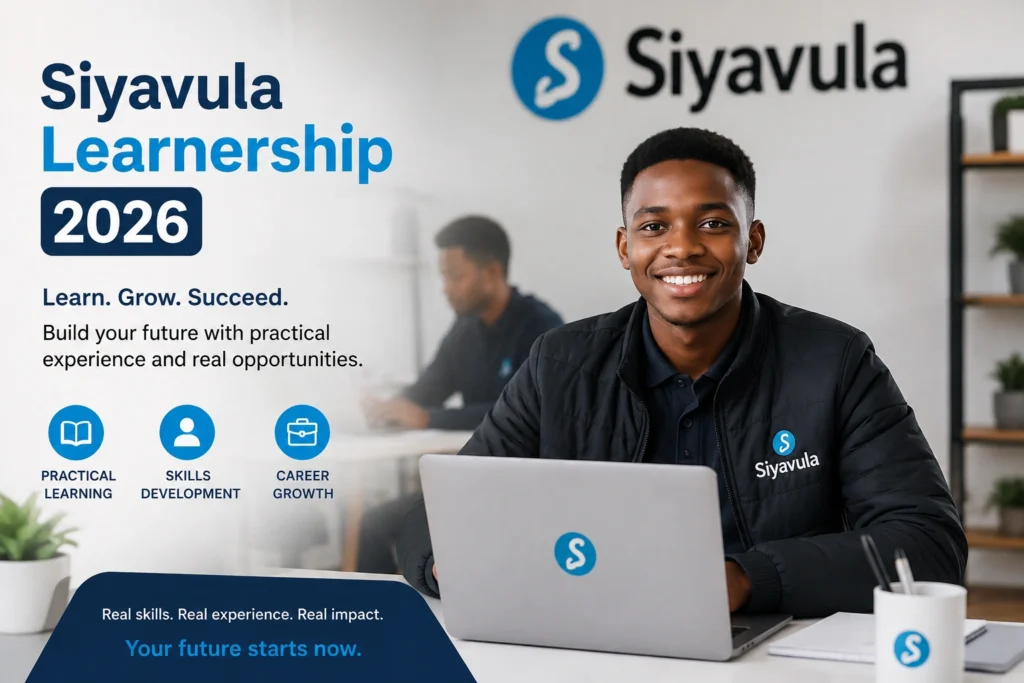
The Siyavula learnership 2026 programme offers a potentially useful route for South Africans who want to build digital skills while working towards a recognised qualification. According to the programme information provided, the opportunity combines remote learning, practical projects, mentorship and workplace-readiness training, with learners receiving a monthly stipend during the programme.
The programme is presented as a partnership involving Siyavula Learning Skills, Umuzi and MICT SETA, with participants working towards a National Certificate at NQF Level 5. It is also described as a fully remote, full-time programme lasting 12 months.
For applicants interested in fields such as web development, data science and user interface design, the appeal is straightforward: you can potentially gain structured training and practical experience without relocating to another city.
However, applicants should not view the opportunity simply as a way to receive a stipend. The real value of a learnership is the combination of qualification, practical experience, portfolio development and career preparation.
What Is the Siyavula Learnership 2026?
The Siyavula learnership 2026 is described as a digital-skills training programme designed to prepare unemployed or aspiring professionals for entry-level opportunities in the technology sector.
Rather than relying exclusively on classroom theory, the programme combines online education with practical projects. This approach is important because technology employers often want candidates who can demonstrate what they are capable of doing, not simply list a qualification on a CV.
According to the supplied programme information, learners work towards an NQF Level 5 National Certificate and receive support from facilitators and mentors throughout the training period.
The programme is also described as fully remote. That means applicants who live outside major technology centres may be able to participate without moving to Johannesburg, Cape Town, Durban or another large city.
The stated programme details include:
| Programme detail | Information |
|---|---|
| Programme | Siyavula Learning Skills 2026 |
| Training partner | Umuzi |
| Accreditation | MICT SETA |
| Qualification | National Certificate, NQF Level 5 |
| Duration | 12 months |
| Study mode | Full-time |
| Delivery | Fully remote |
| Stipend | Monthly stipend; amount not published in the supplied information |
| Practical training | Yes |
| Mentorship | Yes |
| Career support | Yes |
| Potential internships | Available to eligible graduates |
Important: The stipend amount should not be assumed. Applicants should confirm the current stipend value, eligibility rules, start date and application process through the official programme information before making decisions.
Why This Issue Matters
For unemployed young South Africans, the biggest barrier to entering the technology sector is often not a lack of interest. It is the gap between learning something and being able to prove that you can use it in a workplace.
A person might complete several free coding courses, for example, but still struggle when an employer asks for examples of websites, applications, data projects or design work.
This is why structured programmes that combine education with practical assignments can be valuable.
The potential benefits extend beyond the qualification itself. A learner can leave the programme with examples of completed work, improved communication skills, experience collaborating with others and a better understanding of professional expectations.
The remote format is another important factor. Traditional opportunities can be concentrated in major urban areas, creating additional costs for applicants who need accommodation or transport.
A remote learnership can reduce some of those barriers, although applicants still need reliable internet access, suitable equipment and a quiet environment in which to study.
What Skills Can You Develop?
The programme information points towards several digital career pathways, including web development, data science and user interface design.
The exact curriculum and available specialisations should be confirmed before applying, but prospective learners can generally expect digital training to involve a mixture of technical and workplace skills.
These may include:
- Digital literacy
- Problem-solving
- Programming fundamentals
- Data analysis
- Communication
- Collaboration
- Project work
- Time management
- Professional workplace behaviour
- Portfolio development
The important distinction is that learners should aim to finish with evidence of their abilities.
For example, a web development learner should ideally be able to show completed projects. A data-focused learner should be able to explain how they approached a dataset and communicated findings. A UI-focused learner should be able to demonstrate design thinking and examples of their work.
That portfolio can become an important part of a graduate’s job search.
Siyavula Learnership 2026 Digital Career Pathways
The digital economy covers a wide range of occupations, so applicants should think carefully about the career direction they want to pursue.
Data Science
Data-driven decision-making has become important across banking, retail, telecommunications, healthcare, government and other industries.
A data-focused pathway can introduce learners to concepts such as:
- Data analysis
- Programming
- Data visualisation
- Statistical thinking
- Business intelligence
- Digital reporting
- Problem-solving
The goal should not simply be to learn software commands. Learners need to understand how information can be used to answer practical questions.
Potential entry-level directions may include junior data roles, data support, reporting, analytics assistance and related digital positions, depending on the learner’s final skills and experience.
Web Development
Web development can provide another route into the technology industry.
Learners interested in this area may work with concepts such as website structure, programming, user interaction, debugging and version-controlled projects.
A strong portfolio could eventually include several small but complete projects rather than one unfinished ambitious project.
User Interface and Digital Design
People interested in creative technology may find user interface design particularly appealing.
UI work combines visual thinking with an understanding of how people interact with websites and digital products.
Learners can develop skills around layouts, navigation, accessibility, user experience and digital design processes.
The ability to explain why a design decision was made can be just as important as producing an attractive interface.
Who Should Consider Applying?
The opportunity may be particularly relevant to people who:
- Want to enter the digital or technology sector.
- Need practical experience as well as formal training.
- Are comfortable studying online.
- Can commit to a full-time programme.
- Want to build a professional portfolio.
- Are prepared to complete assignments and projects consistently.
- Have an interest in technology, data, software or digital design.
- Need a structured route into the industry.
Applicants should nevertheless check the official eligibility requirements before applying. Do not assume that being unemployed automatically guarantees eligibility.
Age requirements, education requirements, citizenship or residency conditions, access to equipment, internet requirements and other criteria can affect selection.

How to Prepare Before Applying
Getting selected for a learnership is not only about submitting a form. Preparation can make the process considerably easier.
Step 1: Verify the opportunity
Start by checking the latest programme information.
Confirm:
- Application opening and closing dates
- Eligibility requirements
- Qualification details
- MICT SETA accreditation
- Programme duration
- Training schedule
- Stipend conditions
- Equipment requirements
- Internet requirements
- Application method
- Selection process
APPLY HERE: Siyavula Learnership 2026
This is especially important because programme information can change.
Step 2: Choose a career direction
Do not select a digital pathway simply because it sounds popular.
Ask yourself what type of work you enjoy.
Step 3: Prepare your CV
Your CV should be easy to read and focused on relevant evidence.
If you have no formal technology employment experience, include:
- School or tertiary projects
- Personal digital projects
- Volunteer work
- Online courses
- Relevant software skills
- Problem-solving experience
- Team projects
- Academic achievements
Do not fill your CV with skills you cannot demonstrate.
Step 4: Prepare your documents
Keep digital copies of commonly requested documents ready.
These may include:
- South African identity document
- Updated CV
- Educational certificates
- Academic transcripts, where applicable
- Proof of address, if requested
- Other supporting documents specified by the programme
Only submit documents through the legitimate application channel.
Step 5: Check your remote-learning setup
A remote programme still requires commitment.
Before applying, consider whether you have:
- Reliable internet
- A suitable computer or approved device
- A consistent place to study
- Enough time for full-time participation
- The ability to attend online sessions
- Basic digital literacy
Remote does not mean effortless.
ALSO APPLY FOR: Discovery PWD Learnership 2026
Best Practices Experts Recommend
The strongest applicants are likely to approach a learnership as the beginning of a career rather than simply a temporary training opportunity.
Treat every project as portfolio material. Keep your best work organised from the beginning.
Ask questions early. If you do not understand a concept, seek help rather than allowing small gaps to become major problems.
Build beyond the minimum. Once you understand an assignment, experiment with your own small projects.
Document your progress. Keep notes about what you learned, what problems you encountered and how you solved them.
Develop professional communication. Technology careers require more than technical knowledge. Employers need people who can explain problems, work in teams and communicate clearly.
Use the mentorship opportunity. If facilitators or career coaches are available, ask practical questions about CVs, interviews, portfolios and workplace expectations.
Network responsibly. Connect with fellow learners and professionals. A useful professional network can become valuable when searching for internships or entry-level roles.
Mistakes People Often Make
One of the biggest mistakes is applying without reading the requirements.
Another is assuming that the stipend is the main benefit. Financial support can be important, but the long-term value lies in the qualification, skills, experience and portfolio you develop.
Applicants should also avoid submitting incomplete or inaccurate information.
Other common mistakes include:
- Waiting until the deadline to apply
- Using an outdated CV
- Applying without checking eligibility
- Claiming technical skills they do not possess
- Ignoring online-learning requirements
- Missing scheduled sessions
- Failing to save completed projects
- Treating assignments as something to finish rather than evidence of ability
- Assuming a qualification automatically guarantees employment
A learnership can improve your position in the job market, but it cannot guarantee a job.
How to Make the Most of the 12 Months
If selected, create a simple personal development plan for the entire programme.
During the first few months, concentrate on understanding the fundamentals.
As your knowledge improves, focus increasingly on practical projects.
By the middle of the programme, you should ideally have a growing collection of work that demonstrates your abilities.
Towards the end, concentrate on career preparation:
- Update your CV.
- Organise your portfolio.
- Improve your professional profile.
- Practise interview questions.
- Research entry-level technology roles.
- Identify internships and graduate opportunities.
- Ask mentors for feedback.
- Start applying before the programme ends where appropriate.
This approach turns the learnership from a training experience into a structured transition towards employment.
Frequently Asked Questions
Is the Siyavula Learnership 2026 fully remote?
The supplied programme information describes it as a fully remote programme. Applicants should still confirm whether any assessments, onboarding sessions or other activities require physical attendance.
How much is the monthly stipend?
The stipend amount was not published in the information provided. Applicants should verify the current amount and payment conditions through the official programme information.
What qualification does the programme offer?
The programme information states that participants work towards a National Certificate at NQF Level 5, with MICT SETA identified as the accreditation body.
Does completing the learnership guarantee a job?
No. A learnership can improve employability through qualifications, practical experience and portfolio development, but employment depends on the individual’s performance, skills, available vacancies and employer requirements.
Final Summary
For South Africans trying to enter the digital economy, the Siyavula learnership 2026 represents an interesting opportunity because it combines several things that entry-level applicants often struggle to obtain separately: structured training, practical projects, a recognised qualification and workplace preparation.
The remote format could make the programme particularly attractive to applicants who cannot relocate for training. The reported monthly stipend may also provide useful financial support during the learning period, although the exact amount should be confirmed before applying.
The most important point is to look beyond the stipend.
If you are selected, the real objective should be to finish the programme with skills you can demonstrate, projects you can discuss, a portfolio you can show employers and greater confidence in a professional environment.
Before submitting an application, verify the current eligibility criteria, closing date, stipend details, equipment requirements and official application procedure. Keep your documents ready, choose a career pathway that genuinely interests you and make sure you can commit to full-time remote learning.
For an aspiring technology professional, twelve months of disciplined learning and practical project work can be far more valuable than simply adding another short course to a CV.