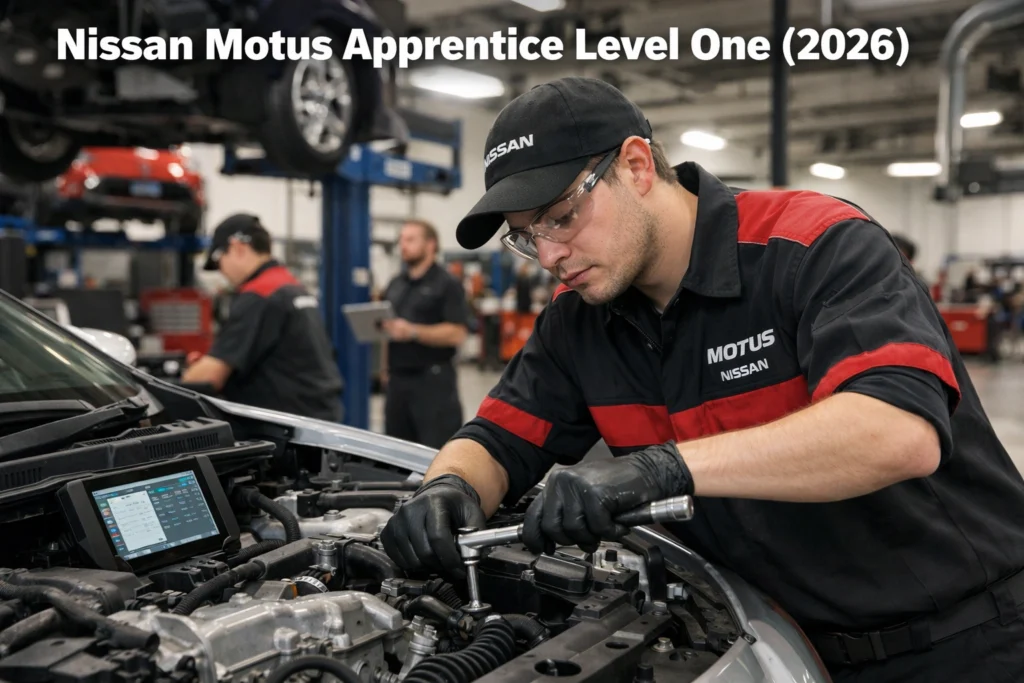

Nissan Motus Apprentice Level One 2026: There’s a quiet shift happening in South Africa’s job market—and it’s not being driven by flashy tech startups or remote work trends. Instead, it’s unfolding in workshop bays, service centers, and dealership floors. The Apprentice Level One – Nissan Motus Corporation opportunity in Johannesburg is becoming one of the most talked-about entry-level roles among young job seekers—and for good reason.
At a time when youth unemployment remains stubbornly high, practical, skills-based opportunities like this are gaining new relevance. But this isn’t just another apprenticeship listing. It reflects a deeper change in how companies like Motus Corporation and global brands like Nissan are rethinking talent pipelines, training, and long-term workforce development.
So why now? And what does this mean for young South Africans trying to break into the automotive industry?
A New Spotlight on Apprenticeships
For years, apprenticeships have existed somewhat in the background—seen as an alternative to university rather than a first-choice career path. But that perception is changing fast.
Rising tuition costs, graduate unemployment, and a growing demand for technical skills have forced both employers and job seekers to rethink traditional pathways. In this environment, roles like Apprentice Level One – Nissan Motus Corporation are no longer “fallback options”—they’re becoming strategic entry points into stable, well-paying careers.
Motus Corporation’s apprenticeship programme taps directly into this shift. By offering structured, hands-on training within a globally recognized automotive brand, it gives candidates something increasingly rare: a clear, practical route from beginner to skilled professional.
APPLY HERE: Nissan Motus Apprentice Level One 2026
How the Opportunity Took Shape
The emergence of this apprenticeship role is not случайный—it’s the result of several overlapping trends.
First, the automotive industry itself is evolving. Vehicles are becoming more complex, integrating digital diagnostics, hybrid systems, and advanced electronics. This has created a shortage of technicians who are not only mechanically skilled but also technologically literate.
Second, companies like Motus have recognized that hiring already-skilled technicians isn’t enough. The talent pool is limited. So instead of competing for experienced workers, they are investing in training new ones from the ground up.
Third, government and industry pressure to create youth employment opportunities has encouraged structured programmes like apprenticeships. While not explicitly a public-sector initiative, this role aligns with broader national goals around skills development.
The result is a programme that is both practical and strategic: it solves a business need while addressing a societal challenge.
Inside the Role: More Than Just “Learning the Basics”
At first glance, the responsibilities listed for the Apprentice Level One role seem straightforward—assist senior technicians, perform basic maintenance, keep the workspace clean. But that description barely scratches the surface.
This role is designed as a foundation layer.
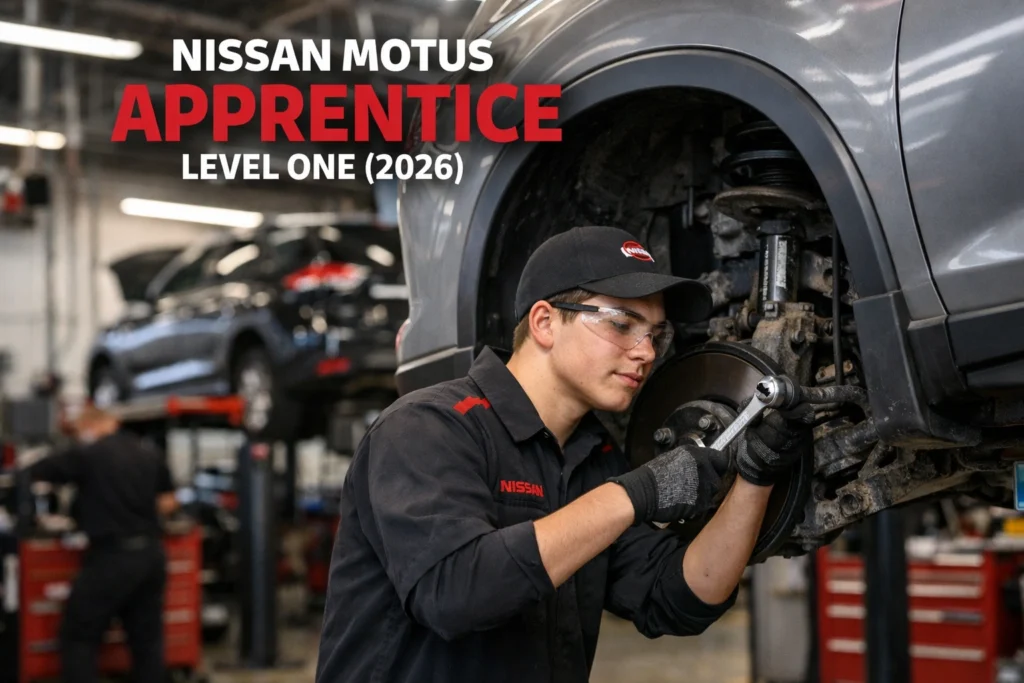
Apprentices are not just changing oil or rotating tires—they are being introduced to the discipline of automotive diagnostics, the rhythm of workshop operations, and the standards required in a professional service environment. Working alongside experienced technicians, they gain exposure to real-world problems that no classroom can fully replicate.
There’s also a strong emphasis on safety, teamwork, and communication. These “soft skills” are often underestimated, but in a workshop setting, they are critical. A single miscommunication can lead to costly mistakes—or worse, safety risks.
Over time, apprentices move from observation to participation, gradually taking on more complex tasks as their confidence and competence grow.
Recent Developments Driving Interest
What’s pushing this specific role into the spotlight now?
One key factor is timing.
With several major automotive brands expanding their presence in South Africa and increasing after-sales service demand, dealerships are under pressure to scale up their technical teams. Apprenticeships offer a pipeline solution.
Additionally, there’s been a noticeable shift in how young people are approaching career decisions. Many are actively seeking roles that combine earning and learning—something traditional university paths don’t always provide.
Social media and job forums have also played a role. Listings like the Apprentice Level One – Nissan Motus Corporation position are being widely shared, often accompanied by discussions about career stability, earning potential, and long-term growth.
The conversation has moved from “Is this a good job?” to “Is this a smarter path than university for some people?”
APPLY HERE: Nissan Motus Apprentice Level One 2026
ALSO APPLY FOR: Workshop Apprentice (HiRise Recruitment) 2026
Public Reaction: Hope, Skepticism, and Realism
The response to opportunities like this has been mixed—but engaged.
On one hand, there’s genuine excitement. Many see apprenticeships as a practical solution to unemployment and a way to gain real skills without incurring debt.
On the other hand, there’s skepticism.
Some critics argue that entry-level apprenticeships can be physically demanding, offer modest starting salaries, and require patience before significant financial rewards materialize. Others question whether all apprenticeships deliver on their promise of advancement.
Both perspectives are valid.
The truth is that success in this kind of role depends heavily on the individual’s commitment, the quality of mentorship, and the structure of the programme itself. Not every apprenticeship is equal—but those linked to established companies like Motus tend to offer more structured growth pathways.
Why This Matters Right Now
This isn’t just about one job listing—it’s about a broader shift in how careers are built.
South Africa faces a dual challenge: high unemployment and a shortage of skilled workers in key industries. Apprenticeships sit at the intersection of these issues.
The Apprentice Level One – Nissan Motus Corporation role matters because it represents a model that could be scaled. If more companies adopt similar approaches, it could reshape the employment landscape—especially for young people who don’t have access to higher education.
There’s also a cultural shift at play.
For decades, academic degrees have been seen as the primary route to success. But as the economy evolves, skills-based careers are gaining recognition. Being a qualified automotive technician is no longer viewed as a fallback—it’s a respected, viable profession with real earning potential.
In this context, every apprenticeship opportunity carries weight. It’s not just a job—it’s part of a larger story about economic adaptation and resilience.
The Bigger Picture: Skills Over Credentials?
One of the most interesting implications of this trend is the growing emphasis on skills over formal credentials.
The qualifications for the Apprentice Level One role are intentionally accessible: a high school diploma, mechanical interest, willingness to learn. What matters more is attitude and aptitude.
This reflects a broader global trend where employers are prioritizing practical ability over academic background. In industries like automotive, where hands-on work is essential, this shift is particularly pronounced.
For job seekers, this changes the equation.
Instead of asking, “What degree should I get?” the question becomes, “What skills can I build—and how quickly can I start?”
APPLY HERE: Nissan Motus Apprentice Level One 2026
What Could Happen Next
Looking ahead, several outcomes are possible.
If programmes like this prove successful, we could see a significant expansion of apprenticeship opportunities across the automotive sector and beyond. Other industries—such as renewable energy, construction, and manufacturing—may adopt similar models.
There’s also the possibility of deeper integration between apprenticeships and formal education. Hybrid models, where apprentices earn certifications or diplomas while working, could become more common.
For Motus Corporation, success in this programme could strengthen its reputation as a talent developer, not just an employer. This could give it a competitive edge in attracting both customers and future employees.
However, there are challenges.
Scaling apprenticeships requires investment, mentorship capacity, and consistent quality control. Without these, programmes risk becoming inconsistent or losing credibility.
The next few years will be critical in determining whether this model becomes a cornerstone of workforce development—or remains a niche solution.
A Career Path Worth Considering?
For individuals considering applying, the decision ultimately comes down to alignment.
This role is ideal for those who:
- Enjoy hands-on work
- Are curious about how things function
- Are willing to learn from the ground up
- Value long-term growth over immediate rewards
It’s not a shortcut to success—but it is a structured pathway.
And in a job market where uncertainty is common, structured pathways are increasingly valuable.
Final Thoughts
The buzz around the Apprentice Level One – Nissan Motus Corporation opportunity isn’t accidental. It reflects deeper changes in the economy, the job market, and the way people think about careers.
In many ways, this role captures a moment in time—a moment where practical skills, real-world experience, and long-term growth are starting to outweigh traditional expectations.
For some, it will be the start of a lifelong career in the automotive industry. For others, it may simply be a stepping stone.
But either way, it’s part of a larger shift—one that’s redefining what opportunity looks like in South Africa today.
APPLY HERE: Nissan Motus Apprentice Level One 2026
ALSO APPLY FOR: Workshop Apprentice (HiRise Recruitment) 2026