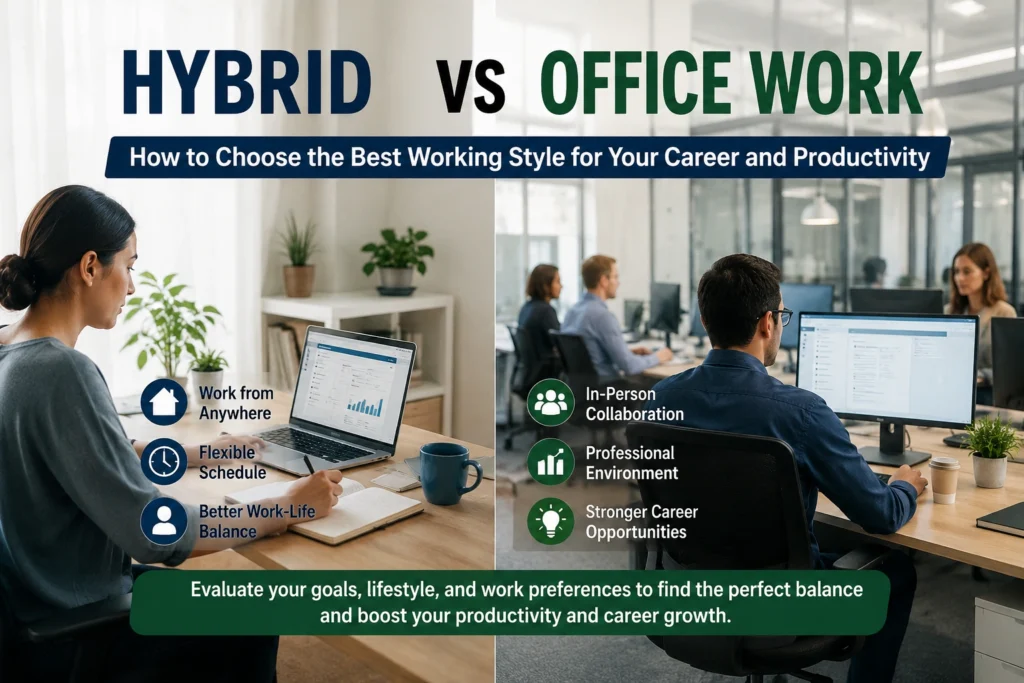

The debate around Hybrid vs Office Work has become one of the biggest workplace discussions in recent years. Many professionals are unsure which option truly offers better career growth, work-life balance, productivity, and long-term job satisfaction. Some employees enjoy the flexibility of working from home but miss the collaboration that comes from being in an office. Others prefer a structured office environment yet struggle with long commutes and less personal time.
The challenge is that there is no universal answer. The best choice depends on your role, personality, industry, employer, and career goals. Understanding the strengths and weaknesses of each approach can help you make smarter career decisions instead of simply following workplace trends.
This practical guide explains what Hybrid vs Office Work means, why it matters, how to determine which environment suits you best, and practical strategies for succeeding in either setup.
Understanding Hybrid vs Office Work
Before comparing the two models, it’s important to understand what they actually mean.
Office work refers to employees working from a company’s physical workplace during standard business hours. Teams collaborate in person, attend face-to-face meetings, and use office facilities daily.
Hybrid work combines working remotely with working in the office. Employees might spend two or three days at home and the remaining days at the office, depending on company policies.
Both models aim to help businesses remain productive while supporting employee performance, but they achieve this in different ways.
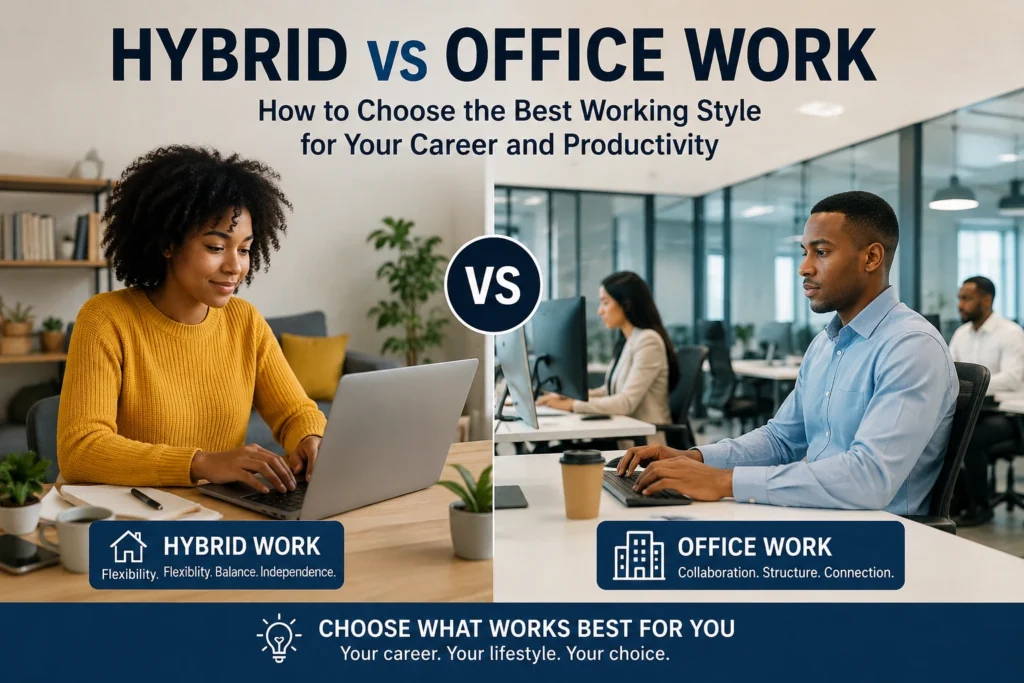
Hybrid work offers flexibility and autonomy, while office work emphasizes direct communication, collaboration, and structured routines.
ALSO APPLY FOR: Apex Group Internship
ALSO APPLY FOR: Zutari Graduate Internships 2026
Why This Issue Matters
Choosing between Hybrid vs Office Work affects far more than where you sit during the day. It influences nearly every aspect of professional life, including:
- Productivity levels
- Mental well-being
- Career development
- Team collaboration
- Personal finances
- Family responsibilities
- Physical health
- Employee engagement
For employers, the choice affects office costs, employee retention, recruitment, innovation, and company culture.
For employees, the right working model can improve job satisfaction and reduce stress, while the wrong one may lead to burnout, isolation, or decreased motivation.
As workplaces continue evolving, professionals who understand both models are better prepared to adapt to changing employer expectations.
Hybrid vs Office Work: Comparing the Key Differences
Flexibility
Hybrid work offers significantly greater flexibility.
Employees often have more control over their schedules, making it easier to attend appointments, manage family responsibilities, or avoid peak traffic.
Office work usually follows fixed schedules with less flexibility.
Winner: Hybrid
Collaboration
Face-to-face collaboration remains one of the biggest strengths of office work.
Quick conversations, brainstorming sessions, and spontaneous discussions often happen more naturally in person.
Hybrid teams rely heavily on video meetings, messaging apps, and digital collaboration tools.
Winner: Office
Productivity
Productivity depends on both the individual and the nature of the job.
Many professionals report completing focused work more efficiently from home due to fewer interruptions.
However, office environments may improve productivity for employees who benefit from supervision, teamwork, or structured routines.
Winner: Depends on the role.
Career Growth
Being physically present in the office can sometimes increase visibility with managers and senior leadership.
Informal networking opportunities, mentorship, and spontaneous interactions may contribute to career advancement.
Hybrid workers can still succeed, but they often need to communicate their achievements more intentionally.
Winner: Slight advantage to Office
Work-Life Balance
Hybrid work generally provides better work-life balance by reducing commuting time and allowing more flexibility.
Employees often use saved commuting hours for exercise, family time, or personal development.
However, boundaries between work and home must be carefully managed.
Winner: Hybrid
Company Culture
Office environments naturally strengthen workplace culture through shared experiences, team lunches, and social interactions.
Hybrid organisations must intentionally create opportunities for connection to avoid employee isolation.
Winner: Office
Cost Savings
Working from home several days each week can reduce expenses related to:
- Fuel
- Public transport
- Parking
- Daily meals
- Professional clothing
Employers may also reduce office space costs through hybrid arrangements.
Winner: Hybrid
How to Decide Between Hybrid vs Office Work
Choosing the right working style requires honest self-assessment rather than following popular opinions.
Step 1: Evaluate Your Personality
Ask yourself:
- Do you enjoy social interaction?
- Do you work better independently?
- Do you need external structure?
- Can you stay motivated without supervision?
People who enjoy independence often thrive in hybrid roles.
Those who gain energy from teamwork may prefer office work.
Step 2: Consider Your Career Stage
Early-career professionals often benefit from office environments because they receive:
- More mentoring
- Faster learning opportunities
- Better networking
- Immediate feedback
Experienced professionals may adapt more easily to hybrid arrangements because they already understand workplace expectations.
Step 3: Assess Your Home Workspace
Hybrid work is much easier if you have:
- Reliable internet
- Quiet working space
- Comfortable chair
- Proper desk
- Minimal distractions
Without these, working from home can quickly become frustrating.
Step 4: Think About Your Industry
Some industries naturally suit hybrid work.
Examples include:
- Software development
- Digital marketing
- Graphic design
- Accounting
- Data analysis
- Content writing
Other industries require physical presence, including:
- Manufacturing
- Healthcare
- Hospitality
- Construction
- Retail
- Laboratory work
Your profession often determines how practical hybrid work is.
Step 5: Consider Your Long-Term Goals
If your goal is rapid promotion into leadership, spending more time in the office may strengthen relationships with decision-makers.
If your priority is flexibility and lifestyle balance, hybrid work could better support your goals.
ALSO READ ABOUT: What to Do When an Application Portal Crashes
Practical Strategies for Succeeding in Hybrid Work
Hybrid work requires discipline.
Successful hybrid employees usually follow these habits:
Create a dedicated workspace
Avoid working from your bed or couch whenever possible.
A dedicated workspace helps your brain separate work from personal life.
Maintain a routine
Start work at consistent times each day.
Morning routines improve focus and reduce procrastination.
Overcommunicate
Managers cannot always see your daily progress.
Provide regular updates.
Share completed work.
Participate actively in meetings.
Protect work-life boundaries
Avoid answering emails late into the evening unless genuinely necessary.
Clear boundaries prevent burnout.
Invest in technology
Reliable internet, quality headphones, and a good webcam improve communication and professionalism.
Practical Strategies for Thriving in Office Work
Office work also requires intentional habits.
Manage commuting time
Use commuting productively by listening to educational podcasts, audiobooks, or planning your day.
Build relationships
Take advantage of face-to-face opportunities.
Networking often happens outside formal meetings.
Reduce distractions
Open-plan offices can be noisy.
Use headphones when appropriate and schedule focused work periods.
Stay organised
Office interruptions happen frequently.
Maintain task lists and prioritize important work before attending meetings.
Balance social interaction
Being friendly is valuable, but avoid excessive conversations that reduce productivity.
Best Practices Experts Recommend
Professionals who successfully navigate Hybrid vs Office Work often share similar recommendations.
Prioritize results over location. Employers increasingly measure performance by outcomes rather than physical presence.
Communicate clearly and consistently. Strong communication prevents misunderstandings, especially in hybrid teams.
Continue learning. Digital collaboration tools, project management platforms, and communication software continue evolving. Staying updated improves employability.
Schedule regular feedback. Don’t wait for annual performance reviews. Ask managers for constructive feedback throughout the year.
Take care of your health. Whether working remotely or in the office, regular movement, healthy eating, and sufficient sleep remain essential for long-term performance.
Stay adaptable. Many organisations continue adjusting workplace policies. Employees who embrace change often enjoy stronger career opportunities.
Mistakes People Often Make
Many professionals unintentionally reduce their effectiveness by making avoidable mistakes.
Assuming hybrid work is always easier
Working from home requires self-discipline.
Without good habits, distractions can reduce productivity.
Ignoring career visibility
Hybrid employees sometimes assume managers automatically notice their contributions.
Instead, regularly communicate achievements and project progress.
Neglecting workplace relationships
Whether remote or in the office, strong professional relationships remain valuable.
Networking continues to influence career opportunities.
Working too many hours
Hybrid employees often struggle to “switch off.”
Office workers may stay late simply because everyone else does.
Long hours do not always equal higher productivity.
Failing to adapt
Every organisation has unique expectations.
Successful employees adjust their working style instead of insisting on one approach.
Which Working Model Is Better?
There is no single winner in the Hybrid vs Office Work debate.
Hybrid work may be ideal if you value:
- Flexibility
- Independence
- Reduced commuting
- Better work-life balance
- Lower daily expenses
Office work may suit you better if you value:
- Collaboration
- Mentorship
- Structured routines
- Networking
- Face-to-face communication
Many professionals find that a balanced hybrid schedule offers the advantages of both environments.
The key is understanding your own needs while remaining flexible enough to adapt as your career evolves.
Frequently Asked Questions
Is hybrid work more productive than office work?
It depends on the employee and the type of work. Tasks requiring deep concentration often benefit from remote work, while collaborative projects may be more effective in an office setting.
Does working in the office improve promotion opportunities?
In some organisations, greater office visibility can create additional networking and mentoring opportunities. However, consistent high-quality performance and strong communication remain the most important factors for career advancement.
What skills are most important for hybrid workers?
Successful hybrid employees typically demonstrate excellent communication, time management, self-discipline, organisation, digital collaboration, and problem-solving skills.
Can companies switch between hybrid and office work?
Yes. Many organisations regularly review workplace policies based on business needs, employee feedback, technology, and operational requirements. Employees should remain adaptable to changing expectations.
Final Thoughts
The discussion around Hybrid vs Office Work is unlikely to disappear anytime soon because workplaces continue evolving alongside technology and employee expectations. Rather than asking which model is universally better, focus on which environment helps you perform at your best while supporting your personal and professional goals.
If you thrive on independence, flexibility, and reduced commuting, hybrid work may provide the balance you need. If you value daily collaboration, structured routines, and in-person mentorship, office work could better support your career growth. In many cases, a thoughtfully designed hybrid arrangement offers the best of both worlds.
Whichever model you choose, success ultimately depends less on your location and more on your habits. Build strong communication skills, stay organised, manage your time effectively, continue learning, and maintain healthy boundaries between work and personal life. These practices will help you succeed regardless of where you work.
ALSO APPLY FOR: Apex Group Internship
ALSO APPLY FOR: Zutari Graduate Internships 2026
ALSO READ ABOUT: What to Do When an Application Portal Crashes