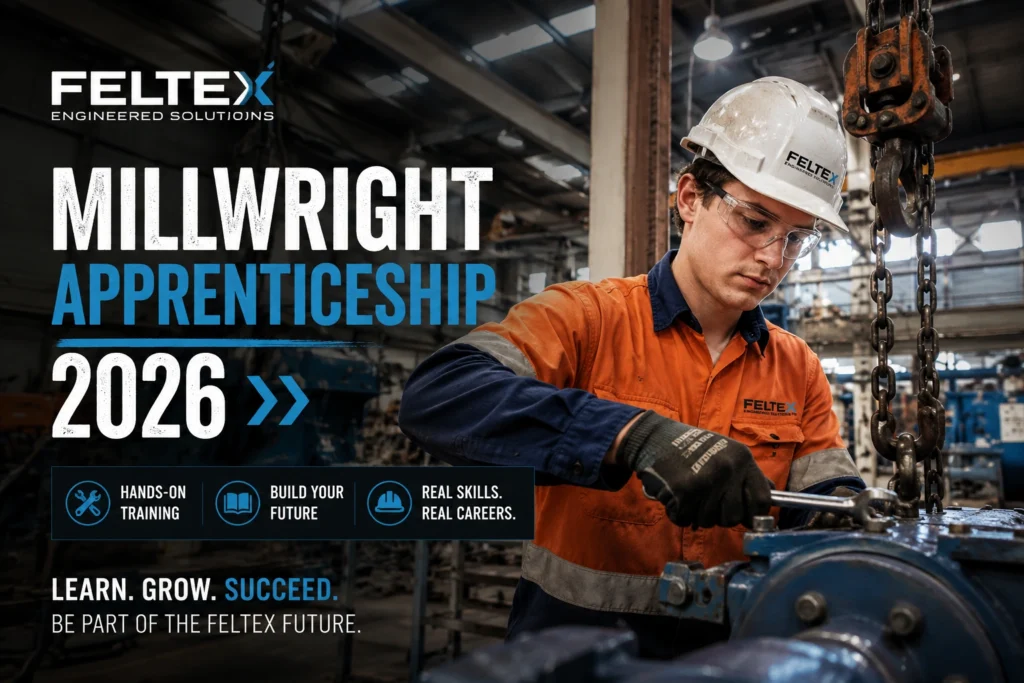

The Feltex Millwright Apprenticeship 2026 is arriving at a moment when technical trades are suddenly back in the spotlight across South Africa’s industrial economy. From automotive production plants to energy infrastructure projects, employers are scrambling to secure skilled artisans who can keep modern machinery running — and young South Africans are beginning to realise that trades like millwrighting may offer something university degrees increasingly struggle to guarantee: direct entry into stable, high-demand work.
That is why this apprenticeship is attracting attention far beyond the Eastern Cape.
With applications officially open in Gqeberha and the closing date set for 14 May 2026, the programme is already circulating heavily on job forums, Facebook career groups, and technical college WhatsApp networks. The appeal is obvious. It combines paid workplace exposure, accredited artisan training, and a possible route into one of the country’s most important manufacturing sectors: automotive production.
For many applicants, this is not just another apprenticeship advert. It represents a practical pathway into an economy where technical competence is becoming increasingly valuable.
A Manufacturing Opportunity at the Right Time
South Africa’s automotive sector has spent the past few years navigating supply-chain instability, rising production costs, load-shedding disruptions, and global competition. Yet despite those pressures, the industry remains one of the country’s strongest industrial employers.
Companies connected to vehicle manufacturing continue investing heavily in automation, maintenance systems, and advanced production equipment. That creates an urgent need for artisans who can combine electrical and mechanical expertise — exactly what millwrights are trained to do.
Feltex, operating as part of the Fehrer group, sits directly inside this environment.
Its Gqeberha operation supports large-scale automotive manufacturing through specialised production processes and high-volume machinery systems. In factories like these, downtime is expensive. Every minute a production line stops can affect delivery schedules, supplier contracts, and profitability. Skilled maintenance teams are therefore critical.
This is where apprenticeships become strategically important.
Instead of hiring already-qualified artisans in a highly competitive labour market, manufacturers increasingly prefer to develop talent internally. Structured apprenticeship programmes allow companies to shape technical workers according to plant-specific systems, safety requirements, and operational standards.
The Feltex Millwright Apprenticeship 2026 reflects exactly that trend.
APPLY HERE: Feltex Millwright Apprenticeship 2026
Why Millwrights Are Suddenly in Demand Again
For years, many South African students were pushed toward traditional academic degrees while vocational careers were often overlooked. But the labour market has shifted dramatically.
Trades linked to engineering, energy, logistics, and manufacturing are experiencing renewed demand. Millwrights, in particular, have become essential because they operate across both mechanical and electrical disciplines.
That flexibility matters in modern factories.
A millwright may troubleshoot conveyor systems in the morning, repair electrical faults in the afternoon, and perform preventative maintenance on robotic equipment later the same day. In highly automated plants, employers value technicians who can understand entire systems rather than isolated components.
Industry analysts have repeatedly warned about South Africa’s artisan shortage, especially as experienced technicians approach retirement age. Apprenticeship pipelines are now being treated as long-term survival strategies for industrial companies.
The result is that opportunities like this are becoming more competitive.
What Makes the Feltex Programme Different?
Not all apprenticeships carry the same weight in the industry. Some offer limited practical exposure or inconsistent training environments. What makes the Feltex programme stand out is its connection to a real production facility operating at industrial scale.
This is not simulated training.
Apprentices entering the programme will work around functioning manufacturing systems where production targets, maintenance schedules, and operational efficiency directly affect business performance. That kind of exposure can accelerate learning dramatically.
The programme is also structured through MERSETA, which remains one of the country’s most recognised sector education and training authorities in engineering and manufacturing.
Successful candidates will spend four years combining:
- Technical training
- Workplace learning
- Maintenance exposure
- Trade-related theory
- Practical assessments
By the end of the programme, apprentices move toward trade test eligibility and nationally recognised artisan status.
That qualification can open doors across multiple industries — not only automotive manufacturing.
The Entry Requirements Reveal Something Important
One detail drawing attention online is the programme’s strict educational criteria.
Applicants need either:
- Grade 12 with pure Mathematics and Physical Science, or
- An N3 qualification including Electrical/Fitter Trade Theory, Mathematics, and Engineering Science.
Maths Literacy is explicitly excluded.
That requirement signals the technical intensity of the apprenticeship. Modern millwrighting involves calculations, fault analysis, electrical systems, measurement precision, and engineering concepts that demand strong foundational numeracy.
The programme also emphasises physical readiness.
Applicants must be medically fit, comfortable working at heights, and capable of functioning in heavy industrial environments. This is another reminder that artisan careers are highly practical professions requiring both mental and physical resilience.
In many ways, the advert quietly challenges outdated perceptions about vocational work being “easy” alternatives.
Industrial trades increasingly require technical adaptability, problem-solving ability, and continuous learning.
Why This Matters Right Now
The timing of the Feltex Millwright Apprenticeship 2026 matters because South Africa’s youth employment crisis remains severe, especially among matriculants and TVET graduates searching for meaningful workplace experience.
Many young people face a difficult cycle:
- Employers want experience.
- Graduates cannot get experience without employment.
- Entry-level jobs remain limited.
Apprenticeships partially solve that problem by combining training and workplace integration from day one.
At the same time, government and industry partnerships are placing greater emphasis on technical skills development. Sectors tied to infrastructure, manufacturing, transport, and energy increasingly depend on artisan pipelines to sustain operations.
That makes accredited apprenticeships more valuable than they were a decade ago.
The Eastern Cape is especially important in this conversation because it remains one of South Africa’s major automotive production hubs. Programmes like this therefore carry regional economic significance beyond individual employment opportunities.
For many applicants, this apprenticeship could become a gateway into long-term industrial careers that extend well beyond a single employer.
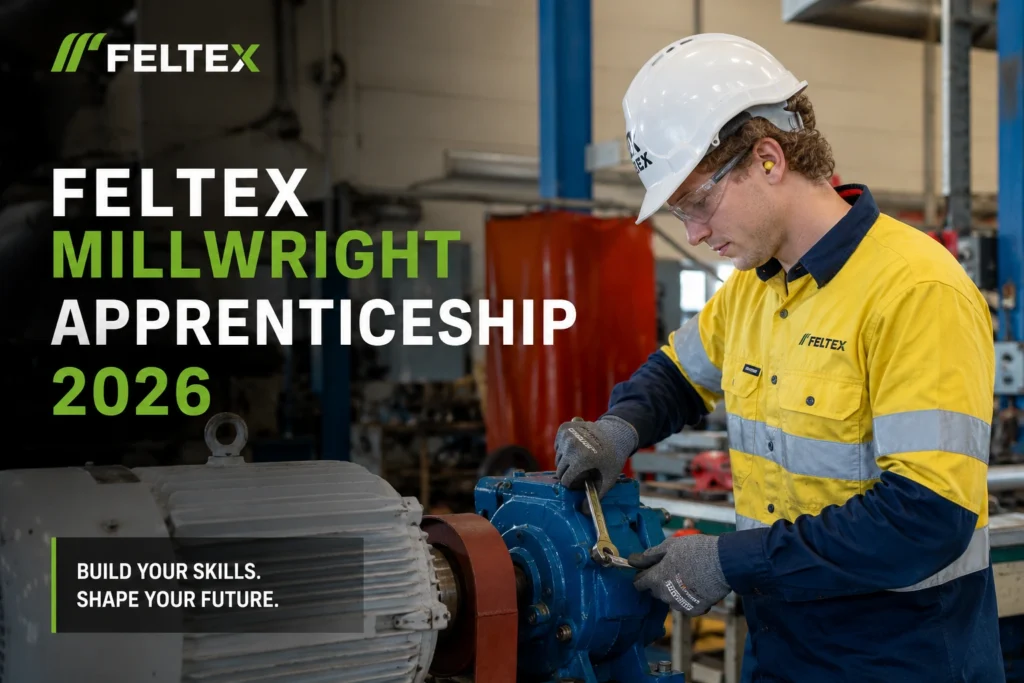
APPLY HERE: Feltex Millwright Apprenticeship 2026
Public Reaction: Hope, Competition, and Pressure
Online response to the apprenticeship has followed a familiar pattern seen with many major technical opportunities in 2026.
Excitement is high — but so is concern about competition.
On career forums and social platforms, applicants are already discussing:
- Whether Grade 12 alone is enough
- How important N3 qualifications may be
- What aptitude tests might include
- Whether relocation costs could become a challenge
Some users are also debating whether apprenticeships now offer stronger career stability than certain university pathways.
That conversation reflects wider anxieties in South Africa’s labour market. Rising tuition costs, graduate unemployment, and economic uncertainty have pushed many young people to reconsider vocational routes.
At the same time, employers increasingly appear to value practical competence over purely theoretical qualifications in technical industries.
The apprenticeship conversation is therefore becoming part of a larger national debate about skills, employability, and economic survival.
The Reality Behind “Earn While You Learn”
One reason apprenticeship programmes gain traction online is the promise of earning an income while training.
That appeal is understandable, especially in households under financial pressure.
But industry veterans often caution applicants against viewing apprenticeships as quick-income opportunities. The reality is more demanding.
A millwright apprenticeship involves:
- Long training periods
- Technical coursework
- Shift environments
- Safety protocols
- Physical labour
- Continuous assessments
Apprentices must balance learning with operational expectations inside real industrial settings.
Those who succeed typically develop strong discipline early.
However, the long-term payoff can be significant. Qualified artisans frequently gain access to opportunities in:
- Manufacturing
- Mining
- Energy
- Logistics
- Petrochemical operations
- Food processing
- Maintenance contracting
Some later transition into supervisory, planning, or engineering-support roles.
That long-term mobility explains why apprenticeships remain attractive despite their intensity.
APPLY HERE: Feltex Millwright Apprenticeship 2026
ALSO APPLY FOR: Gold One Gedex Apprenticeships 2026
The Skills Employers Are Quietly Looking For
Although qualifications matter, the Feltex advert hints at something deeper.
Companies increasingly recruit apprentices based not only on marks, but also on behavioural traits.
The posting specifically mentions:
- Problem-solving
- Communication
- Teamwork
- Decision-making
- Learning orientation
These qualities matter because modern maintenance environments are collaborative and time-sensitive.
Factories operate under production pressure. Technicians must communicate faults clearly, coordinate repairs quickly, and adapt to changing systems.
Applicants who only focus on academic results may therefore overlook an important part of the recruitment process.
Recruiters often pay attention to:
- Curiosity about machinery
- Safety awareness
- Reliability
- Practical interest
- Technical hobbies
- Willingness to learn
That is why candidates with workshop exposure, DIY mechanical interests, or hands-on school projects sometimes stand out strongly during interviews.
What Could Happen Next
The success of programmes like the Feltex Millwright Apprenticeship 2026 could influence how more manufacturers approach workforce development over the next few years.
Several trends are already emerging:
More Industry-Led Training Pipelines
Manufacturers may continue expanding internal apprenticeship systems instead of relying solely on external recruitment. Skilled artisan shortages are becoming too expensive to ignore.
Increased Competition for Technical Apprenticeships
As awareness grows around artisan career opportunities, application volumes are likely to rise sharply. Strong maths and science performance may become even more important.
Greater Focus on Automation Skills
Future millwrights may increasingly work with robotics, automated controls, and smart manufacturing systems. Apprenticeships could evolve to include more digital diagnostic training.
Stronger TVET-to-Industry Partnerships
Technical colleges and employers may deepen collaboration to improve graduate employability and reduce skills mismatches.
Regional Industrial Talent Development
Cities like Gqeberha may continue positioning themselves as technical training hubs connected to automotive manufacturing ecosystems.
In other words, this apprenticeship may represent part of a much larger shift happening inside South Africa’s industrial economy.
Common Mistakes That Could Cost Applicants
One recurring issue with high-profile apprenticeship opportunities is poor application preparation.
Recruiters frequently eliminate candidates for avoidable reasons:
- Missing certified documents
- Generic CVs
- Incorrect subject combinations
- Incomplete applications
- Late submissions
For this programme, the Mathematics requirement is especially critical. Applicants with Maths Literacy should avoid assuming equivalence.
Candidates should also carefully tailor their CVs toward technical aptitude rather than submitting broad, unrelated applications.
Even small details matter:
- Mention workshop exposure
- Include technical school subjects
- Highlight safety awareness
- Show teamwork examples
- Demonstrate genuine engineering interest
In competitive selection environments, specificity often matters more than length.
A Career Path That Still Builds Real Industrial Expertise
One reason apprenticeships continue attracting respect inside engineering industries is simple: they produce practical competence.
While automation changes manufacturing constantly, factories still depend on people who understand how systems actually work.
Millwrights occupy a unique position in that ecosystem.
They are troubleshooters, installers, maintenance specialists, and operational problem-solvers all at once.
That versatility explains why qualified artisans often remain employable even during economic downturns. When production systems fail, businesses need people who can restore operations quickly and safely.
The Feltex Millwright Apprenticeship 2026 therefore represents more than a training opportunity. It reflects the ongoing importance of technical craftsmanship in a rapidly evolving industrial world.
For applicants willing to commit to four demanding years of training, the programme could become the foundation for a long-term career in one of South Africa’s most important sectors.
And in an economy where practical skills increasingly shape employability, that matters more than ever.
APPLY HERE: Feltex Millwright Apprenticeship 2026
ALSO APPLY FOR: Gold One Gedex Apprenticeships 2026