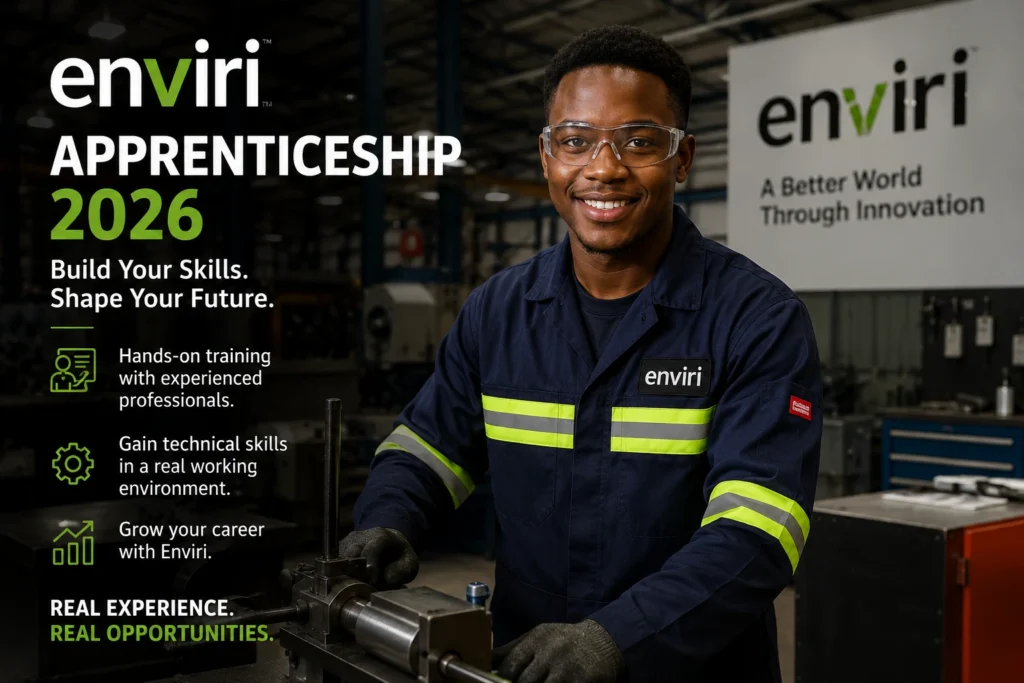

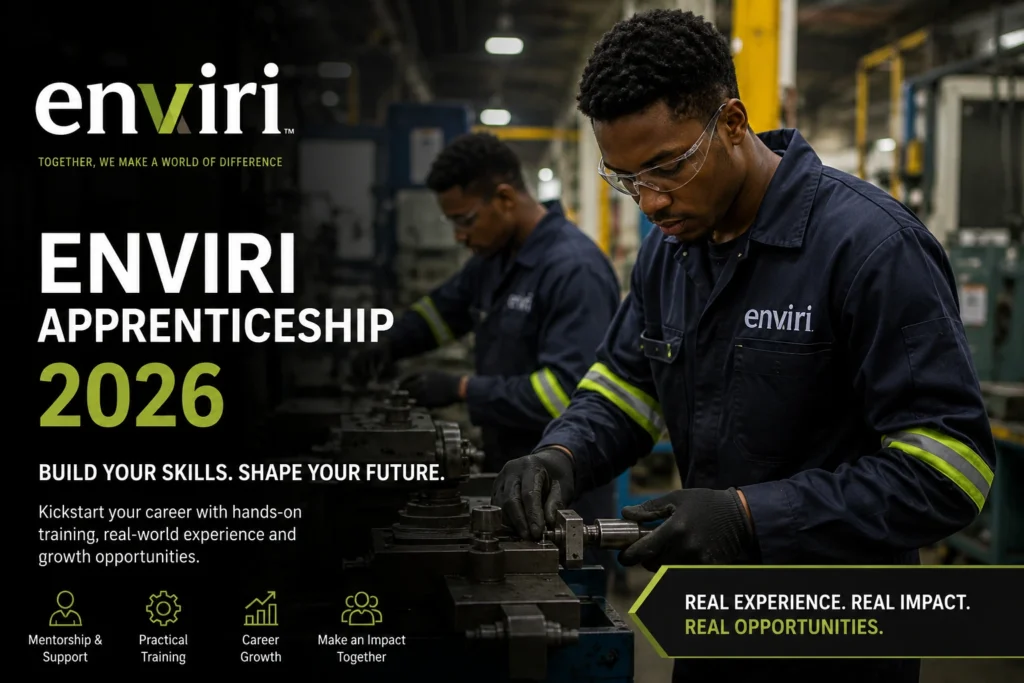
The Enviri Apprenticeship 2026 is generating growing interest among aspiring railway professionals at a time when employers across the transport and infrastructure sectors are placing renewed emphasis on technical skills, safety competence and structured workplace learning.
Rather than offering classroom-based education alone, this apprenticeship promises something many employers increasingly value: practical experience gained while working alongside experienced professionals in a highly regulated industry.
For candidates interested in engineering, heavy equipment, maintenance or railway operations, opportunities like this are becoming more significant as infrastructure investment and workforce renewal continue across many rail networks. Apprenticeships are no longer viewed as alternative career routes—they are increasingly recognised as direct pathways into specialised technical professions.
The Enviri Harsco Rail Apprentice Driver Operator Maintainer programme reflects this broader shift. It combines supervised training, technical assessments and real operational exposure to prepare apprentices for a future in railway maintenance and machine operations.
Why The Opportunity Is Receiving Attention
Railway employers face an ongoing challenge.
Across many countries, experienced technical workers are approaching retirement while demand for infrastructure maintenance remains high. Modern rail systems require highly trained personnel who understand both mechanical equipment and strict operational safety standards.
That has encouraged companies to invest more heavily in structured apprenticeships instead of relying only on recruiting already qualified workers.
The Enviri Apprenticeship 2026 fits squarely into this trend.
Instead of expecting applicants to arrive with years of industry experience, the programme focuses on developing practical competence through supervised learning and progressive responsibility.
For many job seekers, particularly younger candidates looking for technical careers, that approach is attractive because it offers both training and a clear professional direction.
Understanding Enviri And Harsco Rail
The apprenticeship is offered through Harsco Rail, a division of Enviri Corporation.
Harsco Rail has operated in railway maintenance for more than a century and supplies equipment, engineering services and maintenance solutions for railway operators around the world.
Its work centres on what the railway industry calls “Maintenance of Way”—the ongoing inspection, repair and maintenance of railway infrastructure that keeps trains operating safely and efficiently.
This includes specialised On-Track Machines that inspect, repair and grind railway tracks to maintain safe operating conditions.
Because these machines are technically sophisticated and safety-critical, operators require extensive training before working independently.
That is exactly where this apprenticeship comes in.
What The Apprenticeship Actually Involves
One aspect that makes the Enviri Apprenticeship 2026 stand out is its combination of several disciplines within one training programme.
Rather than focusing only on machine operation, apprentices gradually develop skills in:
- Driving On-Track Machines
- Machine operation
- Preventive maintenance
- Mechanical inspections
- Fault diagnosis
- Basic repairs
- Rail safety procedures
- Operational communication
- Route familiarisation
- Technical documentation
This broad exposure reflects how modern railway maintenance operates.
Today’s Driver Operator Maintainers are expected to understand not only how equipment works but also how to maintain reliability, identify potential faults and operate within strict safety regulations.
That makes the apprenticeship suitable for individuals who enjoy practical work, problem-solving and structured technical environments.
Safety Comes Before Everything Else
One theme appears repeatedly throughout the programme description: safety.
That should not surprise anyone familiar with railway operations.
Working around heavy machinery, active railway lines and specialised maintenance equipment leaves little room for shortcuts or guesswork.
As a result, apprentices are expected to learn:
- Personal Track Safety procedures
- Safe machine operation
- Environmental compliance
- Quality management
- Risk awareness
- Equipment inspections
- Incident reporting
- Safe communication practices
This emphasis is important because railway employers generally recruit for attitude as much as technical ability.
A candidate who consistently follows procedures may often be viewed more favourably than someone with stronger mechanical knowledge but poor safety discipline.
The Skills Employers Are Really Looking For
Many applicants assume technical apprenticeships are won purely on academic performance.
In reality, employers often evaluate personal qualities just as carefully.
The Enviri Apprenticeship 2026 highlights characteristics including:
- Reliability
- Teamwork
- Attention to detail
- Professional behaviour
- Adaptability
- Communication
- Self-motivation
- Willingness to learn
These qualities matter because railway maintenance frequently involves working under changing operational conditions.
Shift work, overnight maintenance windows and travel between work locations are common parts of the profession.
Candidates who understand these realities—and demonstrate flexibility—are often stronger applicants.
Practical Experience Remains The Biggest Advantage
One reason apprenticeships continue gaining popularity is simple.
Experience matters.
Many entry-level technical vacancies ask for previous workplace exposure that new graduates often struggle to demonstrate.
Apprenticeships help bridge that gap.
Participants gain experience with:
- Real maintenance teams
- Actual railway equipment
- Operational planning
- Fault investigation
- Machine servicing
- Competency assessments
- Workplace communication
- Industry procedures
These experiences become valuable additions to future CVs because they demonstrate practical competence rather than theoretical knowledge alone.
Why This Matters Right Now
The timing of the Enviri Apprenticeship 2026 is significant.
Across infrastructure industries, employers increasingly report shortages of technically skilled workers.
At the same time, governments and private operators continue investing in maintaining railway systems that support freight movement, passenger transport and economic growth.
Rail infrastructure cannot operate without skilled maintenance teams.
Every safely operating train depends on thousands of inspections, repairs and preventative maintenance activities carried out behind the scenes.
Programmes like this therefore serve two purposes.
They help employers develop future specialists while giving job seekers an opportunity to enter an industry that values long-term technical expertise.
For applicants considering careers beyond traditional office work, this creates an appealing alternative.
Public Interest Reflects A Bigger Career Trend
Career discussions online increasingly show growing interest in vocational education and apprenticeships.
Many young people are questioning whether conventional career paths always provide the best route into stable employment.
Technical professions are attracting renewed attention because they often offer:
- Structured learning
- Industry-recognised qualifications
- Practical experience
- Career progression
- Specialist expertise
- Transferable technical skills
Railway careers fit naturally into this trend.
Although not always highly visible compared with technology or finance careers, railway maintenance remains an essential industry with continuing demand for skilled professionals.
The Application Is About More Than Qualifications
Applicants sometimes underestimate how much their CV influences apprenticeship selection.
For technical programmes, recruiters often look beyond academic records.
A strong application should clearly demonstrate:
- Interest in engineering or maintenance
- Mechanical curiosity
- Dependability
- Safety awareness
- Digital literacy
- Ability to follow procedures
- Teamwork
- Willingness to work flexible schedules
Even basic experience using Microsoft Office applications can strengthen an application because railway maintenance increasingly relies on digital reporting systems and operational documentation.
Candidates with workshop exposure, vocational subjects or mechanical hobbies should also include these experiences where relevant.
APPLY HERE: Enviri Apprenticeship 2026
ALSO APPLY FOR: Tshwane South TVET College Apprentice 2026
Travel And Flexibility Should Not Be Overlooked
One practical aspect of the apprenticeship deserves careful consideration.
The role may involve travel across railway worksites and overnight stays depending on operational requirements.
For some applicants, this is an exciting opportunity to experience different rail environments.
For others, it may require adjusting expectations about work routines.
Understanding this before applying helps candidates determine whether the role genuinely matches their lifestyle and career goals.
What Makes Railway Apprenticeships Different?
Compared with many other technical apprenticeships, railway training often involves additional regulatory requirements.
Participants typically work towards competencies linked to:
- Track access
- Operational permits
- Route knowledge
- Machine certification
- Safety compliance
- Practical assessments
This structured progression means apprentices gradually earn greater responsibility as they demonstrate competence.
The emphasis is not simply on completing training but on proving the ability to perform safely in real operational conditions.
Possible Challenges Applicants Should Expect
While the opportunity is attractive, it is important to recognise that railway apprenticeships are demanding.
Successful candidates should expect:
- Continuous assessments
- Strict safety standards
- Shift work
- Outdoor working conditions
- Mechanical troubleshooting
- Physical activity
- Ongoing learning
The programme is designed to build professional competence rather than provide easy entry into the industry.
Applicants who embrace learning and feedback are generally more likely to succeed.
What Could Happen Next
The wider outlook for railway maintenance careers remains positive.
As infrastructure modernisation continues, employers are expected to invest further in developing technical talent rather than relying solely on experienced external recruitment.
Future developments could include:
- Greater use of digital maintenance systems
- Increased automation support
- More predictive maintenance technologies
- Expanded safety monitoring
- Advanced machine diagnostics
- Broader apprenticeship pathways
For apprentices entering today, that means the skills developed during programmes like this may evolve alongside increasingly sophisticated railway technology.
Continuous learning will likely become an important part of long-term career development.
Advice For Prospective Applicants
Candidates interested in the Enviri Apprenticeship 2026 can improve their applications by focusing on practical strengths rather than trying to appear overqualified.
Useful preparation includes:
- Updating your CV with accurate technical information.
- Highlighting any workshop, engineering or maintenance exposure.
- Demonstrating reliability through previous employment, volunteering or education.
- Showing willingness to travel and work flexible schedules.
- Mentioning digital skills such as Microsoft Outlook, Excel and Word.
- Explaining genuine interest in railway operations and technical careers.
- Carefully checking spelling and presentation before submitting your application.
- Reading the vacancy requirements thoroughly to ensure your application reflects the role.
Small details often make a significant difference during competitive recruitment processes.
Final Thoughts
The Enviri Apprenticeship 2026 represents more than a training opportunity—it reflects a broader shift towards practical, skills-based career development within the railway industry.
By combining supervised machine operation, maintenance experience, competency assessments and rigorous safety training, the programme prepares participants for work in one of the transport sector’s most technically demanding environments.
For applicants seeking a career that blends engineering, heavy equipment, operational responsibility and continuous learning, this apprenticeship offers a credible starting point rather than a short-term placement.
Success, however, will depend not only on technical interest but also on professionalism, adaptability and a commitment to working safely every day.
As railway employers continue investing in skilled technical workforces, programmes like this are likely to remain an important gateway into long-term careers supporting modern transport infrastructure.