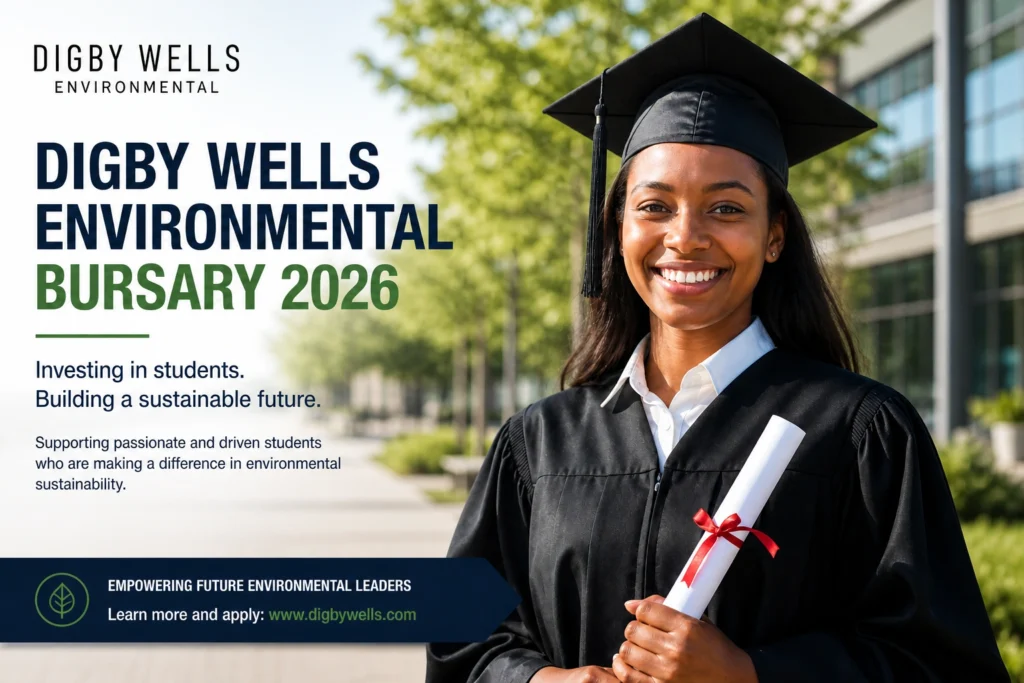

For many South African students, choosing a career in environmental science or sustainability comes with a difficult reality: passion alone is not enough to cover the cost of studying. That’s where the Digby Wells Environmental Bursary 2026 steps in.
This bursary is more than just financial aid—it’s a structured opportunity designed to help students enter careers that directly impact water security, environmental protection, and sustainable development. If you’re interested in fields like GIS, ecology, hydrology, or social impact, this programme could be a meaningful stepping stone toward a long-term career.
In this guide, you’ll learn exactly what the bursary offers, who qualifies, how to apply, and how to stand out as an applicant.
What You Should Know First
The Digby Wells Environmental Bursary 2026 is aimed at South African students pursuing environmental-related qualifications. Its main goal is to support students financially while also exposing them to real-world sustainability work.
Here’s the key idea:
This bursary doesn’t just fund your studies—it aligns your education with industry-relevant skills and potential career pathways.
Students supported by this programme are often guided toward careers that address real challenges like water scarcity, environmental compliance, and responsible mining practices.
APPLY HERE: Digby Wells Environmental Bursary 2026
Understanding the Purpose of the Bursary
Why this bursary exists
South Africa faces growing environmental challenges—water shortages, land degradation, and the need for sustainable infrastructure. Companies operating in environmental consulting and sustainability sectors require skilled professionals who understand both science and community impact.
The Digby Wells bursary is designed to:
- Build a pipeline of skilled environmental professionals
- Support transformation and access to education
- Align academic training with industry needs
What makes it different?
Unlike many bursaries that only cover tuition, this programme often includes:
- Financial support for studies
- Exposure to practical work environments
- Mentorship from professionals in the field
This combination gives students a clearer transition from university into employment.
Fields of Study Covered
The Digby Wells Environmental Bursary 2026 targets qualifications that are directly linked to sustainability and environmental management.
Core fields include:
- Environmental Science
- Hydrology and Water Resource Management
- Geographic Information Systems (GIS)
- Ecology and Biodiversity
- Environmental Engineering
- Social and Environmental Impact Studies
Example:
A student studying GIS might learn how to map water resources or track environmental changes using satellite data. With bursary support, they could also gain exposure to real projects, such as monitoring pollution or planning sustainable land use.
Who Should Apply?
Basic eligibility
While exact criteria may vary slightly, typical requirements include:
- South African citizenship
- Acceptance or enrollment at a recognised university
- Studying an environmental-related qualification
- Demonstrated academic potential
- Financial need
Ideal candidate profile
The strongest applicants usually show:
- A clear interest in sustainability issues
- Willingness to work in environmental sectors
- Problem-solving mindset
- Commitment to making a social or environmental impact
What the Bursary May Cover
Although benefits can differ year to year, the Digby Wells Environmental Bursary 2026 generally aims to reduce the financial burden of studying.
Possible coverage:
- Tuition fees
- Study materials (textbooks, software, etc.)
- Accommodation or living allowance (in some cases)
Beyond money
This is where the bursary stands out:
- Mentorship: Guidance from experienced professionals
- Industry exposure: Insight into real environmental projects
- Career alignment: Better chances of entering the sustainability sector
Step-by-Step: How the Application Process Works
Applying for a bursary can feel overwhelming, but breaking it down makes it manageable.
Step 1: Prepare your documents
You’ll typically need:
- Certified ID copy
- Academic transcripts or latest results
- Proof of university acceptance
- Motivational letter
- CV (if required)
APPLY HERE: Digby Wells Environmental Bursary 2026
Step 2: Write a strong motivation letter
This is your chance to stand out.
What to include:
- Why you chose your field
- Your interest in environmental issues
- Your long-term career goals
- How the bursary will help you succeed
Example:
Instead of saying “I need financial support,” explain how you plan to contribute to water sustainability or environmental protection.
Step 3: Submit your application on time
Late applications are usually not considered. Always double-check deadlines and required documents.
Step 4: Prepare for possible follow-ups
Shortlisted candidates may be contacted for:
- Interviews
- Additional documentation
- Further assessments
ALSO APPLY FOR: Dorothy Cameron Bursary 2026
How to Stand Out as an Applicant
Competition for bursaries is high, so small details matter.
1. Show real interest in sustainability
Mention:
- Projects you’ve worked on
- Environmental topics you care about
- Volunteer work (if any)
2. Connect your studies to real-world impact
Explain how your qualification will solve actual problems.
Example:
If studying hydrology, talk about addressing water shortages in rural areas.
3. Keep your application clear and structured
Avoid:
- Long, unfocused paragraphs
- Generic statements
- Copy-paste answers
Why This Opportunity Matters
Environmental careers are no longer niche—they are essential.
Real-world impact:
- South Africa is a water-scarce country
- Climate change affects agriculture and infrastructure
- Sustainable development is a national priority
By supporting students in these fields, the Digby Wells Environmental Bursary 2026 contributes to:
- Job creation in green sectors
- Improved environmental management
- Long-term economic sustainability
Common Misunderstandings About Digby Wells Environmental Bursary 2026
“It’s only for top students with perfect marks”
Not necessarily. While academic performance matters, many bursaries also consider:
- Potential
- Motivation
- Financial need
“It only covers tuition”
This bursary may include additional support such as mentorship and industry exposure, which can be just as valuable.
“Environmental careers don’t pay well”
This is outdated. Fields like environmental consulting, GIS, and water management are growing and increasingly important.
“You need prior experience to apply”
Most bursaries are designed for students, so prior work experience is usually not required.

Practical Example: How This Bursary Can Shape a Career
Imagine a student named Thabo:
- He studies Environmental Science
- Receives the Digby Wells bursary
- Gets mentorship and exposure to real projects
After graduating:
- He enters environmental consulting
- Works on water management projects
- Builds a career solving real environmental problems
Without funding, Thabo might not have completed his studies. With the bursary, he gains both education and direction.
Key Takeaways
- The Digby Wells Environmental Bursary 2026 supports students in sustainability-related fields
- It combines financial assistance with career-focused development
- Ideal candidates show both academic potential and a passion for environmental impact
- A strong application includes a clear motivation and real-world connection
- This bursary can open doors to meaningful careers in environmental sectors
Frequently Asked Questions (FAQs)
1. Who can apply for the Digby Wells Environmental Bursary 2026?
South African students studying or planning to study environmental-related courses at recognised institutions can apply, provided they meet academic and financial criteria.
2. Does the bursary guarantee a job after graduation?
Not necessarily, but it can improve your chances by providing industry exposure and relevant skills.
3. Can first-year students apply?
Yes, many bursaries accept first-year students, especially if they have strong academic results and clear career goals.
4. What makes a strong application?
A clear motivation, good academic performance, and a demonstrated interest in sustainability or environmental work.
Final Thoughts
The Digby Wells Environmental Bursary 2026 is not just about funding—it’s about building a future. For students who want to work on real environmental challenges, this opportunity offers both financial support and a pathway into meaningful careers.
If you are serious about sustainability, this bursary could be one of the most practical steps you take toward turning your studies into real-world impact.
ALSO APPLY FOR: Dorothy Cameron Bursary 2026
APPLY HERE: Digby Wells Environmental Bursary 2026