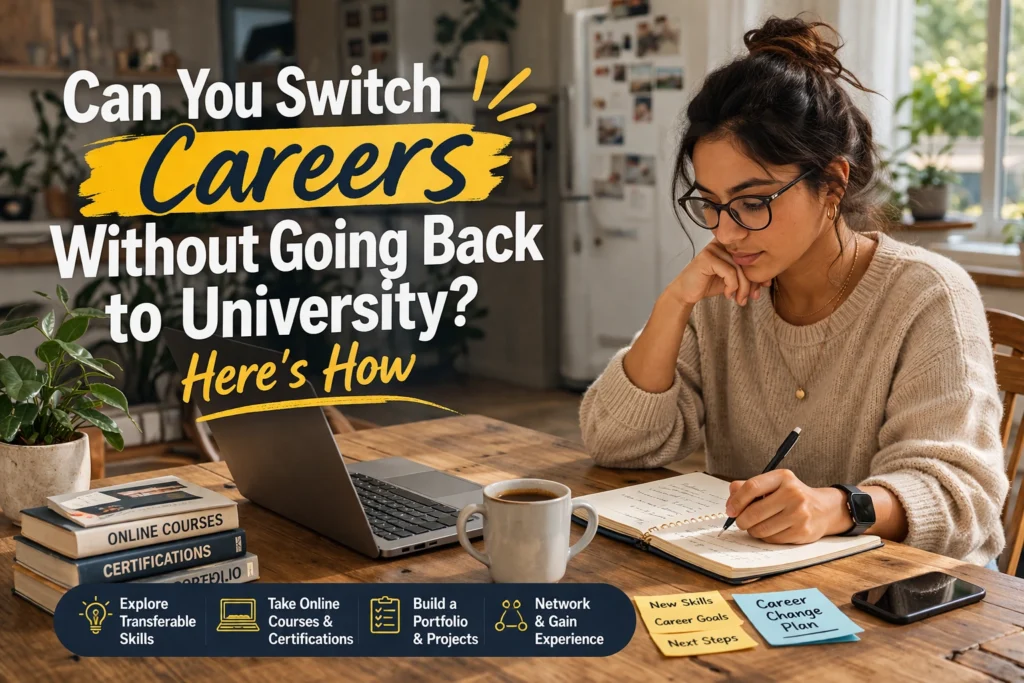

You wake up, go to work, and repeat the same routine every day—but something feels off. Maybe your job no longer excites you. Maybe it never did. Or maybe the industry you’re in is shrinking, unstable, or simply not aligned with your long-term goals.
Then comes the big question: Can you switch careers without going back to university?
For many people, the idea of returning to full-time study feels impossible. Tuition is expensive. Time is limited. Responsibilities—family, rent, or debt—don’t pause just because you want a new direction.
The good news? You can change careers without going back to university. In fact, thousands of people are doing it every year by leveraging practical skills, online learning, and real-world experience instead of traditional degrees.
This guide breaks down exactly how to do it—step by step—so you can make a realistic, confident transition.
ALSO APPLY FOR: RCL Foods WIL Internship 2026
ALSO APPLY FOR: SETA-Accredited Logistics Learnership 2026
Understanding Career Switching Without University
Before diving into strategies, it’s important to understand what this path really looks like.
Switching careers without university doesn’t mean skipping learning altogether. It means choosing alternative, faster, and often more affordable ways to gain relevant skills.
Instead of a 3–4 year degree, people today use:
- Short online courses and certifications
- Bootcamps (especially for tech and digital roles)
- Self-directed learning (YouTube, blogs, projects)
- Internships, freelancing, or volunteering
- On-the-job skill transfer
Employers are increasingly hiring based on skills and proof of ability, not just degrees—especially in fields like:
- Digital marketing
- IT support and cybersecurity
- UX/UI design
- Data analysis
- Sales and customer success
- Project management
- Skilled trades
The shift is clear: what you can do matters more than where you studied.
Why This Issue Matters
Changing careers without going back to university isn’t just a personal decision—it’s a growing global trend with real-world impact.
1. Rising Cost of Education
University fees continue to increase, making degrees inaccessible for many. Avoiding this route can prevent long-term debt.
2. Fast-Changing Job Market
Industries evolve quickly. By the time a degree is completed, some skills may already be outdated. Shorter learning paths allow faster adaptation.
3. Economic Pressure
Many people can’t afford to stop working to study full-time. Career switching without university allows you to earn while you transition.
4. Mental Health and Job Satisfaction
Being stuck in an unfulfilling job affects motivation, productivity, and well-being. A career switch can significantly improve quality of life.
5. Accessibility and Opportunity
Not everyone had the chance to attend university. Alternative pathways create more inclusive access to better careers.
Step-by-Step: How to Switch Careers Without Going Back to University
Step 1: Identify Your Target Career
Start with clarity. Ask yourself:
- What kind of work do I actually want to do?
- What industries are growing?
- What roles align with my strengths?
Don’t just chase trends—focus on fit and sustainability.
Tip: Research job descriptions on platforms like LinkedIn or Indeed to understand required skills.
Step 2: Audit Your Transferable Skills
You likely already have skills that apply to other careers.
Examples:
- Communication → sales, marketing, HR
- Problem-solving → IT, operations, logistics
- Organization → project management, admin roles
- Customer service → client success, retail management
Write down everything you’ve done in past jobs—even small tasks. You’ll be surprised how much is transferable.
Step 3: Close the Skill Gap (Without University)
Once you know your target role, identify what you’re missing.
Then build those skills using:
- Online courses (Coursera, Udemy, Google certificates)
- Free resources (YouTube tutorials, blogs)
- Bootcamps (especially for tech or design)
- Practice projects
Example:
If you want to move into digital marketing:
- Learn SEO basics
- Practice running small ad campaigns
- Create social media content
The goal is practical ability, not just theory.
Step 4: Build a Portfolio or Proof of Work
Employers want to see what you can do.
Depending on your field, this could include:
- A website or portfolio
- Case studies
- Freelance projects
- Personal projects (e.g., a blog, app, or design samples)
Even unpaid or self-initiated work counts—what matters is demonstrating skill.
ALSO READ ABOUT: Things to Secure After Internship Completion
Step 5: Gain Real-World Experience
Experience doesn’t have to come from a full-time job immediately.
Start with:
- Freelancing
- Internships
- Volunteering
- Side projects
- Contract work
This step is crucial—it bridges the gap between learning and employment.
Step 6: Network Strategically
Many career opportunities come through connections.
You can:
- Connect with professionals on LinkedIn
- Join industry groups or forums
- Attend webinars or local events
- Ask for informational interviews
Don’t just ask for jobs—ask for advice. People are more willing to help than you think.
Step 7: Reposition Your CV and Personal Brand
Your CV should reflect your new direction, not just your past.
Focus on:
- Transferable skills
- Relevant projects
- Certifications and courses
- Achievements, not just duties
Also update your LinkedIn profile to match your new career goals.
Step 8: Apply Smartly (Not Widely)
Instead of applying to hundreds of jobs, focus on:
- Entry-level or junior roles
- Roles that value skills over degrees
- Companies known for hiring non-traditional candidates
Tailor each application to match the job description.
Best Practices Experts Recommend
1. Start Before You Quit
Don’t leave your job too early. Build skills and experience while still earning income.
2. Focus on Skills That Pay
Choose skills that are in demand—tech, digital, and business-related skills often offer faster returns.
3. Learn by Doing
Passive learning isn’t enough. Apply what you learn immediately through projects.
4. Be Consistent, Not Perfect
Small daily progress is more effective than occasional bursts of effort.
5. Leverage Online Presence
Recruiters often search online. A strong LinkedIn profile or portfolio can open doors.
6. Stay Adaptable
Your first role in a new field may not be your dream job—but it’s a stepping stone.
Mistakes People Often Make
1. Waiting for the “Perfect Time”
There’s rarely a perfect moment. Delaying action only prolongs dissatisfaction.
2. Trying to Learn Everything at Once
Focus on the core skills needed for entry-level roles, not mastery.
3. Ignoring Transferable Skills
Many people underestimate what they already know, which slows their transition.
4. Not Building Proof of Work
Certificates alone are rarely enough. Employers want to see results.
5. Applying Without Preparation
Sending out CVs without tailoring them or building relevant skills leads to rejection.
6. Giving Up Too Early
Career switching takes time—often 3 to 12 months. Persistence is key.
Can You Switch Careers Without Going Back to University? Here’s How (Key Insight)
The answer is yes—but it requires strategy, effort, and consistency.
You’re not replacing university with nothing—you’re replacing it with:
- Targeted learning
- Real-world experience
- Demonstrated skills
This approach is often faster, cheaper, and more aligned with today’s job market.
Frequently Asked Questions (FAQ)
1. Is it really possible to get hired without a degree?
Yes. Many employers now prioritize skills and experience over formal education, especially in tech, marketing, and creative industries.
2. How long does it take to switch careers?
It depends on the field and your effort level. Most people can transition within 3 to 12 months with consistent learning and practice.
3. What are the easiest careers to switch into?
Some accessible fields include:
Digital marketing
IT support
Sales
Customer success
Administrative roles
Data entry and junior data analysis
These often require shorter training periods.
4. What if I have no experience at all?
Start small:
Build personal projects
Volunteer
Freelance at beginner rates
Experience grows quickly once you take action.
Practical Advice You Can Start Using Today
Switching careers without going back to university is not only possible—it’s becoming the smarter path for many people.
The key is to replace traditional education with intentional action:
- Choose a clear career direction
- Learn only what’s necessary
- Practice through real projects
- Build visible proof of your skills
- Gain experience in any way possible
- Position yourself strategically in the job market
Don’t wait for permission or perfect conditions. The longer you delay, the longer you stay stuck in a role that doesn’t serve you.
Start small today—one course, one project, one connection. Over time, those steps turn into a completely new career path.
ALSO APPLY FOR: RCL Foods WIL Internship 2026
ALSO APPLY FOR: SETA-Accredited Logistics Learnership 2026
ALSO READ ABOUT: Things to Secure After Internship Completion