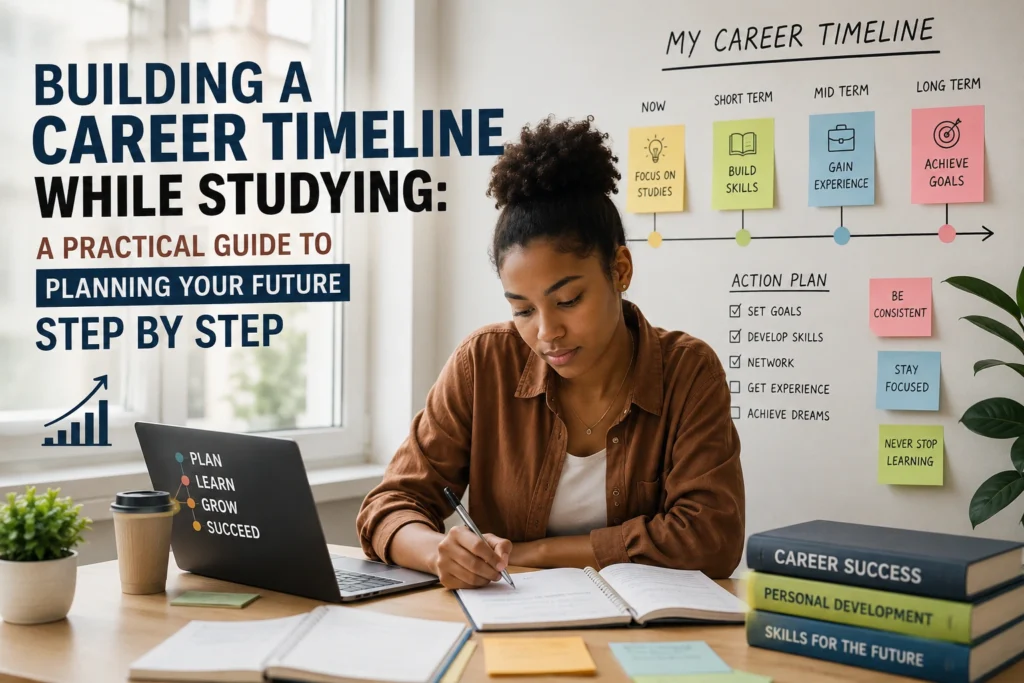

Many students believe they can wait until graduation before thinking seriously about their careers. The reality is often very different. By the time they start applying for jobs, they discover employers expect more than good grades. Companies increasingly look for candidates who have built practical experience, developed transferable skills, and demonstrated consistent personal growth throughout their studies.
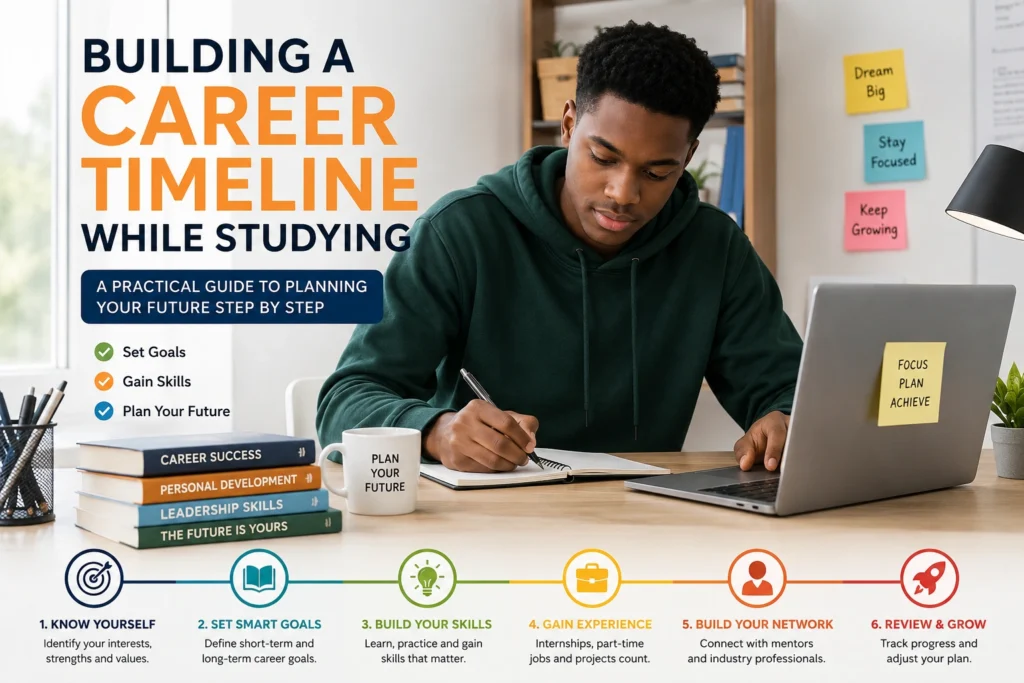
This is where Building a Career Timeline While Studying becomes valuable. Instead of making career decisions at the last minute, a career timeline helps you organize your goals over several months or years. It allows you to identify when to gain experience, improve your skills, network with professionals, and prepare strong job applications before graduation arrives.
Whether you are studying at university, a TVET college, or completing another qualification, creating a structured career timeline can reduce stress and improve your chances of finding meaningful employment after finishing your studies.
What Is Building a Career Timeline While Studying?
Building a Career Timeline While Studying means creating a realistic roadmap that connects your education with future career goals. Rather than focusing only on passing exams, you deliberately plan activities that improve your employability throughout your studies.
A career timeline typically includes:
- Academic milestones
- Skills you want to develop
- Volunteer work
- Internships
- Learnerships
- Networking opportunities
- Certifications
- CV updates
- Job application preparation
Think of it as a long-term project where each semester or year has specific career-building goals.
Instead of feeling overwhelmed in your final year, you’ll already have valuable experience and a clearer direction.
ALSO APPLY FOR: ASSET Bursary 2027
ALSO APPLY FOR: SACBW Foundation Bursary 2027
Why This Issue Matters
Many graduates struggle to find employment not because they lack qualifications but because they lack practical evidence of their abilities.
Employers often compare candidates with similar academic results. The difference usually comes down to experience, leadership, communication skills, digital knowledge, and demonstrated initiative.
Students who plan ahead often enjoy several advantages:
- Better internship opportunities
- Stronger CVs
- Larger professional networks
- Greater confidence during interviews
- More informed career decisions
- Less pressure during final-year job hunting
A career timeline also helps you avoid wasting valuable study years by missing opportunities that only become available to current students, such as internships, graduate programmes, campus leadership roles, bursaries, research projects, or student ambassador positions.
Building a Career Timeline While Studying: Step-by-Step Guide
Step 1: Define Your Long-Term Career Goal
Start by asking yourself where you would like to be within five years.
You don’t need every detail figured out, but having a direction helps guide your decisions.
For example:
- Accountant
- Mechanical engineer
- Teacher
- Marketing specialist
- Software developer
- Healthcare professional
- Entrepreneur
Your goal may change over time, but having an initial destination makes planning easier.
Step 2: Research Industry Expectations
Once you’ve identified a possible career, research what employers typically expect.
Look beyond academic requirements.
Find out:
- Required technical skills
- Preferred software knowledge
- Industry certifications
- Internship expectations
- Communication skills
- Professional memberships
- Portfolio requirements
Understanding employer expectations early helps you prioritize the right experiences while still studying.
Step 3: Break Your Studies Into Milestones
Instead of viewing your qualification as one long journey, divide it into manageable stages.
First Year
Focus on:
- Adjusting to academic life
- Learning effective study habits
- Joining student societies
- Improving digital literacy
- Exploring career options
Second Year
Begin adding experience:
- Volunteer work
- Short courses
- Networking events
- Campus leadership
- Job shadowing
Third Year
Increase professional preparation:
- Internship applications
- Portfolio development
- CV improvements
- LinkedIn profile updates
- Career fairs
Final Year
Prepare for employment:
- Graduate programme applications
- Interview preparation
- Professional references
- Final CV review
- Active job searching
Each stage builds naturally on the previous one.
Step 4: Develop Transferable Skills
Many students underestimate how important transferable skills have become.
Employers consistently value abilities such as:
- Communication
- Problem-solving
- Teamwork
- Leadership
- Adaptability
- Time management
- Critical thinking
- Customer service
These skills can be developed through student organisations, volunteer work, part-time jobs, sports teams, or community projects.
Step 5: Build Practical Experience Every Year
Experience does not always mean paid employment.
You can gain valuable experience through:
- Volunteering
- Student leadership
- Freelancing
- Community projects
- Academic research
- Tutoring
- Competitions
- Hackathons
- Campus events
Every experience adds evidence that you can work with others and solve real problems.
Step 6: Keep Updating Your CV
Many students only create a CV after graduating.
Instead, update it every semester.
Add:
- New skills
- Volunteer work
- Courses
- Awards
- Projects
- Leadership roles
- Academic achievements
Regular updates ensure you don’t forget important accomplishments.
Step 7: Build Your Professional Network
Networking often sounds intimidating, but it simply means building genuine professional relationships.
Start by:
- Attending career fairs
- Speaking with lecturers
- Connecting with alumni
- Following industry professionals online
- Joining professional associations
- Participating in webinars
These connections can later provide mentorship, referrals, or job opportunities.
Step 8: Learn Digital Skills
Nearly every profession now requires digital competence.
Useful skills include:
- Microsoft Excel
- Microsoft Word
- PowerPoint
- Google Workspace
- Data analysis
- Project management software
- Basic AI tools
- Digital communication platforms
Even non-technical careers increasingly expect digital confidence.
Step 9: Reflect and Adjust
A career timeline is not fixed forever.
Review it every six months.
Ask yourself:
- Have my career goals changed?
- What new opportunities have appeared?
- Which skills am I missing?
- What should I prioritise next?
Regular reflection keeps your plan realistic and relevant.
ALSO READ ABOUT: Jobs Driving Growth in KwaZulu-Natal
Sample Career Timeline
A simple example could look like this:
Year 1
- Adjust to studies
- Join one student organisation
- Create LinkedIn profile
- Attend one career event
Year 2
- Volunteer
- Complete two online certificates
- Improve Excel skills
- Update CV
Year 3
- Apply for internships
- Build portfolio
- Attend networking events
- Practice interviews
Final Year
- Apply for graduate programmes
- Request references
- Finalise CV
- Begin active job applications
This structured approach prevents leaving everything until graduation.
Best Practices Experts Recommend
Career advisers and recruitment professionals often encourage students to start preparing earlier than they think necessary.
Some of the most effective practices include:
Start before you feel ready. Waiting until you feel completely prepared often means missing valuable opportunities.
Focus on consistency rather than perfection. Small actions completed regularly produce stronger results than occasional bursts of activity.
Document every achievement. Keep certificates, project summaries, volunteer records, and references organised in one place.
Seek feedback regularly. Lecturers, mentors, supervisors, and career advisers can identify strengths and areas for improvement.
Remain flexible. Career interests often evolve as you gain experience. A timeline should guide you rather than restrict you.
Prioritise quality experiences. A few meaningful activities that develop genuine skills are usually more valuable than collecting numerous unrelated certificates.
Mistakes People Often Make
Many students unintentionally reduce their career opportunities through avoidable mistakes.
Waiting Until Final Year
Career preparation should begin early, not only when graduation approaches.
Focusing Only on Grades
Academic performance matters, but employers also value practical experience and interpersonal skills.
Ignoring Networking
Many opportunities arise through professional relationships rather than online applications alone.
Applying Everywhere Without a Plan
Random applications often produce poor results.
Target positions aligned with your long-term goals.
Never Updating Your CV
Leaving your CV untouched for years means forgetting valuable experiences.
Underestimating Volunteer Work
Volunteer experience often demonstrates initiative, responsibility, and teamwork.
Avoiding Career Services
Many educational institutions offer free career guidance, CV reviews, workshops, and employer events that students never use.
How to Stay Motivated
Long-term planning can feel overwhelming, especially while balancing assignments and exams.
Try these strategies:
- Set one career goal each month.
- Celebrate small achievements.
- Keep a simple progress checklist.
- Review your timeline every semester.
- Learn from setbacks rather than abandoning your plan.
- Stay curious about your industry.
Career development is a gradual process rather than one major event.
Frequently Asked Questions
1. When should I start Building a Career Timeline While Studying?
Ideally, during your first year of study. Starting early gives you more time to gain experience, develop skills, and make informed career decisions before graduation.
2. What if I don’t know what career I want?
That’s completely normal. Begin by exploring different industries, attending career events, speaking with professionals, and trying volunteer or internship opportunities. Your timeline can change as your interests become clearer.
3. Do part-time jobs count as career experience?
Yes. Part-time work often helps develop communication, teamwork, customer service, time management, and problem-solving skills that employers value across many industries.
4. How often should I update my career timeline?
Review it at least every six months or whenever your goals, interests, or academic plans change. Regular updates keep your timeline practical and relevant.
Final Thoughts
Building a Career Timeline While Studying is one of the most practical ways to prepare for life after graduation. Instead of waiting until your final semester to think about employment, you gradually build the skills, experience, confidence, and professional relationships employers are looking for.
The process does not require perfection or expensive training. Small, consistent actions—such as volunteering, learning digital skills, attending networking events, updating your CV, and gaining practical experience—can make a significant difference over time.
Start with a simple plan that matches your current stage of study, review it regularly, and adjust it as your goals evolve. By graduation, you’ll have far more than a qualification—you’ll have a strong foundation for launching your career with confidence.
ALSO APPLY FOR: ASSET Bursary 2027
ALSO APPLY FOR: SACBW Foundation Bursary 2027
ALSO READ ABOUT: Jobs Driving Growth in KwaZulu-Natal