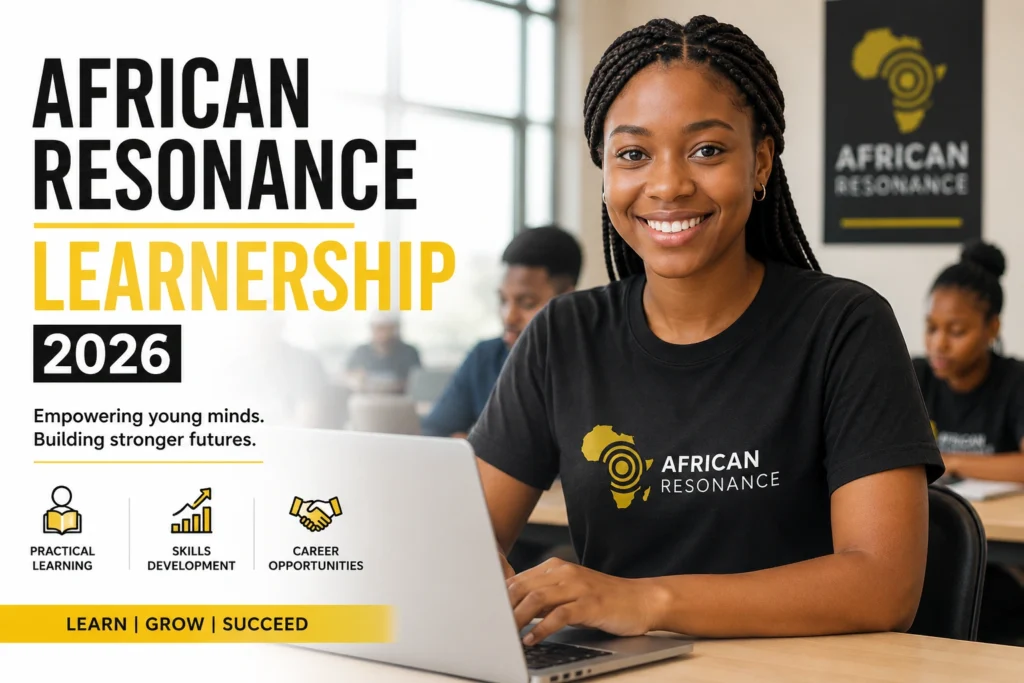

Breaking into the technology industry can feel overwhelming, especially for young South Africans who have recently completed Matric but have little or no work experience. Many entry-level IT positions require experience that first-time job seekers simply do not have, creating a frustrating cycle where gaining experience seems impossible without already having it.
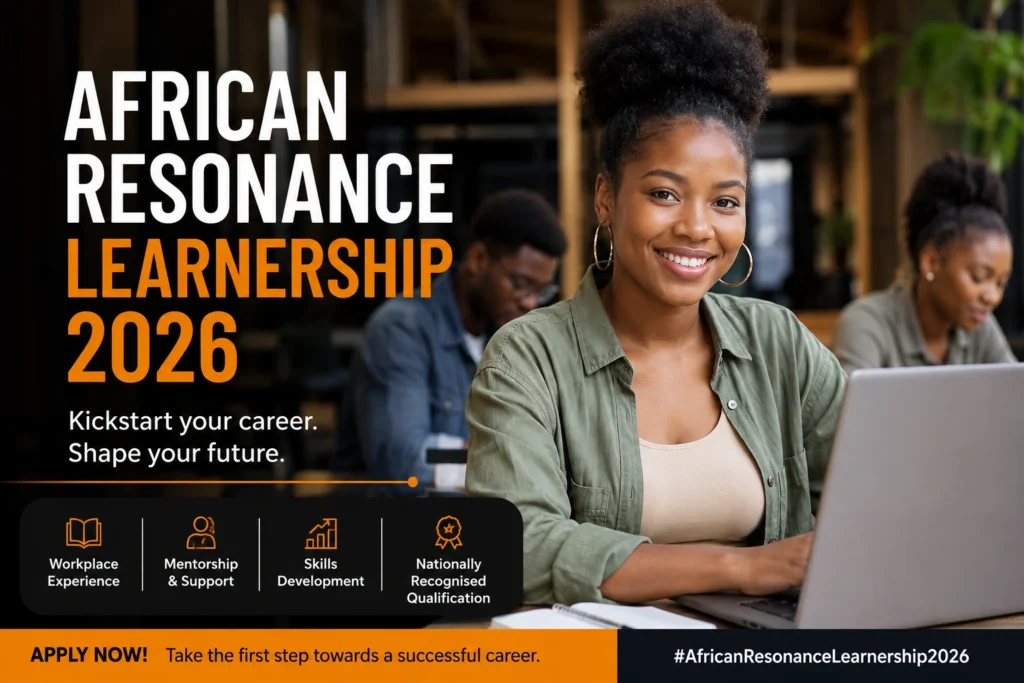
The African Resonance Learnership 2026 offers a practical solution to this challenge. Instead of expecting candidates to arrive with years of industry knowledge, the programme is designed to help unemployed South Africans develop valuable software testing skills while gaining real workplace experience in the growing fintech sector. Participants also receive financial support through a monthly stipend, transport assistance, and daily meals, making the opportunity more accessible.
If you have an interest in technology, enjoy solving problems, and pay close attention to detail, this learnership could be the stepping stone that launches your IT career.
What Is the African Resonance Learnership 2026?
The African Resonance Learnership 2026 is a structured Software Testing Learnership aimed at unemployed South Africans who want to begin careers in information technology without previous employment experience.
Unlike traditional classroom courses, the programme combines formal learning with practical workplace exposure. Learners work toward a nationally recognised learnership qualification while gaining hands-on experience in a professional fintech environment.
This combination allows participants to understand both the theory and the practical application of software quality assurance, testing processes, and digital payment technologies.
Applications close on 30 June 2026, making early preparation essential.
Why This Issue Matters
South Africa continues to face high youth unemployment, while the technology industry continues to expand rapidly. Companies increasingly rely on software developers, testers, analysts, and cybersecurity professionals to support digital services.
Software testing is one of the most accessible entry points into the IT industry because it develops skills that are useful across many technology careers.
As businesses increasingly depend on digital banking, online shopping, mobile payments, and cloud-based platforms, software quality has become more important than ever. Even small software defects can disrupt financial transactions, compromise customer confidence, or create expensive operational problems.
By participating in the African Resonance Learnership 2026, learners gain practical skills that employers actively value while building experience that can strengthen future job applications.
Who Is African Resonance?
African Resonance is a South African fintech company specialising in payment technologies and financial technology solutions.
Its systems support financial institutions, payment providers, retailers, merchants, and businesses that process digital payments every day.
Because the fintech industry operates in highly regulated environments where reliability is essential, software quality assurance plays a critical role. This makes software testing an excellent career path for individuals who enjoy logical thinking and working with technology.
Why Software Testing Is an Excellent Career Choice
Many people assume software testing simply involves clicking through applications looking for mistakes.
In reality, professional software testers perform an essential role throughout software development. Their responsibilities include identifying bugs, verifying system functionality, documenting problems, validating fixes, and ensuring software performs as expected before customers use it.
Software testers often work alongside developers, business analysts, project managers, and quality assurance specialists.
Experience in software testing can also open doors to careers such as:
- Quality Assurance Analyst
- Test Automation Engineer
- Business Analyst
- Systems Analyst
- Software Developer
- Product Support Specialist
- IT Project Coordinator
For many professionals, software testing becomes the foundation for a long-term technology career.
What Learners Can Expect During the Programme
The African Resonance Learnership 2026 combines structured learning with practical workplace experience.
Participants may receive training in areas including:
- Software testing fundamentals
- Quality assurance principles
- Manual testing techniques
- Test planning
- Test case design
- Defect identification
- Defect logging and reporting
- Software Development Life Cycle (SDLC)
- Agile software development
- Test documentation
- Basic automation testing concepts
- Test management platforms such as Jira and TestRail
- Workplace communication
- Professional ethics
- Team collaboration
- Business readiness skills
These practical skills are directly applicable in modern software development environments.
Benefits of the African Resonance Learnership 2026
One reason this opportunity stands out is the support it offers throughout the learning period.
Successful learners can expect:
- A nationally recognised learnership qualification
- Monthly stipend
- Transport allowance
- Free daily meals
- Workplace experience
- Professional mentorship
- Coaching from experienced industry professionals
- Exposure to software testing tools
- Fintech industry experience
- Personal and professional development opportunities
These benefits allow learners to focus on developing their skills while reducing some of the financial barriers often associated with training programmes.
Who Can Apply?
Applicants should satisfy the minimum eligibility requirements before submitting an application.
Requirements include:
- Grade 12 (Matric)
- Mathematics passed
- Physical Science passed
- Computer literacy
- Currently unemployed
- Available for the full learnership period
- Good attention to detail
- Analytical thinking ability
- Positive attitude
- Ability to work independently
- Ability to work within a team
Importantly, previous work experience is not required, making this programme suitable for recent Matric graduates and aspiring IT professionals.
Qualifications That May Strengthen Your Application
Although not compulsory, additional studies can improve your competitiveness.
Helpful qualifications include:
- Computer Applications Technology (CAT)
- Information Technology
- Computer Science
- Software Development
- Software Testing
- Other IT-related certificates or qualifications
Applicants who have completed online technology courses or participated in coding projects should also mention these achievements in their CV.
ALSO VISIT: https://africanresonance.com
African Resonance Learnership 2026: Step-by-Step Application Guide
Submitting a strong application requires more than simply attaching your CV.
Step 1: Update Your CV
Highlight:
- Mathematics and Physical Science results
- Computer skills
- School IT subjects
- Technology projects
- Online certifications
- Leadership activities
- Problem-solving achievements
Even informal technology experience can demonstrate genuine interest.
Step 2: Prepare a Professional Motivation Letter
Your motivation letter should explain:
- Why software testing interests you
- Why you want to join the fintech industry
- Your willingness to learn
- Your attention to detail
- Your commitment to completing the programme
Keep the letter concise and professional.
Step 3: Gather Supporting Documents
Prepare:
- Updated CV
- Motivation letter
- Certified ID copy
- Certified Matric certificate
- Copies of any relevant IT qualifications
Ensure scanned documents are clear and readable.
Step 4: Submit Your Application
Email your application to:
Suggested subject line:
Software Testing Learnership Application 2026
Avoid submitting incomplete applications or waiting until the final day before the deadline.
ALSO APPLY FOR: Valterra Platinum Learnership 2026
Best Practices Experts Recommend
Applicants often focus only on meeting the minimum requirements, but small improvements can significantly strengthen an application.
Career professionals generally recommend:
- Tailor your CV specifically for technology roles.
- Use a professional email address.
- Carefully proofread every document.
- Include all requested supporting documents.
- Highlight analytical thinking and attention to detail.
- Mention any technology-related school assignments.
- Demonstrate enthusiasm for learning.
- Submit your application well before the closing date.
- Double-check your contact details.
- Save documents using professional file names.
These small details demonstrate professionalism and the attention to detail expected from software testers.
Mistakes People Often Make
Many promising candidates reduce their chances by making avoidable mistakes.
Common errors include:
- Sending incomplete applications.
- Forgetting certified documents where required.
- Using poorly formatted CVs.
- Writing generic motivation letters copied from the internet.
- Ignoring spelling and grammar errors.
- Waiting until the final application day.
- Using unprofessional email addresses.
- Leaving out computer-related experience because they believe it is insignificant.
Remember that software testing requires precision. A well-prepared application reflects the qualities employers are looking for.
Skills You Will Develop
Beyond technical knowledge, learners build valuable workplace skills that remain useful throughout their careers.
These include:
Technical Skills
- Software testing
- Defect reporting
- Quality assurance
- Test documentation
- Software development processes
- Testing tools
Professional Skills
- Communication
- Time management
- Teamwork
- Critical thinking
- Analytical reasoning
- Professional conduct
- Attention to detail
- Problem-solving
These transferable skills remain valuable across numerous industries, not only fintech.
Frequently Asked Questions
1. Do I need previous work experience?
No. The African Resonance Learnership 2026 is specifically designed for unemployed South Africans who may not have previous workplace experience.
2. Will learners receive financial support?
Yes. Successful candidates receive a monthly stipend together with transport support and free daily meals during the programme.
3. Is the qualification nationally recognised?
Yes. Learners work toward a nationally recognised learnership qualification while gaining workplace experience.
4. When is the application closing date?
Applications close on 30 June 2026. Early submission is strongly recommended to avoid missing the deadline.
Final Thoughts
The African Resonance Learnership 2026 provides far more than temporary training. It offers unemployed South Africans an opportunity to gain recognised qualifications, practical workplace experience, professional mentorship, and exposure to one of the country’s fastest-growing industries.
For candidates interested in technology but unsure how to enter the sector, software testing provides a practical and accessible starting point. The combination of structured learning, real-world experience, and financial support makes this programme particularly attractive for recent Matric graduates and aspiring IT professionals.
If you meet the eligibility requirements, begin preparing your application immediately. Update your CV, write a personalised motivation letter, organise your supporting documents, and submit everything well before the 30 June 2026 deadline. A thoughtful, accurate, and complete application could become the first step toward building a successful career in software testing and the wider technology