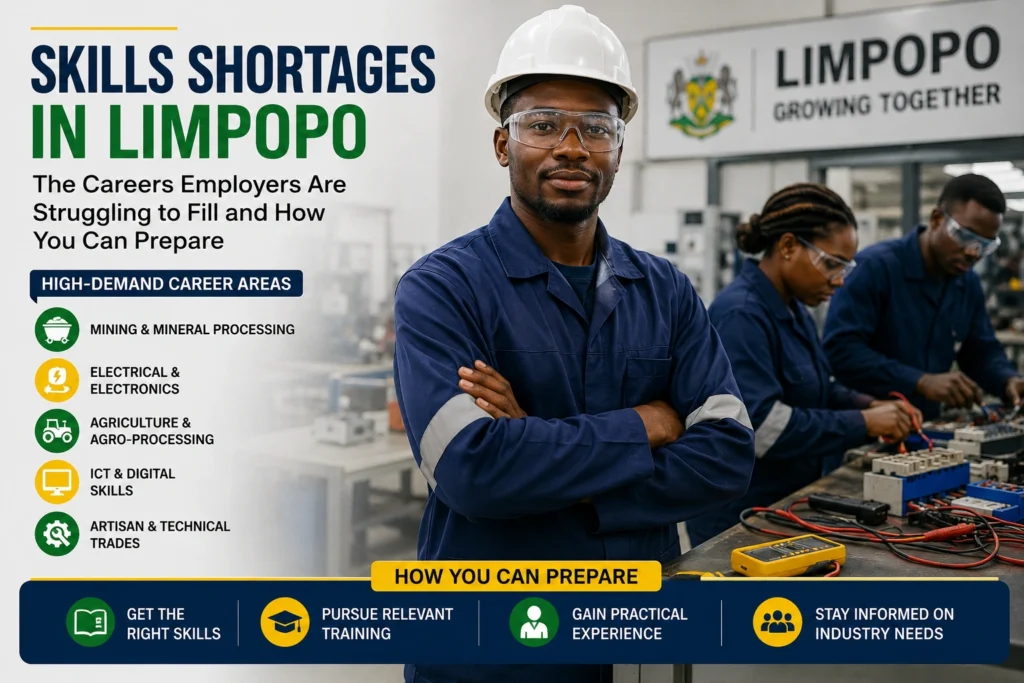

Limpopo is home to growing industries such as mining, agriculture, healthcare, logistics, education, tourism, and public infrastructure. Yet despite high unemployment, many employers across the province continue to report difficulty finding workers with the right qualifications, technical skills, and practical experience. This creates a frustrating situation where thousands of people are searching for jobs while businesses struggle to recruit suitable candidates.
Understanding Skills Shortages in Limpopo can help job seekers, students, graduates, and career changers make better decisions about education, training, and future employment. Rather than pursuing qualifications with limited demand, people who understand where the labour market is heading can develop skills that employers genuinely need.
This practical guide explains what skills shortages are, why they exist in Limpopo, which sectors are most affected, and the practical steps anyone can take to improve their chances of finding sustainable employment.
Understanding Skills Shortages in Limpopo
A skills shortage happens when employers have vacancies but cannot find enough qualified or experienced people to fill them. This does not necessarily mean there are no job seekers. Instead, it usually means there is a mismatch between available skills and industry needs.
In Limpopo, several factors contribute to this challenge:
- Rapid technological change
- Shortages of specialised technical qualifications
- Limited workplace experience among graduates
- Rural access to training opportunities
- Migration of skilled professionals to larger provinces
- Growing demand in sectors like healthcare, mining, engineering, and information technology
While some industries can train entry-level workers internally, many specialised positions require years of education, practical training, and professional registration.
ALSO APPLY FOR: FEM Internship 2026
ALSO APPLY FOR: BHSc Internship 2026
Why This Issue Matters
Understanding Skills Shortages in Limpopo benefits more than individual job seekers.
For workers, it helps them invest their time and money in qualifications that offer stronger employment prospects.
For employers, reducing shortages improves productivity, service delivery, and business growth.
For communities, having enough teachers, healthcare professionals, engineers, artisans, and technicians leads to better public services, stronger local economies, and improved quality of life.
For young people leaving school, knowledge of labour market demand helps them avoid studying in fields with limited employment opportunities while considering careers that continue to experience strong demand.
The province’s long-term economic development depends on developing skilled professionals who can support industries that drive employment and investment.
Industries Experiencing Skills Shortages in Limpopo
Healthcare
Healthcare remains one of the largest sectors experiencing shortages.
Demand continues for:
- Professional nurses
- Medical laboratory professionals
- Pharmacists
- Radiographers
- Physiotherapists
- Occupational therapists
- Emergency medical personnel
- Medical specialists
Growing populations and expanding healthcare services mean skilled healthcare workers remain essential across hospitals, clinics, and private practices.
Mining
Mining continues to play a major role in Limpopo’s economy.
Employers frequently look for:
- Mining engineers
- Geological specialists
- Surveyors
- Electricians
- Diesel mechanics
- Boilermakers
- Fitters and turners
- Safety officers
- Instrumentation technicians
Modern mining increasingly relies on digital systems, automation, and advanced equipment, making technical skills even more valuable.
Engineering
Engineering shortages extend across public and private sectors.
Common shortages include:
- Civil engineers
- Mechanical engineers
- Electrical engineers
- Structural engineers
- Environmental engineers
- Project engineers
Infrastructure projects require skilled professionals capable of planning, building, and maintaining roads, water systems, power infrastructure, and industrial facilities.
Agriculture
Agriculture remains a major employer throughout Limpopo.
Growing demand exists for:
- Agricultural scientists
- Irrigation specialists
- Farm managers
- Veterinary professionals
- Agricultural technicians
- Food safety specialists
- Precision farming experts
Modern farming increasingly uses technology, making digital agricultural skills more important than ever.
Information Technology
Technology affects almost every industry.
Employers increasingly seek:
- Software developers
- Cybersecurity specialists
- Cloud computing professionals
- Data analysts
- Network administrators
- Systems engineers
- IT support specialists
Digital transformation has created demand far beyond traditional technology companies.
Education
Schools continue experiencing shortages in several specialist teaching areas.
Demand often exists for teachers in:
- Mathematics
- Physical Sciences
- Technology
- Accounting
- Computer studies
- Technical vocational subjects
Experienced school leadership and educational support professionals are also increasingly important.
Construction
Infrastructure investment creates ongoing demand for skilled construction professionals.
These include:
- Quantity surveyors
- Construction managers
- Site supervisors
- Building inspectors
- Civil technicians
- Skilled artisans
Construction projects depend heavily on experienced technical workers who understand safety standards and quality requirements.
Why Skills Gaps Continue to Exist
Several factors explain why shortages remain despite unemployment.
Education Does Not Always Match Industry Needs
Some qualifications focus heavily on theory while employers increasingly seek practical workplace experience.
Graduates may have academic knowledge but lack industry exposure.
Experienced Professionals Are Limited
Many specialised occupations require several years of practical experience.
Employers competing for experienced workers often recruit from the same limited talent pool.
Rural Training Challenges
Many rural communities have limited access to specialised colleges, technical facilities, laboratories, and apprenticeship opportunities.
This can delay skills development for talented students.
Technological Change
Technology evolves quickly.
Workers must continuously update their knowledge through short courses, certifications, and workplace learning.
Those who stop learning may find their skills becoming outdated.
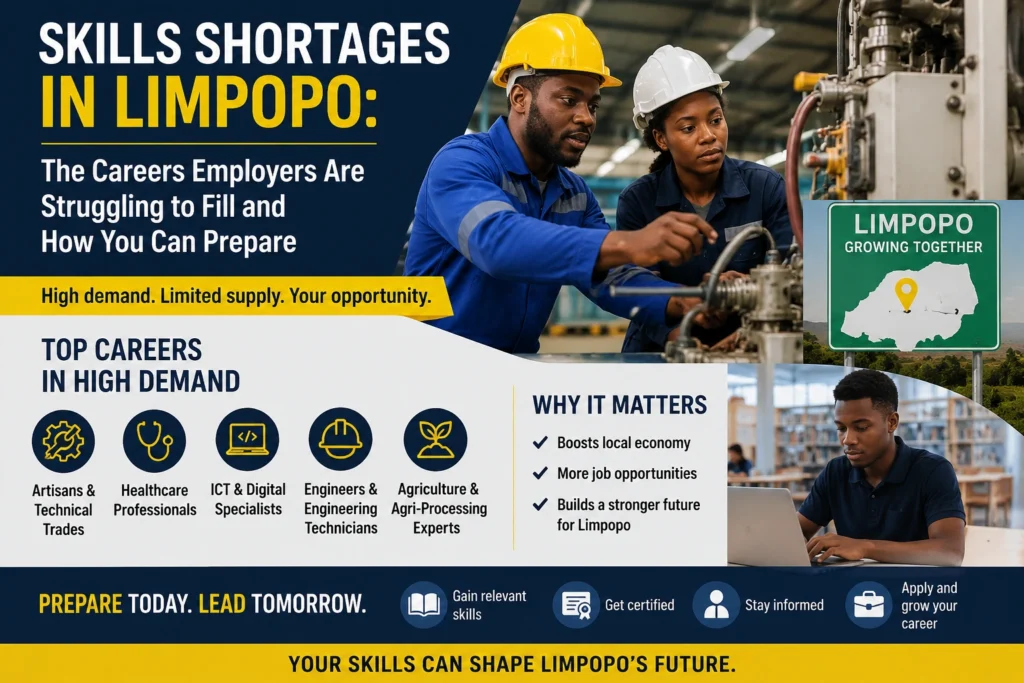
ALSO RREAD ABOUT: Careers Inside Airports You Never Hear About
How Job Seekers Can Respond to Skills Shortages in Limpopo
Instead of focusing only on today’s vacancies, prepare for tomorrow’s labour market.
Step 1: Research High-Demand Occupations
Review:
- Government scarce skills publications
- Industry reports
- Employer recruitment trends
- Professional council information
- Provincial development priorities
This helps identify careers likely to remain in demand over the coming years.
Step 2: Choose Practical Qualifications
Employers increasingly value qualifications that include:
- Workplace learning
- Apprenticeships
- Learnerships
- Laboratory experience
- Clinical placements
- Industry projects
Practical exposure often strengthens employability.
Step 3: Build Digital Skills
Even non-technical careers increasingly require digital competence.
Useful skills include:
- Microsoft Office
- Spreadsheet analysis
- Digital communication
- Online collaboration tools
- Data management
- Basic cybersecurity awareness
Digital literacy supports employability across many industries.
Step 4: Develop Soft Skills
Technical knowledge alone is rarely enough.
Employers consistently value:
- Communication
- Problem-solving
- Adaptability
- Teamwork
- Professional behaviour
- Time management
- Customer service
- Leadership potential
Strong interpersonal skills often distinguish candidates with similar qualifications.
Step 5: Gain Experience Wherever Possible
Experience can come from many sources:
- Volunteering
- Community projects
- Internships
- Vacation work
- Job shadowing
- Freelance work
- Student leadership
Even small projects can demonstrate initiative and practical ability.
Step 6: Continue Learning
Industries evolve constantly.
Short courses, online certifications, workshops, and professional development help workers remain competitive throughout their careers.
Learning should continue long after graduation.
Best Practices Experts Recommend
Career development specialists and employers consistently encourage several practical habits.
Follow labour market trends instead of assumptions. A career that was popular ten years ago may no longer offer the same opportunities today.
Combine technical and interpersonal skills. Employers increasingly recruit candidates who can solve problems, communicate effectively, and work with diverse teams.
Build professional networks early. Attending career fairs, joining professional associations, and connecting with industry mentors can create future opportunities.
Keep qualifications current. Certifications, licences, and professional registrations should remain up to date.
Prepare a professional CV and online presence. Recruiters often review digital profiles alongside traditional applications.
Remain flexible. Some opportunities may begin as internships, learnerships, contract work, or graduate programmes before leading to permanent employment.
Mistakes People Often Make
Many capable job seekers unintentionally reduce their employment opportunities.
One common mistake is selecting a qualification without researching industry demand. Passion matters, but understanding employment prospects also helps support long-term career success.
Another mistake is assuming a degree alone guarantees employment. Employers often seek evidence of practical experience, internships, and workplace readiness.
Some applicants ignore technical certifications that employers specifically request. A short industry-recognised course can sometimes make a significant difference during recruitment.
Others fail to update their skills after graduation. Technology, legislation, and workplace practices continue evolving, making lifelong learning increasingly important.
Finally, many people apply for hundreds of jobs using the same generic CV. Tailoring applications to each vacancy generally improves success rates.
Emerging Opportunities in Limpopo
While traditional industries remain important, several emerging fields are creating additional opportunities.
These include:
- Renewable energy
- Water resource management
- Environmental sustainability
- Agritech
- Digital services
- Smart manufacturing
- Logistics technology
- Supply chain management
- Artificial intelligence support roles
- Data-driven agriculture
Young professionals who prepare for these growing sectors may benefit from increasing employer demand over the coming decade.
Frequently Asked Questions
What are the biggest Skills Shortages in Limpopo?
Healthcare professionals, engineers, artisans, mining specialists, ICT professionals, teachers in technical subjects, agricultural experts, and construction professionals remain among the most sought-after occupations.
Do skills shortages mean getting a job is easy?
No. Employers still expect candidates to meet qualification requirements, demonstrate practical experience where possible, and possess both technical and soft skills. Skills shortages improve opportunities but do not guarantee employment.
Can TVET qualifications help address skills shortages?
Yes. TVET qualifications, apprenticeships, and artisan training prepare learners for many occupations experiencing ongoing demand, particularly in engineering, construction, manufacturing, and maintenance.
How can students prepare while still studying?
Students can seek internships, vacation work, volunteering opportunities, industry certifications, networking events, and digital skills training before graduation. Building practical experience early strengthens future job applications.
Final Thoughts
Understanding Skills Shortages in Limpopo allows job seekers to make informed career decisions instead of relying on guesswork or outdated advice. While unemployment remains a serious challenge, many employers continue searching for workers with specialised technical knowledge, practical experience, digital capabilities, and strong professional skills.
The most successful candidates usually combine relevant qualifications with continuous learning, workplace experience, and adaptability. Whether you are choosing a career for the first time, changing professions, or looking to improve your employability, researching labour market demand before investing in education or training can significantly improve your long-term prospects.
Rather than waiting for opportunities to appear, develop skills that industries genuinely need, stay informed about changing employment trends, and continue building experience whenever possible. Small, consistent steps today can position you for stronger career opportunities as Limpopo’s economy continues to evolve.
ALSO APPLY FOR: FEM Internship 2026
ALSO APPLY FOR: BHSc Internship 2026
ALSO RREAD ABOUT: Careers Inside Airports You Never Hear About