
The excitement of graduating often lasts only a few weeks before a difficult reality sets in. After months of sending CVs, refreshing job portals, and hearing little back, many South African graduates begin wondering whether employers expect experience before offering someone their first opportunity.
It is a challenge shared by thousands of young professionals every year.
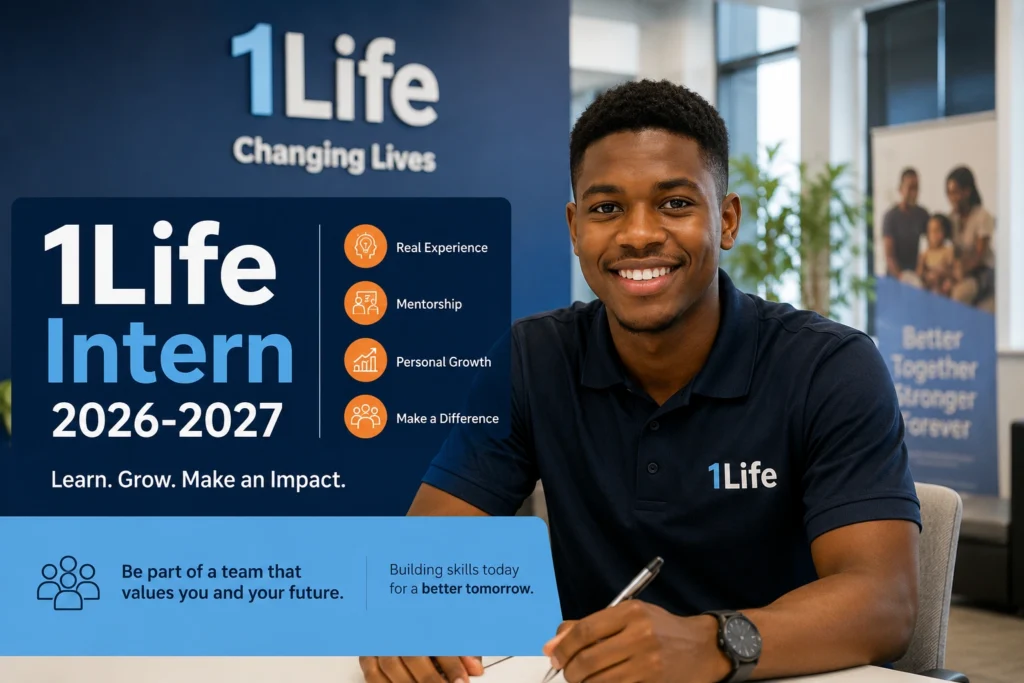
That is why internship programmes continue to play an important role in helping graduates bridge the gap between university and the workplace. The 1Life Intern 2026-2027 programme is one such opportunity, offering graduates the chance to gain practical corporate experience within one of South Africa’s established insurance companies.
Rather than focusing on a single career field, the programme spans several business functions, from Human Resources and Research to Data Analytics, Project Coordination and Claims Administration. This wider approach means graduates from different academic backgrounds have an opportunity to enter the financial services industry while building skills that remain valuable across many sectors.
For graduates hoping to strengthen their employability, this programme represents more than temporary workplace exposure—it can become the foundation for a long-term professional career.
Why the 1Life Intern 2026-2027 programme matters today
South Africa continues to face one of the highest youth unemployment rates in the world. While universities and TVET colleges produce thousands of qualified graduates annually, employers frequently seek applicants who have already demonstrated workplace competence.
This creates a difficult cycle:
A graduate needs experience to secure employment, yet needs employment to gain experience.
Structured internship programmes help solve this challenge by allowing graduates to contribute to real business operations while receiving guidance from experienced professionals.
Insurance and financial services are also becoming increasingly technology-driven. Today’s organisations rely heavily on customer data, digital systems, compliance processes and analytics. As a result, graduates entering these industries are expected to combine technical knowledge with communication, teamwork and problem-solving abilities.
The 1Life internship programme reflects these changing workplace expectations by exposing interns to modern corporate environments instead of limiting them to administrative observation.
Exploring the internship opportunities available
One of the strengths of the 1Life Intern 2026-2027 programme is its diversity. Instead of recruiting only finance graduates, 1Life has opened opportunities across multiple departments.
Available internships include:
- Resolutions Intern
- Research Intern
- Business Quality Consultant Intern
- Management Information Analyst Intern
- Claims Administrator Intern
- Project Coordinator Intern
- Quality Assurance Intern
- Learning and Development Intern
- Human Resource and Talent Intern
Each role focuses on a different area of the business, allowing graduates to choose opportunities aligned with both their qualifications and long-term career goals.
Someone with a Statistics or Data Science background may naturally fit into Management Information Analysis, while Psychology graduates could find valuable experience within Learning and Development or Research.
Business graduates, meanwhile, have opportunities across several departments including customer resolutions, quality management and project coordination.
This flexibility makes the programme accessible to graduates from a broad range of academic disciplines.
More than office work: What interns are likely to experience
Many graduates imagine internships involving little more than photocopying documents or making coffee.
Modern graduate programmes are increasingly different.
Within the insurance industry, interns often become involved in meaningful operational work under supervision.
For example, a Claims Administrator Intern may help process claim documentation, communicate with customers and maintain digital records while learning how insurance claims are evaluated.
A Project Coordinator Intern could assist with scheduling meetings, tracking project milestones and updating progress reports that support larger organisational initiatives.
Graduates entering Human Resources may observe recruitment processes, assist with onboarding activities and learn how employee records are managed.
Meanwhile, Research Interns may participate in customer surveys, analyse market trends and prepare reports that influence business decisions.
The common thread across these positions is practical exposure.
Interns begin understanding how different departments connect to achieve broader organisational objectives.
Who is likely to qualify?
Although every internship has its own qualification requirements, the programme generally targets recent graduates who have completed relevant diplomas or degrees.
Depending on the role, suitable qualifications include:
- Business Management
- Commerce
- Human Resources
- Marketing
- Psychology
- Sociology
- Statistics
- Mathematics
- Data Science
- Computer Science
- Informatics
- Project Administration
- Legal Studies
- Risk Management
- Training and Development
Applicants should carefully compare their qualifications with the specific internship before submitting an application.
Applying for positions unrelated to one’s academic background rarely improves the chances of being shortlisted.
Looking beyond qualifications
Academic qualifications help candidates meet minimum requirements, but employers increasingly evaluate how applicants demonstrate workplace readiness.
Recruiters often look for evidence of:
- Professional communication
- Computer literacy
- Analytical thinking
- Attention to detail
- Customer-service awareness
- Time management
- Team collaboration
- Adaptability
- Problem-solving
These qualities frequently become the deciding factor when several applicants possess similar academic records.
Graduates should therefore ensure that their CV reflects practical examples wherever possible, including university projects, volunteer work, leadership positions or community initiatives.
Expert insight: Why insurance internships are becoming more valuable
Financial services are evolving rapidly as insurers adopt artificial intelligence, digital claims processing, automation and advanced customer analytics.
This means today’s graduates are entering an industry that increasingly values both technical expertise and interpersonal skills.
Experience gained during an internship can therefore extend beyond insurance itself.
A graduate who develops competencies in project coordination, data analysis, quality assurance or customer experience often builds transferable skills applicable across banking, consulting, healthcare, telecommunications and technology sectors.
In many respects, internships have shifted from being short-term training opportunities to becoming long-term career investments.

Preparing a stronger application
Competition for graduate internships has increased significantly over recent years.
Applicants who prepare carefully often distinguish themselves before interviews even begin.
Some practical steps include:
- Tailor your CV to the specific internship rather than using one generic version.
- Highlight software skills such as Microsoft Excel, Word, Outlook and PowerPoint.
- Include academic projects relevant to the position.
- Double-check that your contact information is current.
- Upload clear copies of qualifications and transcripts.
- Proofread your application for grammar and spelling errors.
- Submit your application early instead of waiting for deadlines.
Small details often communicate professionalism before recruiters ever meet a candidate.
How to Apply for 1Life Intern 2026/2027
Applications must be submitted online through the official 1Life recruitment platform.
Apply here: Project Coordinator Internship
Apply here: Quality Assurance Internship
ALSO APPLY FOR: MA Automotive Intern 2026
Why choosing the right internship matters
Many graduates feel pressure to apply for every available internship they can find.
While understandable, this approach can weaken applications.
A graduate with a Computer Science qualification, for example, is likely to present a stronger application for the Management Information Analyst Internship than for Human Resources.
Likewise, someone passionate about organisational development may gain more relevant experience through Learning and Development than through Claims Administration.
Choosing internships that genuinely align with career aspirations often leads to stronger interview performance because applicants can clearly explain why they want that particular opportunity.
Employers notice this difference.
Documents applicants should prepare
Before applying, graduates should ensure they have:
- Updated CV
- South African ID
- Completed qualification certificate
- Academic transcript
- Matric certificate
- Current contact information
- Any additional documents requested through the recruitment portal
Keeping these documents readily available helps avoid unnecessary delays when applications open.
Understanding the application process
Applications are expected to be submitted online through the official 1Life careers platform.
Each internship should be treated as an individual opportunity.
Rather than submitting identical applications for multiple positions, applicants should adjust their CV and supporting information to highlight experience most relevant to the specific department.
It is also worth remembering that no official closing date was specified for these opportunities.
This makes early applications particularly important because employers sometimes remove vacancies once sufficient suitable candidates have applied.
Graduates should regularly monitor the official careers portal for updates and additional internship listings.
Frequently asked questions
Is the 1Life Intern 2026-2027 programme only for Commerce graduates?
No. Opportunities are available for graduates in Business, Human Resources, Psychology, Statistics, Data Science, Marketing, Project Administration, Computer Science and several related disciplines.
Is previous work experience required?
The programme is designed primarily for recent graduates seeking workplace experience. Relevant academic projects, volunteer work or leadership activities can strengthen an application even without formal employment history.
When is the application closing date?
No official closing date has been announced. Interested applicants are encouraged to apply as soon as suitable internship opportunities become available because positions may close individually.
Final thoughts
For many graduates, the transition from university to employment remains one of the most challenging stages of their professional journey. Opportunities like the 1Life Intern 2026-2027 programme help reduce that gap by allowing graduates to experience the realities of a corporate environment while developing practical skills that employers increasingly value.
The programme’s broad selection of internship fields reflects how modern organisations operate. Success no longer depends on technical knowledge alone; businesses also need professionals who can analyse information, communicate effectively, solve problems and collaborate across departments.
Graduates who approach the application process thoughtfully—by choosing internships aligned with their qualifications, presenting a polished CV and demonstrating genuine enthusiasm for learning—are likely to place themselves in a stronger position for future employment.
Whether an internship leads directly to permanent employment or simply opens new professional doors, the experience gained can become one of the most valuable investments in a graduate’s early career. In a competitive South African job market, building practical workplace experience remains one of the most effective ways to stand out, and the 1Life Intern 2026-2027 programme offers an opportunity to begin that journey.