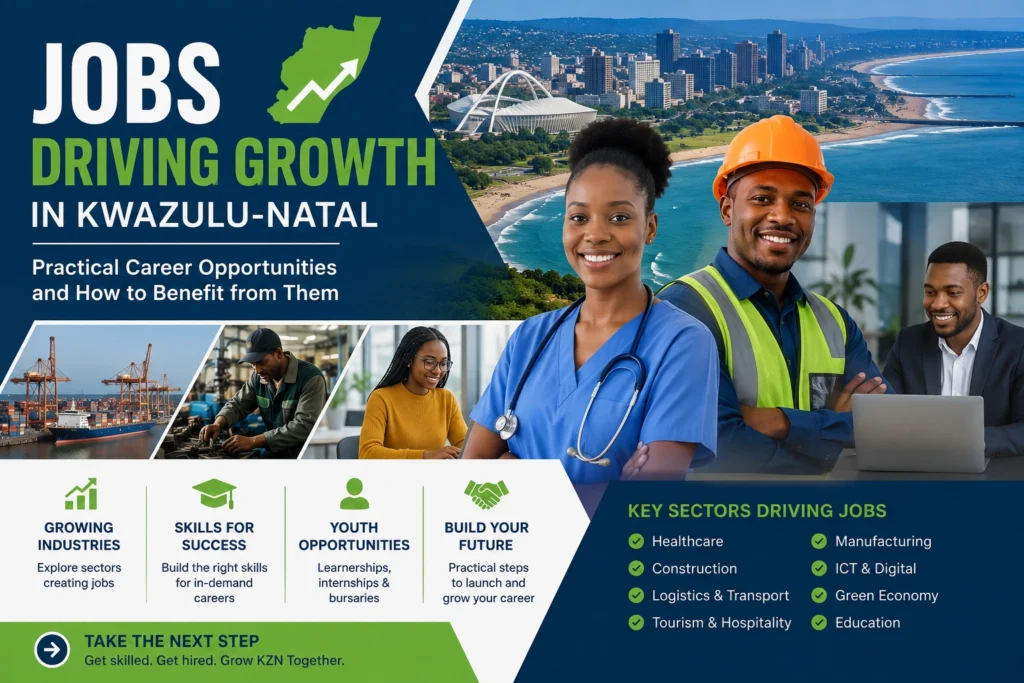

KwaZulu-Natal has long been one of South Africa’s most important economic provinces, but many job seekers still struggle to identify where genuine employment opportunities are emerging. Thousands of people apply for the same vacancies without understanding which industries are actually expanding, what skills employers are looking for, or how economic development projects are creating new career paths.
Understanding the Jobs Driving Growth in KwaZulu-Natal can help job seekers make smarter career decisions instead of relying on outdated assumptions. Rather than applying randomly, it becomes possible to focus on sectors that are hiring, develop the right skills, and improve long-term employment prospects.
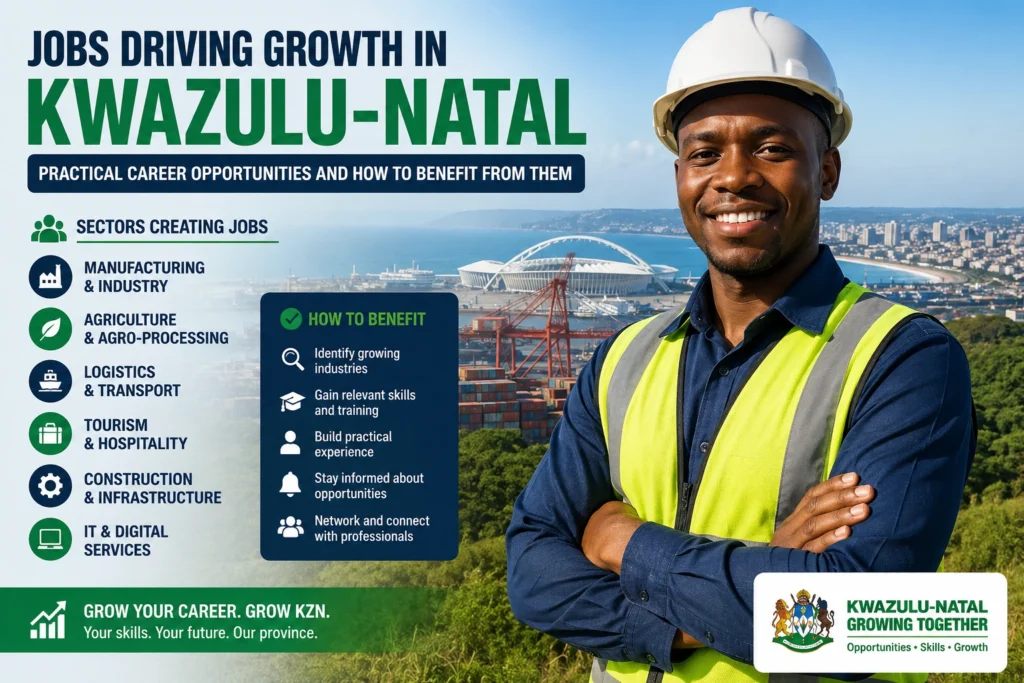
The province continues to benefit from investments in logistics, manufacturing, tourism, renewable energy, agriculture, healthcare, retail, technology, and infrastructure. While economic conditions remain challenging, these industries continue to generate demand for skilled professionals, graduates, artisans, technicians, and entry-level workers.
This guide explains which sectors are driving employment growth in KwaZulu-Natal, why they matter, and practical steps you can take to position yourself for future opportunities.
Understanding Jobs Driving Growth in KwaZulu-Natal
The phrase Jobs Driving Growth in KwaZulu-Natal refers to occupations and industries that contribute significantly to economic activity while creating new employment opportunities.
These jobs are supported by factors such as:
- Infrastructure investment
- Port expansion
- Manufacturing production
- Tourism recovery
- Agricultural development
- Digital transformation
- Renewable energy projects
- Healthcare demand
- Population growth
- Retail expansion
Instead of focusing only on government employment, many of today’s opportunities are emerging in the private sector through businesses that support local and international trade.
KwaZulu-Natal’s strategic location, including the Port of Durban and the Port of Richards Bay, makes the province one of Southern Africa’s most important logistics hubs.
ALSO APPLY FOR: Scania SA Intern 2026
ALSO APPLY FOR: WTW Graduate Intern 2026
Why This Issue Matters
Choosing a growing industry instead of a declining one can significantly improve your chances of finding stable employment.
Economic growth creates a ripple effect throughout the province. When companies invest in factories, warehouses, transport networks, shopping centres, or tourism facilities, they also create opportunities for:
- Administrative staff
- Drivers
- Engineers
- Security officers
- Electricians
- Welders
- Sales representatives
- IT professionals
- Maintenance workers
- Human resource personnel
- Accountants
- Customer service teams
For young people entering the workforce, understanding these employment trends can help avoid spending time and money on qualifications with limited demand.
For experienced workers, identifying growth sectors can support career changes, promotions, or additional training that increases employability.
Industries Creating Jobs Driving Growth in KwaZulu-Natal
1. Logistics and Supply Chain
KwaZulu-Natal remains South Africa’s logistics powerhouse.
The province’s ports connect South Africa to global markets, creating demand for professionals involved in:
- Warehouse operations
- Freight forwarding
- Customs administration
- Inventory control
- Fleet management
- Transport planning
- Forklift operation
- Distribution management
- Shipping coordination
Companies also require administrative support, finance staff, and IT specialists to manage increasingly digital supply chains.
As e-commerce continues expanding, logistics jobs are expected to remain an important employment source.
2. Manufacturing
Manufacturing continues to employ thousands of people across KwaZulu-Natal.
Major manufacturing sectors include:
- Automotive components
- Chemicals
- Food processing
- Packaging
- Textiles
- Steel fabrication
- Consumer goods
Employers frequently recruit:
- Machine operators
- Production supervisors
- Mechanical technicians
- Quality controllers
- Maintenance artisans
- Industrial engineers
- Electricians
- Fitters and turners
Many companies also offer apprenticeships and learnerships that provide valuable workplace experience.
3. Tourism and Hospitality
KwaZulu-Natal remains one of South Africa’s most popular tourist destinations.
Popular attractions include:
- Beaches
- Nature reserves
- Game parks
- Cultural tourism
- Mountain tourism
- Conference venues
As visitor numbers improve, businesses require:
- Hotel staff
- Chefs
- Receptionists
- Tour guides
- Event coordinators
- Hospitality managers
- Housekeeping staff
- Food and beverage personnel
Seasonal work often provides valuable experience that can lead to permanent employment.
4. Agriculture and Agri-processing
Agriculture continues to play a major role in rural employment.
Important agricultural activities include:
- Sugar cane
- Citrus
- Forestry
- Livestock
- Vegetables
- Poultry
- Dairy farming
Modern agriculture increasingly combines traditional farming with technology, creating opportunities for:
- Agricultural technicians
- Farm supervisors
- Irrigation specialists
- Food safety officers
- Agricultural graduates
- Equipment mechanics
Agri-processing facilities also employ workers in production, packaging, quality assurance, and logistics.
5. Renewable Energy
South Africa’s transition toward cleaner energy continues creating new career opportunities.
Projects require professionals such as:
- Electrical engineers
- Solar installers
- Wind technicians
- Environmental specialists
- Project managers
- Electricians
- Health and safety officers
Many supporting businesses also need procurement, finance, administration, and logistics staff.
6. Healthcare
Healthcare demand continues growing because of population growth and increased healthcare investment.
Career opportunities include:
- Nurses
- Pharmacists
- Medical laboratory staff
- Emergency medical personnel
- Medical receptionists
- Healthcare administrators
- Community health workers
- Medical technicians
Private healthcare providers continue expanding across many parts of KwaZulu-Natal.
7. Information Technology
Technology is transforming every industry.
Even companies outside the technology sector now recruit:
- Software developers
- IT technicians
- Data analysts
- Cybersecurity specialists
- Systems administrators
- Technical support consultants
- Cloud specialists
Digital skills are becoming valuable regardless of your chosen career.
8. Construction and Infrastructure
Infrastructure investment supports employment in:
- Road construction
- Housing projects
- Water infrastructure
- Public facilities
- Commercial developments
Employers frequently seek:
- Civil engineers
- Quantity surveyors
- Construction managers
- Bricklayers
- Plumbers
- Electricians
- Welders
- Site supervisors
- Safety officers
Construction projects also generate work for suppliers and subcontractors.
ALSO READ ABOUT: Why Degrees Alone Are No Longer Enough
Jobs Driving Growth in KwaZulu-Natal: Skills Employers Want
While qualifications remain important, employers increasingly value practical workplace skills.
Highly sought-after skills include:
- Computer literacy
- Communication
- Problem-solving
- Time management
- Teamwork
- Customer service
- Basic financial understanding
- Digital skills
- Safety awareness
- Adaptability
Technical certifications often improve employment prospects, particularly in engineering, logistics, healthcare, and information technology.
Practical Steps to Prepare for Growth Industries
Finding work in expanding industries requires planning rather than simply submitting large numbers of applications.
Step 1: Research Growing Industries
Start by identifying industries currently expanding in your local municipality or surrounding areas.
Economic development reports, company announcements, and recruitment trends often indicate where new opportunities are emerging.
Step 2: Improve Your Qualifications
Short courses can strengthen your CV.
Consider training in:
- Microsoft Office
- Data analysis
- Occupational health and safety
- Project management
- Logistics
- Customer service
- Digital marketing
- Computer programming
Continuous learning demonstrates initiative to employers.
Step 3: Build Practical Experience
Experience remains one of the biggest hiring factors.
Look for:
- Learnerships
- Internships
- Apprenticeships
- Graduate programmes
- Volunteer opportunities
- Contract work
Even temporary experience helps develop workplace skills.
Step 4: Tailor Every Application
Avoid sending identical CVs.
Instead:
- Match your experience to the vacancy
- Highlight relevant achievements
- Include measurable accomplishments
- Keep your CV updated
- Write customised cover letters
Employers notice applicants who clearly demonstrate suitability for the role.
Step 5: Develop Digital Skills
Many employers now recruit online.
Learn how to:
- Use professional email
- Create digital CVs
- Attend virtual interviews
- Complete online assessments
- Build a professional LinkedIn profile
Digital confidence is becoming essential across nearly every industry.
Step 6: Build Professional Networks
Many vacancies are filled through referrals and professional contacts.
Attend:
- Career expos
- Industry events
- Networking sessions
- Skills workshops
- Community employment programmes
Building relationships often creates opportunities before vacancies are publicly advertised.
Best Practices Experts Recommend
Career advisers and workforce development professionals often recommend focusing on long-term employability rather than chasing every available vacancy.
Some practical best practices include:
- Continuously update your CV.
- Keep copies of all qualifications.
- Improve communication skills.
- Develop both technical and soft skills.
- Apply early rather than waiting until closing dates.
- Research employers before interviews.
- Stay informed about industry trends.
- Learn basic computer skills regardless of your profession.
- Maintain a professional online presence.
- Continue learning even after securing employment.
Employers increasingly favour candidates who demonstrate curiosity, adaptability, and a willingness to learn.
Mistakes People Often Make
Many job seekers unknowingly reduce their own chances of success.
Common mistakes include:
Applying without reading job requirements
Many applicants submit CVs for positions they clearly do not qualify for.
Ignoring growing industries
Some people continue targeting sectors with limited hiring instead of exploring expanding industries.
Using outdated CVs
An old CV may not reflect your latest qualifications, certifications, or experience.
Failing to prepare for interviews
Strong interview preparation can make a significant difference when candidates have similar qualifications.
Neglecting digital skills
Modern workplaces increasingly depend on technology, even in traditional industries.
Stopping skills development
Learning should continue throughout your career rather than ending after formal education.
Future Outlook for Employment in KwaZulu-Natal
Employment opportunities will continue evolving alongside technological change and economic investment.
Several trends are expected to influence future hiring:
- Increased automation
- Expansion of renewable energy
- Digital transformation
- Smarter logistics systems
- Healthcare growth
- Infrastructure upgrades
- Growth in online commerce
- Greater demand for skilled artisans
Workers who continue developing their skills will generally remain more competitive in the labour market.
Frequently Asked Questions
Which industry currently offers the most opportunities in KwaZulu-Natal?
Logistics, manufacturing, healthcare, retail, tourism, agriculture, technology, and construction all continue creating employment opportunities, although demand varies by region and economic conditions
Do I need a university degree to benefit from these growing industries?
No. Many employers recruit candidates with TVET qualifications, apprenticeships, learnerships, certificates, trade qualifications, or relevant workplace experience.
Which digital skills improve employability?
Computer literacy, Microsoft Office, data analysis, cloud computing, digital communication, cybersecurity awareness, and basic programming can all strengthen job application
How can young people prepare for future jobs?
Focus on developing transferable skills, gaining workplace experience through internships or learnerships, improving digital literacy, and continuously learning new technical and professional skills.
Final Thoughts
Understanding the Jobs Driving Growth in KwaZulu-Natal allows job seekers to make more informed career choices instead of relying on guesswork. The province continues to benefit from strengths in logistics, manufacturing, tourism, agriculture, healthcare, construction, renewable energy, and technology, creating opportunities for people with a wide range of qualifications and experience levels.
Rather than applying for every vacancy you find, take a strategic approach. Identify industries that are expanding, build relevant skills, gain practical experience where possible, and tailor each application to the role. Staying adaptable and committed to continuous learning will improve your chances of finding sustainable employment as KwaZulu-Natal’s economy continues to evolve.
ALSO APPLY FOR: Scania SA Intern 2026
ALSO APPLY FOR: WTW Graduate Intern 2026
ALSO READ ABOUT: Why Degrees Alone Are No Longer Enough