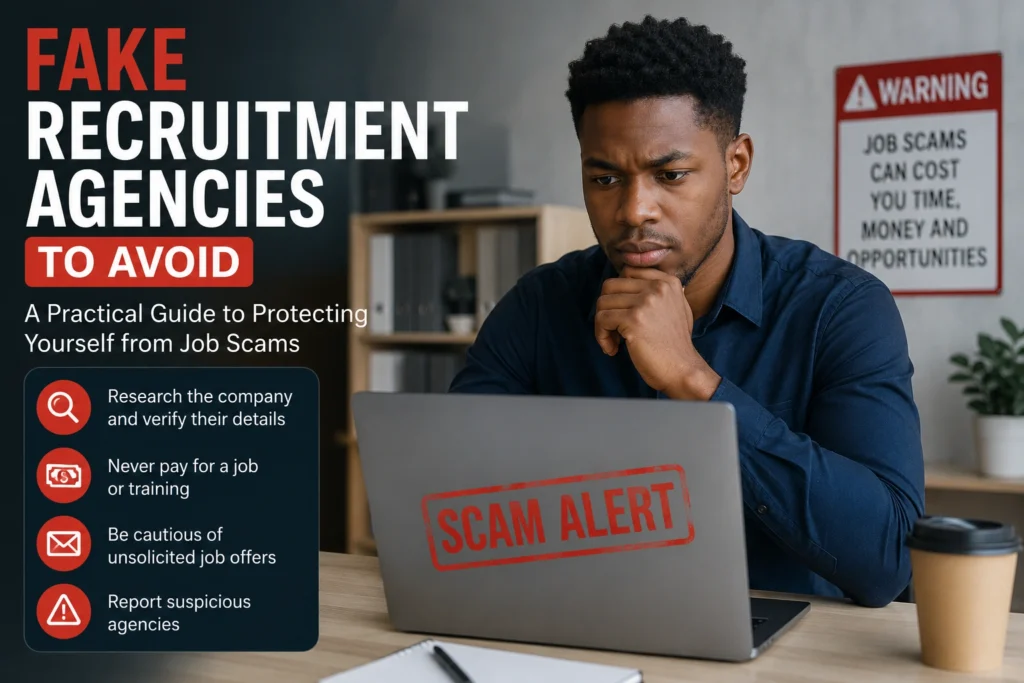

Searching for a job can be stressful, especially when you have been unemployed for months or urgently need an income. Unfortunately, scammers understand this pressure and use it to target job seekers. Every year, thousands of people lose money, personal information, or valuable time after falling victim to fake recruitment agencies pretending to offer genuine employment opportunities.
The biggest challenge is that many fraudulent agencies appear convincing. They often have professional-looking websites, fake office addresses, copied company logos, and recruiters who communicate confidently through email, WhatsApp, or social media. Some even claim to represent well-known employers.
Understanding Fake Recruitment Agencies to Avoid is one of the most valuable skills any job seeker can develop. Knowing the warning signs can help you protect your finances, safeguard your personal information, and focus your efforts on legitimate employment opportunities.
This practical guide explains how fake recruitment agencies operate, how to identify them, and the steps you can take to avoid becoming another victim.
What Are Fake Recruitment Agencies?
A recruitment agency connects employers with suitable candidates. Legitimate agencies earn their income from companies that hire them to recruit staff—not from job seekers.
Fake recruitment agencies imitate this business model but exist only to exploit people looking for work. Instead of helping candidates find employment, they attempt to collect:
- Registration fees
- Administration fees
- Training fees
- Medical examination payments
- Visa processing fees
- Uniform deposits
- Personal banking information
- Identity documents
Some scams are designed purely to steal money, while others aim to collect personal information for identity theft or other forms of fraud.
Understanding how these scams work makes it much easier to recognise Fake Recruitment Agencies to Avoid before any damage is done.
ALSO APPLY FOR: SAIEE Bursary 2027
ALSO APPLY FOR: Raubex Bursary 2027
Why This Issue Matters
Job scams affect more than just bank accounts.
Many victims experience:
- Financial losses they cannot easily recover
- Delayed job searches after chasing fake opportunities
- Identity theft using stolen documents
- Emotional stress and loss of confidence
- Missed opportunities with genuine employers
Young graduates, first-time job seekers, unemployed professionals, and people urgently seeking work are often targeted because scammers know they are eager to secure employment quickly.
As online recruitment continues to grow, scammers have become increasingly sophisticated. They no longer rely only on suspicious emails—they now use professional websites, social media advertising, messaging apps, and fake interviews to appear legitimate.
Learning how to verify recruitment agencies has become an essential part of modern job hunting.
Common Types of Fake Recruitment Agencies to Avoid
Although scams evolve constantly, most fall into several common categories.
Agencies That Charge Registration Fees
One of the biggest warning signs is being asked to pay before any recruitment process begins.
Common excuses include:
- Registration fee
- Candidate database fee
- Administration cost
- Processing fee
Legitimate recruitment agencies generally do not charge candidates simply to register for jobs.
Agencies That Guarantee Employment
No recruiter can honestly promise that every applicant will receive a job.
Scammers often advertise:
- “Guaranteed placement”
- “100% employment success”
- “Immediate hiring”
Real employers make hiring decisions based on qualifications, interviews, experience, and business needs.
Fake Government Recruitment Agencies
Government jobs attract enormous interest.
Scammers sometimes create fake advertisements claiming to recruit for:
- Municipal positions
- Government departments
- Public hospitals
- State-owned companies
Always apply through official government recruitment channels rather than unofficial agencies making extraordinary promises.
Overseas Employment Scams
International jobs often involve higher salaries, making them attractive targets for fraud.
Victims may be asked to pay for:
- Work permits
- Immigration processing
- Flights
- Accommodation
- Medical certificates
While genuine overseas recruitment exists, every payment request should be independently verified before any money changes hands.
Social Media Recruitment Scams
Facebook, WhatsApp, Telegram, TikTok, and other social platforms have become popular places for scammers.
Warning signs include:
- Limited company information
- Pressure to respond immediately
- Personal messaging only
- No official company email
- Requests for payment through mobile transfers
Social media can be used for genuine recruitment, but every opportunity should be verified independently.
Warning Signs of Fake Recruitment Agencies to Avoid
Recognising red flags early can save both money and time.
Watch out for agencies that:
- Request upfront payment
- Use free email addresses instead of company domains
- Refuse to provide physical office details
- Have poorly written contracts
- Promise unusually high salaries for simple work
- Conduct interviews entirely through text messages
- Pressure candidates to act immediately
- Avoid answering basic questions
- Have no professional online presence
- Ask for banking PINs or passwords
One warning sign alone may not prove fraud, but several together should raise serious concerns.
ALSO READ ABOUT: Workplace Etiquette
Step-by-Step Guide to Verifying a Recruitment Agency
Step 1: Research the Company
Start with a simple online search.
Look for:
- Official website
- Company registration details
- Physical address
- Contact numbers
- Professional email addresses
A genuine recruiter should have a clear online presence.
Step 2: Check Independent Reviews
Search beyond the company’s own website.
Look for:
- Google reviews
- Professional networking platforms
- Consumer complaint forums
- News reports
- Job seeker discussions
Remember that fake positive reviews also exist, so consider overall patterns rather than one or two comments.
Step 3: Verify the Employer
If an agency claims to recruit for a major company, visit that employer’s official careers page.
Check whether:
- The vacancy exists
- The recruitment agency is mentioned
- Contact information matches
Large employers often list authorised recruitment partners.
Step 4: Never Rush
Scammers frequently create urgency.
Typical phrases include:
- “Apply within one hour.”
- “Pay today.”
- “Limited positions.”
- “Immediate processing.”
Legitimate recruiters generally allow candidates reasonable time to review documents and ask questions.
Step 5: Protect Your Personal Information
Avoid sharing sensitive information until you have confirmed the legitimacy of both the recruiter and the job opportunity.
Be cautious when asked for:
- Certified identity documents
- Banking details
- Passport copies
- Tax information
- Passwords
- One-time PINs
Only provide documents when genuinely required during verified recruitment processes.
Step 6: Verify Contact Information
Professional recruitment agencies usually use:
- Company email domains
- Landline numbers
- Registered office addresses
If every conversation happens only through WhatsApp, exercise additional caution.
Step 7: Trust Your Instincts
If something feels wrong, pause.
Ask yourself:
- Does this offer seem too good to be true?
- Am I being pressured?
- Why must I pay before employment?
- Have they answered my questions clearly?
Taking time to investigate is far better than rushing into a costly mistake.
How Genuine Recruitment Agencies Usually Operate
Knowing what legitimate recruitment looks like makes scams easier to identify.
A genuine agency typically:
- Receives payment from employers rather than candidates
- Explains the recruitment process clearly
- Schedules professional interviews
- Provides written communication
- Verifies candidate qualifications
- Shares realistic job descriptions
- Maintains transparent contact details
- Allows applicants time to consider offers
Professional recruiters are interested in matching suitable candidates with employers—not collecting fees from job seekers.
Best Practices Experts Recommend
Employment specialists and consumer protection organisations consistently recommend several habits that reduce the risk of recruitment fraud.
Always verify before applying. Spend a few minutes researching every recruitment agency, even if the advertisement appears professional.
Keep copies of all communication. Save emails, messages, job advertisements, and contracts. Documentation becomes important if you later need to report suspicious activity.
Apply through official company career pages whenever possible. Direct applications reduce the chance of dealing with fake intermediaries.
Be cautious with online payments. Treat any request for upfront recruitment fees as a major warning sign unless you have independently confirmed exactly what the payment covers and why it is required.
Use trusted job platforms. Established employment websites often have verification processes that reduce—but do not eliminate—the risk of fraudulent advertisements.
Discuss suspicious offers with someone else. A second opinion from a trusted friend or family member can sometimes reveal warning signs you overlooked.
Developing these habits makes you a far more difficult target for scammers.
Mistakes People Often Make
Even experienced professionals can fall victim to recruitment fraud.
Some of the most common mistakes include:
Believing High Salary Promises
Scammers know attractive salaries generate excitement. Always compare advertised pay with normal market rates.
Paying Without Verification
Never transfer money simply because someone claims it is needed to secure a position.
Ignoring Poor Communication
Grammar mistakes alone do not prove fraud, but vague responses, inconsistent information, and changing explanations deserve attention.
Sharing Personal Documents Too Early
Identity documents should only be shared after confirming the employer’s legitimacy.
Assuming Social Media Ads Are Verified
A sponsored advertisement is not necessarily genuine. Scammers can purchase online advertising just like legitimate businesses.
Skipping Independent Research
Many victims admit they trusted the recruiter without conducting even a basic online search.
A few minutes of research could prevent months of financial and emotional hardship.
What to Do If You Think You’ve Been Scammed
If you suspect you have dealt with a fake recruitment agency:
- Stop all communication immediately.
- Do not send additional money.
- Save all emails, receipts, and messages.
- Contact your bank if payments have already been made.
- Monitor your accounts for suspicious activity.
- Report the incident to the appropriate authorities and relevant consumer protection organisations.
- Warn others by reporting fraudulent job advertisements on the platform where you found them.
Quick action may reduce further losses and help prevent others from becoming victims.
Frequently Asked Questions
Do legitimate recruitment agencies ever charge job seekers?
Most genuine recruitment agencies are paid by employers rather than candidates. If you are asked to pay upfront simply to access jobs or register, investigate carefully before proceeding.
Can fake recruiters create professional websites?
Yes. Modern scammers often build convincing websites, use copied company branding, and create fake social media profiles. A professional appearance alone does not guarantee legitimacy.
Is every WhatsApp recruiter a scammer?
No. Some recruiters use WhatsApp for communication after initial contact. However, if recruitment happens only through messaging, especially alongside payment requests or pressure tactics, proceed with caution.
What is the safest way to apply for jobs?
Applying through official employer career pages, trusted recruitment agencies with established reputations, and recognised job platforms generally offers greater protection than responding to unsolicited messages.
Final Thoughts
Knowing the Fake Recruitment Agencies to Avoid can protect far more than your bank account. It helps preserve your personal information, your confidence, and valuable time during an already challenging job search.
Remember that genuine recruiters focus on finding the right candidates for employers—not collecting money from applicants. Whenever you encounter an opportunity that promises guaranteed employment, demands upfront fees, or pressures you into making immediate decisions, take a step back and verify every detail.
A careful, informed approach to job hunting may take a little longer, but it significantly reduces the risk of becoming a victim of recruitment fraud. Research every opportunity, ask questions, protect your personal information, and never feel pressured into paying for promises that cannot be independently verified.
ALSO APPLY FOR: SAIEE Bursary 2027
ALSO APPLY FOR: Raubex Bursary 2027
ALSO READ ABOUT: Workplace Etiquette