
As industries change and technology evolves, many South Africans worry about whether their current skills will still be valuable in the years ahead. Traditional sectors are becoming more competitive, while employers increasingly seek workers with knowledge of renewable energy, sustainability, and environmentally friendly technologies. This shift has created exciting opportunities, but it has also left many people wondering where to start.
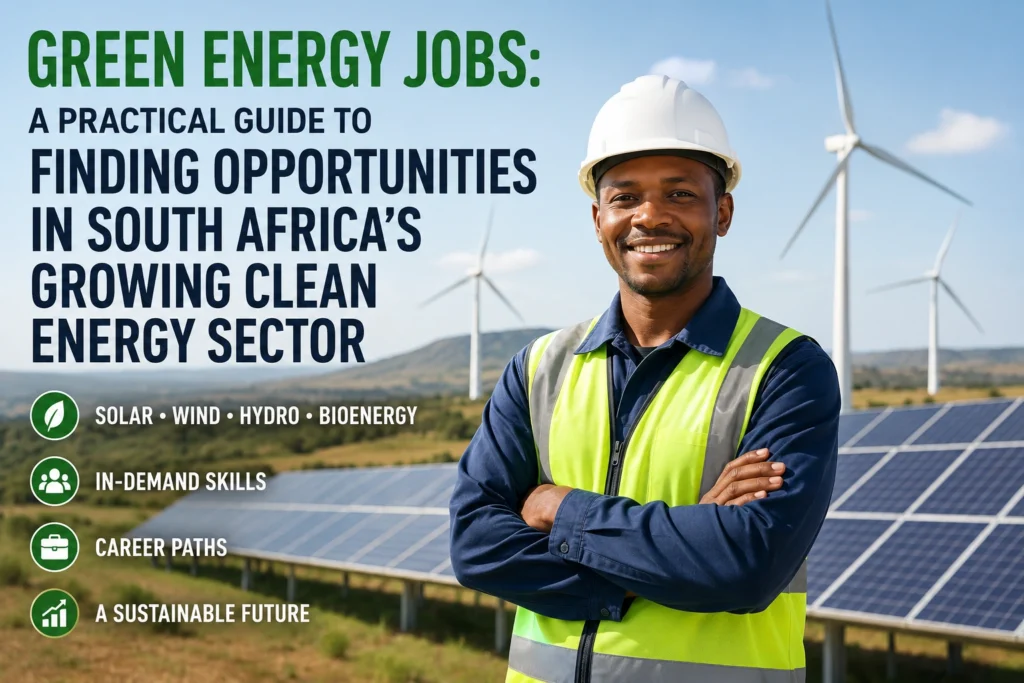
The good news is that Green Energy Jobs are expanding across South Africa. From solar installation and wind farm maintenance to environmental engineering and energy efficiency consulting, the clean energy industry is creating employment opportunities for graduates, artisans, technicians, and even people with little or no previous experience.
This guide explains what Green Energy Jobs are, why demand is increasing, which careers are available, and the practical steps you can take to build a successful career in this growing sector.
What Are Green Energy Jobs?
Green Energy Jobs are occupations that help produce, manage, improve, or support renewable and environmentally sustainable sources of energy. These jobs contribute to reducing pollution, lowering greenhouse gas emissions, and improving energy efficiency.
Unlike traditional fossil fuel industries, green energy focuses on renewable resources such as:
- Solar energy
- Wind power
- Hydroelectric power
- Biomass energy
- Battery storage systems
- Hydrogen energy
- Energy efficiency technologies
The sector includes much more than engineers. Employers also need electricians, project managers, finance professionals, administrators, environmental scientists, IT specialists, logistics coordinators, and customer service staff.
As South Africa continues investing in renewable energy projects, demand for skilled workers is expected to increase across many industries.
ALSO APPLY FOR: Wilderness Internship 2026
ALSO APPLY FOR: Eskom YES Internships 2026
Why This Issue Matters
South Africa faces several major challenges, including unemployment, electricity shortages, rising energy costs, and climate change. The expansion of renewable energy offers solutions to many of these problems simultaneously.
Large-scale solar farms, wind power projects, battery storage facilities, and private renewable energy investments require thousands of workers during planning, construction, operation, and maintenance.
Green energy also supports economic growth by:
- Creating long-term employment
- Reducing dependence on coal
- Improving electricity reliability
- Encouraging investment
- Supporting local manufacturing
- Developing technical skills among young workers
For job seekers, this means learning renewable energy skills today could lead to better career opportunities tomorrow.
Why Green Energy Jobs Are Growing So Quickly
Several factors are driving demand.
1. South Africa Needs More Electricity
The country continues expanding renewable generation to improve electricity supply. Both public and private companies are investing heavily in solar and wind projects.
2. Businesses Want Lower Energy Costs
Many companies are installing rooftop solar systems to reduce electricity expenses and improve energy security.
This creates jobs in:
- Installation
- Electrical maintenance
- Sales
- System design
- Customer support
3. Global Climate Goals
Governments and businesses worldwide are investing billions into cleaner energy technologies, increasing demand for skilled workers.
4. New Technologies
Battery storage, electric vehicles, hydrogen fuel, and smart energy management systems continue creating new specialist careers.
Types of Green Energy Jobs Available
The renewable energy industry offers opportunities for many different education levels.
Solar PV Installer
Solar installers assemble and install rooftop or commercial solar systems.
Typical duties include:
- Installing panels
- Wiring systems
- Mounting equipment
- Testing installations
- Performing maintenance
Many employers value electrical knowledge more than university qualifications.
Wind Turbine Technician
These technicians inspect, repair, and maintain wind turbines.
Responsibilities include:
- Mechanical repairs
- Electrical inspections
- Safety testing
- Preventative maintenance
- Equipment troubleshooting
This role often requires working at height and following strict safety procedures.
Electrical Technician
Electrical technicians support renewable energy systems by maintaining electrical infrastructure and ensuring safe operation.
They may work on:
- Solar farms
- Wind farms
- Battery storage
- Industrial facilities
Renewable Energy Engineer
Engineers design renewable energy systems and solve technical challenges.
They may specialise in:
- Mechanical engineering
- Electrical engineering
- Civil engineering
- Energy systems
- Grid integration
Environmental Officer
Environmental specialists ensure projects comply with environmental regulations.
They conduct:
- Site assessments
- Environmental monitoring
- Compliance reporting
- Risk assessments
Project Manager
Large renewable energy developments require experienced project managers to coordinate teams, contractors, budgets, and timelines.
Energy Efficiency Consultant
These professionals help businesses reduce electricity consumption through smarter equipment and energy management.
Sustainability Specialist
Many companies now employ sustainability professionals to improve environmental performance and reduce carbon emissions.
Administrative and Support Roles
Not every Green Energy Job involves technical work.
Companies also hire:
- Human resources staff
- Procurement officers
- Finance administrators
- Marketing professionals
- Data analysts
- Customer support teams
Skills Employers Look For
While qualifications remain important, employers increasingly value practical skills.
These include:
- Electrical knowledge
- Problem-solving
- Communication
- Computer literacy
- Safety awareness
- Teamwork
- Technical troubleshooting
- Project planning
- Attention to detail
Digital skills are becoming increasingly valuable as renewable energy systems rely heavily on monitoring software and automation.
ALSO READ ABOUT: How AI Is Creating New Entry-Level Roles
How to Start a Career in Green Energy Jobs
Breaking into the renewable energy sector doesn’t always require years of experience.
Here’s a practical roadmap.
Step 1: Understand Which Career Fits You
Think about your interests.
Do you enjoy:
- Working outdoors?
- Solving technical problems?
- Engineering?
- Environmental science?
- Sales?
- Administration?
Choosing the right career path early helps you focus your learning.
Step 2: Build Relevant Skills
Consider learning:
- Electrical basics
- Solar PV installation
- Occupational health and safety
- Computer skills
- Energy efficiency principles
Short courses can strengthen your CV even if you’re still studying.
Step 3: Gain Practical Experience
Experience matters.
Look for:
- Internships
- Learnerships
- Apprenticeships
- Graduate programmes
- Volunteer opportunities
Hands-on experience often makes applicants more competitive.
Step 4: Update Your CV
Highlight:
- Technical skills
- Certifications
- Safety training
- Practical projects
- Software knowledge
Tailor every application to match the specific vacancy.
Step 5: Follow Renewable Energy Employers
Monitor career pages for:
- Solar companies
- Wind energy developers
- Engineering firms
- Energy consultancies
- Government agencies
- Infrastructure companies
Many graduate programmes open annually.
Step 6: Continue Learning
Renewable energy evolves rapidly.
Keep learning about:
- Battery storage
- Electric vehicles
- Smart grids
- Hydrogen technologies
- Energy regulations
Continuous learning helps future-proof your career.
Qualifications That Can Help
Several educational pathways lead into Green Energy Jobs.
Examples include:
- National Certificate (Electrical)
- Electrical Engineering Diploma
- Mechanical Engineering Diploma
- Civil Engineering Degree
- Environmental Science Degree
- Renewable Energy courses
- Occupational Health and Safety certifications
- Trade qualifications
TVET colleges also provide valuable technical training for many renewable energy careers.
Industries Hiring Green Energy Professionals
Renewable energy skills are valuable across numerous industries.
These include:
- Renewable energy developers
- Construction companies
- Mining companies
- Manufacturing
- Municipal infrastructure
- Engineering consultancies
- Utility companies
- Property developers
- Agriculture
- Telecommunications
Many large organisations now operate sustainability departments.
Salary Expectations
Salaries vary depending on qualifications, experience, employer, and location.
Generally:
- Entry-level technicians earn modest starting salaries that increase with experience.
- Qualified electricians with renewable energy expertise often command higher pay.
- Engineers and project managers typically earn significantly more due to specialised skills.
- Experienced sustainability consultants may also enjoy competitive salaries.
Rather than focusing only on starting income, consider the long-term growth potential. The renewable energy sector continues expanding, creating opportunities for career progression and specialised roles.
Best Practices Experts Recommend
Professionals working in renewable energy often share similar advice for newcomers.
Focus on Practical Skills
Employers appreciate candidates who can demonstrate real-world ability, not just theoretical knowledge.
Prioritise Safety
Renewable energy sites have strict safety standards. Health and safety training can strengthen your employability.
Stay Informed
Technology changes quickly. Read industry news and learn about new renewable energy developments.
Network Within the Industry
Attend career fairs, engineering events, sustainability conferences, and employer presentations.
Connections often lead to internship opportunities.
Build a Professional Portfolio
If you’ve completed projects, practical assignments, or technical installations, document them with photos and descriptions.
A portfolio demonstrates initiative and capability.
Mistakes People Often Make
Many applicants unintentionally reduce their chances of success.
Applying Without Research
Understand what each employer actually does before applying.
Ignoring Entry-Level Opportunities
Internships and learnerships often provide the experience employers later require.
Using the Same CV Everywhere
Tailor every application to the specific role.
Overlooking Soft Skills
Communication, teamwork, and reliability matter alongside technical knowledge.
Stopping Learning
Renewable energy evolves rapidly. Continuing education keeps your skills relevant.
Future Trends in Green Energy Jobs
The industry continues creating new career opportunities.
Growing areas include:
- Battery storage systems
- Green hydrogen
- Electric vehicle charging infrastructure
- Smart electricity grids
- Artificial intelligence for energy management
- Solar manufacturing
- Energy data analysis
- Carbon management
These emerging technologies will likely create thousands of additional jobs over the coming decade.
Frequently Asked Questions
1. Do I need a university degree for Green Energy Jobs?
No. Many roles, such as solar installation, electrical work, and technical maintenance, can be accessed through TVET qualifications, apprenticeships, or trade certifications. However, engineering and specialised scientific roles typically require higher education.
2. Which Green Energy Jobs are most in demand?
Demand is strong for solar installers, electricians, wind turbine technicians, renewable energy engineers, project managers, environmental specialists, and energy efficiency consultants.
3. Can school leavers enter the renewable energy industry?
Yes. Many companies offer learnerships, apprenticeships, internships, and entry-level technical training programmes for young people beginning their careers.
4. Is renewable energy a stable career choice?
Renewable energy is considered one of the fastest-growing employment sectors globally. As investment continues in cleaner technologies and energy infrastructure, demand for skilled workers is expected to remain strong.
Final Thoughts
The growth of Green Energy Jobs represents one of the biggest career opportunities emerging in South Africa. As businesses, government, and communities invest in cleaner and more reliable energy systems, the need for skilled professionals continues to expand across technical, engineering, environmental, and administrative roles.
Whether you are a school leaver, graduate, artisan, or experienced professional looking to change careers, now is an excellent time to build relevant skills and gain practical experience. Start by identifying a role that matches your interests, strengthen your qualifications through recognised training, seek internships or learnerships where possible, and keep learning as the industry evolves.
A career in renewable energy is not only about securing employment—it is also an opportunity to contribute to a more sustainable future while developing skills that are likely to remain valuable for years to come.
ALSO APPLY FOR: Wilderness Internship 2026
ALSO APPLY FOR: Eskom YES Internships 2026
ALSO READ ABOUT: How AI Is Creating New Entry-Level Roles