
Finding your first job after completing a qualification can be one of the biggest challenges facing young South Africans. Many employers expect candidates to have workplace experience, yet graduates often struggle to gain that experience without first getting hired. This cycle leaves many talented young people unemployed despite having the right qualifications.
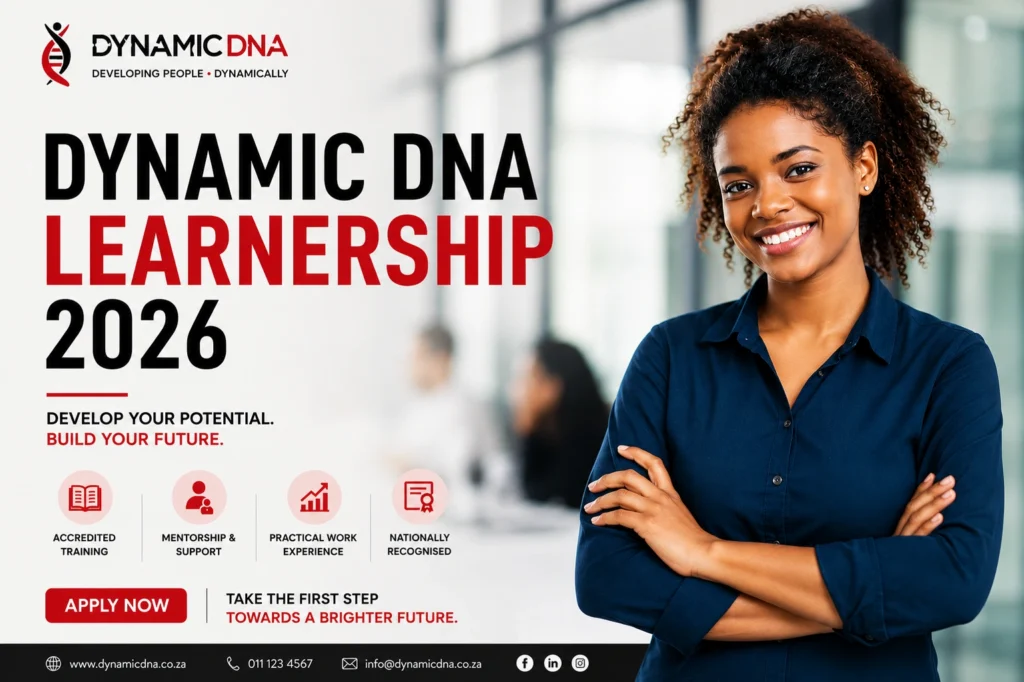
The Dynamic DNA Learnership 2026 aims to address this problem by combining structured learning with practical workplace exposure. Instead of simply studying theory, successful learners develop professional skills while working toward a nationally recognised NQF Level 6 Business Analysis qualification.
If you’re interested in technology, business processes, data, and solving real business problems, this guide explains everything you need to know—from eligibility requirements and application preparation to practical tips that can improve your chances of success.
What Is the Dynamic DNA Learnership 2026?
The Dynamic DNA Learnership 2026 is a workplace-based learning programme designed for unemployed South African youth interested in pursuing a career in Business Analysis.
Based in Randburg, Johannesburg, the programme combines formal learning with practical workplace experience. Learners develop technical knowledge while also gaining valuable exposure to professional environments.
Unlike short training courses, an NQF Level 6 learnership provides nationally recognised learning outcomes that employers across South Africa understand and value.
Business Analysis has become one of the fastest-growing professional fields because organisations increasingly rely on technology to improve efficiency, reduce costs, and make better decisions.
Business analysts help bridge the gap between business needs and technology solutions by understanding how organisations operate and identifying ways to improve processes.
Why This Issue Matters
South Africa continues to experience high youth unemployment, particularly among graduates who have qualifications but limited workplace experience.
Many employers are looking for candidates who can demonstrate more than academic knowledge. They want people who can:
- Solve practical problems
- Communicate professionally
- Understand business operations
- Work with technology
- Collaborate in teams
- Adapt to changing environments
Learnerships like the Dynamic DNA Learnership 2026 help reduce this gap by allowing participants to gain real workplace exposure while earning a recognised qualification.
For many graduates, this first professional experience becomes the stepping stone toward permanent employment.
Understanding Business Analysis
Before applying, it’s important to understand what Business Analysis actually involves.
Many people assume Business Analysis is only about computers or programming.
In reality, Business Analysis is about understanding how organisations work and finding ways to improve them.
A business analyst may help a company:
- Improve customer service processes
- Reduce unnecessary costs
- Analyse business problems
- Gather requirements for new software
- Improve communication between departments
- Support digital transformation projects
- Document business processes
- Recommend practical solutions
Business analysts often work with managers, software developers, project teams, and customers to ensure business goals are achieved effectively.
Who Should Apply for the Dynamic DNA Learnership 2026?
The programme targets unemployed young South Africans who already have relevant educational qualifications.
Applicants should meet the following minimum requirements:
- South African citizen
- Under 30 years old
- Currently unemployed
- Live close to Randburg, Johannesburg
- Not currently participating in another SETA-funded programme
- Hold either:
- A Higher Certificate in Business Analysis, or
- A completed three-year Information Technology qualification with Business Analysis as a major
Meeting the minimum requirements does not automatically guarantee selection, but it ensures your application can be considered.
Why Employers Value Business Analysis Skills
Business Analysis combines several highly transferable skills that employers appreciate across different industries.
These include:
Analytical Thinking
Employers value candidates who can investigate problems instead of simply identifying them.
Communication
Business analysts spend a significant amount of time explaining ideas to different people.
Clear communication is often just as important as technical ability.
Problem-Solving
Companies need employees who can identify inefficiencies and recommend practical improvements.
Technology Awareness
Modern organisations rely heavily on technology.
Understanding both business operations and technology makes Business Analysis particularly valuable.
Teamwork
Business analysts regularly work with multiple departments.
Being able to collaborate professionally is essential.

ALSO VISIT: https://www.dynamicdna.co.za
Dynamic DNA Learnership 2026: How to Prepare a Strong Application
Applying early is only part of the process.
Preparation can make a significant difference.
Step 1: Update Your CV
Your curriculum vitae should immediately show why you’re suitable.
Include:
- Contact information
- Residential location
- Qualification details
- Business Analysis modules
- IT qualifications
- Academic projects
- Computer skills
- Communication skills
- Employment status
- References (if available)
APPLY HERE: Dynamic DNA Learnership 2026
Recruiters often spend only a short time reviewing each CV.
Make important information easy to find.
Step 2: Highlight Relevant Academic Projects
Even if you have never worked before, academic projects demonstrate practical ability.
Examples include:
- Business process analysis
- Systems analysis assignments
- Software development projects
- Database design
- Requirements gathering exercises
- Process improvement case studies
Describe what you achieved rather than simply listing project titles.
Step 3: Demonstrate Professional Skills
Many applicants focus only on qualifications.
Don’t overlook workplace skills like:
- Time management
- Organisation
- Attention to detail
- Team collaboration
- Problem-solving
- Critical thinking
- Written communication
These skills are often equally important.
Step 4: Double-Check Eligibility
Before submitting your application, confirm that you satisfy every listed requirement.
Avoid applying if:
- You exceed the age requirement
- You’re currently employed
- You’re enrolled in another SETA-funded programme
- Your qualification does not meet the requirements
Submitting ineligible applications wastes valuable time for both applicants and recruiters.
Step 5: Apply Before the Deadline
Applications close on 10 July 2026.
Avoid submitting at the last minute.
Unexpected problems such as internet connectivity issues or missing documents can delay submission.
Applying early also gives you time to correct mistakes if necessary.
ALSO APPLY FOR: PathCare Learnership 2027
Best Practices Experts Recommend
Career advisors frequently recommend several habits that improve learnership applications.
Tailor Your CV
Avoid using the same CV for every application.
Highlight Business Analysis knowledge prominently.
Keep Documents Professional
Use clear formatting.
Avoid decorative fonts, unnecessary graphics, or lengthy paragraphs.
Check Spelling
Simple spelling mistakes can create a poor first impression.
Review every document before submission.
Use a Professional Email Address
An email address containing your full name appears far more professional than informal usernames.
Stay Reachable
Answer calls from unknown numbers after applying.
Many candidates miss interview opportunities because recruiters cannot contact them.
Continue Learning
While waiting for responses, continue improving your knowledge through free online Business Analysis resources, Excel training, and communication skills development.
Mistakes People Often Make
Many otherwise qualified candidates reduce their chances by making avoidable mistakes.
Applying Without Meeting Requirements
Always read the eligibility criteria carefully.
If your qualification does not match the stated requirements, your application may be rejected immediately.
Submitting an Outdated CV
A CV that still contains old contact details or missing qualifications can create unnecessary confusion.
Update every section before applying.
Hiding Relevant Qualifications
Some applicants bury important qualifications near the bottom of their CV.
Your Business Analysis or IT qualification should be highly visible.
Waiting Until the Last Day
Last-minute applications increase stress and the risk of technical issues.
Submitting early demonstrates good planning.
Ignoring Professional Presentation
Poor formatting, inconsistent fonts, spelling mistakes, and incomplete information can make recruiters question your attention to detail.
Not Preparing for Interviews
If shortlisted, be ready to explain:
- Why you chose Business Analysis
- Your career goals
- Projects you’ve completed
- How you solve problems
- Why you want workplace experience
Preparation improves confidence considerably.
What Can Learners Expect During the Programme?
Although every employer structures workplace learning differently, participants can generally expect a combination of:
- Classroom-based learning
- Practical workplace experience
- Mentoring
- Skills development workshops
- Team assignments
- Business process analysis
- Professional communication training
- Workplace assessments
The aim is not only to teach technical knowledge but also to prepare learners for long-term careers.
Career Opportunities After Completing the Learnership
Completing an NQF Level 6 Business Analysis learnership can open doors across many industries.
Possible career pathways include:
- Junior Business Analyst
- Systems Analyst
- Business Support Analyst
- Process Improvement Assistant
- Digital Transformation Support
- Project Coordinator
- IT Business Consultant
- Operations Analyst
Because Business Analysis skills apply across banking, retail, healthcare, telecommunications, government, and technology sectors, learners develop versatile career options.
How to Improve Your Employability Beyond the Learnership
While completing the programme, continue building your professional profile.
Consider:
- Learning Microsoft Excel at an advanced level
- Improving presentation skills
- Understanding business process mapping
- Developing report-writing abilities
- Practising interview skills
- Building a LinkedIn profile
- Networking with professionals
- Following developments in technology and digital transformation
Continuous learning makes graduates more competitive.
Frequently Asked Questions
1. Is the Dynamic DNA Learnership 2026 only for Business Analysis graduates?
No. Applicants may also qualify if they have completed a three-year Information Technology qualification with Business Analysis as a major, provided they meet the other eligibility requirements.
2. Can employed candidates apply?
The programme is intended for unemployed South African youth. Applicants should ensure they meet this requirement before submitting an application.
3. Why is living close to Randburg important?
Consistent attendance is an important part of workplace-based learning. Living nearby helps learners participate reliably in training sessions and workplace activities.
4. Does completing the learnership guarantee permanent employment?
No. While completing the programme can significantly improve employability by providing recognised training and workplace experience, it does not automatically guarantee a permanent job.
Final Thoughts
The Dynamic DNA Learnership 2026 offers more than an opportunity to gain another qualification. It provides practical workplace exposure that many graduates need before launching successful careers in Business Analysis and technology.
For unemployed young South Africans who already have the required academic background, this programme offers a valuable chance to strengthen technical knowledge, improve professional confidence, and gain experience that employers increasingly expect.
If you meet the eligibility requirements, don’t rush your application. Take time to prepare a professional CV, highlight your Business Analysis knowledge, organise your supporting documents, and submit your application before the closing date. Small improvements in preparation can make a meaningful difference when competing for limited learnership opportunities.