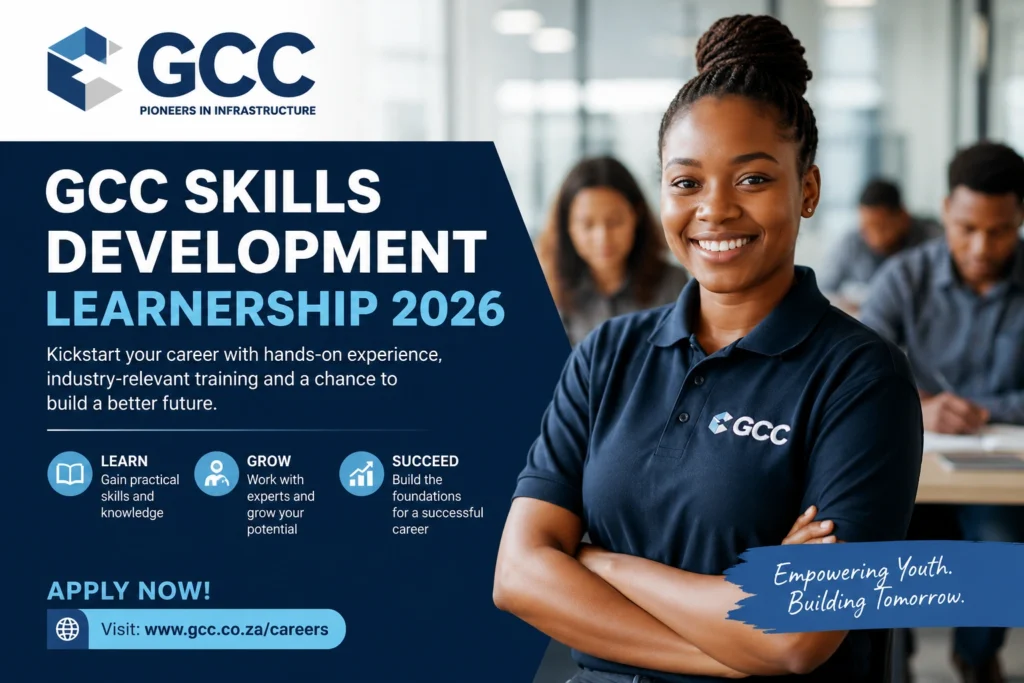

Finding your first career opportunity after Matric can feel overwhelming. Many young South Africans apply for dozens of learnerships without receiving a response, often because they miss important requirements, submit incomplete applications, or fail to prepare the correct supporting documents. Competition is high, and even small mistakes can reduce your chances of being shortlisted.
The GCC Skills Development Learnership 2026 offers an opportunity for eligible young people in Cape Town to gain workplace exposure, develop valuable skills, and begin building a long-term career. While securing a learnership is never guaranteed, submitting a complete and professional application can significantly improve your chances.
This practical guide explains everything you need to know about the GCC Skills Development Learnership 2026, including eligibility requirements, required documents, application tips, common mistakes to avoid, and practical advice that can help you submit a stronger application.
What Is the GCC Skills Development Learnership 2026?
The GCC Skills Development Learnership 2026 is a skills development opportunity designed for young South Africans who meet specific eligibility criteria.
Unlike ordinary job vacancies, a learnership combines structured learning with practical workplace experience. Participants develop both technical and workplace skills while gaining exposure to a professional environment.
For many first-time applicants, this type of programme provides an important stepping stone into the labour market. It allows candidates to gain experience that employers often expect while improving their employability for future opportunities.
Because the programme has clearly defined requirements, applicants should read every instruction carefully before submitting an application.
Who Can Apply for the GCC Skills Development Learnership 2026?
Applicants must satisfy the published eligibility requirements before applying.
The programme is intended for candidates who meet the following criteria:
- Be between 18 and 28 years old
- Be based in Cape Town
- Have successfully passed Matric
- Be an African female candidate
- Candidates living with a disability may receive additional consideration
Meeting these minimum requirements does not automatically guarantee selection. Employers often receive many applications, making it essential to submit a professional and complete application.
If you do not meet the listed criteria, it is generally advisable to look for other learnership opportunities that better match your qualifications and circumstances.
Why This Issue Matters
South Africa continues to face high youth unemployment, particularly among recent Matric graduates and young people without work experience. One of the biggest challenges many employers identify is the lack of practical workplace exposure among first-time job seekers.
Learnerships help bridge this gap by allowing participants to:
- Gain practical work experience
- Develop industry-relevant skills
- Improve communication and teamwork abilities
- Build confidence in professional environments
- Strengthen future CVs
- Increase long-term employability
For many successful professionals, a learnership becomes the first important step toward permanent employment or further career development.
Although every programme differs, employers often value applicants who demonstrate professionalism, attention to detail, and a willingness to learn.
GCC Skills Development Learnership 2026 Application Requirements
Preparing your documents before starting the application process helps reduce mistakes and prevents last-minute stress.
Applicants should prepare the following:
- Updated Curriculum Vitae (CV)
- Certified copy of South African ID
- Highest qualification obtained (Matric certificate or higher qualification)
- Bank confirmation
- Tax clearance certificate
- Disability letter (where applicable)
Before submitting, ensure that every document:
- Is clear and easy to read
- Has been scanned properly
- Is correctly certified where required
- Uses an appropriate file format such as PDF
- Opens without errors
Incomplete applications are often difficult to assess and may not receive further consideration.
ALSO VISIT: https://www.gcc-sd.com
Step-by-Step Guide to Applying Successfully
Applying for the GCC Skills Development Learnership 2026 is relatively straightforward, but success often depends on careful preparation.
Step 1: Update Your CV
Your CV should reflect your latest education, achievements, contact details, and any relevant volunteer work, short courses, or community involvement.
Even if you have never worked before, include:
- School achievements
- Leadership roles
- Computer skills
- Communication skills
- Languages spoken
- Volunteer activities
Keep your CV professional and avoid unnecessary personal information.
Step 2: Gather Supporting Documents
Collect every required document before writing your application email.
Double-check that:
- Your ID copy is certified
- Your qualification documents are complete
- Your bank confirmation is current
- Your tax clearance certificate is included
- Your disability documentation is attached if applicable
Having everything prepared beforehand makes the submission process much easier.
Step 3: Name Your Files Clearly
Many recruiters review hundreds of applications.
Using clear filenames helps make your application easier to organise.
Examples include:
- CV.pdf
- Certified ID.pdf
- Matric Certificate.pdf
- Bank Confirmation.pdf
- Tax Clearance.pdf
Professional file names create a better first impression than random names such as “Document1.pdf” or “Scan00045.pdf.”
Step 4: Write a Professional Email
Candidates should submit all required documents in one email.
A suitable email subject line could be:
GCC Skills Development Learnership Submission
Your email message should briefly include:
- Full name
- Contact number
- Confirmation that all required documents are attached
- A polite thank-you for considering your application
Avoid writing long personal stories. Keep the message concise and professional.
Applications should be submitted to:
Step 5: Review Everything Before Sending
Before clicking “Send,” complete one final review.
Ask yourself:
- Is my CV current?
- Are all required documents attached?
- Is every attachment readable?
- Is my phone number correct?
- Is my email address correct?
- Did I use a professional subject line?
Taking five extra minutes can help you avoid mistakes that may affect your application.
ALSO APPLY FOR: Ivanplats Artisan Learnerships 2026
How to Make Your Application Stand Out
Meeting the minimum requirements is only the beginning.
Recruiters often appreciate applicants who present themselves professionally.
You can improve your application by:
- Using a clean CV layout
- Avoiding spelling mistakes
- Including accurate contact details
- Using a professional email address
- Sending all documents together
- Following every instruction exactly
Attention to detail reflects positively on your organisational skills.
Skills That Can Improve Your Employability
Even if you are selected for a learnership, employers value candidates who continue developing themselves.
Useful skills include:
Computer Literacy
Basic knowledge of Microsoft Word, Excel, Outlook, and internet research remains valuable across many industries.
Communication
Clear verbal and written communication helps employees work effectively with colleagues and supervisors.
Time Management
Being punctual and meeting deadlines are qualities employers consistently value.
Teamwork
Most workplaces require employees to collaborate with others while maintaining professionalism.
Willingness to Learn
Employers often prefer candidates who demonstrate enthusiasm and adaptability over those who already possess extensive experience.
Best Practices Experts Recommend
Career advisors and recruitment professionals commonly recommend the following practices when applying for learnerships:
- Read every application instruction carefully before preparing documents.
- Submit your application well before any closing deadline.
- Use one professional email address consistently.
- Save documents as PDF files whenever possible.
- Keep digital copies of every document for future applications.
- Check spelling and grammar before sending your email.
- Ensure your phone remains available after applying in case recruiters contact you.
- Monitor both your inbox and spam folder regularly.
Small habits like these can make future job applications much easier.
Mistakes People Often Make
Many otherwise qualified applicants reduce their chances because of avoidable errors.
Some of the most common mistakes include:
Applying Without Meeting the Requirements
Submitting applications when you do not satisfy the eligibility criteria rarely leads to success.
Forgetting Attachments
One missing document may leave your application incomplete.
Using an Unprofessional Email Address
Addresses containing nicknames or inappropriate words may create an unprofessional impression.
Sending Blurry Documents
Recruiters cannot verify documents that are difficult to read.
Not Updating Contact Information
Incorrect phone numbers or inactive email addresses may prevent recruiters from reaching shortlisted candidates.
Waiting Until the Last Minute
Technical problems, internet issues, or missing documents can easily delay late applications.
What Happens After You Apply?
Every organisation has its own recruitment process.
Typically, recruiters first review submitted applications to determine whether applicants meet the stated requirements.
Shortlisted candidates may then be contacted for additional screening, interviews, assessments, or document verification.
Because selection timelines vary, applicants should remain patient while continuing to apply for other opportunities rather than relying on a single application.
Continuing your job search helps improve your overall chances of securing employment or training.
Frequently Asked Questions
1. Can I apply if I do not live in Cape Town?
The opportunity specifically indicates that applicants should be based in Cape Town. If you live elsewhere, you may wish to explore learnerships available in your own province unless relocation is acceptable and permitted by the programme requirements.
2. Is previous work experience required?
No previous work experience has been listed among the stated requirements. The opportunity is intended for eligible young candidates who meet the published criteria.
3. What if I do not have a disability?
You may still apply if you meet the other eligibility requirements. The additional consideration mentioned for candidates living with disabilities does not mean disability is mandatory.
4. Can I submit documents separately?
Applicants are advised to send all required supporting documents together in one email. Doing so makes it easier for recruiters to review a complete application.
Final Thoughts
The GCC Skills Development Learnership 2026 represents an opportunity for eligible young African women in Cape Town who are ready to begin building practical workplace skills and professional experience. While competition for learnerships can be strong, careful preparation often distinguishes successful applications from incomplete ones.
Before submitting, take time to ensure that your CV is updated, your supporting documents are complete and clearly scanned, and your email is professional and easy to understand. Following the published instructions carefully demonstrates attention to detail and respect for the application process.
Finally, remember that one application should never be your only plan. Continue applying for other learnerships, internships, apprenticeships, and skills development programmes while waiting for feedback. Persistence, preparation, and continuous learning remain some of the strongest tools for building a successful career.