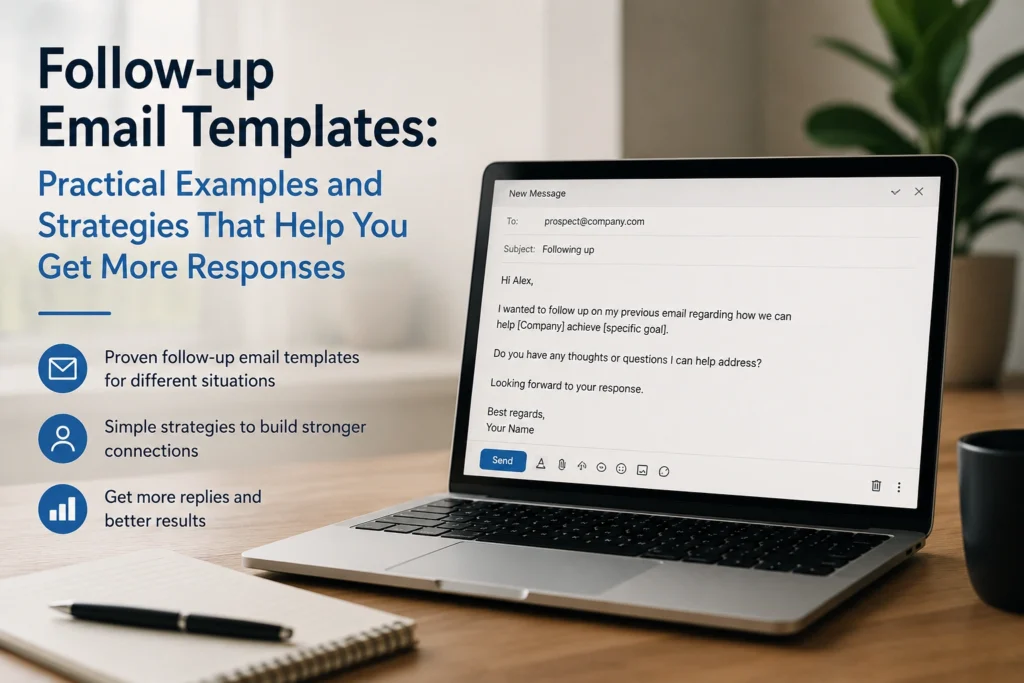

Have you ever sent an important email and then waited… and waited… only to receive no reply? Whether you’re applying for a job, following up after an interview, checking in with a client, or asking for feedback, silence can be frustrating. Many people worry that sending another email will seem annoying or desperate, while others wait so long that valuable opportunities disappear.
This is where Follow-up email templates become incredibly useful. A well-written follow-up email reminds the recipient about your message, shows professionalism, and increases your chances of getting a response without sounding pushy.
The good news is that writing effective follow-up emails doesn’t require exceptional writing skills. Once you understand the purpose, timing, and structure of a strong follow-up, you can adapt proven templates for almost any professional situation.
This practical guide explains how Follow-up email templates work, when to use them, what to include, and provides ready-to-use examples you can customize for your own needs.
What Are Follow-up Email Templates?
Follow-up email templates are pre-written email formats designed for situations where you need to contact someone after your initial message.
Instead of starting from scratch every time, templates provide a professional framework that you can personalize.
They are commonly used for:
- Job applications
- Interview follow-ups
- Sales inquiries
- Business proposals
- Networking contacts
- Customer support
- Payment reminders
- Meeting requests
- Event registrations
- Client check-ins
- Partnership opportunities
The goal isn’t simply to ask, “Did you see my email?” Instead, a great follow-up adds value, shows courtesy, and encourages action.
ALSO APPLY FOR: BP Work Integrated Learner 2026
ALSO APPLY FOR: Ivanplats Artisan Learnerships 2026
Why This Issue Matters
Many opportunities are lost not because people aren’t qualified or interested—but because communication stops too early.
Professionals receive hundreds of emails every week. Sometimes emails are forgotten, buried in crowded inboxes, or postponed until later.
Sending a thoughtful follow-up can:
- Increase response rates significantly
- Demonstrate professionalism
- Show genuine interest
- Keep conversations moving
- Prevent misunderstandings
- Build stronger business relationships
- Improve customer service
- Help job seekers stand out
Rather than being seen as annoying, a polite follow-up often shows initiative and organization.
When Should You Send a Follow-up Email?
Timing matters almost as much as the message itself.
Here are common guidelines.
After a Job Application
Wait about 5–7 business days before following up unless the employer has provided a specific timeline.
After an Interview
Send a thank-you email within 24 hours.
If you haven’t heard back afterward, send another follow-up after the timeframe mentioned during the interview—or roughly one week later.
After Sending a Proposal
Wait 3–5 business days before checking in.
After Meeting Someone
Send your follow-up within 24–48 hours while the conversation is still fresh.
Customer Service Requests
Depending on urgency, waiting 2–3 business days is generally reasonable.
Key Elements Every Follow-up Email Should Include
Successful Follow-up email templates usually contain five simple parts.
1. Clear Subject Line
Examples include:
- Following Up on My Application
- Checking In Regarding Our Meeting
- Quick Follow-Up
- Following Up on Our Conversation
Avoid misleading or overly dramatic subject lines.
2. Friendly Greeting
Address the recipient by name whenever possible.
Example:
Hello Sarah,
or
Dear Mr. Daniels,
3. Reminder
Briefly remind them about your previous email.
For example:
I wanted to follow up regarding the proposal I sent last Tuesday.
Keep this section short.
4. Reason for Following Up
Explain why you’re reaching out.
Examples include:
- requesting an update
- offering additional information
- confirming receipt
- asking about next steps
5. Professional Closing
End politely.
Examples:
- Thank you for your time.
- I appreciate your consideration.
- I look forward to hearing from you.
Always include your name and contact details.
ALSO READ ABOUT: Best Industries to Work in Gauteng
Follow-up Email Templates for Different Situations
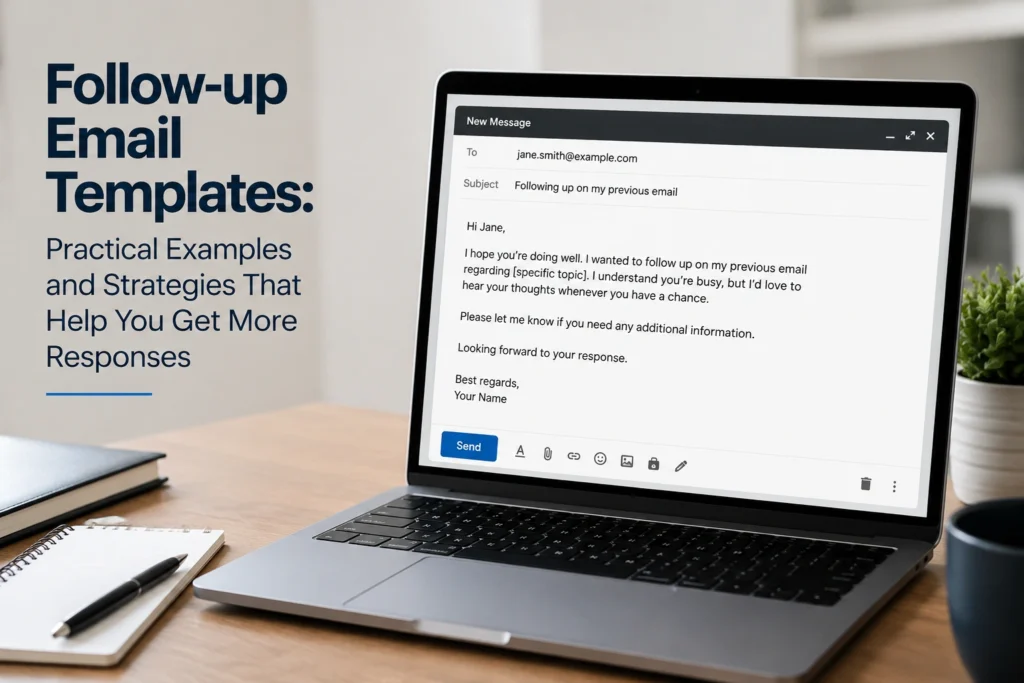
Job Application Follow-up
Subject: Following Up on My Application
Hello [Hiring Manager],
I hope you’re doing well.
I recently submitted my application for the [Job Title] position and wanted to follow up to confirm it was received.
I remain very interested in joining your team and would appreciate any updates regarding the recruitment process.
Thank you for your time and consideration.
Kind regards,
[Your Name]
Interview Follow-up
Subject: Thank You for the Interview
Dear [Interviewer],
Thank you for taking the time to meet with me today.
I enjoyed learning more about the role and your organization. Our discussion strengthened my enthusiasm for the opportunity.
Please let me know if you require any additional information.
Thank you again, and I hope to hear from you soon.
Kind regards,
[Your Name]
Sales Follow-up
Subject: Following Up on Our Conversation
Hello [Client],
I hope you’re having a great week.
I wanted to check whether you’ve had an opportunity to review the information I shared.
If you have any questions or would like to discuss possible solutions, I’d be happy to schedule a call at your convenience.
Looking forward to hearing from you.
Best regards,
[Your Name]
Networking Follow-up
Subject: Great Meeting You
Hello [Name],
It was a pleasure meeting you at [Event].
I really enjoyed our conversation about [Topic]. I’d love to stay connected and continue learning from your experience.
Thank you again for your time.
Kind regards,
[Your Name]
Payment Reminder
Subject: Friendly Payment Reminder
Dear [Customer],
I hope you’re doing well.
This is a friendly reminder regarding Invoice #[Number], which was due on [Date].
If payment has already been made, please disregard this email.
Thank you for your attention, and please let me know if you have any questions.
Kind regards,
[Your Name]
Step-by-Step Guide to Writing Effective Follow-up Email Templates
Step 1: Wait the Appropriate Amount of Time
Following up too early can appear impatient.
Waiting too long may reduce your chances of receiving a response.
Step 2: Keep It Short
Most follow-up emails should be between 75 and 150 words.
Busy professionals appreciate concise communication.
Step 3: Stay Positive
Avoid sounding frustrated.
Never write things like:
- You ignored my email.
- I’ve emailed several times already.
- Why haven’t you replied?
Remain courteous.
Step 4: Add Value
Instead of simply asking for an update, include something helpful.
For example:
- additional information
- relevant documents
- answers to common questions
- scheduling options
Step 5: Make Your Request Clear
Tell the recipient exactly what you’re hoping for.
Examples:
- Could you provide an update?
- Would next Tuesday work?
- Please let me know your availability.
Step 6: Proofread Before Sending
Double-check:
- spelling
- grammar
- recipient’s name
- dates
- attachments
- contact information
Small mistakes can reduce credibility.
Follow-up Email Templates for Recruiters
If you’re contacting recruiters, keep your message respectful and concise.
Example:
Hello [Recruiter],
I hope you’re doing well.
I wanted to follow up regarding my application for the [Position].
I’m very interested in the opportunity and would appreciate any updates regarding the hiring timeline.
Please let me know if you need any further information.
Thank you for your consideration.
Kind regards,
[Your Name]
Best Practices Experts Recommend
Professionals who manage hiring, sales, and client relationships often recommend the following habits:
- Personalize every follow-up instead of sending identical emails.
- Mention previous conversations to provide context.
- Keep paragraphs short for easier reading.
- Use a professional email address.
- Proofread before sending.
- Include one clear call to action.
- Avoid sending multiple follow-ups within a short period.
- Maintain a friendly and respectful tone.
- Follow up consistently but reasonably.
- End every email with appreciation.
These practices help build trust and improve communication over time.
Mistakes People Often Make
Even experienced professionals sometimes make avoidable mistakes.
Sending Too Many Emails
Repeated follow-ups within a few days can overwhelm recipients.
Writing Long Messages
Most people skim emails.
Keep your message focused.
Using Emotional Language
Avoid expressing anger or disappointment.
Professionalism always leaves a better impression.
Forgetting the Original Context
Always remind recipients what you’re following up about.
Otherwise, they may need to search through old emails.
Not Including a Call to Action
Tell readers what you’d like them to do next.
Without clear direction, they may postpone responding.
Ignoring Grammar and Formatting
Typos and poor formatting can make even good messages appear careless.
Tips for Increasing Response Rates
If you want better results from your Follow-up email templates, consider these additional strategies:
- Send emails during normal business hours.
- Use descriptive subject lines.
- Personalize names and company details.
- Reference previous discussions naturally.
- Keep your tone conversational but professional.
- Include only one request per email.
- Follow up no more than two or three times unless the situation requires ongoing communication.
- Thank recipients for their time.
These simple improvements often lead to noticeably higher response rates.
Frequently Asked Questions
How many follow-up emails should I send?
Generally, two or three follow-ups are acceptable for most professional situations. If you still receive no response after that, it’s usually best to move on unless there’s a compelling reason to continue
Should I send another email if someone never replies?
Yes, provided you’ve waited an appropriate amount of time and your follow-up is polite. Many emails go unanswered simply because recipients are busy, not because they are uninterested.
Can I reuse Follow-up email templates?
Absolutely. Templates save time and promote consistency, but you should always personalize them with the recipient’s name, relevant details, and the specific context of your conversation.
What is the ideal length of a follow-up email?
Aim for around 75 to 150 words. Short, focused emails are more likely to be read and answered than lengthy messages.
Final Thoughts
Effective communication doesn’t end after sending your first email. In many professional situations, success depends on following up politely, professionally, and at the right time. Well-crafted Follow-up email templates remove the guesswork by providing a reliable structure that works across job applications, interviews, networking, sales, and customer communication.
The key is to stay respectful, concise, and helpful. Rather than pressuring the recipient, remind them of your previous message, explain why you’re following up, and make it easy for them to respond. By personalizing each template, choosing the right timing, and avoiding common mistakes, you can improve your response rates while strengthening professional relationships. A thoughtful follow-up often makes the difference between being overlooked and receiving the opportunity you’ve been waiting for.
ALSO APPLY FOR: BP Work Integrated Learner 2026
ALSO APPLY FOR: Ivanplats Artisan Learnerships 2026
ALSO READ ABOUT: Best Industries to Work in Gauteng