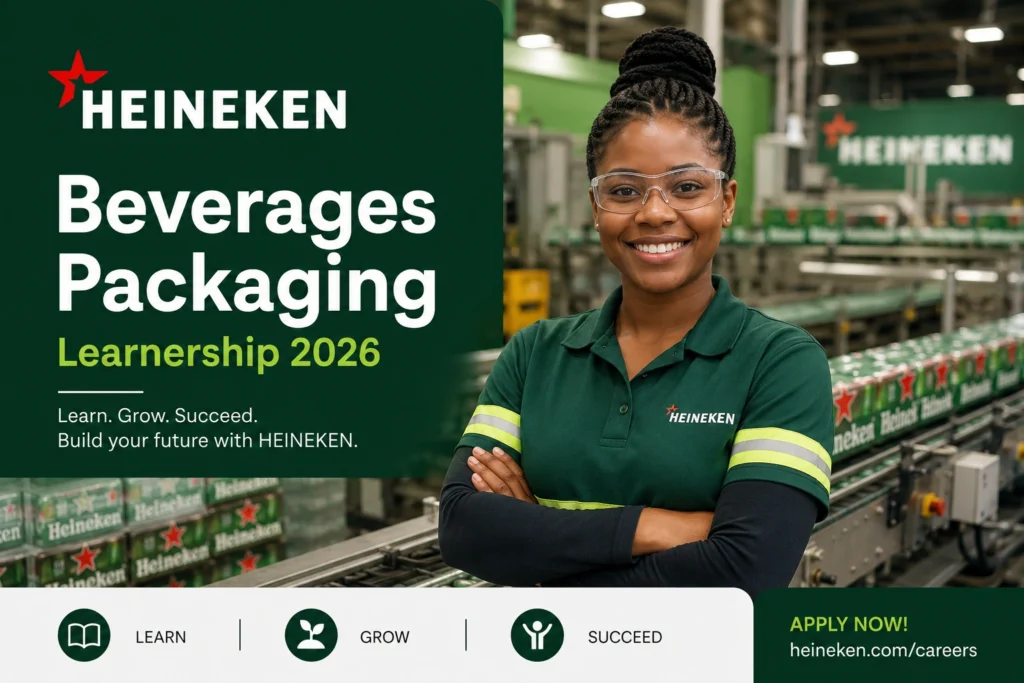

The HEINEKEN Beverages Packaging Learnership 2026 attract so much attention. Learnerships give candidates structured workplace exposure while helping them develop industry-relevant skills in a real production environment. Instead of only learning theory, participants gain hands-on understanding of packaging operations, safety systems, machinery processes and quality standards.
For applicants interested in manufacturing, packaging, logistics or technical operations, the HEINEKEN programme offers more than short-term training. It can help learners understand how large production facilities operate and what employers expect from workers in modern manufacturing environments.
The opportunity is based at the Sedibeng Manufacturing Plant and focuses on NQF Level 3 Packaging Operations. Learners may be exposed to filling processes, sealing, coding, labelling, packing, maintenance basics and workplace safety procedures.
In a competitive job market where practical skills matter more than ever, opportunities like this can become an important stepping stone toward future employment.
What Is the HEINEKEN Beverages Packaging Learnership?
The HEINEKEN Beverages Packaging Learnership is a workplace-based training programme designed to introduce learners to packaging operations inside a manufacturing environment.
Unlike classroom-only learning, this programme combines structured theoretical learning with real operational exposure. Learners may work alongside experienced teams while developing an understanding of how packaging systems support production and distribution.
Packaging plays a major role in the manufacturing supply chain. Products cannot reach customers efficiently without accurate filling, safe sealing, proper labelling and quality checks. Even a small error in packaging can affect customer satisfaction, safety compliance or product quality.
This is why packaging operations require workers who can focus carefully, follow procedures and maintain high standards under pressure.
The learnership aims to help candidates build practical knowledge in areas such as:
- Packaging line operations
- Quality control
- Safety procedures
- Asset management
- First-line maintenance
- Teamwork and communication
- Production discipline
- Problem-solving methods
For many applicants, this type of exposure can help strengthen future job applications in manufacturing and FMCG industries.
Why the Manufacturing Industry Still Offers Career Potential
Many young people overlook manufacturing careers because they often focus only on office-based professions. However, manufacturing remains one of the sectors that continues to require technical skills, operational workers and production support staff.
Large beverage and production companies rely heavily on trained personnel to keep operations running efficiently. Packaging teams are especially important because they help ensure products are prepared correctly before distribution.
Candidates who develop skills in packaging operations may later pursue opportunities in:
- Production operations
- Warehousing
- Technical support
- Maintenance assistance
- Quality assurance
- Supply chain operations
- Logistics support
- FMCG manufacturing
The experience gained during a learnership can also improve confidence in workplace environments where safety, discipline and productivity are essential.
Why This Issue Matters
One of the biggest challenges facing young job seekers today is the lack of practical workplace exposure.
Many applicants submit CVs with academic qualifications but little evidence of real operational experience. Employers increasingly want candidates who already understand workplace expectations such as punctuality, safety awareness, communication and teamwork.
That is why programmes like the HEINEKEN Beverages Packaging Learnership matter beyond just one company opportunity.
They help bridge the gap between education and employment by giving learners exposure to real production systems.
This matters because:
- Youth unemployment remains extremely high.
- Entry-level manufacturing jobs are competitive.
- Technical industries value hands-on experience.
- Workplace discipline is difficult to learn through theory alone.
- Safety and operational awareness are essential in industrial environments.
For many learners, the first structured workplace experience becomes the foundation for future career growth.
Even if participants do not immediately secure permanent employment afterward, the exposure gained may improve future applications across the manufacturing and supply chain sectors.
What Learners May Be Exposed To
The programme focuses on practical packaging operations and manufacturing processes.
Learners may gain experience in several operational areas, including:
Filling and Packaging Processes
This includes understanding how products move through packaging lines and how packaging systems maintain consistency and efficiency.
Date Coding and Labelling
Correct coding and labelling are critical in beverage manufacturing because they help with product tracking, compliance and customer information.
Health and Safety Procedures
Manufacturing environments place strong emphasis on safety compliance. Learners may gain exposure to workplace safety systems, protective equipment procedures and operational safety rules.
Quality Control
Packaging teams help maintain product quality standards. Learners may understand how inspections, checks and monitoring processes work within production environments.
First-Line Maintenance
Basic maintenance awareness can help workers identify minor equipment problems before they become larger operational issues.
Teamwork and Communication
Manufacturing operations rely heavily on coordination between teams. Learners may develop communication skills needed in production environments.
Who Should Consider Applying?
The HEINEKEN Beverages Packaging Learnership may suit applicants who enjoy practical, hands-on environments rather than purely desk-based work.
This opportunity could be especially suitable for candidates interested in:
- Machinery
- Production systems
- Technical work
- Manufacturing environments
- Packaging operations
- Safety procedures
- Logistics and supply chain work
Successful learners are often people who can:
- Follow instructions carefully
- Work under pressure
- Maintain attention to detail
- Arrive on time consistently
- Adapt to structured environments
- Communicate effectively with teams
Applicants who enjoy problem-solving and technical learning may also find manufacturing environments rewarding.
Requirements Applicants Should Understand
Before applying, candidates should always verify the latest official requirements on the employer’s careers platform.
The opportunity details mention the following requirements:
- Matric or Grade 12
- Pure Mathematics
- English
- Strong academic results may be advantageous
- Technical orientation
- Ability to work under pressure
- Communication skills
- Safety awareness
Some manufacturing environments may also require shift work or extended operational hours depending on production schedules.
Applicants should prepare mentally for structured routines and operational discipline.
Step-by-Step Guide to Applying Successfully
Many candidates lose opportunities because they rush applications or ignore important details. Following a structured process can improve the quality of your application.
Step 1: Prepare Your CV Properly
Your CV should be clean, short and easy to read.
Include:
- Full name
- Contact details
- Location
- Educational background
- Matric subjects
- Technical strengths
- Practical experience
- Skills related to safety or teamwork
Avoid long paragraphs and unnecessary personal information.
Step 2: Highlight Technical Interest
Manufacturing employers want candidates who show genuine interest in practical work.
Mention any experience involving:
- School technical subjects
- Mechanical projects
- Workshop activities
- Machinery exposure
- Volunteer work
- Maintenance-related tasks
Even informal experience can strengthen your application.
Step 3: Double-Check Contact Information
Many applicants accidentally miss opportunities because their phone numbers or email addresses are incorrect.
Always verify your:
- Cellphone number
- Email address
- Spelling of names
- Uploaded documents
Step 4: Prepare Supporting Documents
Commonly required documents may include:
- Certified ID copy
- Updated CV
- Matric certificate
- Academic records
Ensure scans are clear and readable.
Step 5: Apply Through the Official Platform
Use only official company application systems when submitting your details.
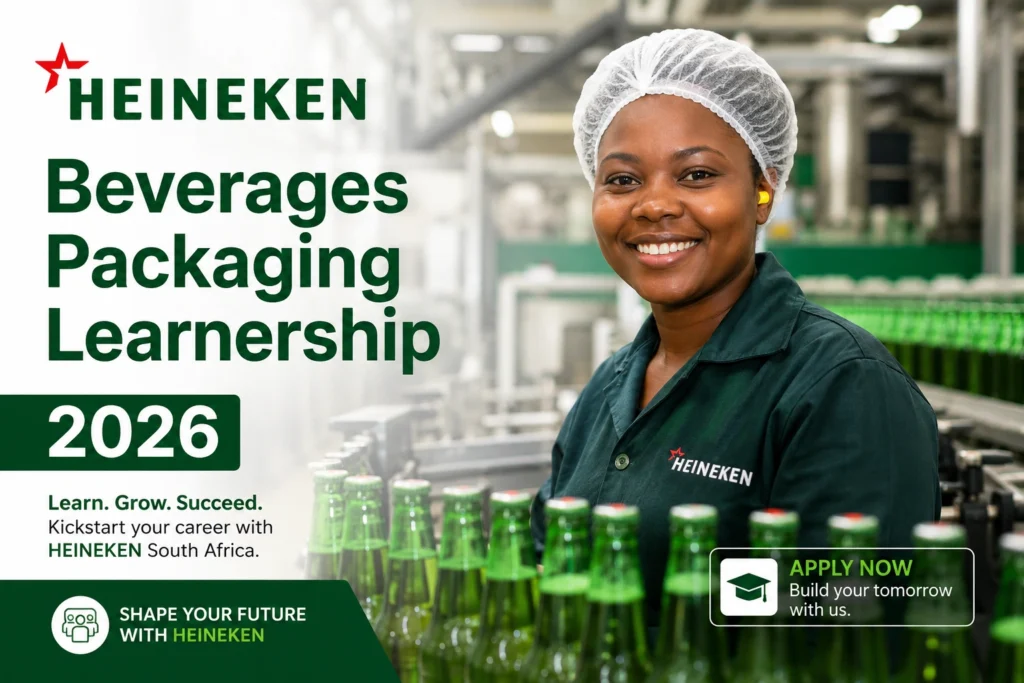
APPLY HERE: HEINEKEN Beverages Packaging Learnership 2026
ALSO APPLY FOR: TotalEnergies Supply Chain Learnerships 2026
How to Make Your CV Stand Out
One of the biggest mistakes applicants make is using generic phrases without evidence.
Saying “I am hardworking” is not enough.
Instead, show examples of skills linked to manufacturing environments.
A stronger CV may include statements like:
- Assisted with technical school projects involving equipment
- Completed Mathematics and technical subjects in Matric
- Worked in environments requiring attention to detail
- Participated in safety-focused activities or practical tasks
Employers want proof of potential, not only general claims.
Best Practices Experts Recommend
Candidates applying for manufacturing learnerships can improve their chances by following several important best practices.
Research the Industry
Understanding basic manufacturing terminology can help during interviews and assessments.
Learn about:
- Packaging operations
- Production lines
- Workplace safety
- Quality assurance
- Manufacturing environments
Practice Professional Communication
Answer calls professionally and check your email regularly after applying.
Many candidates miss opportunities simply because they ignore communication attempts.
Prepare for Assessments
Some employers may require aptitude testing or assessments.
Practice:
- Mathematics
- Logical reasoning
- Problem-solving exercises
- Basic technical understanding
Show Reliability
Manufacturing employers value dependability.
During interviews, demonstrate:
- Punctuality
- Willingness to learn
- Respect for procedures
- Understanding of workplace discipline
Focus on Safety Awareness
Safety is extremely important in production environments.
Candidates who show awareness of safe working behaviour may stand out positively.
Mistakes People Often Make
Many applicants unknowingly weaken their own applications through avoidable errors.
Submitting Generic CVs
A manufacturing learnership application should not look identical to applications for retail or office jobs.
Tailor your CV toward technical and operational work.
Ignoring Mathematics Performance
If the programme requires Pure Mathematics, ensure your results are clearly visible on your application.
Using Unprofessional Email Addresses
Avoid casual email names that appear unprofessional.
Applying Without Reading Instructions
Some candidates skip important details and upload incomplete documents.
Always review application requirements carefully.
Falling for Recruitment Scams
Never pay anyone for recruitment assistance.
Legitimate employers do not ask for payment to process learnership applications.
How This Learnership Could Support Long-Term Career Growth
A learnership may not guarantee permanent employment, but it can improve employability significantly.
Practical workplace exposure often helps candidates:
- Build confidence
- Develop technical understanding
- Improve communication skills
- Understand industrial discipline
- Gain operational awareness
- Strengthen future job applications
Experience inside a recognised manufacturing company can also help learners better understand which career paths suit their strengths and interests.
For some candidates, packaging operations may become the starting point toward future technical studies or specialised operational careers.
Frequently Asked Questions
1. Does the HEINEKEN Beverages Packaging Learnership guarantee permanent employment?
No programme can automatically guarantee permanent employment. However, the workplace experience gained may strengthen future job applications and improve employability.
2. Is previous work experience required?
Many learnerships are designed for entry-level applicants. However, showing technical interest or practical exposure can improve your application.
3. Why is Pure Mathematics important for this programme?
Manufacturing environments often involve measurements, calculations, production systems and technical problem-solving. Mathematics can support understanding of operational processes.
4. What should applicants do after submitting applications?
Monitor your email and phone regularly. Keep copies of your application and any reference numbers for future follow-up.
Final Thoughts
The HEINEKEN Beverages Packaging Learnership offers more than just workplace exposure. It provides an opportunity for learners to understand how real manufacturing environments operate while building valuable technical and operational skills.
For candidates interested in production, packaging, quality control or manufacturing support roles, this type of experience can become an important foundation for future career growth.
The key is approaching the application process seriously. Prepare a focused CV, highlight technical strengths, follow instructions carefully and demonstrate willingness to learn in a structured environment.
In competitive job markets, practical exposure often separates strong candidates from the rest. Even small improvements in preparation, professionalism and technical awareness can make a major difference when applying for opportunities like this.