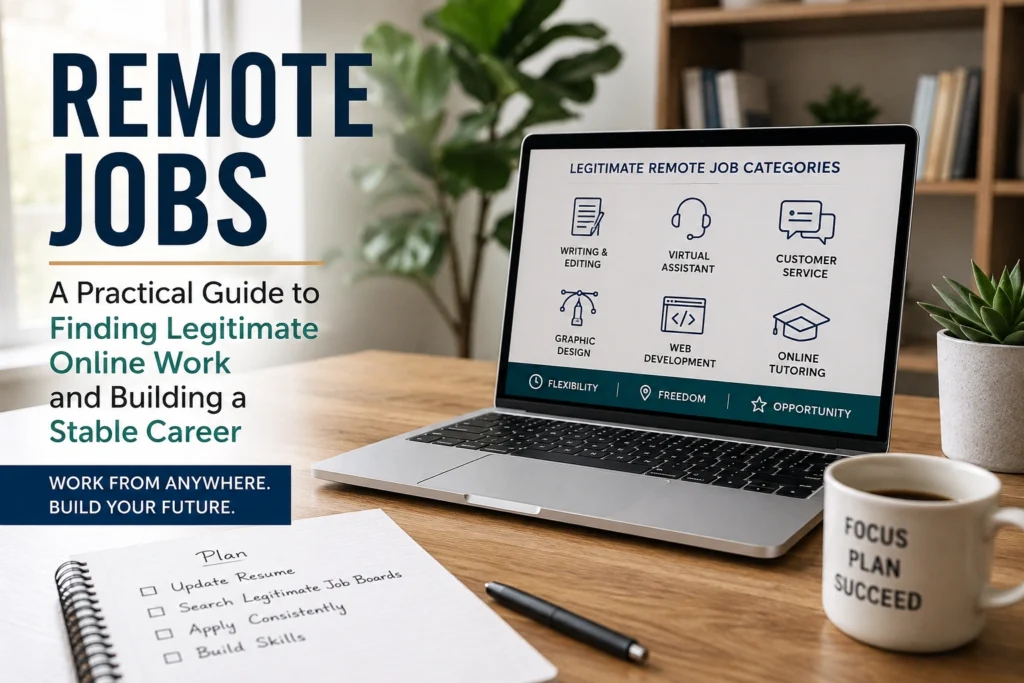

The demand for remote jobs has exploded over the past few years, but so has the confusion around them. Many people searching for online work face the same frustrating problems: fake job listings, endless applications with no responses, low-paying gigs disguised as “opportunities,” and uncertainty about which skills employers actually want.
For job seekers in South Africa and around the world, remote work offers something incredibly valuable — flexibility, access to international employers, reduced transport costs, and the possibility of earning income without relocating. Yet many applicants struggle because they approach remote jobs the same way they would approach traditional office jobs.
The reality is that remote hiring works differently. Employers care deeply about communication, self-management, digital skills, and reliability. Understanding how the remote work market operates can dramatically improve your chances of success.
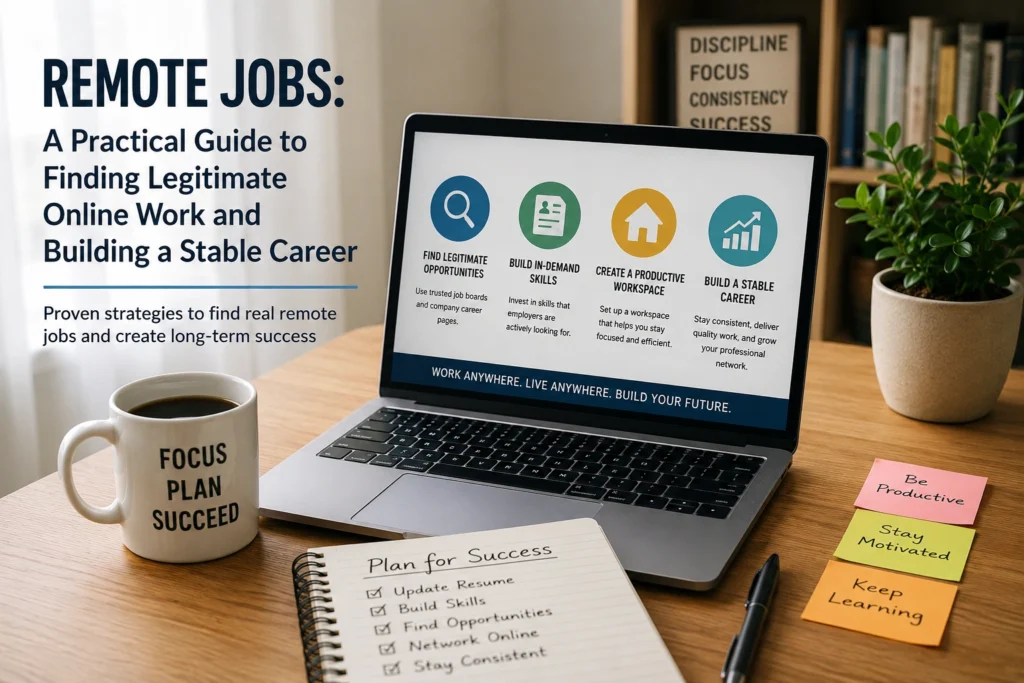
This guide explains what remote jobs are, why they matter, how to find legitimate opportunities, which skills are in demand, and the practical steps you can take to build a sustainable remote career.
What Are Remote Jobs?
Remote jobs are positions that allow employees or freelancers to work outside a traditional office environment. Instead of commuting daily, workers complete tasks from home, co-working spaces, or any location with reliable internet access.
Remote jobs can be:
- Full-time permanent positions
- Part-time roles
- Freelance contracts
- Hybrid arrangements
- Project-based gigs
Common industries offering remote jobs include:
- Customer support
- Software development
- Graphic design
- Writing and editing
- Digital marketing
- Virtual assistance
- Data analysis
- Online teaching
- Sales and recruitment
- Cybersecurity and IT support
Some companies hire fully remote teams across different countries, while others allow employees to work remotely within specific regions.
ALSO APPLY FOR: Investec Tech Graduate Internships 2027
ALSO APPLY FOR: Eduvos Quality Assurance Graduate Intern 2026
Why Remote Jobs Are Becoming More Popular
Several major shifts have changed the global job market:
Businesses Want Lower Costs
Companies save money on office space, utilities, and operational expenses by hiring remote workers.
Employers Can Hire Globally
Instead of limiting recruitment to one city, companies can hire talented people from anywhere.
Workers Want Flexibility
Many employees prefer flexible schedules, less commuting, and improved work-life balance.
Digital Tools Make Collaboration Easier
Platforms like video conferencing software, cloud storage, and project management systems have made remote teamwork more practical than ever.
Why This Issue Matters
Remote jobs are not just a trend — they are reshaping the future of work.
For many people, especially young graduates and unemployed professionals, remote opportunities provide access to income that may not exist locally. Someone living in a smaller town can now work for a company based in Johannesburg, London, Dubai, or New York without relocating.
The impact is especially important in countries facing high unemployment rates. Remote work can help:
- Reduce transportation costs
- Expand access to global employment markets
- Create opportunities for people with disabilities
- Help parents balance family responsibilities
- Increase digital skills development
- Enable side income streams
Remote jobs also change how careers develop. Workers are increasingly judged by productivity and results rather than physical presence in an office.
However, competition is intense. Thousands of applicants may apply for a single remote role. That is why having a strategy matters.
How to Find Legitimate Remote Jobs
1. Identify Your Remote-Friendly Skills
Before applying, evaluate which of your skills translate well to remote work.
Examples include:
- Writing
- Customer communication
- Administrative support
- Coding
- Graphic design
- Social media management
- Teaching
- Bookkeeping
- Data entry
- Sales
If you lack experience, focus on transferable skills such as:
- Time management
- Problem-solving
- Communication
- Organization
- Research
- Adaptability
Remote employers often value reliability and communication just as much as technical expertise.
2. Build a Strong Online Presence
Your online profile often becomes your first impression.
Important steps include:
Create a Professional CV
A remote-work CV should emphasize:
- Digital tools you can use
- Independent work experience
- Communication skills
- Achievements and measurable results
Update LinkedIn
A professional LinkedIn profile helps recruiters find you. Include:
- Clear headline
- Skills section
- Portfolio links
- Work samples
- Certifications
Build a Portfolio
If possible, create examples of your work:
- Writing samples
- Design projects
- Coding repositories
- Marketing campaigns
- Presentation slides
Even beginners can create sample projects to demonstrate ability.
3. Use Trusted Remote Job Platforms
One of the biggest mistakes job seekers make is relying on random social media posts.
Use reputable platforms instead, including:
- Remote-specific job boards
- Freelancing marketplaces
- Company career pages
- Professional networking sites
Look for roles labeled:
- Remote
- Work from home
- Distributed team
- Fully remote
- Hybrid remote
Always research companies before applying.
4. Learn Basic Remote Work Tools
Many remote employers expect familiarity with digital collaboration tools.
Useful platforms include:
- Zoom
- Google Workspace
- Microsoft Teams
- Slack
- Trello
- Asana
- Notion
You do not need expert-level knowledge immediately, but basic competence matters.
5. Tailor Every Application
Sending the same application to hundreds of companies rarely works.
Instead:
- Match your CV to the job description
- Use keywords from the listing
- Explain why you fit remote work specifically
- Highlight communication and self-discipline
Remote employers want evidence that you can work independently.
Remote Jobs That Often Hire Beginners
Not every remote position requires years of experience.
Popular entry-level remote jobs include:
Virtual Assistant
Tasks may include:
- Email management
- Scheduling
- Research
- Data organization
Customer Support Agent
Many companies hire remote support staff for:
- Live chat
- Email support
- Phone assistance
Content Writing
Businesses constantly need:
- Blog articles
- Product descriptions
- SEO content
- Social media captions
Online Tutoring
Teaching English or tutoring academic subjects can provide flexible income opportunities.
Data Entry
Although competition is high, some legitimate data-entry roles still exist.
Social Media Assistance
Brands often need help managing:
- Facebook pages
- Instagram accounts
- TikTok content
- Community engagement
ALSO READ ABOUT: AI and Jobs: How Workers Can Stay Relevant, Adapt Faster, and Build Future-Proof Careers
How to Avoid Remote Job Scams
Unfortunately, scams are common in the remote work market.
Warning signs include:
- Requests for upfront payment
- Unrealistically high salaries
- Poor grammar in job descriptions
- No company website
- Pressure to act immediately
- Requests for banking details too early
A legitimate employer will usually:
- Conduct interviews
- Explain responsibilities clearly
- Provide contracts or agreements
- Use professional communication channels
If something feels suspicious, research the company thoroughly before proceeding.
Step-by-Step Strategy to Get Your First Remote Job
Step 1: Choose One Skill Area
Avoid trying to learn everything at once.
Focus on one direction such as:
- Writing
- Design
- Admin support
- Coding
- Marketing
Step 2: Learn Basic Industry Skills
Use free or affordable resources:
- YouTube tutorials
- Online courses
- Practice projects
- Community forums
Step 3: Create Sample Work
Employers often care more about proof of ability than formal qualifications.
Examples:
- Write sample blog posts
- Design social media graphics
- Build a simple website
- Create spreadsheet systems
Step 4: Apply Consistently
Remote job hunting requires persistence.
Set weekly goals such as:
- 10 tailored applications
- 2 portfolio updates
- 1 networking conversation
Step 5: Prepare for Virtual Interviews
Practice answering questions about:
- Communication
- Productivity
- Time management
- Working independently
- Handling deadlines
Good lighting, clear audio, and stable internet can improve interview performance significantly.
Best Practices Experts Recommend
Create a Dedicated Workspace
Even a small quiet area helps improve focus and professionalism.
Maintain Consistent Working Hours
Routine improves productivity and helps remote workers avoid burnout.
Improve Communication Skills
Clear writing and timely responses are critical in remote environments.
Track Your Productivity
Use task lists or productivity systems to manage deadlines and workloads.
Keep Learning
The remote job market evolves quickly. Workers who continually improve their skills stay competitive.
Build Professional Relationships
Networking remains valuable even in remote industries. Online communities and LinkedIn connections can lead to opportunities.
Mistakes People Often Make
Applying Without Reading the Job Description
Many applicants ignore key requirements and apply blindly.
Using Generic CVs
Remote employers want customized applications that match the role.
Ignoring Time Zones
International remote work may require schedule flexibility.
Underestimating Communication
Poor communication is one of the biggest reasons remote employees fail.
Falling for Scams
Never pay “registration fees” or buy equipment from unknown employers.
Expecting Instant Results
Finding quality remote jobs takes time, patience, and consistent effort.
How to Stay Productive in Remote Jobs
Working remotely can be freeing, but it also requires discipline.
Helpful strategies include:
- Setting daily goals
- Taking scheduled breaks
- Avoiding distractions
- Using productivity apps
- Separating work time from personal time
Burnout can happen quickly when home and work boundaries disappear.
The Skills Most Remote Employers Want
Remote hiring managers increasingly prioritize:
- Communication
- Problem-solving
- Accountability
- Tech literacy
- Adaptability
- Collaboration
- Time management
Technical expertise matters, but employers also want workers who can operate independently without constant supervision.
FAQ
Are remote jobs legitimate?
Yes, many legitimate companies hire remote workers globally. However, scams also exist, so researching employers carefully is essential.
Do I need a degree to get remote jobs?
Yes. Entry-level opportunities exist in customer support, virtual assistance, content writing, tutoring, and social media management.
Can beginners get remote jobs?
Yes. Entry-level opportunities exist in customer support, virtual assistance, content writing, tutoring, and social media management.
What equipment do I need for remote work?
Most remote jobs require: Reliable internet, A laptop or desktop computer, Headphones, Basic software tools, and a quiet working environment
The Future of Remote Jobs
Remote work is likely to remain a major part of the global economy. Many companies now operate with distributed teams permanently, while others use hybrid systems.
Artificial intelligence, automation, and digital collaboration tools will continue shaping how remote work evolves. Workers who adapt to changing technologies and continue learning will have stronger long-term opportunities.
At the same time, competition will continue increasing. Simply wanting a remote job is no longer enough. Candidates need practical skills, professionalism, and persistence.
Final Thoughts
Remote jobs have created new opportunities for millions of people, but success requires more than simply applying online. The strongest candidates understand how remote hiring works, develop valuable digital skills, communicate professionally, and stay consistent in their job search.
Start by identifying one marketable skill, building a professional online presence, and applying strategically rather than randomly. Focus on legitimate opportunities, keep improving your abilities, and avoid shortcuts that promise unrealistic earnings.
Remote work can provide flexibility, global career access, and financial growth — but only for people willing to approach it with discipline and long-term thinking.
ALSO APPLY FOR: Investec Tech Graduate Internships 2027
ALSO APPLY FOR: Eduvos Quality Assurance Graduate Intern 2026
ALSO READ ABOUT: AI and Jobs: How Workers Can Stay Relevant, Adapt Faster, and Build Future-Proof Careers