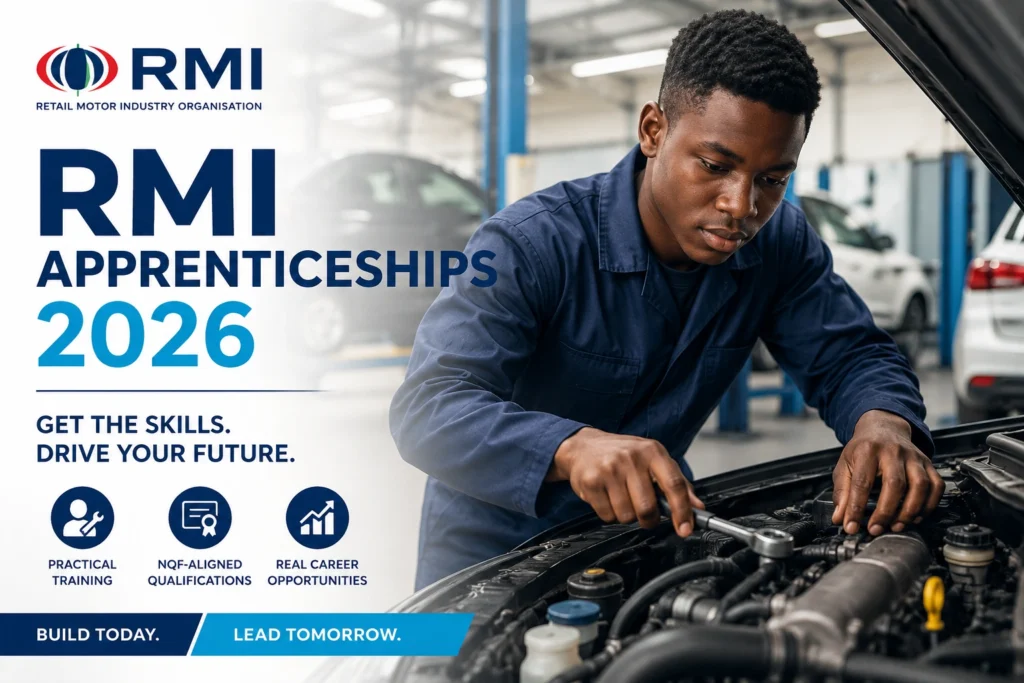

South Africa’s employment crisis is no longer just a headline — it is shaping how an entire generation thinks about the future. And in 2026, one opportunity is suddenly attracting serious attention from school leavers, unemployed youth, parents, and even policymakers: Retail Motor Industry [ RMI ] Apprenticeships 2026.
The timing is not accidental.
Across the country, conversations about “future-proof careers” are intensifying as traditional entry-level jobs become harder to secure. At the same time, the automotive repair and aftermarket sector is facing a growing shortage of qualified artisans. Workshops are struggling to find diesel mechanics. Panel beaters are in demand. Auto electricians are increasingly valuable as modern vehicles become more technologically advanced.
That combination — high unemployment on one side and a shortage of technical skills on the other — has pushed apprenticeships back into the spotlight.
For many young South Africans, the appeal is obvious: earn an income while learning a respected trade, avoid massive university debt, and enter an industry that still urgently needs skilled people.
And unlike many career trends that disappear after a few months online, this one has real economic weight behind it.
Why Retail Motor Industry (RMI) Apprenticeships 2026 Are Trending
The renewed attention around apprenticeships is part of a much bigger shift happening in South Africa’s labour market.
For years, university education was promoted as the main pathway to success. But rising tuition costs, graduate unemployment, and pressure on the economy have forced many families to rethink that assumption.
Now the conversation is changing.
Technical skills are increasingly being viewed not as “second-choice careers,” but as practical, stable, and financially rewarding professions. The automotive sector sits at the centre of that shift because vehicles remain essential to everyday life, business logistics, transport, and commerce.
Cars still need repairs.
Trucks still need servicing.
Fleet vehicles still require diagnostics and maintenance.
And newer electric and hybrid technologies are creating entirely new specialisations.
The Retail Motor Industry organisation has positioned itself as one of the key drivers behind developing the next generation of artisans. Industry leaders have repeatedly warned that South Africa cannot afford to lose experienced technical expertise without replacing it with newly trained workers.
APPLY HERE: (RMI) Apprenticeships 2026
The Skills Shortage Has Become Impossible to Ignore
One of the most striking developments in the automotive sector is how openly employers now discuss the shortage of qualified artisans.
For years, businesses quietly managed staffing gaps internally. But the shortage has reached a stage where many workshops and repair centres are actively competing for trained workers.
That changes the power dynamic for young people entering the industry.
Instead of fighting for overcrowded general jobs, apprentices can move into specialised technical roles where demand already exists.
According to industry commentary from the RMI, shortages are especially visible in areas such as:
- Petrol and diesel mechanics
- Panel beating
- Spray painting
- Auto electrical systems
- Vehicle diagnostics
- Welding and coded welding
- Engine fitting
- Automotive machining
- Vehicle body building
These are highly practical trades tied directly to the functioning of the economy.
And importantly, they are difficult to replace with automation.
While artificial intelligence is disrupting many office-based industries globally, skilled artisans remain essential because vehicles require physical inspection, repairs, diagnostics, and maintenance that still depend heavily on human expertise.
That reality is making apprenticeships look increasingly future-resistant.
Why an Apprenticeship Feels More Relevant Than Ever
Part of the growing interest in apprenticeships comes from frustration.
Many young South Africans are exhausted by the cycle of applying for jobs that require experience they do not yet have. Apprenticeships offer something different: a structured entry point into employment.
You are not expected to arrive fully skilled.
You are trained while working.
That distinction matters enormously.
The “earn while you learn” structure has become one of the strongest selling points of the RMI apprenticeship pathway. In an economy where many households are under financial pressure, being able to contribute income during training changes the equation for many families.
It also shifts the emotional experience of education itself.
Instead of studying for years with uncertain outcomes, apprentices are immersed in real workshops, real mechanical systems, and real workplace environments from the beginning.
That hands-on exposure builds confidence much faster than purely theoretical learning.
And for many young people who prefer practical work over classroom-heavy education, the apprenticeship route feels more aligned with how they naturally learn.
The Automotive Industry Is Changing — Fast
Another reason Retail Motor Industry [ RMI ] Apprenticeships 2026 are receiving attention is because the automotive world itself is evolving rapidly.
Modern vehicles are no longer simple mechanical machines.
Today’s cars rely heavily on:
- Electronic control systems
- Computer diagnostics
- Advanced sensors
- Hybrid technologies
- Electrical systems
- Software integration
That evolution means automotive artisans increasingly need both technical and digital skills.
The stereotype of mechanics working only with spanners and grease is outdated.
Modern workshops now use diagnostic computers, specialised software, and electronic testing equipment daily. Young people entering the sector today may end up working in one of the most technologically advanced skilled trades available.
This transformation is also changing public perception.
Parents who once pushed children away from technical trades are beginning to recognise that automotive careers now involve sophisticated systems, specialised expertise, and long-term growth potential.
Why This Matters Right Now
South Africa is at a critical point in its workforce development journey.
The country urgently needs more artisans.
Government targets around artisan development reflect growing concern about long-term economic sustainability. Infrastructure projects, transport systems, logistics networks, and industrial operations all rely heavily on technical workers.
Without enough skilled artisans, economic growth slows.
That is why organisations such as the RMI and merSETA are investing heavily in training pipelines.
But the issue is bigger than economics alone.
There is also a social dimension.
Youth unemployment affects confidence, family stability, mental wellbeing, and long-term opportunity. Apprenticeships provide more than technical training — they offer structure, mentorship, workplace experience, and a realistic route into the labour market.
For many young South Africans, that first opportunity is everything.
The timing also matters because many matriculants are currently reconsidering expensive tertiary pathways. Rising living costs are forcing families to think more practically about education returns.
In that environment, apprenticeships suddenly look less like an alternative and more like a strategic career move.
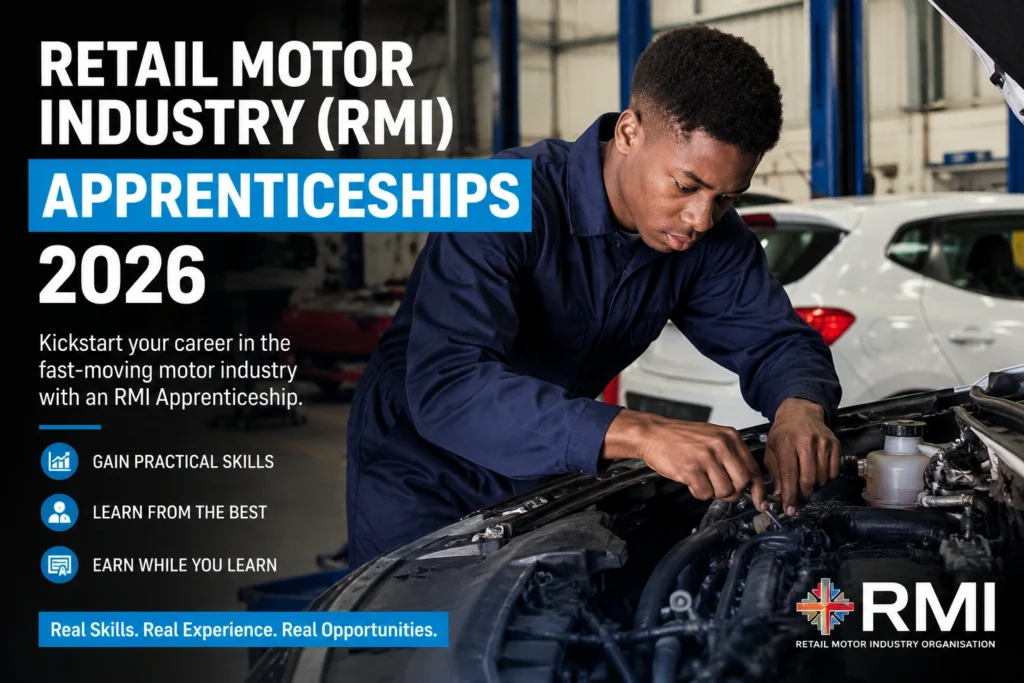
APPLY HERE: (RMI) Apprenticeships 2026
Public Reaction Has Shifted Dramatically
A noticeable cultural shift is happening around artisan careers.
Years ago, apprenticeships were often unfairly viewed as less prestigious than university degrees. But online discussions, career forums, and youth employment conversations increasingly show changing attitudes.
More people are openly discussing:
- Trade careers with strong earning potential
- Entrepreneurship opportunities
- Shorter routes into employment
- Skills shortages
- International mobility for artisans
That last point is especially important.
Qualified artisans are globally transferable in ways many people underestimate. Automotive skills can open doors not only in South Africa but internationally, particularly where technical shortages exist.
This broader awareness is helping apprenticeships regain social credibility.
The conversation is no longer simply “degree versus no degree.”
It is becoming “Which pathway leads to sustainable opportunity?”
And for many young people, the apprenticeship answer is becoming increasingly convincing.
The Rise of Entrepreneurial Thinking
One of the most interesting aspects of the RMI apprenticeship conversation is how often entrepreneurship now appears alongside employment.
Many experienced artisans eventually open:
- Repair workshops
- Panel beating businesses
- Fleet maintenance services
- Mobile mechanic operations
- Specialist diagnostic centres
This possibility changes how apprenticeships are perceived.
An artisan qualification is not just preparation for employment. It can also become the foundation for business ownership.
That matters in an economy where formal employment opportunities remain limited.
Skilled trades offer something powerful: independence potential.
A qualified artisan with experience, reputation, and technical ability can build a client base in ways many office workers cannot easily replicate.
That entrepreneurial angle is attracting increasing interest from ambitious young people looking beyond traditional career structures.
APPLY HERE: (RMI) Apprenticeships 2026
ALSO APPLY FOR: Woodlands Dairy Millwright Apprentice 2026
Women Are Entering the Industry in Greater Numbers
Another major development is the growing focus on gender transformation within the automotive sector.
For decades, workshops and technical trades were heavily male-dominated. But industry leaders increasingly acknowledge the need for broader representation.
As a result, young women interested in mechanics, diagnostics, welding, or automotive systems are being actively encouraged to apply.
This shift reflects wider labour market changes across technical industries.
Many employers now recognise that diversity improves workplace culture, innovation, and skills development. Training institutions are also working to make technical environments more inclusive and accessible.
The visibility of women entering artisan careers is gradually reshaping outdated stereotypes about who belongs in automotive spaces.
What You Need to Start
Although requirements vary between employers and training providers, most RMI-related apprenticeship opportunities look for a few key basics:
- A Grade 12 / Matric certificate
- Strong interest in technical work
- Reliability and discipline
- Willingness to learn
- Mechanical curiosity
- Good communication skills
A valid driver’s licence is often considered an advantage, especially in automotive environments where vehicle movement forms part of workshop operations.
But attitude remains one of the biggest deciding factors.
Many employers say they can teach technical skills more easily than work ethic.
Where Young People Are Looking for Opportunities
The search for apprenticeships has increasingly moved online, with applicants monitoring multiple platforms simultaneously.
Popular sources include:
- RMI networks and announcements
- merSETA career portals
- Automotive dealership groups
- Training academies
- Technical institutions
- Corporate career pages
Large motor groups continue to advertise apprenticeship intakes because they need long-term technical talent pipelines.
At the same time, private artisan training institutions are becoming more visible as demand for technical education grows.
Competition can still be intense, especially in major cities, but awareness of opportunities is definitely expanding.
What Could Happen Next
The future of the automotive apprenticeship landscape could evolve in several important ways.
First, demand for specialised diagnostics and electrical expertise is likely to increase dramatically as vehicle technology advances. Electric vehicles, hybrid systems, and software-based diagnostics may create entirely new artisan categories over the next decade.
Second, government and industry partnerships around artisan development may expand further if unemployment pressures continue.
Third, apprenticeship programmes themselves could become more digitally integrated, combining online theory learning with workshop-based practical training.
And finally, public perception of technical careers may continue improving as more successful artisans share their stories and financial progress online.
That visibility matters.
Career decisions are heavily influenced by what young people see around them. The more visible successful artisans become, the more attractive apprenticeship pathways may appear.
Final Thoughts
The story behind Retail Motor Industry (RMI) Apprenticeships 2026 is ultimately about something bigger than automotive training.
It reflects a national shift in how South Africans think about work, skills, and economic survival.
For years, many young people were told success had only one shape. But today’s labour market is forcing a broader and more realistic conversation about opportunity.
Apprenticeships are no longer sitting quietly in the background.
They are becoming central to discussions about employability, economic resilience, and future-proof careers.
And while no career path guarantees instant success, the automotive sector offers something increasingly valuable in uncertain times: practical skills linked directly to real economic demand.
For young people willing to learn, work hard, and develop technical expertise, the road ahead may look far more promising than many realise.
Sometimes the smartest career move is not following the crowd.
Sometimes it is learning the skill the economy desperately needs next.