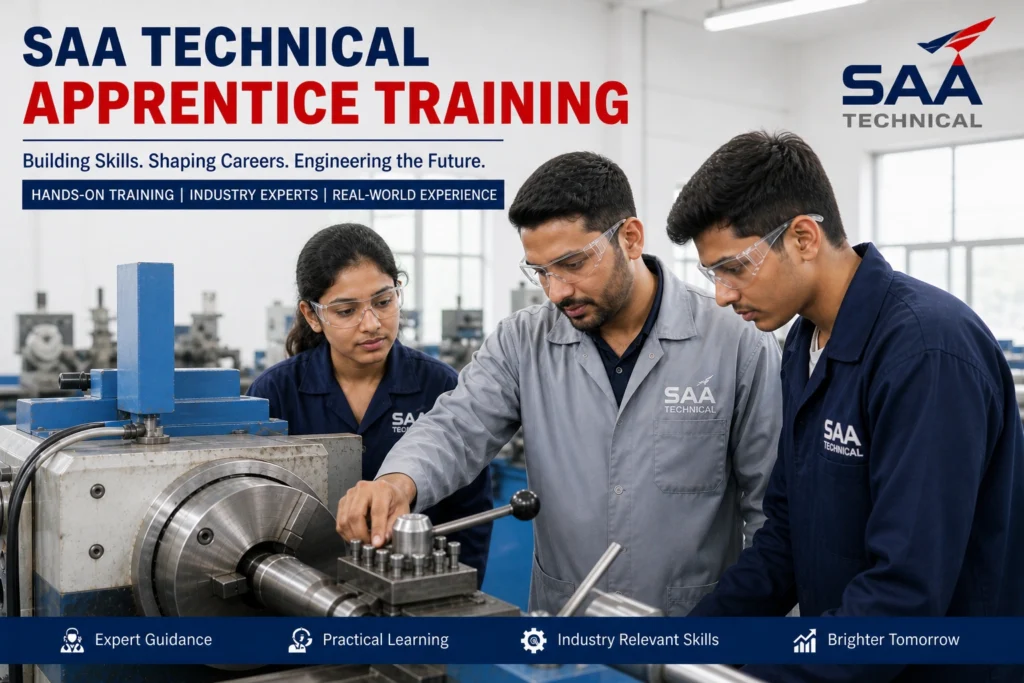

At 6:30 on a crisp Johannesburg morning, the hangar doors slide open with a low mechanical hum. Inside, a group of apprentices in navy overalls gather around a partially disassembled aircraft engine. Their instructor doesn’t begin with theory. Instead, he points to a worn turbine blade and asks a simple question: “What do you see?”
For Sipho, a 22-year-old trainee from Soweto, the answer isn’t just about metal fatigue or airflow. It’s about possibility. Just two years earlier, he was unsure how to translate his interest in mechanics into a stable career. Today, he’s part of the SAA Technical – Apprentice Training programme—one of the country’s most quietly significant pathways into high-skill aviation work.
This isn’t just a training programme. It’s a window into how South Africa is rebuilding technical expertise in an industry that has faced turbulence of its own.
A programme shaped by pressure—and purpose
The aviation sector in South Africa has not had an easy decade. Financial strain, restructuring, and global shocks like the COVID-19 pandemic forced major changes across airlines and maintenance divisions. Amid this uncertainty, technical skills pipelines were at risk of drying up.
That’s where SAA Technical – Apprentice Training has taken on renewed importance.
Historically, SAA Technical (SAAT) has been one of the continent’s leading aircraft maintenance, repair, and overhaul (MRO) providers. Its apprenticeship programme was designed to feed highly skilled artisans into this ecosystem—aircraft electricians, mechanical technicians, avionics specialists. But today, the programme carries an additional burden: rebuilding trust in aviation careers.
For many young South Africans, especially those from under-resourced communities, aviation can feel distant—something seen in the sky, not within reach. Apprenticeships like this are quietly closing that gap.
APPLY HERE: SAA Technical – Apprentice Training
Learning beyond textbooks: the hangar as a classroom
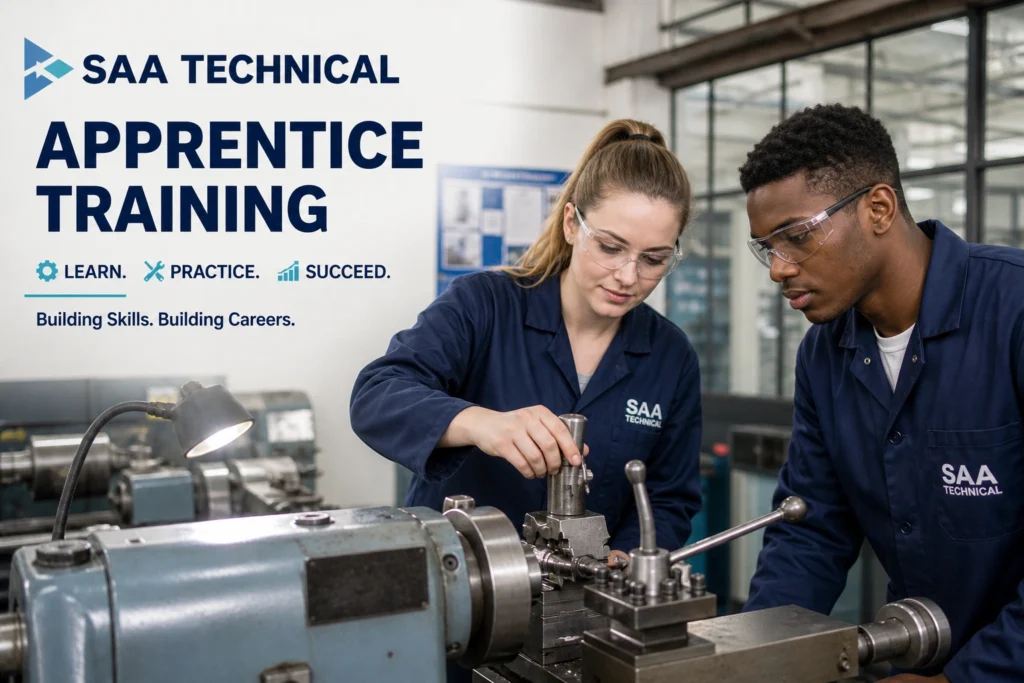
Unlike traditional academic pathways, SAA Technical – Apprentice Training is grounded in practical immersion. Apprentices don’t spend years only in lecture rooms. From early on, they are introduced to real aircraft systems, tools, and workflows.
A typical training cycle blends:
- Structured theoretical instruction (engineering principles, safety protocols)
- Hands-on mechanical and electrical work
- Exposure to live maintenance operations
- Mentorship from experienced technicians
But what sets this programme apart is the pace at which responsibility increases.
By the second year, apprentices are no longer just observing. They’re contributing—under supervision—to inspections, diagnostics, and component repairs. It’s a steep learning curve, and not everyone makes it through.
“In aviation, there’s no room for guesswork,” one senior instructor explains. “We’re not just training workers—we’re shaping decision-makers who understand that safety is everything.”
That mindset shift—from student to accountable professional—is one of the programme’s defining features.
Why SAA Technical – Apprentice Training matters now
South Africa faces a well-documented skills shortage in technical trades. While university enrolment has grown, artisan pipelines have struggled to keep pace with industry demand.
Aviation amplifies this challenge.
Aircraft maintenance is a high-stakes, highly regulated field requiring precision, discipline, and internationally recognised standards. Losing skilled technicians doesn’t just affect one company—it impacts the country’s ability to maintain aircraft locally, support regional airlines, and compete globally.
The SAA Technical – Apprentice Training programme sits at the intersection of several national priorities:
- Youth employment and skills development
- Industrial capacity rebuilding
- Aviation sector recovery
- Technical education reform
It also reflects a broader shift in how careers are being redefined. For years, many students were encouraged to pursue purely academic degrees. Today, there’s a growing recognition that technical expertise—especially in specialised fields like aviation—offers equally valuable and often more stable career paths.
A closer look at the human journey
Behind the structure and strategy, the programme is ultimately about individuals navigating change.
Take Lerato, for example. She grew up in Polokwane, fascinated by how things worked but unsure where that curiosity could lead. After struggling to secure university funding, she discovered the apprenticeship route.
“The first time I touched an aircraft component, I realised this is real,” she says. “It’s not just a job. You’re part of something that moves people across the world.”
Her experience also highlights another shift: increasing diversity in technical spaces. While engineering fields have traditionally been male-dominated, programmes like this are slowly broadening access.
Still, the journey is not easy.
Apprentices face long hours, rigorous assessments, and the pressure of working in a safety-critical environment. Dropout rates can be high—not necessarily due to lack of ability, but because of the mental and physical demands.
Yet those who complete the programme emerge with something rare: industry-ready skills that are both locally valuable and internationally transferable.
APPLY HERE: SAA Technical – Apprentice Training
Inside the system: how the training connects to industry
One of the strengths of SAA Technical – Apprentice Training is its direct alignment with operational needs.
Unlike some training initiatives that operate in isolation, this programme is embedded within a working MRO environment. That means apprentices are learning on systems and technologies currently in use—not outdated simulations.
This alignment has several implications:
- Graduates require less onboarding when entering the workforce
- Skills remain relevant to industry standards
- Employers have greater confidence in competency levels
However, there’s also a tension here.
As aviation technology evolves—especially with digital diagnostics, predictive maintenance, and sustainability considerations—the training model must continuously adapt. Keeping curricula aligned with global trends requires investment, coordination, and forward planning.
Expert insight: the bigger implications for South Africa
From a policy and economic perspective, apprenticeship programmes like this carry weight beyond individual career outcomes.
Expert-style insight:
South Africa’s long-term competitiveness in sectors like aviation depends not only on infrastructure but on human capital. Technical apprenticeships create a multiplier effect: each skilled artisan supports operational efficiency, safety compliance, and innovation capacity. Without sustained investment in these pipelines, the country risks becoming dependent on imported expertise—an expensive and unsustainable model.
In this sense, SAA Technical – Apprentice Training is not just a workforce initiative. It’s part of a broader strategy to retain technical sovereignty.
APPLY HERE: SAA Technical – Apprentice Training
ALSO APPLY FOR: MAN Truck & Bus 2026 Apprenticeship
What aspiring applicants should realistically expect
For those considering applying, it’s important to move beyond the glossy perception of aviation careers.
This is demanding work.
Apprentices should be prepared for:
- A multi-year commitment with structured progression
- Intensive technical learning and assessments
- Strict adherence to safety and procedural standards
- Physical tasks in workshop and hangar environments
But for the right candidate—someone curious, disciplined, and resilient—the rewards are significant.
Not just in terms of employment, but in the sense of participating in a field where precision and responsibility truly matter.
FAQ
1. What qualifications are needed to apply?
Typically, applicants need a strong background in mathematics and physical science, often at matric level. Specific requirements may vary depending on the intake and specialisation.
2. Does completing the programme guarantee a job?
Not necessarily. While the training is highly regarded and improves employability, placement depends on operational needs and broader industry conditions.
3. How long does the apprenticeship last?
Most programmes run for several years, combining theoretical and practical components, with progression based on performance and assessments.
The bigger picture: rebuilding trust in skilled work
As the hangar quiets down in the late afternoon, Sipho carefully logs his day’s work. It’s meticulous, almost repetitive—but essential. Every bolt tightened, every inspection recorded contributes to a system where safety is non-negotiable.
That’s the quiet reality of aviation maintenance. It’s not glamorous. It’s not visible to passengers boarding flights. But it’s foundational.
The story of SAA Technical – Apprentice Training is, in many ways, a story about rebuilding—skills, confidence, and pathways that had begun to fade. It reflects a broader shift in how South Africa is rethinking education and work, placing renewed value on technical mastery.
For young people standing at the crossroads of uncertainty, programmes like this offer something increasingly rare: a clear, structured route into a meaningful career.
And in an economy searching for both stability and growth, that clarity matters more than ever.
APPLY HERE: SAA Technical – Apprentice Training
ALSO APPLY FOR: MAN Truck & Bus 2026 Apprenticeship