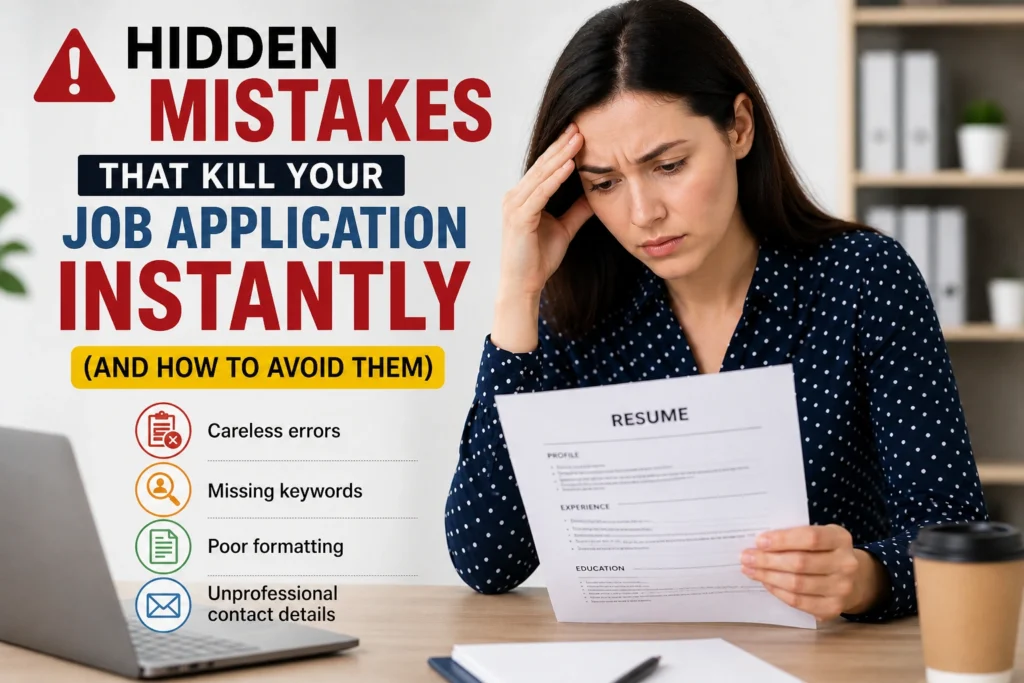

You’ve done everything right—earned your qualification, updated your CV, and applied to dozens of roles. Yet the rejections keep coming, or worse, silence. It’s frustrating, confusing, and often discouraging. Many job seekers assume they’re simply not qualified enough, but that’s not always the truth.
In reality, there are hidden mistakes that kill your job application instantly—small, often overlooked errors that can cause recruiters to dismiss your application within seconds. These mistakes don’t always reflect your ability or potential, but they can completely undermine your chances before you even get an interview.
This guide breaks down those hidden pitfalls, explains why they matter, and gives you practical, step-by-step strategies to fix them. If you’re serious about improving your job search results, understanding these mistakes is essential.
What Are “Hidden Mistakes” in Job Applications?
Hidden mistakes are subtle issues that may not seem significant to applicants but have a major impact on how recruiters perceive your application. These can include formatting problems, vague language, poor tailoring, or even how you name your CV file.
Unlike obvious errors (like missing qualifications), these mistakes are dangerous because they often go unnoticed by the applicant—but not by hiring managers.
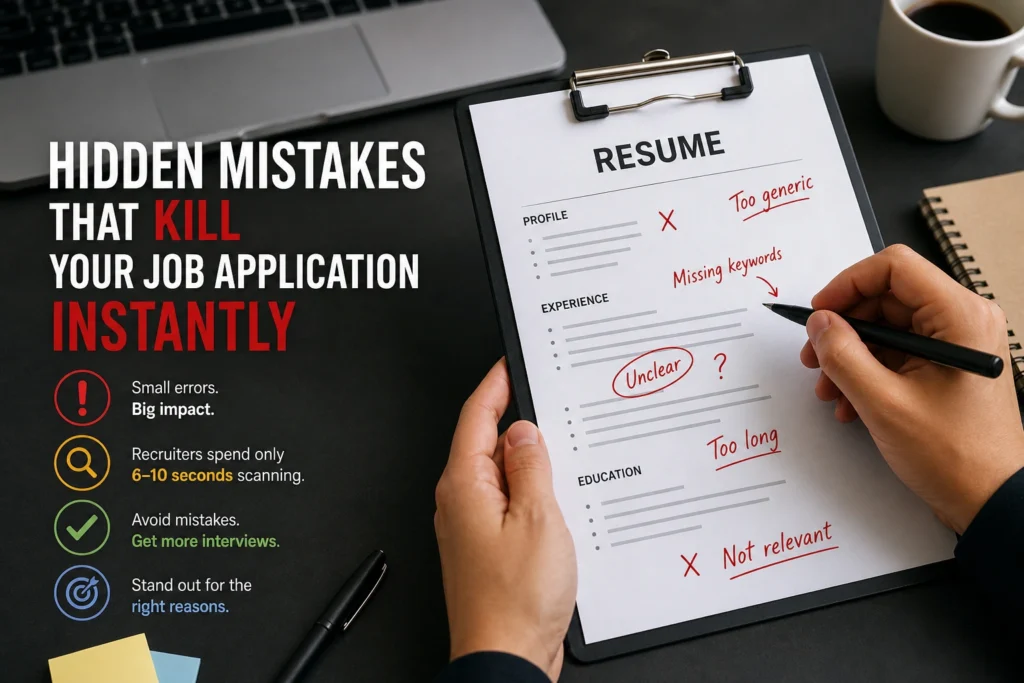
Recruiters typically spend 6–10 seconds scanning a CV before deciding whether to continue reading. That means even minor issues can result in instant rejection.
ALSO APPLY FOR: Scania Technician Apprenticeship 2026
ALSO APPLY FOR: Toyota Boshoku (TBSA) Apprenticeships 2026
Why This Issue Matters
Understanding the hidden mistakes that kill your job application instantly is not just about improving your CV—it’s about increasing your chances of getting hired.
Here’s why it matters in the real world:
- High competition: In South Africa and globally, a single job posting can receive hundreds of applications.
- Limited recruiter time: Hiring managers use quick filters to eliminate candidates.
- Automated screening systems: Many companies use ATS (Applicant Tracking Systems) that reject poorly structured CVs.
- Lost opportunities: A strong candidate can be rejected simply because of avoidable errors.
Fixing these mistakes can dramatically improve your response rate without needing new qualifications or experience.
Hidden Mistakes That Kill Your Job Application Instantly
1. Using a Generic CV for Every Job
Sending the same CV to every employer is one of the biggest mistakes. Recruiters can instantly tell when an application is not tailored.
Why it fails:
- Doesn’t match the job description
- Lacks relevant keywords
- Feels impersonal
Fix it:
Customize your CV for each job by aligning your skills and experience with the job requirements.
2. Poor CV Formatting
A cluttered or confusing layout can make your CV unreadable.
Common issues:
- Too many fonts or colors
- Long paragraphs instead of bullet points
- No clear headings
Fix it:
Use a clean, professional format:
- Simple font (e.g., Arial, Calibri)
- Clear sections (Education, Experience, Skills)
- Bullet points for readability
3. Spelling and Grammar Errors
Even a single typo can damage your credibility.
Why it matters:
Employers often see errors as a sign of carelessness.
Fix it:
- Use spell-check tools
- Read your CV out loud
- Ask someone else to review it
4. Weak or Vague Job Descriptions
Many applicants list responsibilities instead of achievements.
Example (weak):
- Responsible for customer service
Example (strong):
- Resolved customer queries, improving satisfaction ratings by 20%
Fix it:
Focus on measurable results and impact.
5. No Keywords for ATS Systems
If your CV doesn’t include relevant keywords, it may never reach a human.
Fix it:
- Use keywords from the job description
- Include industry-specific terms
- Match your skills to the role
6. Unprofessional Email Address
An email like coolguy123@email.com can instantly turn recruiters off.
Fix it:
Use a simple format:
7. Applying Without Reading Instructions
Many applicants ignore application instructions.
Examples:
- Not attaching required documents
- Ignoring subject line instructions
- Missing deadlines
Fix it:
Carefully read and follow all instructions before submitting.
8. Lack of a Clear Career Focus
A CV that tries to apply for everything often fails.
Fix it:
- Define your career direction
- Highlight relevant experience only
- Remove unrelated details
9. Overloading Your CV with Information
Too much information can overwhelm recruiters.
Fix it:
- Keep your CV 1–2 pages (if possible)
- Focus on relevant experience
- Remove outdated or unnecessary details
10. No Cover Letter (When Required)
Skipping a cover letter when requested can lead to automatic rejection.
Fix it:
Write a short, tailored cover letter explaining:
- Why you’re interested
- Why you’re a good fit
ALSO READ ABOUT: Why Thousands of South Africans Are Struggling to Find Internships
Step-by-Step Strategy to Avoid These Mistakes
Step 1: Start With the Job Description
Carefully read the job ad and highlight key requirements, skills, and keywords.
Step 2: Tailor Your CV
Match your experience and skills directly to the job requirements.
Step 3: Use a Clean Layout
Ensure your CV is easy to read and visually professional.
Step 4: Add Measurable Achievements
Focus on results, not just responsibilities.
Step 5: Optimize for Keywords
Include relevant terms to pass ATS screening.
Step 6: Proofread Thoroughly
Check for grammar, spelling, and formatting errors.
Step 7: Follow Instructions Exactly
Submit all required documents in the correct format.
Step 8: Double-Check Before Sending
Review everything one last time to ensure accuracy.
Best Practices Experts Recommend
- Keep it simple: Avoid overly complex designs
- Be specific: Use numbers and results where possible
- Stay relevant: Only include information related to the job
- Update regularly: Keep your CV current
- Use action verbs: Words like “achieved,” “managed,” “developed”
- Test your CV: Upload it to ATS tools to see how it performs
Experts agree that a well-structured, tailored CV significantly increases your chances of getting shortlisted.
Mistakes People Often Make
Even experienced job seekers fall into these traps:
- Applying to too many jobs without customizing applications
- Copying CV templates without adapting them
- Ignoring feedback or rejection patterns
- Using outdated or irrelevant information
- Rushing applications at the last minute
Avoiding these common behaviors can immediately improve your results.
Frequently Asked Questions (FAQs)
1. How long should my CV be?
Ideally, 1–2 pages. Focus on relevant experience and avoid unnecessary details.
2. Do I need a cover letter for every job?
Not always, but if the employer requests one, skipping it can lead to rejection.
3. What are ATS systems and why do they matter?
ATS (Applicant Tracking Systems) scan CVs for keywords. If your CV isn’t optimized, it may be rejected automatically.
4. Can small mistakes really cost me a job?
Yes. Recruiters often eliminate candidates quickly, and small errors can create a negative first impression.
Final Thoughts: Turn Small Fixes Into Big Results
The truth is, many job seekers are more qualified than they realize—but they’re held back by hidden mistakes that kill your job application instantly. The good news is that these mistakes are fixable.
By tailoring your CV, improving formatting, using clear achievements, and paying attention to details, you can significantly increase your chances of getting noticed.
Start by reviewing your current CV today. Identify at least three mistakes from this guide and fix them immediately. Small changes can lead to big opportunities.
ALSO APPLY FOR: Scania Technician Apprenticeship 2026
ALSO APPLY FOR: Toyota Boshoku (TBSA) Apprenticeships 2026
ALSO READ ABOUT: Why Thousands of South Africans Are Struggling to Find Internships