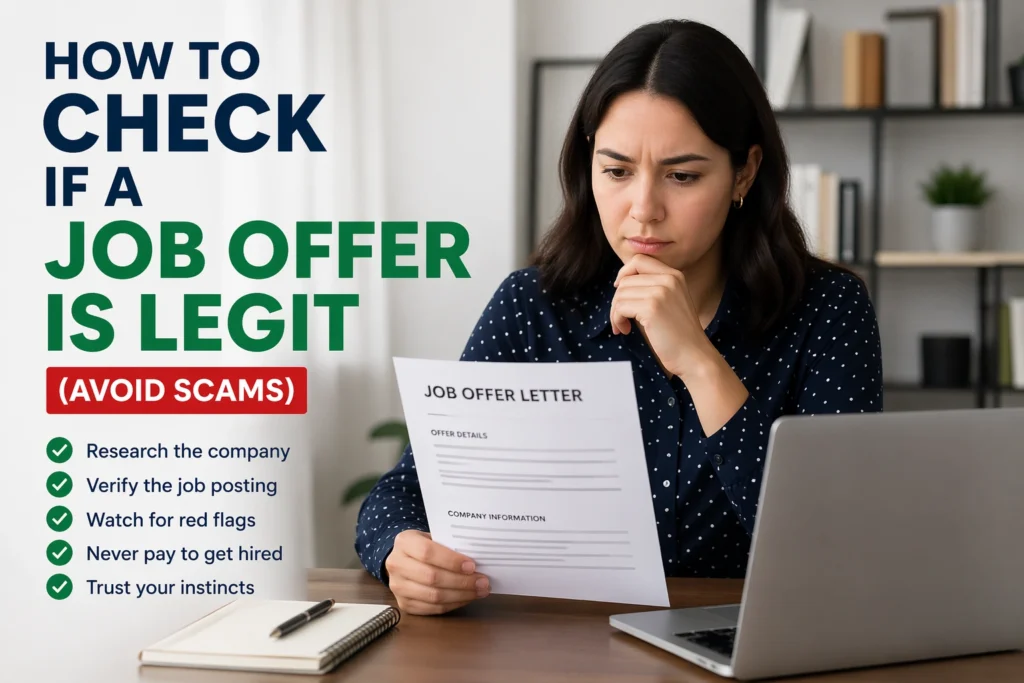

Finding a job today can feel like navigating a maze—especially when opportunities come through emails, social media, or unfamiliar websites. Many job seekers are excited when an offer arrives quickly, sometimes without even applying. But that excitement can quickly turn into regret if the offer turns out to be a scam. Fraudulent job offers are becoming more sophisticated, targeting people who are actively searching or urgently need income.
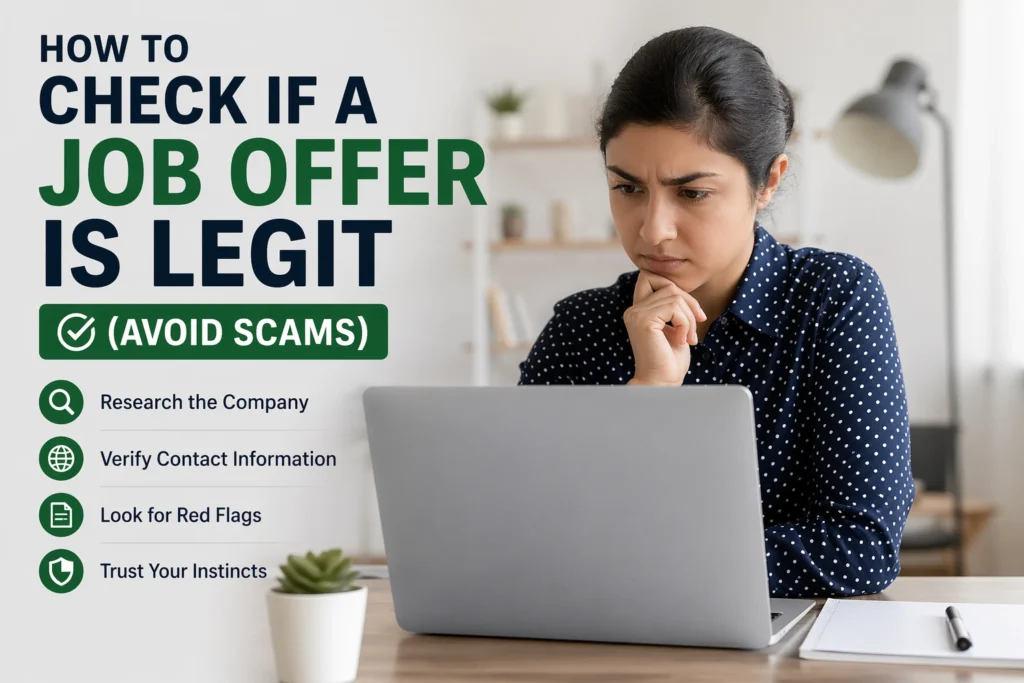
If you’ve ever wondered whether an offer is too good to be true, you’re not alone. Learning how to check if a job offer is legit (avoid scams) is no longer optional—it’s an essential skill in today’s digital job market.
Understanding the Problem: What Are Job Scams?
Before diving into solutions, it’s important to understand what job scams actually look like.
A job scam is a fraudulent offer designed to trick you into giving away money, personal information, or both. These scams often mimic legitimate companies and may include:
- Fake job postings on real platforms
- Emails posing as recruiters
- Offers with high salaries and minimal requirements
- Requests for upfront payments or sensitive data
Scammers exploit urgency and trust. They may pressure you to act quickly or create a sense of exclusivity—“You’ve been selected!”—to lower your guard.
The tricky part? Many scams look surprisingly professional. They use real company logos, convincing language, and even fake interviews.
ALSO APPLY FOR: AFGRI Apprenticeship 2026
ALSO APPLY FOR: Epiroc Millwright Apprenticeships 2026
Why This Issue Matters
Job scams aren’t just an inconvenience—they can have serious consequences.
Financial loss: Some victims are asked to pay for “training,” “equipment,” or “background checks.” Once paid, the scammer disappears.
Identity theft: Sharing personal information like ID numbers, bank details, or addresses can lead to long-term damage.
Emotional toll: Being scammed can be discouraging, especially during an already stressful job search.
Lost opportunities: Time spent chasing fake jobs means missing real opportunities.
In a competitive job market, protecting yourself is just as important as finding the right role.
How to Check If a Job Offer Is Legit (Avoid Scams)
Here’s a step-by-step guide you can follow whenever you receive a job offer.
1. Research the Company Thoroughly
Start with a simple search.
- Visit the company’s official website
- Check if the job is listed on their careers page
- Look for consistent contact details (email domain, phone number, address)
Red flag: If the recruiter uses a generic email (like Gmail or Yahoo) instead of a company domain, be cautious.
Also, search for reviews or mentions of scams related to the company name.
2. Verify the Recruiter’s Identity
Legitimate recruiters usually have a professional online presence.
- Check LinkedIn profiles
- Look for connections and activity
- Confirm they are associated with the company
If possible, contact the company directly using official contact details and ask if the recruiter works there.
3. Analyze the Job Offer Carefully
Read the offer letter closely.
Watch for:
- Poor grammar or spelling errors
- Vague job descriptions
- Unrealistic salaries for minimal work
- Missing company details
A legitimate offer should include clear responsibilities, compensation, and terms.
4. Be Wary of Upfront Payments
One of the biggest warning signs.
No legitimate employer will ask you to pay for:
- Training
- Equipment
- Application processing
- Background checks
If money is involved before you even start working, it’s almost certainly a scam.
5. Check the Interview Process
Most real jobs involve at least one structured interview.
Be cautious if:
- You’re hired instantly without an interview
- The interview is only via text or messaging apps
- Questions are superficial or scripted
Professional companies typically conduct interviews via video, phone, or in-person, with meaningful discussion.
6. Look for Pressure Tactics
Scammers often create urgency.
Examples:
- “You must accept within 24 hours”
- “This offer is only available today”
- “Act now to secure your position”
Legitimate employers give you time to review and decide.
7. Cross-Check Contact Details
Compare the information you’ve received with official sources.
- Email domain matches the company
- Phone numbers are listed publicly
- Addresses exist and are verifiable
Even small inconsistencies can signal a scam.
8. Trust Your Instincts
If something feels off, don’t ignore it.
Common gut reactions include:
- The offer seems too good to be true
- Communication feels rushed or inconsistent
- You’re being asked for unusual information
Pause and investigate further before proceeding.
Best Practices Experts Recommend
Professionals in recruitment and cybersecurity often emphasize a few key habits that can protect you long-term.
Always apply through official channels
Use company websites or trusted job boards rather than unsolicited messages.
Keep personal information private
Avoid sharing sensitive data until you’ve verified the employer.
Use a separate email for job applications
This helps you manage communication and spot suspicious messages more easily.
Document everything
Save emails, offer letters, and communication in case you need to report a scam.
Stay updated on common scam tactics
Scammers evolve quickly, so awareness is your best defense.
ALSO READ ABOUT: How Government Learnership Grants Work
Mistakes People Often Make
Even careful job seekers can fall into traps. Here are common mistakes to avoid.
Getting excited too quickly
A fast offer can feel like a win—but it’s often a tactic to bypass scrutiny.
Ignoring small red flags
Minor inconsistencies can point to bigger issues.
Skipping research
Failing to verify a company or recruiter is one of the biggest risks.
Sharing information too early
Never send ID documents, banking details, or passwords upfront.
Assuming job platforms guarantee safety
Even reputable platforms can have fraudulent listings.
Frequently Asked Questions
1. What is the biggest sign of a job scam?
The clearest sign is being asked to pay money upfront. Legitimate employers do not charge candidates for employment.
2. Can a real company accidentally appear suspicious?
Yes, sometimes smaller companies or startups may have limited online presence. However, they should still be verifiable through direct contact and consistent information.
3. Is it safe to accept a job offer without an interview?
In most cases, no. While some roles may have minimal screening, a complete lack of interview or assessment is a major red flag.
4. What should I do if I think I’ve been scammed?
Stop communication immediately.
Report the incident to your local authorities or consumer protection agency.
Monitor your financial accounts and consider identity protection measures.
Final Thoughts: Stay Alert, Stay Empowered
Knowing how to check if a job offer is legit (avoid scams) is one of the most valuable skills you can develop as a job seeker. The goal isn’t to become paranoid—it’s to become informed and cautious.
Before accepting any offer:
- Research the company
- Verify the recruiter
- Analyze the offer carefully
- Never pay upfront
- Trust your instincts
A legitimate job will stand up to scrutiny. Taking a little extra time to verify can save you from financial loss, stress, and wasted effort.
In a world full of opportunities—and risks—your best protection is awareness. Stay curious, ask questions, and don’t rush decisions. The right job will still be there when you’re ready to accept it with confidence.
ALSO APPLY FOR: AFGRI Apprenticeship 2026
ALSO APPLY FOR: Epiroc Millwright Apprenticeships 2026
ALSO READ ABOUT: How Government Learnership Grants Work