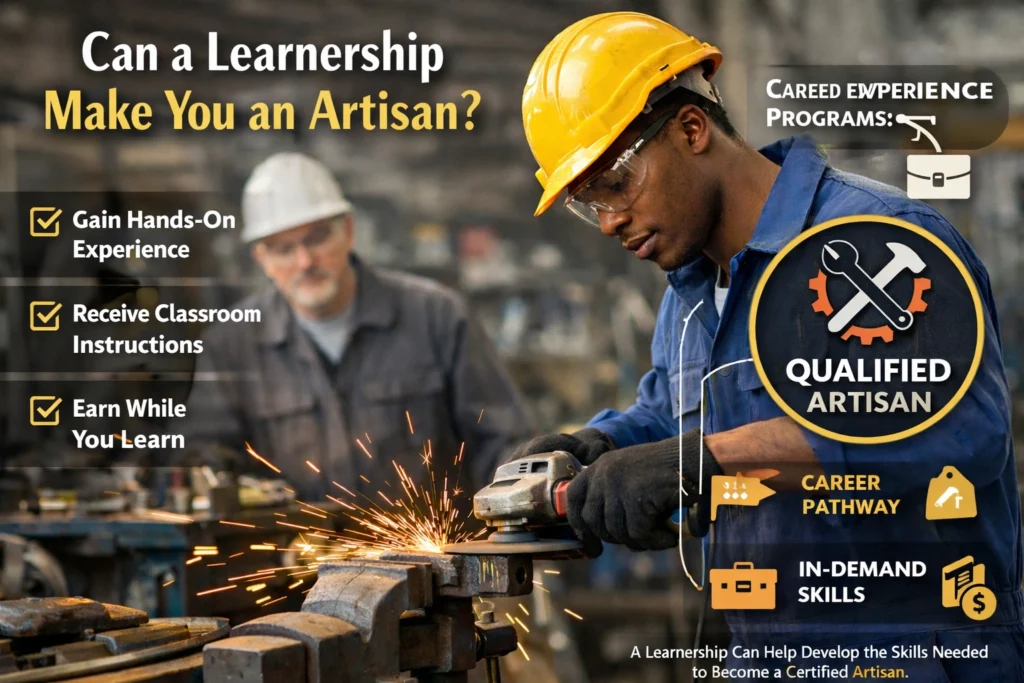

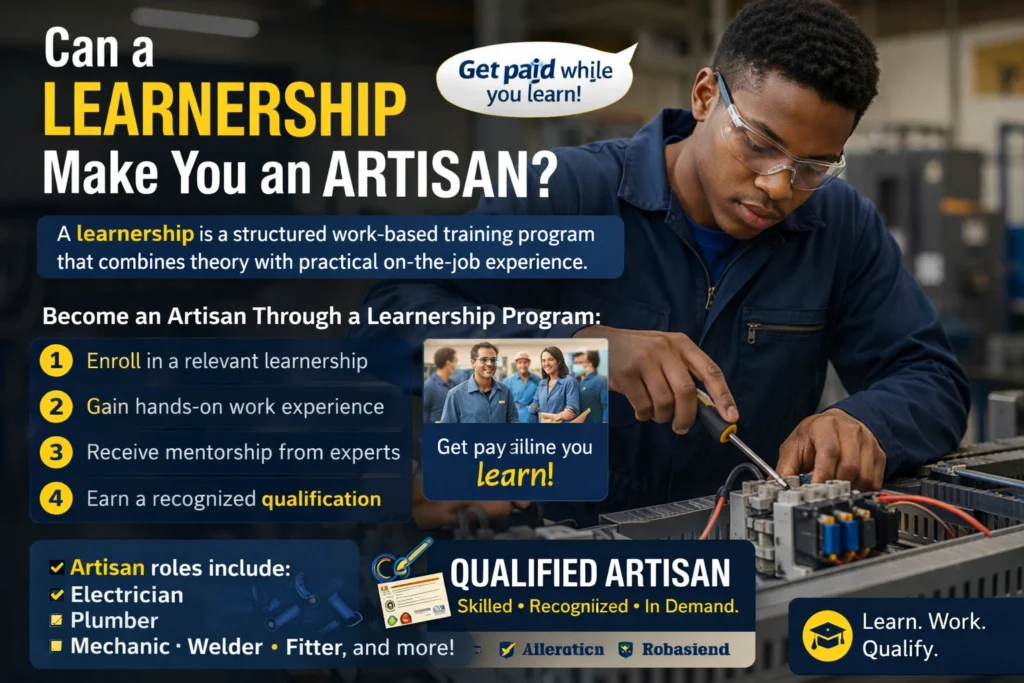
Can a Learnership Make You an Artisan? Becoming an artisan—someone skilled in a technical trade like plumbing, electrical work, welding, or carpentry—is a practical and rewarding career path. But many people wonder: Can a learnership actually lead to becoming a qualified artisan? The short answer is yes—but the journey involves more than just signing up for a learnership.
This guide breaks down the full path in simple, clear terms so you understand exactly how learnerships fit into artisan training, what steps are required, and how to succeed.
What You Should Know First
A learnership can absolutely be part of your journey to becoming an artisan, but it is not the final step on its own. To become a fully qualified artisan, you typically need:
- Structured training (like a learnership or apprenticeship)
- Practical workplace experience
- A trade test (final certification exam)
Think of a learnership as a bridge between classroom learning and real-world skills—not the destination itself.
ALSO APPLY FOR: AVI I&J YES4Youth Learnership 2026
ALSO APPLY FOR: End-User Computing Learnership 2026 Now
Understanding the Basics: What Is a Learnership?
A learnership is a work-based learning programme that combines:
- Theoretical training (often through a college or training provider)
- Practical experience (on-the-job training with an employer)
These programmes are designed to help you gain skills in a specific field while earning a stipend.
Example:
If you enroll in an electrical learnership:
- You might study basic electrical theory in a classroom
- Then spend time working under a qualified electrician
By the end, you gain both knowledge and experience, which is critical in technical careers.
What Is an Artisan?
An artisan is a qualified tradesperson who has passed a trade test and is certified to work independently in a specific trade.
Common artisan trades include:
- Electrician
- Plumber
- Fitter and turner
- Boilermaker
- Carpenter
Being an artisan means you’re not just trained—you’re officially recognized as competent in your trade.
The Full Path: From Learnership to Artisan
Step 1: Complete Basic Education
Before starting a learnership, most programs require:
- Grade 9, 10, or 12 (depending on the trade)
- Basic math and science (especially for technical trades)
This foundation helps you understand the theory behind your trade.
Step 2: Enroll in a Learnership or Technical Program
This is where the journey often begins.
A learnership gives you:
- Structured training
- Workplace exposure
- Industry-relevant skills
However, not all learnerships are directly aligned with artisan trades. You must choose one that leads into a trade qualification pathway.
Step 3: Gain Workplace Experience
Experience is everything in becoming an artisan.
During and after your learnership, you’ll need to:
- Work under experienced professionals
- Practice real tasks daily
- Build technical confidence
Example:
A plumbing learner might:
- Install pipes
- Fix leaks
- Learn safety standards
This hands-on training is what transforms knowledge into skill.
Step 4: Move Into an Apprenticeship (If Required)
In many cases, a learnership alone isn’t enough. You may need to transition into an apprenticeship, which is more focused on trade mastery.
The difference:
- Learnership = broader training
- Apprenticeship = deeper, trade-specific training
Some learnerships already include apprenticeship-style training—but not all do.
Step 5: Complete Required Training Hours
To qualify for a trade test, you must log a certain number of:
- Practical hours
- Workplace tasks
These are often recorded in a logbook signed by your supervisor.
Step 6: Pass the Trade Test
This is the final and most important step.
The trade test assesses:
- Practical skills
- Problem-solving ability
- Safety knowledge
Passing this test officially makes you a qualified artisan.
Can a Learnership Alone Make You an Artisan?
Here’s the honest answer:
No, a learnership alone does not automatically make you an artisan.
But it can be the starting point or even a major portion of the journey—especially if it’s aligned with a trade and includes sufficient practical training.
Why Learnerships Are Still Valuable
Even though they’re not the final step, learnerships offer major benefits:
1. You Earn While You Learn
You receive a stipend, making it easier to support yourself while gaining skills.
2. Real-World Experience
Employers value hands-on experience more than theory alone.
3. Industry Exposure
You build connections and understand workplace expectations.
4. Pathway to Further Training
Many apprenticeships or trade opportunities start with a learnership.
Common Misunderstandings About Can a Learnership Make You an Artisan? Here’s the Full Path
“Once I finish a learnership, I’m automatically qualified.”
Not true. A learnership gives you skills and experience, but you still need to pass a trade test.
“All learnerships lead to artisan careers.”
Incorrect. Some learnerships focus on business, administration, or retail—not technical trades.
“I don’t need an apprenticeship if I do a learnership.”
Sometimes you do. It depends on:
- The type of learnership
- The trade requirements
- Your level of practical exposure
“Experience doesn’t matter as much as certification.”
In artisan careers, experience is just as important as certification—often more.
ALSO READ ABOUT: Why Some Internships Don’t Lead to Jobs (And How to Improve Your Chances In 2026)
How to Choose the Right Learnership for an Artisan Career
If your goal is to become an artisan, be strategic.
Look for:
- Trade-aligned programs (e.g., electrical, mechanical, construction)
- Accredited training providers
- Opportunities for workplace learning
- Clear progression to a trade test
Tip:
Ask this question before enrolling:
“Will this program help me qualify for a trade test?”
If the answer is unclear, reconsider.
Real-Life Example Path
Let’s say you want to become an electrician:
- Finish Grade 12 with math and science
- Join an electrical learnership
- Gain workplace experience under supervision
- Transition into an apprenticeship (if needed)
- Complete required hours
- Pass the trade test
Only after step 6 are you officially an artisan.
Challenges You Might Face
The path is realistic—but not always easy.
Limited Opportunities
Some learnerships are competitive.
Inconsistent Training Quality
Not all programs offer strong practical experience.
Long Timeline
It can take several years to qualify.
Financial Pressure
Stipends are helpful but often modest.
Understanding these challenges helps you prepare better.
Key Takeaways
- A learnership is a starting point, not the final step to becoming an artisan
- You need practical experience + a trade test to qualify
- Not all learnerships lead to artisan careers—choose carefully
- Apprenticeships may still be required after a learnership
- Hands-on experience is critical for success in technical trades
Frequently Asked Questions (FAQs)
1. Can I become an artisan without a learnership?
Yes, but it’s harder. Learnerships provide structured training and workplace exposure, making the process smoother.
2. How long does it take to become an artisan?
It typically takes 2 to 4 years, depending on the trade, training path, and experience gained.
3. Do I get paid during a learnership?
Yes, most learnerships offer a monthly stipend, though it may not be a full salary.
4. What happens after I pass the trade test?
You become a certified artisan, which allows you to:Work independently, Apply for higher-paying jobs, or Start your own business
Final Thoughts
So, Can a Learnership Make You an Artisan? Here’s the Full Path—the answer is clear: a learnership is a powerful stepping stone, but not the complete journey.
If you choose the right program, gain real experience, and follow through to the trade test, you can absolutely turn that opportunity into a fully qualified artisan career. The key is understanding the process, planning your path, and staying committed from start to finish.
ALSO APPLY FOR: AVI I&J YES4Youth Learnership 2026
ALSO APPLY FOR: End-User Computing Learnership 2026 Now
ALSO READ ABOUT: Why Some Internships Don’t Lead to Jobs (And How to Improve Your Chances In 2026)