
Sipho had been out of school for nearly two years, picking up odd jobs around Johannesburg. He was hardworking, reliable, and eager to build a real career—but every time he applied for a stable job, he hit the same wall: “Do you have a qualification?”
University wasn’t an option financially, and short courses didn’t seem to open enough doors. That’s when someone mentioned becoming an artisan. But what did that actually mean—and how long would it take?
If you’ve ever found yourself in a similar situation, this guide will walk you through What Is an Artisan Qualification and How Long It Takes, in a clear, practical way that helps you make real decisions about your future.
What Is an Artisan Qualification and How Long It Takes
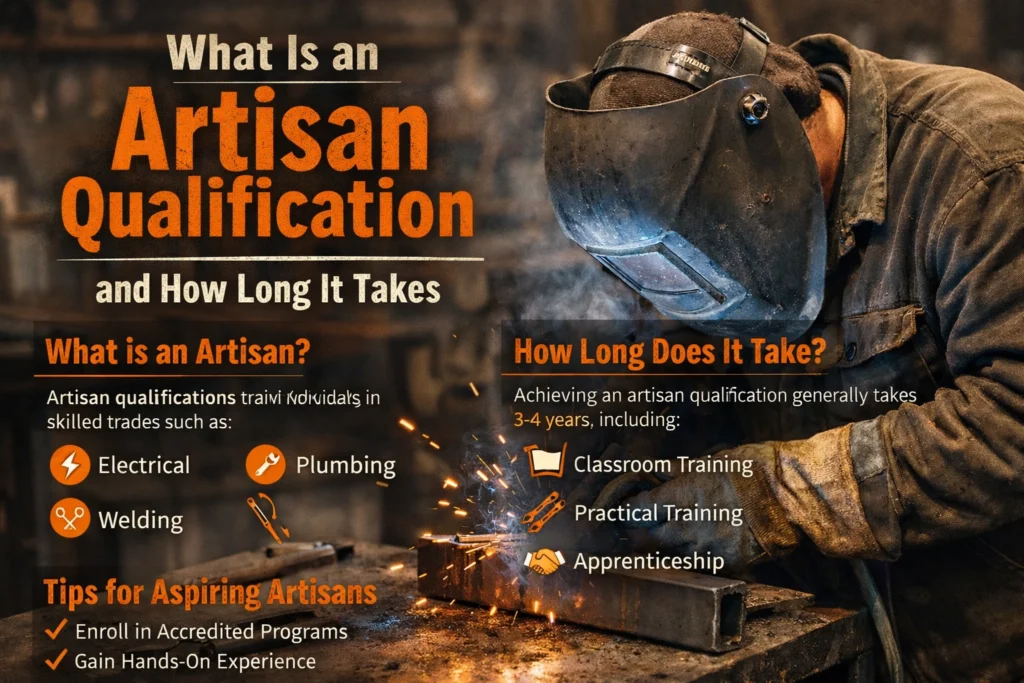
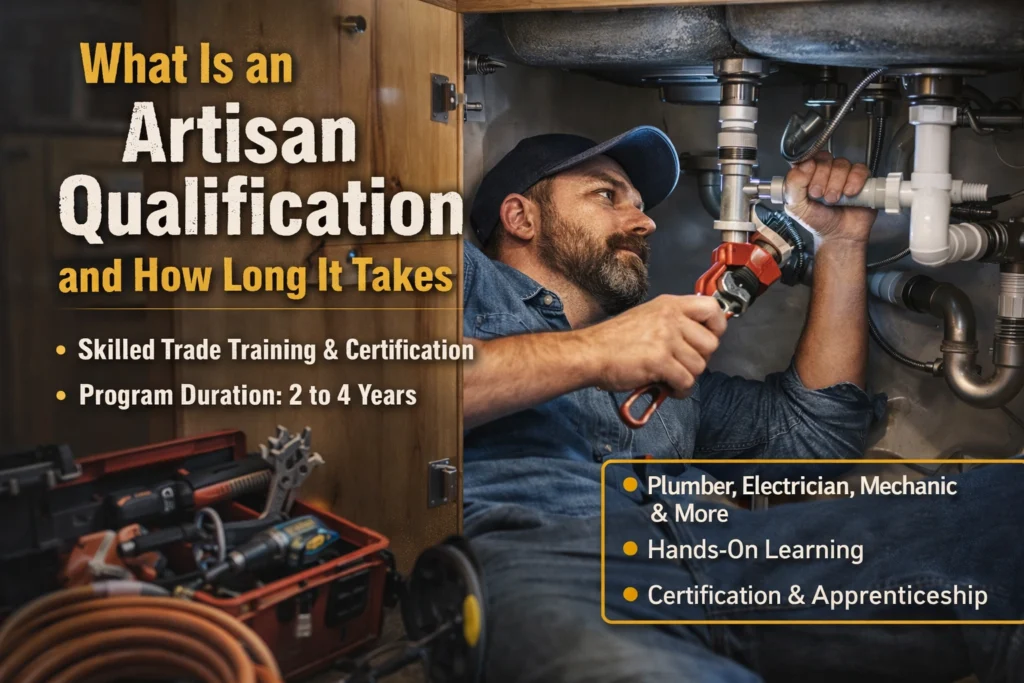
An artisan qualification is a formal certification that proves you are skilled in a specific trade—such as plumbing, electrical work, welding, or fitting and turning. It’s not just about theory; it’s about mastering practical, hands-on skills that industries rely on every day.
In South Africa, artisan qualifications are typically governed and quality-assured by organizations like Quality Council for Trades and Occupations (QCTO), ensuring that training meets national standards.
Common Artisan Trades Include:
- Electrician
- Plumber
- Welder
- Diesel mechanic
- Boilermaker
- Carpenter
So, How Long Does It Take?
The timeline varies, but generally:
- 3 to 4 years is the standard path
- Includes both theoretical training and practical workplace experience
- Ends with a trade test, which qualifies you as a certified artisan
In short, when people ask What Is an Artisan Qualification and How Long It Takes, the answer is:
A structured, skills-based career path that usually takes about 3–4 years to complete, combining study and real-world training.
ALSO APPLY FOR: Bridgestone Graduate Internships 2026
ALSO APPLY FOR: Sibanye Stillwater Miner Learnership 2026
Why This Issue Matters
South Africa faces a paradox: high unemployment, yet a shortage of skilled artisans. Industries—from construction to mining—constantly need qualified tradespeople.
Here’s why this matters in real life:
1. Better Employment Opportunities
Artisans are in demand locally and internationally. A qualified electrician or welder often has more consistent work than many degree holders.
2. Earning Potential
Once qualified, artisans can:
- Earn stable salaries
- Start their own businesses
- Take on contract work
3. Economic Impact
The government actively promotes artisan development through Technical and Vocational Education and Training (TVET) colleges such as Ekurhuleni East TVET College, because skilled trades are essential for infrastructure growth.
4. Practical Career Path
Unlike purely academic routes, this path suits people who prefer working with their hands and seeing tangible results.
Understanding the Artisan Qualification Path
To fully grasp What Is an Artisan Qualification and How Long It Takes, you need to understand the journey step by step.
Step 1: Choose Your Trade
Start by identifying a trade that matches your interests and strengths. For example:
- Enjoy problem-solving? Consider electrical work
- Like working with machinery? Try fitting and turning
Step 2: Enroll in a TVET College or Training Program
You’ll typically begin with an N1–N3 or NC(V) qualification at a TVET college.
This phase includes:
- Basic theory
- Safety standards
- Technical knowledge
Step 3: Complete an Apprenticeship or Learnership
This is where real learning happens.
- You work under experienced artisans
- Gain hands-on experience
- Earn a stipend in many cases
Companies, municipalities, and organizations often offer these opportunities.
Step 4: Gain Workplace Experience
You must log practical hours in your trade. This is essential before attempting your trade test.
Step 5: Pass the Trade Test
This is the final assessment. Once you pass:
- You become a qualified artisan
- You receive a recognized certification
Timeline Breakdown: What to Expect
Here’s a realistic breakdown of how long each stage takes:
| Stage | Duration |
|---|---|
| TVET College (N1–N3) | 1 year |
| Apprenticeship/Learnership | 2–3 years |
| Trade Test Preparation | 3–6 months |
Total: Around 3 to 4 years
However, some fast-track routes exist if you already have experience.
ALSO READ ABOUT: 2026 Can You Switch Careers Without Going Back to University?
Step-by-Step Strategy to Become an Artisan Faster
If you’re serious about this path, here’s how to approach it efficiently:
1. Start Early with Applications
TVET colleges and learnerships have deadlines. Apply as early as possible.
2. Target In-Demand Trades
Focus on trades with high demand:
- Electrical
- Plumbing
- Welding
3. Build Basic Skills Beforehand
Even informal experience (helping a local technician) can give you an advantage.
4. Network in Your Community
Many apprenticeship opportunities come through referrals.
5. Stay Consistent
The biggest difference between those who qualify and those who don’t is persistence.
ALSO APPLY FOR: Bridgestone Graduate Internships 2026
ALSO APPLY FOR: Sibanye Stillwater Miner Learnership 2026
Best Practices Experts Recommend
1. Treat Your Apprenticeship Like a Job
Show up on time, be reliable, and learn actively.
2. Focus on Practical Skills
Employers value what you can do, not just what you know.
3. Keep Learning
Technology is changing trades—especially electrical and mechanical fields.
4. Document Your Experience
Keep records of your work hours and tasks. This helps when preparing for your trade test.
5. Learn Business Skills
Many artisans eventually become self-employed. Knowing pricing, customer service, and budgeting gives you an edge.
Mistakes People Often Make
1. Waiting Too Long to Apply
Opportunities are competitive. Missing deadlines can delay your career by a year.
2. Ignoring the Trade Test Requirements
Some learners complete training but don’t qualify because they lack required experience hours.
3. Choosing a Trade Without Research
Not all trades have equal demand. Make informed decisions.
4. Dropping Out Midway
The process is long, but quitting halfway wastes time and effort.
5. Underestimating Soft Skills
Communication, reliability, and professionalism matter just as much as technical ability.
Frequently Asked Questions (FAQs)
1. Can I become an artisan without going to university?
Yes. In fact, artisan qualifications are specifically designed as an alternative to university, focusing on practical skills.
2. How much does it cost to become an artisan?
Costs vary: TVET colleges are relatively affordable. Many learnerships are funded and even pay stipends
3. Is an artisan qualification recognized internationally?
Yes. Many South African artisans work abroad, especially in countries facing skills shortages.
4. Can I study part-time while working?
In some cases, yes. Certain programs allow flexible learning combined with work experience.
Turning Skills Into Opportunity
Understanding What Is an Artisan Qualification and How Long It Takes can be a turning point—especially if you feel stuck between limited options.
This path isn’t instant. It requires commitment, patience, and hands-on effort over several years. But unlike many uncertain career routes, it offers something powerful: a clear, practical way to earn, grow, and build independence.
If you’re ready to take action:
- Choose a trade that fits your strengths
- Apply to a TVET college or learnership
- Commit to the full journey
Because in the end, becoming an artisan isn’t just about getting a qualification—it’s about building a skill that no one can take away from you.
ALSO APPLY FOR: Bridgestone Graduate Internships 2026
ALSO APPLY FOR: Sibanye Stillwater Miner Learnership 2026
ALSO READ ABOUT: 2026 Can You Switch Careers Without Going Back to University?