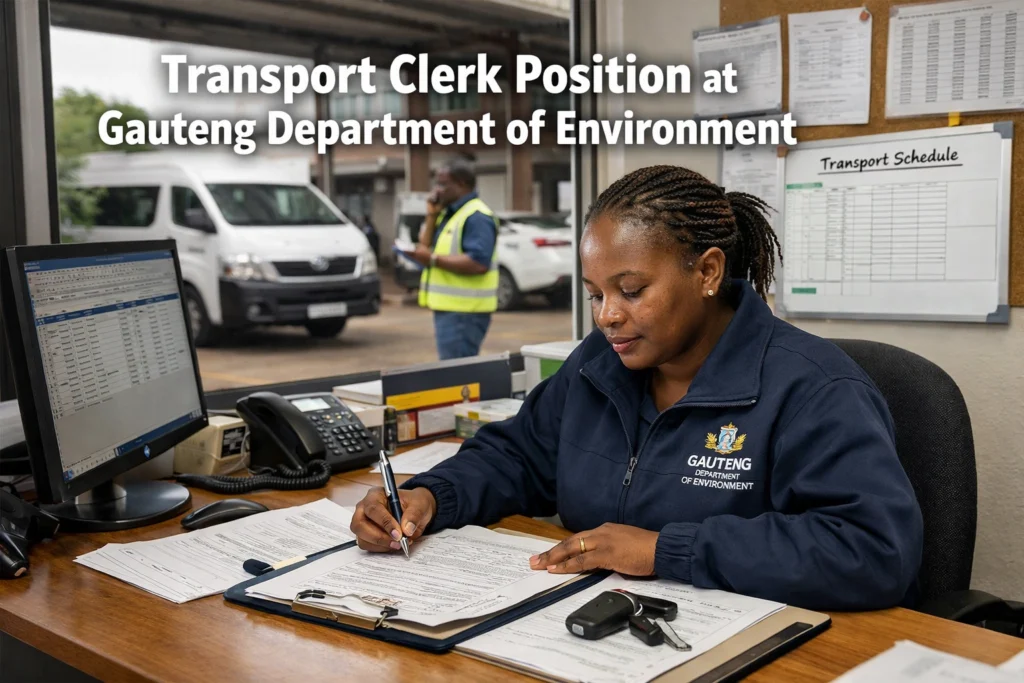

Transport Clerk Position: In a labour market where entry-level opportunities are increasingly scarce, especially for young people holding only a Grade 12 qualification, the Transport Clerk Position at the Gauteng Department of Environment arrives at a critical moment. With South Africa’s youth unemployment rate still among the highest globally, roles like this are more than just vacancies—they are gateways into structured, stable careers within the public service.
But beyond the immediate appeal of a government salary and benefits, this position reflects broader shifts in how provincial departments manage logistics, assets, and service delivery. Fleet management—once seen as a purely administrative function—has evolved into a critical operational pillar. Understanding why this role matters requires unpacking not just the job description, but the systems, expectations, and long-term implications behind it.
The Strategic Importance of the Transport Clerk Position in Government Operations
At first glance, the Transport Clerk Position may appear administrative. However, within a government department, transport logistics underpin almost every service delivery function—from environmental inspections to emergency responses.
Fleet inefficiencies in the public sector have historically led to:
- Increased operational costs
- Delayed service delivery
- Poor asset management and accountability
By placing a dedicated clerk within the Facilities Management (Fleet Management) directorate, the department is reinforcing a shift toward data-driven vehicle oversight and accountability.
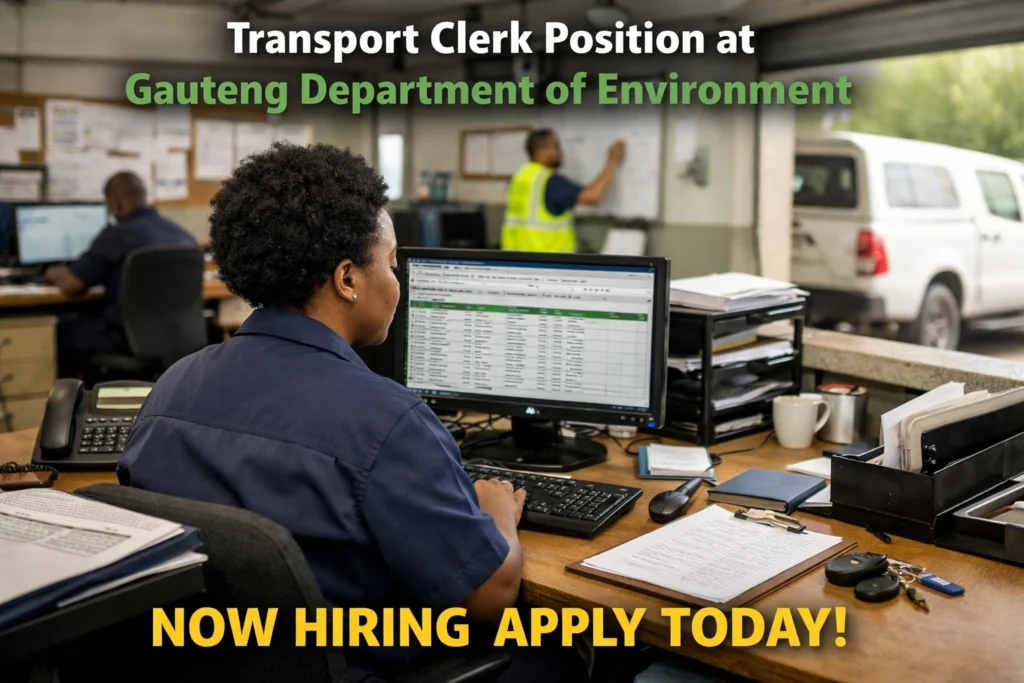
The role’s responsibilities—such as tracking monthly vehicle expenditure, maintaining electronic log sheets, and coordinating service bookings—indicate a move toward digitised fleet systems. This aligns with broader public sector reforms aimed at improving transparency and reducing wasteful expenditure.
In essence, the Transport Clerk becomes a control point—ensuring that vehicles, one of the most expensive government assets, are used efficiently and responsibly.
Apply via Gauteng Professional Job Centre
Why Entry-Level Roles Like This Are Becoming More Valuable
The requirement of only a Grade 12 certificate, with no prior experience, is particularly significant. In a competitive job market, most entry-level roles now demand diplomas or degrees. This makes the Transport Clerk Position stand out as an accessible pathway.
However, accessibility does not mean simplicity. The competencies listed—planning, report writing, communication, and initiative—reflect a growing trend:
Even entry-level public sector roles now require functional professionalism from day one.
This shift is driven by:
- Increased scrutiny on government performance
- Digital transformation of administrative systems
- The need for real-time reporting and compliance
For applicants, this means the role is not just a job—it is a skills incubator. Candidates will gain exposure to:
- Fleet management systems
- Financial tracking processes
- Interdepartmental coordination
- Basic compliance and auditing frameworks
These are transferable skills that can lead to roles in logistics, procurement, or operations management.
Fleet Management as a Hidden Career Pathway
One of the most overlooked aspects of the Transport Clerk Position is its potential to open doors into a specialized field: fleet and logistics management.
Globally and locally, logistics is becoming a high-demand sector. In South Africa, the growth of e-commerce, infrastructure development, and public service delivery has increased demand for skilled logistics professionals.
Within government, fleet management includes:
- Vehicle lifecycle planning
- Maintenance scheduling
- Fuel usage monitoring
- Risk and accident management
The duties listed—such as processing petrol claims, inspecting vehicles, and compiling maintenance reports—mirror foundational tasks in professional logistics environments.
For a young entrant, this role offers:
- Practical exposure without requiring tertiary education upfront
- A pathway to further studies in supply chain or transport management
- Experience that can transition into private sector logistics roles
In other words, the Transport Clerk Position is not just administrative—it is foundational training for a career in logistics.
The Role of Compliance, Risk, and Accountability
Another critical dimension of this role lies in compliance and risk management. Government fleet misuse has been a recurring issue in South Africa, often linked to:
- Unauthorized vehicle use
- Poor record-keeping
- Delayed maintenance
This position directly addresses those risks.
Key responsibilities such as:
- Inspecting vehicles before and after use
- Maintaining accurate records
- Processing accident reports
- Testing drivers before granting access
…are all part of a broader system of internal control mechanisms.
From an analytical perspective, this reflects a governance model where administrative roles double as accountability safeguards.
The inclusion of driver testing, for example, is particularly notable. It suggests that the department is not only managing vehicles but also actively managing driver competence and risk exposure.
This aligns with national efforts to improve road safety and reduce liability within government operations.
ALSO APPLY FOR: Dental Specialist
Digital Transformation and Administrative Evolution
The mention of an “Electronic log sheet system” is a small but telling detail. It signals the ongoing digital transformation of public sector administration.
Traditionally, fleet records were paper-based, making them prone to:
- Errors
- Manipulation
- Delays in reporting
By transitioning to electronic systems, departments can:
- Track vehicle usage in real time
- Generate automated reports
- Improve audit readiness
For the Transport Clerk, this means the role is no longer about filing paperwork—it is about interacting with digital systems and data.
This has two implications:
- Candidates must be comfortable with basic technology and data entry
- The role provides early exposure to digital tools used across government
As South Africa continues to modernize its public administration, roles like this will increasingly require digital literacy as a core competency.
Employment Equity and Inclusive Recruitment Dynamics
The job advertisement explicitly encourages applications from Coloureds, Indians, and people with disabilities, reflecting South Africa’s ongoing commitment to employment equity.
Within the context of the Transport Clerk Position, this highlights a broader policy objective:
- Ensuring representation in public service
- Creating inclusive access to economic opportunities
- Addressing historical imbalances in employment
For applicants, this means the recruitment process is not purely merit-based in isolation—it is part of a structured transformation agenda.
Understanding this context can help candidates better position their applications, particularly when highlighting:
- Community involvement
- Adaptability
- Commitment to public service
The Application Process: A Filter for Serious Candidates
While the role is entry-level, the application process is intentionally structured to filter out unprepared candidates.
Key requirements include:
- Submission of the new Z83 form (mandatory)
- A detailed CV
- Strict adherence to submission methods (no email or fax)
The insistence on the updated Z83 form reflects a broader effort by the Department of Public Service and Administration to standardize applications and reduce administrative inconsistencies.
Additionally, the requirement for shortlisted candidates to provide certified documents only at a later stage is designed to:
- Reduce application burden
- Streamline initial screening
From an analytical standpoint, this process rewards:
- Attention to detail
- Compliance with instructions
- Basic administrative competence
In many ways, the application process itself mirrors the job’s expectations.
What This Means Going Forward
The Transport Clerk Position is more than a single vacancy—it reflects evolving trends in public sector employment and operational management.
Looking ahead, several implications stand out:
1. Entry-Level Roles Will Continue to Carry More Responsibility
As government departments modernize, even junior roles will require a blend of administrative, technical, and analytical skills.
2. Logistics and Fleet Management Will Gain Prominence
With increasing pressure to improve service delivery, efficient transport systems will remain a priority across departments.
3. Digital Skills Will Become Non-Negotiable
The shift toward electronic systems means future applicants must be comfortable with basic digital tools.
4. Public Sector Jobs Will Remain Highly Competitive
Accessible roles with stable salaries—like this one offering R228,321 per annum—will continue to attract large applicant pools.
5. Early Career Entry Points Will Shape Long-Term Trajectories
For many candidates, this role could be the starting point for careers in:
- Government administration
- Supply chain management
- Operations and logistics
Ultimately, the Transport Clerk Position represents a strategic foothold—one that combines accessibility with long-term potential.
A Practical Opportunity with Strategic Value
For Grade 12 graduates in Johannesburg and beyond, the Transport Clerk Position at the Gauteng Department of Environment offers a rare combination of accessibility, stability, and career development.
It is a role grounded in everyday administrative tasks, yet connected to broader systems of governance, logistics, and service delivery. For those willing to approach it with professionalism and curiosity, it can serve as a stepping stone into far more complex and rewarding career paths.
With the 31 March 2026 deadline fast approaching, the opportunity is immediate—but its impact could be long-term.