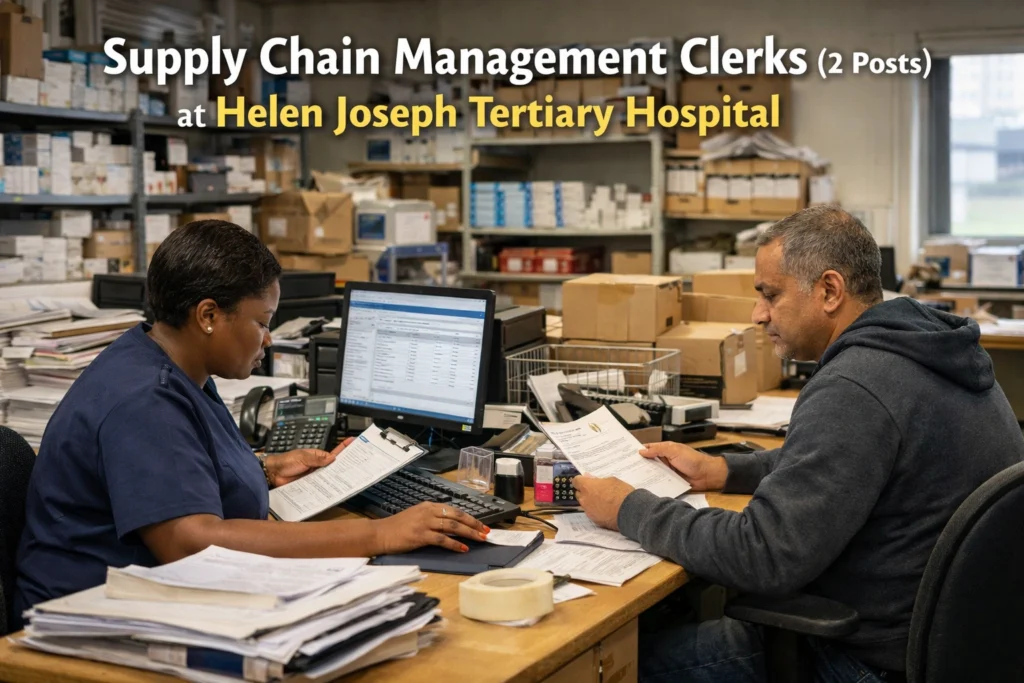

If you’re looking to start a stable career in government or healthcare administration, the Supply Chain Management Clerks opportunity at Helen Joseph Tertiary Hospital could be exactly what you need.
This entry-level role is designed for individuals with Grade 12, basic administrative skills, and an interest in procurement and logistics—making it one of the most accessible pathways into the public service sector.
With a competitive salary, structured responsibilities, and exposure to real-world systems like procurement and asset management, this role offers more than just a job—it offers a foundation for long-term career growth.
What You Should Know First
Before diving into details, here’s the most important takeaway:
- This is an entry-level government job—no prior experience required
- You’ll work in procurement, administration, and asset tracking
- The role supports hospital operations behind the scenes
- Salary: R228,321 per year + benefits
- Deadline: 25 March 2026 (strictly online applications)
In simple terms, Supply Chain Management Clerks ensure that hospitals have the right equipment, supplies, and systems in place to function efficiently.
Understanding the Role of Supply Chain Management Clerks
What Does “Supply Chain Management” Mean?
Supply chain management (SCM) refers to the process of sourcing, purchasing, storing, and distributing goods and services.
In a hospital setting, this includes:
- Medical equipment
- Office supplies
- Pharmaceuticals
- Maintenance services
As a clerk, you don’t make big decisions—but you keep everything running smoothly through accurate administration and coordination.
Where You’ll Work and Why It Matters
Working at Helen Joseph Tertiary Hospital means being part of a major public healthcare institution.
Why this environment is important:
- Hospitals rely heavily on efficient supply chains
- Delays or errors can directly affect patient care
- You gain exposure to public sector systems and compliance rules
Even though your role is administrative, your work contributes to life-saving operations behind the scenes.
Minimum Requirements Explained Simply
You don’t need a degree—but you do need the right mindset and basic skills.
Basic Requirements:
- Grade 12 (Matric)
- Computer literacy (Word, Excel, email)
- Good communication and teamwork
- Strong attention to detail
Knowledge That Helps (But Isn’t Mandatory):
- Public finance rules like PFMA and PPPFA
- Understanding of procurement processes
- Familiarity with systems like BAS or SAP SRM
Example:
Even knowing how to track orders in Excel or organize files properly can give you an advantage.
Key Responsibilities (Broken Down Step-by-Step)
The job is divided into two main areas: Supply Chain Tasks and Asset Management.
1. Supply Chain Duties
This is the core of your daily work.
a) Processing Orders
- Generate purchase orders
- Capture requests into systems
- Follow up on approvals
Example: A department needs gloves. You help process the request and ensure the order is placed correctly.
b) Managing Suppliers
- Update supplier databases
- Register new vendors on systems
- Communicate with service providers
Think of it as maintaining a trusted contact list for suppliers.
c) Handling Quotations and Bids
- Request price quotes
- Receive and record supplier responses
- Assist with bid documentation
This ensures the hospital gets value for money and fairness in procurement.
d) Receiving and Distributing Goods
- Check deliveries from suppliers
- Record items in registers
- Issue goods to departments
Example: When new equipment arrives, you verify and log it before it’s used.
2. Asset Management Duties
This focuses on tracking hospital property.
a) Asset Registration
- Record new equipment in the system
- Assign barcodes
b) Asset Tracking
- Monitor movement of items
- Update records regularly
c) Asset Verification
- Conduct yearly checks
- Perform spot checks
d) Asset Disposal
- Remove outdated or broken items
- Follow proper procedures
Example: Old computers must be formally removed from records—not just thrown away.
Understanding Public Sector Systems (Made Simple)
You’ll come across a few technical systems and laws.
BAS (Basic Accounting System)
- Tracks government spending
- Ensures accountability
SAP SRM (Supplier Relationship Management)
- Manages suppliers and procurement
- Keeps records of transactions
PFMA & PPPFA (Simplified)
- PFMA: Ensures public funds are used properly
- PPPFA: Ensures fair and transparent procurement
You don’t need to master these immediately—you’ll learn on the job.
How to Apply (Step-by-Step)
Applying correctly is just as important as qualifying.
Step 1: Access the Online Portal
Applications are done through the Gauteng E-Recruitment system only.
ALSO APPLY FOR: Nursing Assistant Posts
Step 2: Prepare Your Documents
You need:
- Completed Z83 form
- Updated CV
Important:
- No certificates required at this stage
- Documents must be in PDF format
Step 3: Submit Your Application
- Use reference: refs/042595
- Fill in all details carefully
- Upload documents
Step 4: Submit Before Deadline
25 March 2026
Late or incomplete applications are automatically rejected.
Common Misunderstandings About Supply Chain Management Clerks
“You need experience to apply”
Not true. This is an entry-level role.
“It’s just paperwork”
While administrative, your work impacts hospital efficiency and patient care.
“Supply chain is only about warehouses”
In reality, it includes:
- Procurement
- Supplier coordination
- Financial tracking
“You won’t grow in this role”
Many professionals start as clerks and move into:
- Procurement officers
- Logistics coordinators
- Supply chain analysts
Why This Role Is a Smart Career Move
1. Entry into Government Employment
Public sector jobs offer:
- Stability
- Benefits
- Structured growth
2. Transferable Skills
You gain skills in:
- Administration
- Data management
- Compliance
- Communication
3. Exposure to Real Systems
Working with systems like BAS and SAP builds valuable experience for future roles.
4. Career Growth Opportunities
You can later pursue:
- Diploma or degree in supply chain management
- Promotions within government
Key Takeaways
- Supply Chain Management Clerks play a critical role in hospital operations
- No experience is required—just basic skills and willingness to learn
- The job includes procurement, supplier management, and asset tracking
- You’ll work in a structured government environment with growth potential
- Applications must be submitted online before 25 March 2026
Frequently Asked Questions (FAQs)
1. Do I need a qualification beyond Matric?
No. Grade 12 is sufficient, though additional knowledge helps.
2. Is this a permanent job?
Most public service roles are permanent, subject to conditions and performance.
3. What skills will help me succeed?
Attention to detail, Organization, Basic computer skills, and Communication
4. Can I apply without knowing BAS or SAP?
Yes. These are learned on the job, not required beforehand.
Final Thoughts
The Supply Chain Management Clerks positions at Helen Joseph Tertiary Hospital offer a rare combination of accessibility, stability, and long-term growth potential.
If you’re organized, willing to learn, and interested in how systems work behind the scenes, this role can be your first step into a meaningful public service career.