

Getting real-world experience before you graduate can make a huge difference in your career. That’s where internships come in. They help you build practical skills, grow your network, and stand out when applying for jobs later. But many students feel overwhelmed when trying to apply—especially while balancing classes, exams, and personal commitments.
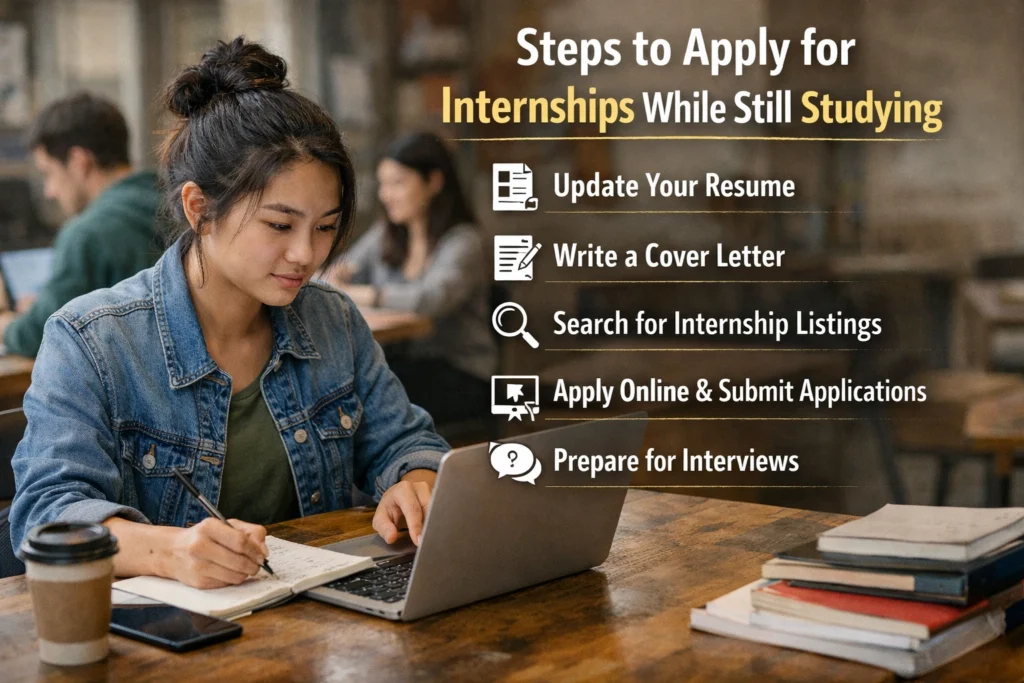
This guide breaks down the Steps to Apply for Internships While Still Studying in a simple, practical way. Whether you’re in your first year or about to graduate, you’ll learn how to approach the process confidently and effectively.
What You Should Know First
Before diving into applications, here’s the key idea:
Applying for internships is not a one-time task—it’s a process that requires planning, consistency, and strategy.
You don’t need perfect grades or years of experience. What matters most is:
- Starting early
- Being intentional about your goals
- Presenting your skills clearly
- Applying consistently
Think of it as building your career step by step—not chasing one perfect opportunity.
ALSO APPLY FOR: Takealot N6 Internship 2026
ALSO APPLY FOR: Electrum’s Winter Internship 2026
Why Internships Matter More Than You Think
Internships are more than just a line on your CV. They help you:
- Understand how your field works in real life
- Gain hands-on experience employers value
- Build professional connections
- Discover what you actually enjoy doing
For example, a marketing student might think they love social media—but during an internship, they may discover they prefer data analysis or content strategy instead.
ALSO READ ABOUT: 2026-Bursary Renewals Explained
Step-by-Step: Steps to Apply for Internships While Still Studying
1. Start Early (Earlier Than You Think)
Many students wait until their final year to apply—but that’s a mistake.
Best practice:
- Start researching internships at least 6–12 months in advance
- Some competitive programs close applications very early
Example:
If you want a winter internship in June, you should start preparing in January or even earlier.
2. Identify Your Career Interests
Before applying, ask yourself:
- What field am I interested in?
- What skills do I want to develop?
- What kind of companies attract me?
You don’t need a perfect answer—just a direction.
Tip:
Write down 2–3 areas you’re curious about (e.g., finance, IT support, engineering design). This helps you avoid applying randomly.
3. Build a Simple but Strong CV
Your CV doesn’t need to be long—it needs to be clear and relevant.
Include:
- Your education (current qualification)
- Key skills (technical and soft skills)
- Projects or assignments
- Volunteer work or part-time jobs
Example:
If you’re studying IT and built a small app for a class project, include it. That shows initiative.
4. Create a Basic Cover Letter Template
A cover letter explains why you want the internship and why you’re a good fit.
Keep it simple:
- Introduce yourself
- Mention the internship
- Highlight your skills
- Explain your interest
Then customize it slightly for each application.
5. Use Multiple Search Channels
Don’t rely on one source. Explore:
- University career portals
- Company websites
- Job platforms
- Networking events
- Social media (especially professional platforms)
Pro tip:
Many opportunities are never widely advertised—networking can uncover them.
ALSO APPLY FOR: Takealot N6 Internship 2026
ALSO APPLY FOR: Electrum’s Winter Internship 2026
6. Apply Consistently (Not Just Once)
One of the biggest mistakes students make is applying to only a few internships.
Better approach:
- Apply to multiple opportunities regularly
- Set a weekly goal (e.g., 5–10 applications)
Think of it like increasing your chances statistically.
7. Prepare for Interviews Early
Even before you get invited, start preparing.
Common questions include:
- Tell us about yourself
- Why do you want this internship?
- What are your strengths?
Example preparation:
Practice explaining a project you worked on:
- What was the task?
- What did you do?
- What was the result?
8. Manage Your Time as a Student
Balancing studies and applications can be tough.
Simple strategy:
- Allocate specific days for applications
- Use weekends or lighter academic days
- Avoid applying during exam periods if possible
Consistency is more important than intensity.
9. Track Your Applications
Keep a simple record:
- Company name
- Position applied for
- Date of application
- Status (applied, shortlisted, rejected)
This helps you stay organized and follow up if needed.
10. Learn from Rejections
Rejection is part of the process.
Instead of getting discouraged:
- Review your CV
- Improve your cover letter
- Practice interviews
Each rejection is feedback—even if it’s not explicitly given.
Common Misunderstandings About Steps to Apply for Internships While Still Studying
“I need experience before applying”
Not true. Internships are designed for beginners. Your coursework, projects, and willingness to learn matter more.
“Only top students get internships”
Grades help—but they’re not everything. Employers also look for:
- Communication skills
- Problem-solving ability
- Motivation
“I should wait until my final year”
Starting earlier gives you an advantage. Even short-term or unpaid internships can build experience.
“One application is enough”
Applying once or twice is rarely enough. Most successful candidates apply to many opportunities.
Practical Example: How a Student Might Apply
Let’s say Thabo is a second-year engineering student.
Step-by-step:
- He decides he’s interested in mechanical design
- He updates his CV with a class project
- He creates a simple cover letter
- He searches online and finds 10 internships
- He applies to all 10 over two weeks
- He prepares for interviews using common questions
- He tracks responses in a spreadsheet
Result: Even if only 2 respond, he gains interview experience—and possibly an offer.
Key Takeaways
- Start early—don’t wait until your final year
- Focus on learning and growth, not perfection
- Apply consistently to multiple opportunities
- Tailor your CV and cover letter for each role
- Use rejection as a learning tool
- Stay organized and manage your time wisely
- Build skills through projects and practical experience
Frequently Asked Questions (FAQs)
1. When should I start applying for internships?
Ideally, 6–12 months before the internship start date. Early preparation gives you more options.
2. Can I apply for internships with no work experience?
Yes. Focus on:Academic projects, Skills, Volunteer work, and Personal initiatives
3. How many internships should I apply for?
There’s no fixed number, but applying to multiple opportunities regularly increases your chances significantly.
4. What if I get rejected from all my applications?
This is common. Improve your CV, refine your approach, and keep applying. Persistence is key.
Final Thoughts
Understanding the Steps to Apply for Internships While Still Studying can completely change your career path. It’s not about being perfect—it’s about being prepared, proactive, and persistent.
Start small. Apply consistently. Learn from every experience.
Over time, those small efforts build into real opportunities—and that’s what sets successful graduates apart.
ALSO APPLY FOR: Takealot N6 Internship 2026
ALSO APPLY FOR: Electrum’s Winter Internship 2026
ALSO READ ABOUT: 2026-Bursary Renewals Explained