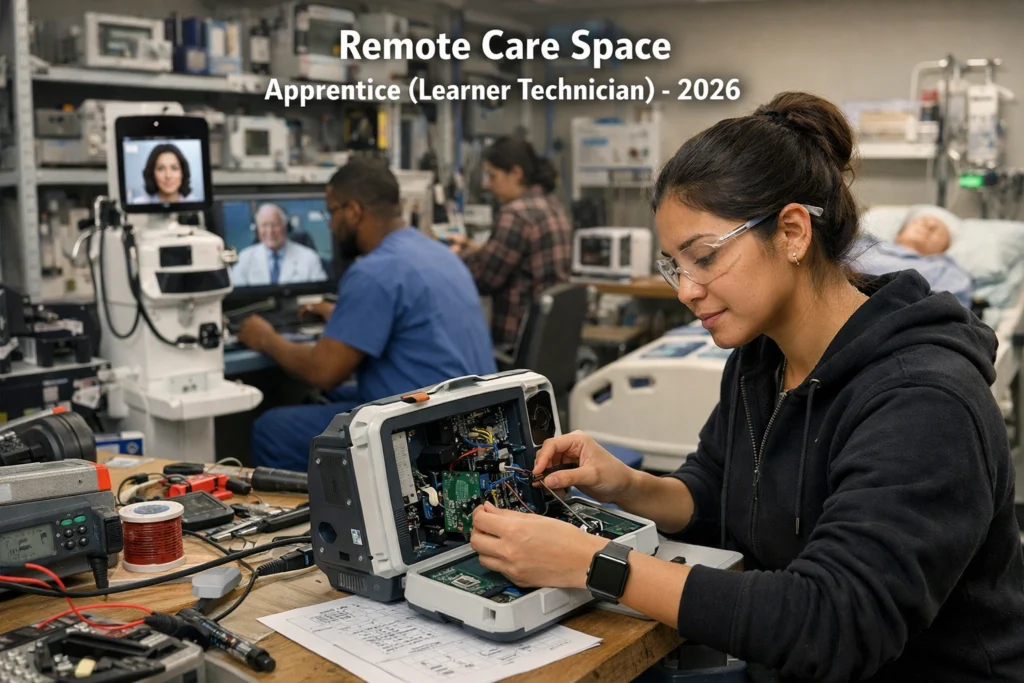

Remote Care Space Apprentice: In early 2026, a seemingly routine listing for a Remote Care Space Apprentice (Learner Technician) in Kempton Park drew an unexpectedly high level of interest—over 100 applicants within days. At first glance, it’s just another 12-month contract role. But beneath the surface, this opportunity reflects a deeper shift in South Africa’s labour market, technical education system, and the future of mobility itself.
At a time when youth unemployment remains one of the country’s most pressing socio-economic challenges, structured entry-level roles like this are becoming critical gateways into skilled employment. Simultaneously, the automotive industry is undergoing rapid transformation, driven by digital diagnostics, hybrid technologies, and evolving customer expectations.
This convergence—of economic necessity and technological change—makes the Remote Care Space Apprentice (Learner Technician) role far more significant than its job description suggests.
The Changing Landscape of Automotive Careers in South Africa
The traditional image of a motor mechanic—spanners, grease, and manual repairs—is increasingly outdated. Today’s automotive technician operates in a hybrid environment where mechanical knowledge intersects with software diagnostics and electronic systems.
South Africa’s automotive sector remains one of the country’s key industrial pillars, contributing significantly to GDP and employment. According to industry estimates, the sector supports hundreds of thousands of jobs across manufacturing, retail, servicing, and logistics. However, the skills required within this ecosystem are shifting rapidly.
Modern vehicles now rely heavily on:
- Electronic control units (ECUs)
- Advanced driver-assistance systems (ADAS)
- Computerized diagnostic tools
- Hybrid and electric powertrains
This shift has created a growing demand for technicians who are not just mechanically competent, but digitally literate.
The Automotive Apprentice (Learner Technician) role is designed to bridge exactly this gap. It introduces candidates to real-world workshop environments while simultaneously exposing them to modern diagnostic technologies.
For many young South Africans, especially those without access to formal tertiary education, this pathway represents a practical and increasingly relevant alternative to traditional academic routes.
Why Apprenticeships Are Regaining Strategic Importance
Apprenticeships are not new. But their relevance is being rediscovered in a modern context.
In South Africa, the mismatch between education outcomes and industry needs has long been a concern. Universities produce graduates, yet employers often struggle to find candidates with practical, job-ready skills. Apprenticeships—particularly in technical fields—offer a solution by combining:
- Structured learning
- Hands-on experience
- Industry exposure
The Remote Care Space Apprentice(Learner Technician) model reflects this approach. Over a 12-month period, candidates don’t just learn theory—they actively participate in vehicle diagnostics, repairs, and customer service.
This dual-learning model has several advantages:
- Faster Skills Acquisition
Practical exposure accelerates learning compared to purely classroom-based education. - Improved Employability
Candidates leave with real experience, making them more attractive to employers. - Industry Alignment
Training is directly aligned with current workplace demands.
Globally, countries like Germany and Switzerland have long relied on apprenticeship systems to maintain strong technical workforces. South Africa is increasingly looking to similar models to address its own skills shortages.
Inside the Role: What the Remote Care Space Apprentice (Learner Technician) Actually Does
The job description may appear straightforward, but the day-to-day reality of a Remote Care Space Apprentice(Learner Technician) is multifaceted.
At its core, the role revolves around learning by doing. Apprentices work under experienced technicians, gradually taking on more responsibility as their skills develop.
Typical responsibilities include:
- Assisting with vehicle diagnostics using computerized tools
- Performing basic maintenance tasks such as oil changes and brake inspections
- Supporting repairs on engines, transmissions, and electrical systems
- Maintaining workshop cleanliness and adhering to safety protocols
- Interacting with team members and occasionally customers
What makes this role particularly valuable is its exposure to real-world problem-solving. Unlike controlled classroom environments, workshops present unpredictable challenges—faulty sensors, intermittent electrical issues, or complex mechanical failures.
This environment cultivates:
- Analytical thinking
- Technical adaptability
- Attention to detail
Additionally, apprentices are often required to complete coursework or training modules aimed at achieving a formal trade qualification. This combination of practical and theoretical learning is essential for long-term career progression.
APPLY HERE: Remote Care Space Apprentice (Learner Technician)
ALSO APPLY FOR: Toyota Apprenticeships 2026
The Hidden Value: Soft Skills and Workplace Readiness
While technical skills are the obvious focus, one of the most overlooked aspects of the Automotive Apprentice (Learner Technician) role is the development of soft skills.
Employers consistently highlight gaps in:
- Communication
- Professional conduct
- Customer interaction
- Time management
This apprenticeship structure addresses those gaps directly.
For example:
- Customer Service Exposure
Apprentices learn how to explain technical issues in simple terms—an essential skill in modern service environments. - Team Collaboration
Workshops rely heavily on teamwork. Apprentices must coordinate with technicians, parts suppliers, and service advisors. - Workplace Discipline
Meeting deadlines, following safety procedures, and maintaining professionalism are all part of daily expectations.
These competencies are transferable across industries, making apprenticeships valuable even beyond automotive careers.
Competition and Accessibility: Why Over 100 Applicants Applied
The high number of applicants for this single position is not surprising—and it reveals several important trends.
1. Youth Unemployment Pressure
South Africa’s youth unemployment rate remains among the highest globally. Entry-level roles that offer training and potential permanent employment are therefore highly competitive.
2. Low Barrier to Entry
The requirements for this Automotive Apprentice (Learner Technician) role are relatively accessible:
- Matric/Grade 12
- Basic mechanical knowledge (preferred, not mandatory)
- Willingness to learn
This opens the door to a broad pool of candidates, including those who may not have formal technical qualifications.
3. Clear Career Pathway
Unlike many entry-level jobs, this role offers a defined progression:
Apprentice → Qualified Technician → Senior Technician → Workshop Manager or Specialist
This clarity makes it particularly attractive to career-focused applicants.
4. Potential for Permanent Employment
The possibility of transitioning into a full-time role after 12 months significantly increases its appeal. In a volatile job market, stability is a powerful incentive.
APPLY HERE: Remote Care Space Apprentice (Learner Technician)
Industry Trends Shaping the Future of Automotive Apprenticeships
The Automotive Apprentice (Learner Technician) role is evolving alongside broader industry trends. Understanding these trends is key to evaluating its long-term value.
Electrification and Hybrid Vehicles
While South Africa’s electric vehicle adoption is still developing, the shift is inevitable. Apprentices entering the field today will need to adapt to:
- Battery management systems
- Electric drivetrains
- High-voltage safety protocols
Digital Diagnostics and AI Integration
Modern vehicles generate vast amounts of data. Technicians increasingly rely on software to identify faults. This means future apprentices must be comfortable with:
- Diagnostic software platforms
- Data interpretation
- Continuous learning as technologies evolve
Aftermarket Growth
As vehicles stay on the road longer, demand for maintenance and repair services continues to grow. This creates sustained demand for skilled technicians.
Skills Shortages
Despite high unemployment, there is a shortage of qualified artisans in South Africa. Apprenticeships like this are critical pipelines for addressing that gap.
Risks and Realities: What Applicants Should Consider
While the opportunity is promising, it is not without challenges.
Short-Term Contract Nature
A 12-month contract does not guarantee permanent employment. Performance, company capacity, and economic conditions all play a role.
Physically Demanding Work
Automotive work can be physically intensive, requiring long hours on your feet and exposure to workshop environments.
Continuous Learning Requirement
Technology evolves rapidly. Technicians must commit to ongoing learning throughout their careers.
Modest Entry-Level Pay
While described as “competitive,” apprentice salaries are typically modest. The real value lies in long-term career prospects rather than immediate financial gain.
Understanding these realities helps applicants make informed decisions.
What This Means Going Forward
The growing interest in roles like Automotive Apprentice (Learner Technician) signals a broader shift in how young South Africans are approaching careers.
Firstly, there is increasing recognition that skills-based pathways can offer viable alternatives to traditional university education. As the cost of higher education rises and graduate unemployment persists, apprenticeships provide a more direct route into the workforce.
Secondly, employers are likely to expand such programmes. Companies benefit from training talent internally, ensuring alignment with their specific operational needs.
Thirdly, the automotive industry itself will continue to transform. Apprentices entering today will not just be mechanics—they will be multi-skilled technicians operating at the intersection of engineering and technology.
Finally, policy implications are significant. Government and industry stakeholders may need to invest more heavily in:
- Technical training infrastructure
- Public-private apprenticeship partnerships
- Awareness campaigns promoting artisan careers
If scaled effectively, programmes like this could play a meaningful role in reducing unemployment while strengthening South Africa’s technical workforce.
A Small Job Listing with Big Implications
The Automotive Apprentice (Learner Technician) position in Kempton Park is more than just an entry-level job—it is a microcosm of larger economic and industrial trends.
It highlights:
- The urgent need for practical skills development
- The transformation of the automotive sector
- The growing importance of apprenticeships in bridging employment gaps
For applicants, it represents a chance to build a sustainable career in a future-focused industry. For the broader economy, it signals a pathway toward addressing one of South Africa’s most persistent challenges: the transition from unemployment to meaningful, skilled work.
As interest in such roles continues to grow, one thing is clear—the humble apprenticeship is no longer a fallback option. It is becoming a strategic cornerstone of the modern workforce.
ALSO APPLY FOR: Toyota Apprenticeships 2026
APPLY HERE: Remote Care Space Apprentice (Learner Technician)