
Operator Vacancy: There are no waiting patients here, no consultations, no visible urgency. Yet without this room—and the person running it—the entire clinic would grind to a halt.
This is where the Operator works.
Often overlooked in public discussions about healthcare careers, the Operator role is a critical link in infection control, patient safety, and clinical efficiency. The recently advertised Operator position (Reference Number: refs/045351) at the SMU Oral Health Centre offers a glimpse into a profession that sits quietly at the heart of South Africa’s healthcare system.
What the Operator Role Really Means in Practice
On paper, the role of an Operator may appear administrative and technical. But in reality, it is deeply operational—balancing precision, consistency, and responsibility in a high-stakes environment.
The successful candidate will be responsible for managing the lifecycle of dental instruments—from their use in clinical procedures to their return in sterile condition. This involves meticulous record-keeping, strict adherence to sterilisation protocols, and coordination with clinical staff.
Daily responsibilities include:
- Recording instrument usage and tracking handpieces
- Monitoring sterilisation cycles and documenting autoclave performance
- Cleaning, drying, wrapping, and packing instruments according to protocol
- Disinfecting and maintaining dental equipment
- Managing linen supplies and sterile storage areas
Each of these tasks feeds into a larger system designed to prevent cross-contamination and ensure patient safety.
In a country like South Africa, where public healthcare facilities often operate under pressure, roles like this become even more critical. Efficiency is not just about speed—it’s about consistency and trust.
Apply via Gauteng Professional Job Centre
Why This Operator Position Matters Now
Healthcare systems worldwide have undergone significant scrutiny in recent years, particularly around infection prevention and control. In South Africa, public sector facilities continue to adapt to evolving standards while managing high patient volumes.
This is where the Operator role becomes more than just a job—it becomes a safeguard.
At the SMU Oral Health Centre, the Operator ensures that every instrument used in a patient’s mouth meets strict hygiene standards. This is not just a regulatory requirement; it is a frontline defense against infections.
The timing of this vacancy is also notable. With ongoing investments in healthcare infrastructure and a growing emphasis on compliance with occupational health standards, there is increasing demand for skilled support roles that maintain operational integrity.
For job seekers, especially those with matric and some exposure to healthcare environments, this role represents a practical entry point into the public health system.
Operator Vacancy: A Closer Look at the Requirements and Skills
The minimum requirement for the Operator position is a Grade 12 (Matric) certificate or equivalent qualification. While experience in a dental clinic or hospital environment is not mandatory, it is considered a strong advantage.
But beyond formal qualifications, the role demands a specific mindset.
Attention to detail is non-negotiable. A missed step in sterilisation or an incorrect record entry can have serious consequences. The Operator must also be comfortable working with processes that are repetitive but essential—where consistency matters more than speed.
There is also a physical and practical dimension to the work. Handling instruments, managing sterilisation equipment, and maintaining a clean environment require both discipline and stamina.
Importantly, the role also requires an understanding of hygiene protocols and the ability to follow structured procedures without deviation.
Inside the Sterilisation Process: More Than Just Cleaning
One of the most misunderstood aspects of the Operator role is the sterilisation process itself. It is not simply about washing instruments—it is a multi-step system governed by strict guidelines.
The process typically includes:
- Decontamination: Instruments are soaked in specialised detergents to remove biological material
- Cleaning: Manual or mechanical cleaning ensures all residues are eliminated
- Drying and Inspection: Instruments are checked for cleanliness and functionality
- Packaging: Items are wrapped and sealed using approved materials
- Sterilisation: Autoclaves use high-pressure steam to eliminate microorganisms
- Storage: Sterile instruments are stored in controlled environments until use
Each stage must be documented. Each cycle must be recorded. Each deviation must be addressed.
For the Operator, this process becomes second nature—but it never becomes casual.
also apply for: General Worker Job in Johannesburg
Expert Insight: The Hidden Risk Management Role
From a healthcare management perspective, the Operator role can be viewed as a form of risk control.
Infection outbreaks, equipment contamination, and procedural delays often trace back to breakdowns in sterilisation systems. By maintaining rigorous standards, the Operator effectively reduces institutional risk.
In public healthcare settings, where resources may be limited, the cost of failure is even higher. Preventing a single infection can save not only money but also lives.
This is why the role, despite its modest salary package of R163 680 per annum, carries significant responsibility.
It is also why departments increasingly emphasise compliance checks, audits, and documentation—areas where the Operator plays a central role.
Apply via Gauteng Professional Job Centre
Navigating the Application Process in Gauteng
The application process for this Operator position reflects broader trends in public sector recruitment in Gauteng.
Applications must be submitted online via the official e-Recruitment portal. This shift toward digital systems aims to improve transparency and efficiency, but it also requires applicants to be comfortable with online processes.
Key requirements include:
- A completed and signed Z83 application form
- An updated comprehensive CV
- Submission of supporting documents if shortlisted
Candidates should also be prepared for:
- Personnel suitability checks (including criminal and credit records)
- Qualification verification
- Reference checks with at least three referees
The emphasis on verification reflects a growing focus on accountability within the public service.
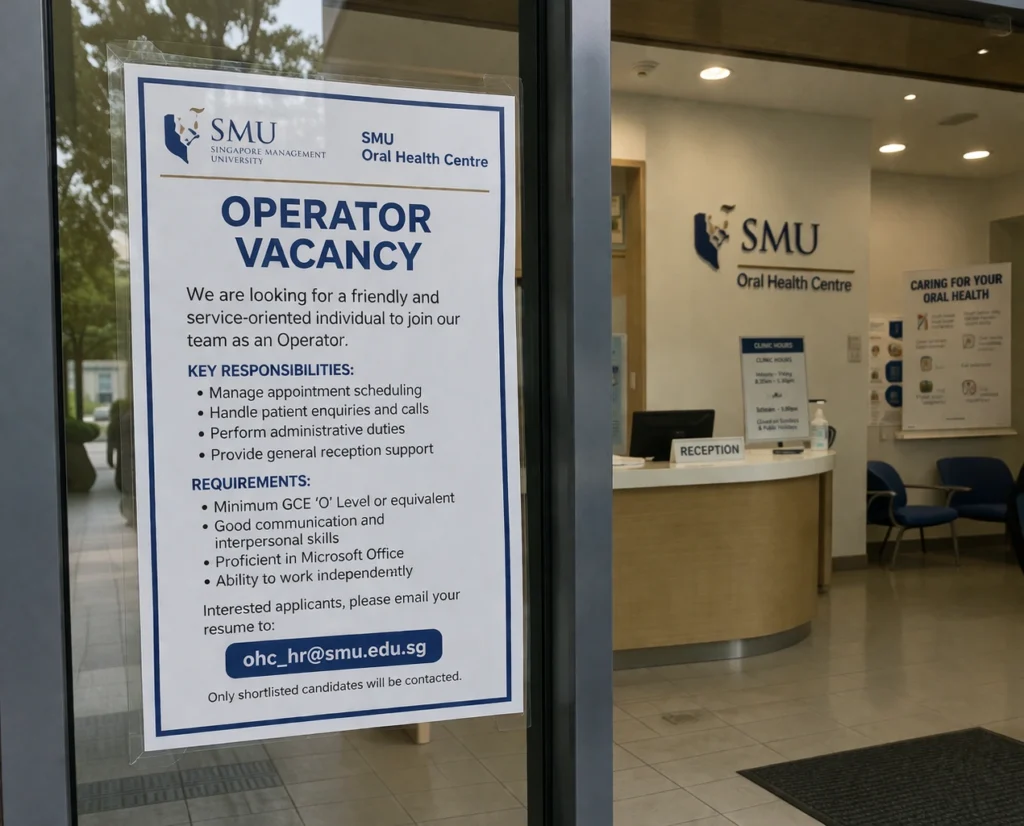
A Role with Broader Career Implications
While the Operator position may appear specialised, it can serve as a stepping stone into broader healthcare careers.
Exposure to clinical environments, infection control protocols, and hospital operations can open pathways into:
- Dental assisting
- Sterilisation management
- Healthcare administration
- Occupational health and safety roles
For many, this role provides practical experience that complements further study or training.
It also offers something less tangible but equally valuable: an understanding of how healthcare systems function behind the scenes.
Frequently Asked Questions (FAQ)
1. Do I need prior experience to apply for the Operator role?
No, experience is not mandatory, but having worked in a dental clinic or hospital environment will give you an advantage
2. Where do I apply for this Operator position?
Applications must be submitted online through the Gauteng Department of Health e-Recruitment portal. No email or hand-delivered applications are accepted
3. What happens if I don’t hear back after applying?
If you have not been contacted within three months of the closing date (03 April 2026), you should assume your application was unsuccessful.
The Bigger Picture: Recognising the Unseen Workforce
In conversations about healthcare careers, attention often gravitates toward doctors, nurses, and specialists. These roles are vital—but they are not the whole story.
Behind every successful procedure is a system. Behind that system are people whose work rarely makes headlines.
The Operator is one of those roles.
At the SMU Oral Health Centre, this position represents more than a job opening. It reflects the ongoing effort to maintain standards, protect patients, and ensure that public healthcare continues to function—day in and day out.
For job seekers, it offers an opportunity to step into a role that is both practical and meaningful. For the healthcare system, it reinforces a simple truth: sometimes, the most important work happens out of sight.
And yet, without it, nothing else works.