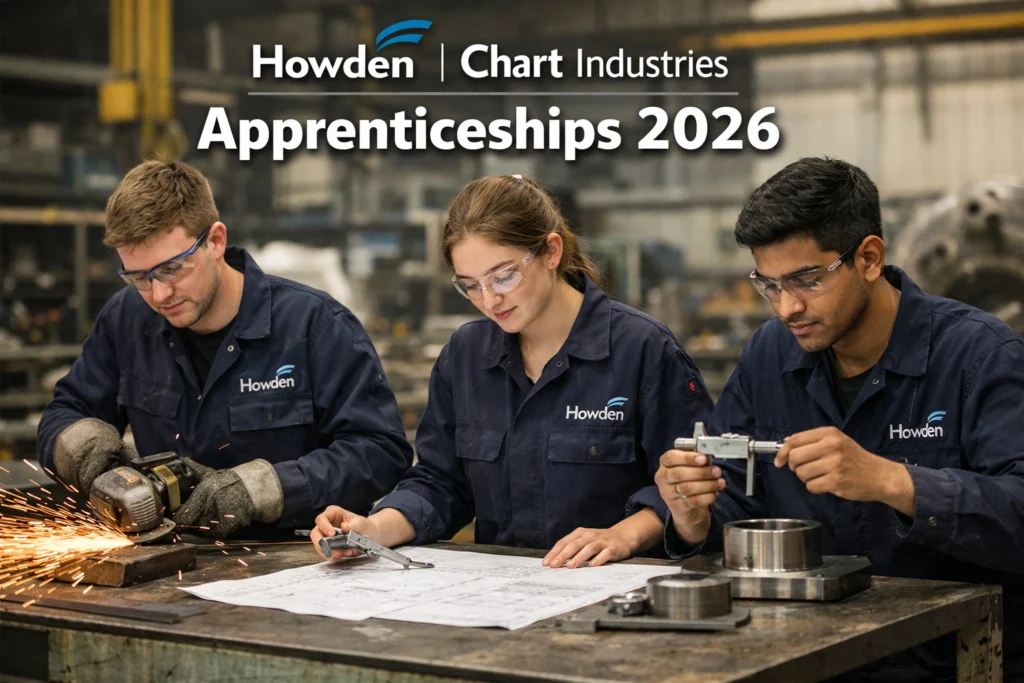

As South Africa continues to grapple with youth unemployment while simultaneously facing a shortage of skilled artisans, programmes like the Howden (Chart Industries) Apprenticeships 2026 arrive at a critical moment. The country’s industrial sector—particularly energy, manufacturing, and infrastructure—depends heavily on technically trained professionals. Yet, the pipeline of qualified artisans has not kept pace with demand.
This is where structured apprenticeship programmes step in—not just as training initiatives, but as economic interventions. The 2026 intake from Chart Industries (through its Howden South Africa division) offers more than a career opportunity; it reflects broader shifts in how industry is investing in skills development, workforce sustainability, and long-term competitiveness.
This article unpacks the Howden (Chart Industries) Apprenticeships 2026 from an analytical perspective—exploring its significance, structure, sector relevance, and what it reveals about the future of technical careers in South Africa.
Why the Howden Apprenticeships Matter Right Now
South Africa’s labour market presents a paradox. On one hand, unemployment—especially among youth—remains persistently high. On the other, employers consistently report shortages of skilled artisans such as welders, boilermakers, and mechanical fitters.
This mismatch is not new, but it has intensified in recent years due to:
- Declining enrolment in technical education pathways
- Aging artisan workforce approaching retirement
- Infrastructure and energy sector expansion
- Increased demand for specialised industrial maintenance skills
The Howden (Chart Industries) Apprenticeships 2026 sits directly at this intersection. By offering four years of structured training, the programme is not just filling vacancies—it is rebuilding a talent pipeline that industry desperately needs.
The timing is also significant. With South Africa investing heavily in energy reliability and industrial capacity, companies like Howden—known for air and gas handling systems—play a pivotal role in maintaining critical infrastructure such as power plants.
APPLY HERE: Howden (Chart Industries) Apprenticeships 2026
ALSO APPLY FOR: Apprentice Social Media Strategist
Understanding the Programme Structure: More Than Just Training
At first glance, the apprenticeship may seem like a standard technical training opportunity. However, its design reflects a deliberate blend of theory, practice, and professional integration.
Key Components of the Programme
- Structured theoretical training aligned with national trade standards
- Hands-on workplace experience in real industrial environments
- Mentorship from experienced artisans
- Trade-specific skill development in high-demand fields
The four-year duration is particularly important. Unlike short-term learnerships, apprenticeships of this length allow for:
- Deep technical mastery
- Exposure to complex engineering systems
- Progressive responsibility in real work settings
This aligns with global best practices in artisan training, where competence is built over time rather than rushed through condensed programmes.
Available Trades and Locations
The programme offers limited but targeted positions:
- Gauteng (Booysens):
- 2 × Boilermakers
- 1 × Welder
- Mpumalanga:
- Arnot: 1 × Mechanical Fitter
- Kendal: 1 × Mechanical Fitter
These locations are not random—they are closely tied to South Africa’s industrial and energy hubs, particularly coal-fired power stations and heavy manufacturing zones.
Sector Relevance: Engineering Skills in a Changing Economy
To understand the value of the Howden (Chart Industries) Apprenticeships 2026, it’s important to consider the industries these skills serve.
Energy Sector Demand
Mechanical fitters and welders are essential in maintaining power generation infrastructure. Facilities like those in Mpumalanga require continuous maintenance to avoid costly breakdowns.
As South Africa works to stabilise its electricity supply, demand for these roles is expected to remain strong—even as the country transitions toward renewable energy sources.
Manufacturing and Industrial Processing
Boilermakers and welders play a central role in:
- Fabrication of industrial equipment
- Repair of pressure vessels and piping systems
- Construction of large-scale mechanical structures
These skills are transferable across industries, from mining to petrochemicals.
Global Engineering Integration
Because Howden operates under Chart Industries, apprentices are exposed to international engineering standards. This has two important implications:
- Skills portability – Graduates may find opportunities beyond South Africa
- Higher training quality – Global companies tend to maintain rigorous technical standards
In a globalised labour market, this exposure is a significant advantage.
Entry Requirements: Filtering for Potential, Not Just Credentials
The eligibility criteria for the programme reveal how companies are balancing accessibility with technical readiness.
Minimum Academic Requirements
Applicants must have:
- A Technical Matric with Mathematics and Science, or
- An N3 qualification with relevant trade subjects
This ensures candidates have foundational knowledge while still allowing multiple entry pathways.
Additional Competency Expectations
Beyond academics, the programme emphasises:
- Engineering aptitude
- Problem-solving ability
- Communication skills
- Teamwork and attention to detail
This reflects a broader shift in hiring practices. Employers are increasingly looking for adaptive, trainable individuals rather than purely academic achievers.
Special Requirements
- Medical fitness
- Clean criminal record
- Psychometric assessment clearance
These requirements are standard in industrial environments, where safety and reliability are non-negotiable.
The Real Value Proposition: What Apprentices Actually Gain
While the programme outlines clear benefits, the deeper value lies in how these translate into long-term career outcomes.
1. Industry-Recognised Artisan Status
Completing a four-year apprenticeship positions candidates to become qualified artisans, a credential that remains highly respected in South Africa.
2. Practical Experience That Employers Prioritise
Many graduates struggle with the “experience gap.” Apprenticeships eliminate this issue by embedding work experience into the training process.
3. Exposure to Complex Engineering Systems
Working within a company like Howden means dealing with:
- Industrial fans and compressors
- Gas handling systems
- Large-scale mechanical installations
This level of exposure is difficult to replicate in classroom settings.
4. Career Mobility
Qualified artisans often have:
- Opportunities for contract work
- Access to international markets
- Potential to move into supervisory or specialist roles
In some cases, artisans can earn competitive salaries that rival or exceed those of university graduates.
APPLY HERE: Howden (Chart Industries) Apprenticeships 2026
Scarcity and Competition: Only 5 Positions Available
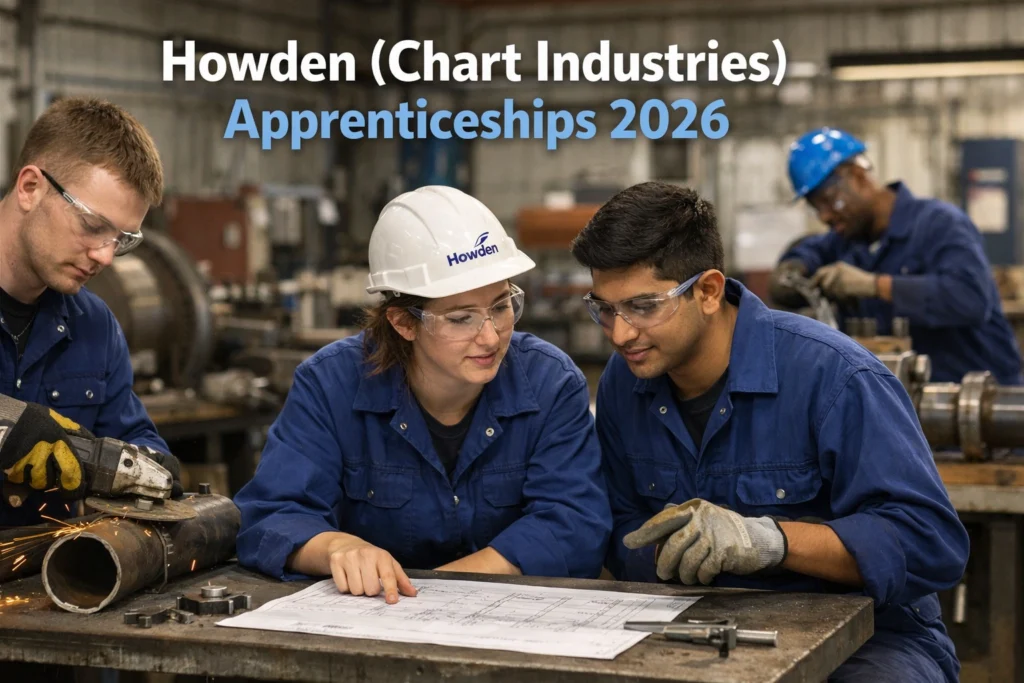
One of the most striking aspects of the Howden (Chart Industries) Apprenticeships 2026 is its limited intake—just five positions.
This scarcity highlights two key realities:
High Selectivity
With such few spots, competition is expected to be intense. Candidates will need to stand out not only academically but also in terms of attitude and potential.
Quality Over Quantity
Rather than mass training, the programme appears focused on developing a small number of highly competent artisans. This approach often leads to better training outcomes and stronger mentorship.
From an industry perspective, this reflects a trend toward precision talent development, where companies invest deeply in fewer individuals.
Application Strategy: What Strong Candidates Will Do Differently
Given the competitive nature of the programme, applicants need to approach the process strategically.
Key Documents
- Updated CV
- Certified ID copy
- Certified academic results
Beyond the Basics
Strong candidates typically:
- Highlight hands-on projects or technical exposure
- Demonstrate genuine interest in engineering trades
- Show evidence of problem-solving or mechanical aptitude
Searching for the Application
Applicants are instructed to search online for:
“Howden Apprenticeship Programme 2026”
This suggests that the application process is centralised through official company channels rather than third-party platforms—a common practice for large engineering firms.
APPLY HERE: Howden (Chart Industries) Apprenticeships 2026
Broader Trends: What This Programme Reveals About Skills Development
The Howden (Chart Industries) Apprenticeships 2026 is not an isolated initiative—it reflects broader changes in how skills are developed in South Africa.
Shift Toward Employer-Led Training
Companies are increasingly taking responsibility for training rather than relying solely on public institutions.
Renewed Focus on Artisan Careers
There is growing recognition that:
- Not all careers require university degrees
- Technical trades offer stable and lucrative pathways
- Artisan shortages can constrain economic growth
Integration of Global Standards
Multinational companies are raising the bar for training quality, aligning local programmes with international benchmarks.
What This Means Going Forward
The implications of the Howden (Chart Industries) Apprenticeships 2026 extend beyond the five individuals who will be selected.
For Job Seekers
This programme reinforces the value of technical skills as a viable career path. As demand for artisans grows, those with the right training will find increasing opportunities.
For Industry
It signals a continued shift toward long-term talent investment. Companies that train their own workforce are better positioned to maintain operational efficiency and innovation.
For the South African Economy
If replicated at scale, programmes like this could:
- Reduce youth unemployment
- Address critical skills shortages
- Strengthen industrial capacity
However, the limited number of positions also highlights a challenge: demand for opportunities far exceeds supply. Expanding similar initiatives will be crucial.
For Education Policy
There is a clear need to:
- Strengthen technical education pathways
- Improve alignment between education and industry needs
- Promote apprenticeships as mainstream career options
Final Thoughts
The Howden (Chart Industries) Apprenticeships 2026 represents more than a training programme—it is a microcosm of South Africa’s evolving labour market. It reflects both the challenges and opportunities within the country’s skills development landscape.
For individuals with an interest in engineering trades, this is a rare opportunity to gain high-quality training within a globally connected company. For the broader economy, it is a reminder that sustainable growth depends not just on policy, but on practical, hands-on skills development.
As competition for such programmes intensifies, the message is clear: technical expertise is no longer a fallback option—it is a strategic career choice.