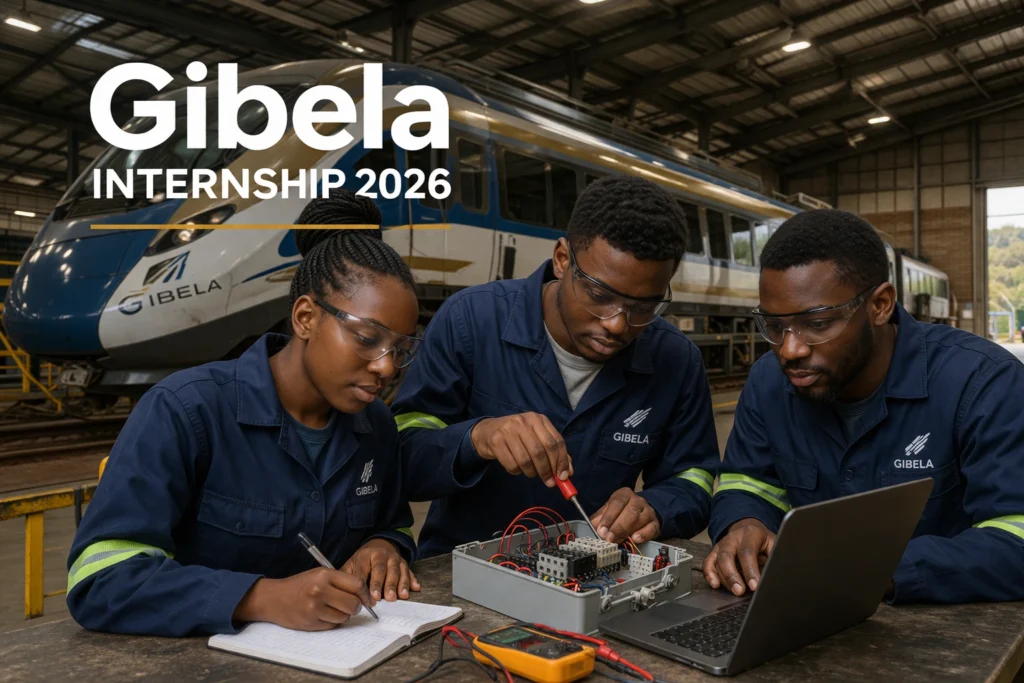

There’s a quiet shift happening in South Africa’s industrial landscape — and suddenly, it’s getting loud.
The Gibela Internship 2026 is trending not just because it offers jobs, but because it signals something bigger: a renewed push to rebuild the country’s rail infrastructure while creating a pipeline of highly skilled, globally competitive graduates.
At a time when youth unemployment remains one of South Africa’s most urgent challenges, opportunities like this don’t just appear — they reflect deeper economic movement. And right now, that movement is happening in rail.
But what exactly is driving the buzz around this programme? And why are graduates, recruiters, and industry watchers paying close attention?
Let’s unpack it.
The Bigger Picture: How Rail Made a Comeback
For years, South Africa’s rail sector struggled with underinvestment, maintenance backlogs, and declining public confidence. Passenger rail systems faltered, freight inefficiencies mounted, and the country’s once-promising rail manufacturing capability faded into the background.
Then came a turning point.
Government infrastructure strategies, combined with partnerships between local and global players, began reshaping the industry. One of the most significant outcomes of this shift has been the rise of the Gibela Rail Transport Consortium — a joint venture tasked with modernising South Africa’s commuter rail fleet.
Working closely with global rail giant Alstom, Gibela has been manufacturing modern trains locally, transferring skills, and building long-term industrial capacity.
This is where the Gibela Internship 2026 comes in.
It’s not just about training graduates — it’s about feeding talent directly into a strategic national industry.
Why the Gibela Internship 2026 Is Trending Now
The timing of this programme couldn’t be more relevant.
South Africa is currently doubling down on infrastructure-led growth. Rail is a core component of that strategy, especially in easing logistics bottlenecks and revitalising commuter transport.
Against this backdrop, the Gibela programme is attracting attention for a few key reasons:
It connects local talent to global expertise.
Through its partnership with Alstom, interns gain exposure to international engineering standards and systems.
It targets high-demand skills.
Fields like mechatronics, digital systems, and supply chain management are not only scarce locally — they’re globally competitive.
It offers real industrial experience.
Unlike purely academic programmes, this internship places graduates inside active manufacturing environments.
It reflects a broader hiring trend.
More companies are shifting from hiring experienced workers to developing talent pipelines through structured graduate programmes.
In short, this isn’t just another internship listing — it’s part of a wider economic story.
APPLY HERE: Gibela Internship 2026
ALSO APPLY FOR: MANCOSA Graduate Internships 2026
Inside the Programme: What Graduates Are Actually Getting
The Gibela Internship 2026 offers multiple career paths, each aligned with critical areas of the rail manufacturing ecosystem.
Engineering & Technical Roles
For graduates in electrical, mechanical, and industrial engineering, this is arguably the most direct route into heavy industry.
Roles like Electronics Engineering Graduate, Tooling Engineer, and Maintenance Technician place interns at the heart of train production and maintenance systems.
This isn’t theoretical work — it’s hands-on, technical, and deeply practical.
Quality & Compliance
Quality assurance might not sound glamorous, but in rail manufacturing, it’s everything.
Interns in this track learn inspection systems, compliance protocols, and manufacturing standards — including ISO frameworks that are recognised globally.
These are skills that travel well beyond South Africa.
Supply Chain & Procurement
Behind every train is a complex logistics network.
Procurement graduates step into roles that involve supplier coordination, inventory management, and contract systems — all critical in large-scale manufacturing.
Given the global supply chain disruptions of recent years, these skills are in especially high demand.
Digital & Innovation Roles
Perhaps the most surprising — and exciting — part of the programme lies here.
The inclusion of VR-Learning Developer and Business Solutions roles shows how digital transformation is reshaping even traditional industries like rail.
Interns may work on:
- Virtual reality training simulations
- ERP systems and business software
- Digital workflow optimisation
This fusion of engineering and digital tech reflects where the future of industry is heading.
Who Gets In — And Who Doesn’t
The requirements for the Gibela Internship 2026 are relatively straightforward on paper:
- South African citizenship
- Diploma or Degree in a relevant field
- Age between 18–35
- Currently unemployed
But the reality is more competitive.
Thousands of graduates are expected to apply before the 03 April 2026 deadline. What separates successful applicants isn’t just qualifications — it’s how well they position themselves.
Candidates who demonstrate:
- Practical project experience
- Familiarity with tools like AutoCAD, MATLAB, or SAP
- Strong communication and adaptability
are more likely to stand out.
This reflects a broader shift in hiring — employers are increasingly prioritising applied skills over purely academic results.
Public Reaction: Hope, Pressure, and Competition
Online discussions around the programme reveal a mix of excitement and anxiety.
For many young South Africans, opportunities like this represent a rare chance to break into industries that traditionally feel inaccessible.
There’s optimism — especially among engineering and TVET graduates — that programmes like this could bridge the gap between education and employment.
But there’s also pressure.
The limited number of positions compared to the scale of demand means competition is intense. Some graduates express frustration that even with qualifications, opportunities remain scarce.
Still, the general sentiment leans positive.
Because even if not everyone gets in, the existence of programmes like the Gibela Internship 2026 signals that the system is slowly shifting toward skills development and industrial growth.
Why This Matters Right Now
This isn’t just about one internship.
The Gibela Internship 2026 sits at the intersection of three critical trends shaping South Africa’s future:
1. Youth Employment Crisis
With millions of young people unemployed, structured graduate programmes offer a practical entry point into the workforce.
They reduce the “experience barrier” that locks many graduates out of jobs.
2. Infrastructure-Led Growth
Rail investment is not just about transport — it’s about economic efficiency.
Improved rail systems lower logistics costs, boost trade, and support industrial expansion.
3. Skills Transfer and Localisation
Partnerships with companies like Alstom ensure that skills aren’t just imported — they’re developed locally.
This builds long-term capacity within South Africa’s workforce.
Taken together, these factors make the programme more than a career opportunity — it’s part of a national development strategy.
The Application Rush: What Sets Top Candidates Apart
As the deadline approaches, application volumes are expected to spike.
But not all applications are equal.
Strong candidates tend to:
- Tailor their CVs to specific roles
- Highlight technical tools and software proficiency
- Include portfolios (especially for digital roles)
- Apply early rather than last-minute
Interestingly, applying to multiple roles — where eligible — has become a common strategy.
It increases visibility and improves overall chances of selection.
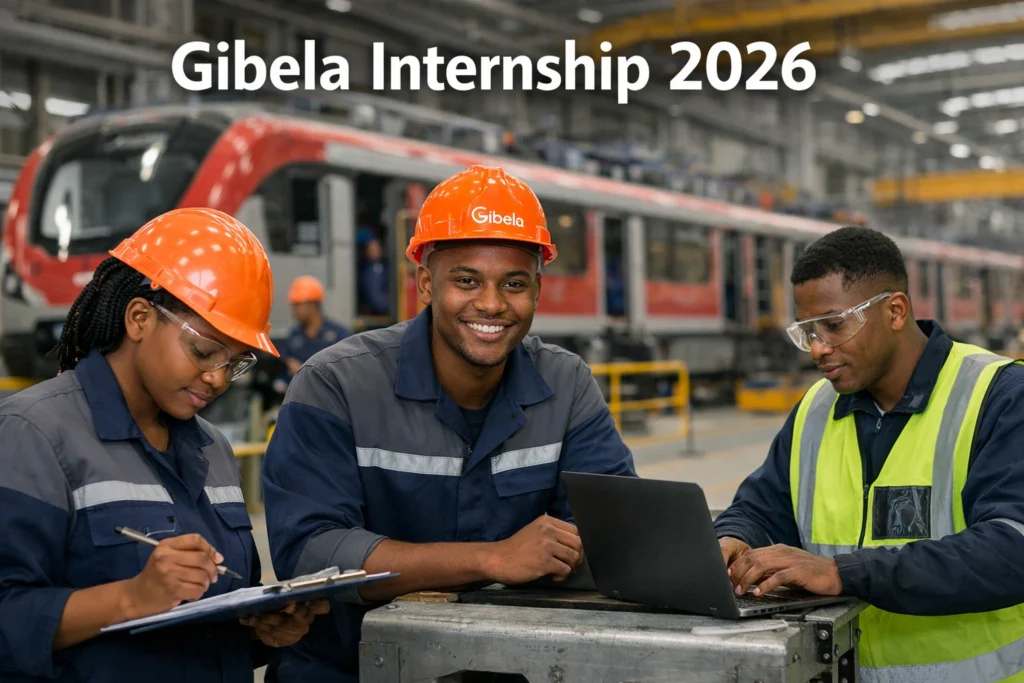
APPLY HERE: Gibela Internship 2026
What Could Happen Next
The success of the Gibela Internship 2026 could have ripple effects beyond this year’s intake.
Expansion of Graduate Programmes
If demand continues to grow, more companies in manufacturing and infrastructure may launch similar initiatives.
Increased Focus on Rail Careers
Historically overlooked, rail engineering and manufacturing could become more attractive career paths for young professionals.
Stronger Industry-Academia Links
Universities and TVET colleges may begin aligning curricula more closely with industry needs, especially in areas like mechatronics and digital systems.
Potential Job Absorption
While permanent employment isn’t guaranteed, high-performing interns could transition into full-time roles — either within Gibela or across the broader rail and engineering sector.
The Real Opportunity — And Its Limits
It’s important to stay grounded.
The Gibela Internship 2026 is a powerful opportunity — but it’s not a guaranteed solution to unemployment.
Not every applicant will be selected. Not every intern will secure a permanent job.
But that doesn’t diminish its value.
Because programmes like this do something crucial:
They create pathways.
They connect education to industry.
They turn theoretical knowledge into practical experience.
And in an economy where that connection is often missing, that’s a significant step forward.
Final Thought: A Signal of Change
The growing attention around the Gibela Internship 2026 isn’t accidental.
It reflects a shift in how South Africa is thinking about skills, industry, and opportunity.
Less focus on short-term fixes. More emphasis on building systems that develop talent over time.
For graduates watching from the sidelines, this moment matters.
Not just because of one internship — but because of what it represents.
A door opening in an industry that’s finally moving again.
APPLY HERE: Gibela Internship 2026
ALSO APPLY FOR: MANCOSA Graduate Internships 2026