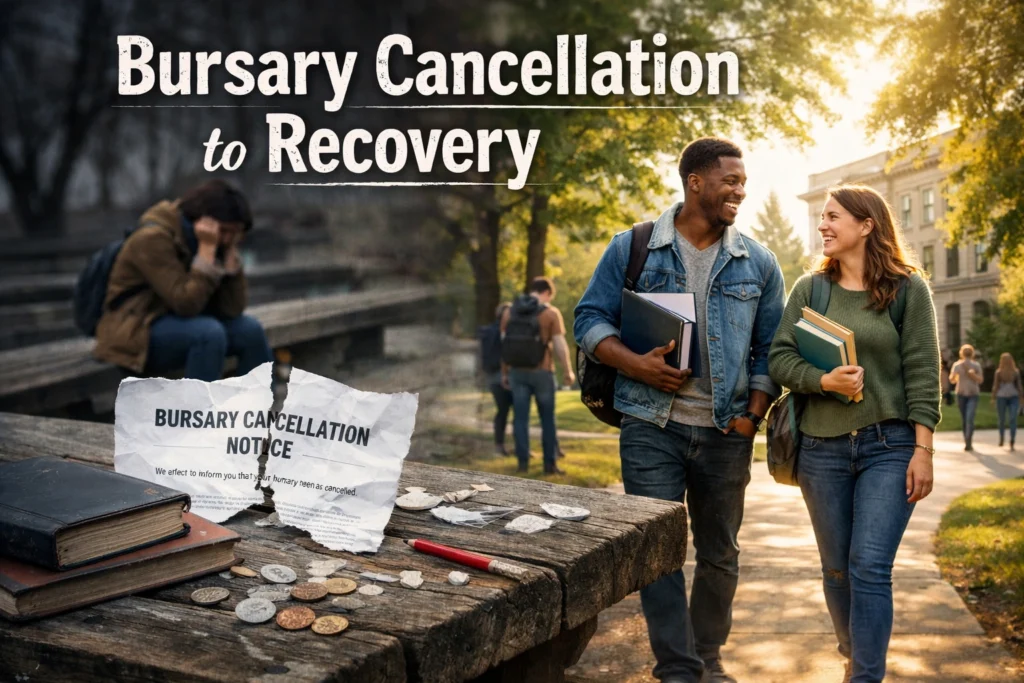

Losing a bursary halfway through the academic year can feel overwhelming. One moment your studies are funded, and the next you’re scrambling to figure out how to pay fees, stay enrolled, and keep your future on track. That’s exactly why Bursary Cancellation to Recovery: A Mid-Year Bursary Guide matters—it helps you understand what happens when funding is withdrawn and, more importantly, how to recover from it.
Whether your bursary was cancelled due to academic performance, administrative issues, or personal circumstances, this guide will walk you through what to expect and what steps you can take next. The goal is simple: help you move from panic to a practical plan.
What You Should Know First
Bursary cancellation is not the end of your academic journey. It’s a setback—but one that can often be managed or even reversed.
Here’s the key idea:
- Most bursaries have clear conditions (academic performance, attendance, conduct).
- Cancellation usually follows specific violations or administrative issues.
- You often have options, including appeals, alternative funding, or payment arrangements.
- Acting quickly can make the difference between dropping out and staying enrolled.
Think of bursary cancellation as a turning point rather than a dead end.
ALSO APPLY FOR: Flyfofa Aviation NSF Bursaries 2026
ALSO APPLY FOR: Career Wise Bursaries Services 2026
Why Bursaries Get Cancelled Mid-Year
Understanding why a bursary is cancelled helps you avoid repeating the same issue—and strengthens your case if you want to appeal.
1. Academic Performance Issues
Many bursaries require you to maintain a minimum average (for example, 60% or above). If your marks drop:
- You may receive a warning first
- Continued underperformance can lead to cancellation
Example:
If you fail multiple modules in your first semester, your sponsor may decide you’re not meeting their expectations.
2. Breach of Contract Terms
Bursary agreements are legally binding. Common violations include:
- Skipping classes or poor attendance
- Changing courses without approval
- Failing to submit required reports
3. Administrative or Documentation Problems
Sometimes, it’s not about performance at all:
- Missing documents
- Late registration confirmation
- Incorrect banking or academic records
4. Misconduct or Disciplinary Issues
Serious misconduct (like cheating or campus violations) can result in immediate cancellation.
What Happens Immediately After Cancellation?
When your bursary is cancelled mid-year, several things may happen quickly:
Loss of Financial Coverage
- Tuition fees may no longer be paid
- Accommodation and allowances could stop immediately
Outstanding Fees Become Your Responsibility
Your institution may:
- Place your account on hold
- Restrict access to results or registration
Academic Progress Is Affected
Without funding, you might:
- Miss exams due to unpaid fees
- Be unable to continue the semester
This stage can feel urgent—and it is. The sooner you act, the better your chances of recovery.
Step-by-Step: How to Recover After Bursary Cancellation
Step 1: Confirm the Reason for Cancellation
Don’t assume—get clarity.
Contact:
- Your bursary provider
- Your university’s financial aid office
Ask for:
- A written explanation
- Any supporting documentation
Why it matters: You need the exact reason to decide your next move.
Step 2: Check If You Can Appeal
Many students don’t realise this: you may be allowed to appeal the decision.
Grounds for appeal could include:
- Medical issues affecting performance
- Family emergencies
- Administrative errors
Example:
If you failed exams due to illness and have medical proof, your bursary provider might reconsider.
Tip:
Write a clear, honest appeal letter and attach evidence.
Step 3: Speak to Your Institution
Your university or college can be a powerful ally.
They may offer:
- Payment plans
- Temporary fee waivers
- Advice on alternative funding
Important: Don’t disappear or avoid communication—this can make things worse.
Step 4: Explore Alternative Funding Options
If your bursary cannot be reinstated, look for other funding sources:
- Government financial aid schemes
- Private bursaries and scholarships
- Student loans
- Part-time work or internships
Example:
Some students successfully switch to new bursaries mid-year if spaces become available.
Step 5: Adjust Your Academic Strategy
If academic performance caused the cancellation:
- Seek tutoring or academic support
- Reduce your course load (if possible)
- Focus on improving key subjects
This not only helps you pass—it strengthens future funding applications.
Step 6: Create a Survival Plan
You need a short-term plan to stay in school:
- Negotiate deadlines for fees
- Prioritise essential expenses
- Consider temporary work
Even small steps can keep you enrolled while you secure long-term funding

ALSO APPLY FOR: Flyfofa Aviation NSF Bursaries 2026
ALSO APPLY FOR: Career Wise Bursaries Services 2026
Turning Setbacks Into Comebacks
A cancelled bursary doesn’t define your academic future. Many students recover and succeed—but it requires action and resilience.
Here’s how to shift your mindset:
Reframe the Situation
Instead of thinking:
“I’ve lost everything”
Think:
“I need a new plan”
Build a Stronger Case for Future Funding
Use this experience to:
- Improve your grades
- Show determination
- Demonstrate responsibility
Sponsors often value students who overcome challenges.
Common Misunderstandings About Bursary Cancellation to Recovery: A Mid-Year Bursary Guide
“Once it’s cancelled, it’s final”
Not always true. Appeals and reconsiderations are possible, especially with valid reasons.
“There are no other funding options mid-year”
While limited, opportunities do exist. Some bursaries open unexpectedly, and institutions may help.
“You must drop out immediately”
Many students stay enrolled by negotiating payment plans or securing temporary funding.
“It only happens to struggling students”
Even high-performing students can lose bursaries due to technical or administrative issues.
How to Prevent Future Bursary Loss
Recovery is important—but prevention is even better.
Stay on Top of Academic Requirements
- Track your grades regularly
- Seek help early if you struggle
Understand Your Contract
Know:
- Minimum marks required
- Reporting obligations
- Conditions for renewal
Communicate Proactively
If problems arise:
- Inform your sponsor early
- Provide documentation
Keep Records
Save:
- Emails
- Academic reports
- Medical certificates
These can support you if issues arise later.
Key Takeaways
- Bursary cancellation is serious but not the end of your education.
- Always confirm the reason before taking action.
- You may be able to appeal the decision, especially with valid evidence.
- Universities can help with payment plans and advice.
- Explore alternative funding options immediately.
- Use the experience to improve your academic and financial strategy.
Frequently Asked Questions (FAQs)
1. Can I get my bursary reinstated after cancellation?
Yes, in some cases. If you have strong reasons—like medical issues or administrative errors—you can submit an appeal with supporting documents.
2. How long does the appeal process take?
It varies by provider, but it can take anywhere from a few days to several weeks. Act quickly and follow up regularly.
3. What if I can’t pay my fees after cancellation?
Speak to your institution immediately. Many offer payment plans or temporary relief while you arrange funding.
4. Can I apply for another bursary in the same year?
Yes, although options may be limited. Keep checking for opportunities and apply as soon as possible.
Moving Forward With Confidence
Bursary Cancellation to Recovery: A Mid-Year Bursary Guide is ultimately about resilience. Losing funding mid-year is stressful—but it doesn’t have to derail your future.
By understanding what went wrong, acting quickly, and exploring your options, you can stay on track. Many students face this challenge and still graduate successfully.
The key is simple: don’t freeze—take action.
ALSO APPLY FOR: Flyfofa Aviation NSF Bursaries 2026
ALSO APPLY FOR: Career Wise Bursaries Services 2026
ALSO READ ABOUT: What is an NQF level and why does it matter?