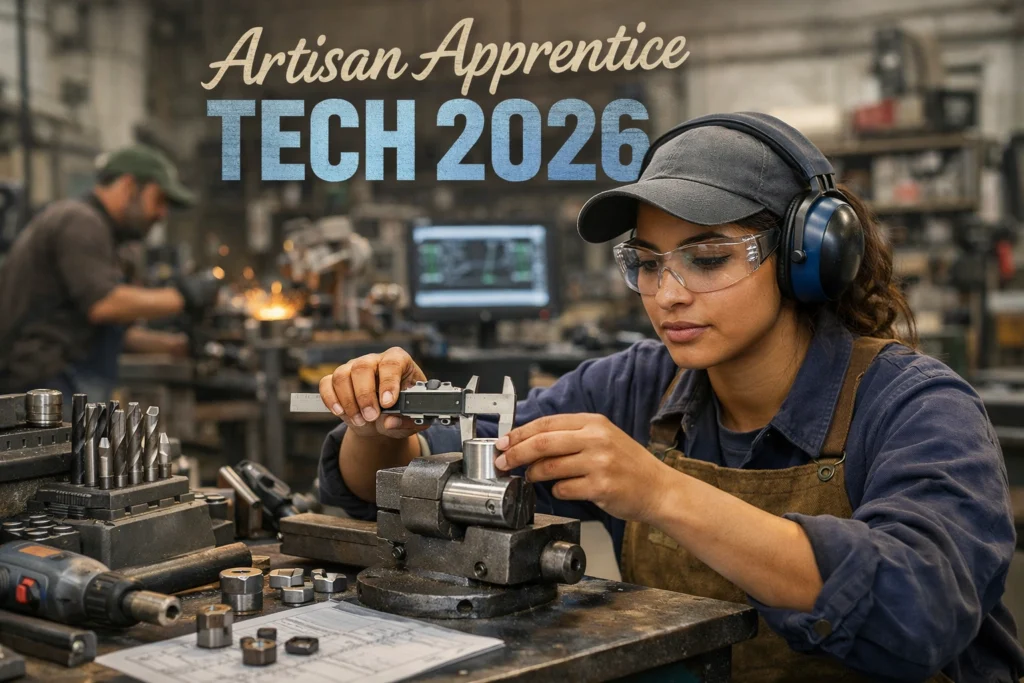

Artisan Apprentice Tech 2026: In an economy increasingly shaped by infrastructure demands, energy constraints, and industrial automation, the ARTISAN APPRENTICE TECH role has quietly become one of the most strategically important entry points into South Africa’s labour market. While graduate unemployment continues to dominate headlines, a parallel story is unfolding—one where technically trained youth are finding structured pathways into employment through hands-on apprenticeships.
The recent listing for an Artisan Apprentice Technician / Artisan Assistant role in Cape Town—facilitated by Chainlink Recruitment for an international organisation—offers more than just a job opportunity. It reflects broader shifts in how companies are rebuilding technical capacity, addressing skills shortages, and redefining what “entry-level” truly means in the modern industrial environment.
This article explores the deeper implications of the ARTISAN APPRENTICE TECH role, unpacking what it reveals about workforce development, industry demand, and the evolving expectations placed on young technicians in South Africa.
The Growing Importance of the ARTISAN APPRENTICE TECH Role
For decades, South Africa’s technical workforce pipeline has faced a paradox: high unemployment among youth, yet persistent shortages of qualified artisans. Electricians, millwrights, and maintenance technicians remain in critical demand across sectors such as manufacturing, logistics, energy, and mining.
The ARTISAN APPRENTICE TECH role sits at the intersection of this gap.
Unlike traditional apprenticeships that often follow rigid trade certification routes, modern roles like this blend practical exposure with immediate workplace integration. Candidates are not just learners—they are contributors from day one, assisting with equipment repairs, installations, and preventative maintenance.
This shift matters because:
- Companies are under pressure to reduce downtime and improve operational efficiency
- There is less tolerance for long training cycles without productivity
- Employers want multi-skilled technicians, not narrowly trained specialists
In this context, the apprentice technician is no longer just “learning the ropes”—they are part of the technical ecosystem from the outset.
APPLY HERE: Artisan Apprentice Tech 2026
A Closer Look at the Role: More Than Just “Assistant” Work
At first glance, the responsibilities outlined—diagnosing faults, repairing equipment, assisting with installations—may seem typical of junior technical roles. But a closer reading reveals something more nuanced.
The job requires exposure to:
- Fault diagnosis and troubleshooting
- Preventative maintenance systems
- Technical documentation and reporting
- Client-facing support functions
This combination is significant.
Traditionally, apprentices were shielded from complex diagnostics or client interactions until later stages of training. Here, the expectation is immediate immersion. The candidate is not only learning how machines work but also how technical services are delivered as a business function.
The inclusion of service documentation and reporting is especially telling. In modern technical environments, data is as important as manual skill. Maintenance logs, fault histories, and service records feed into predictive maintenance systems and operational planning.
In other words, today’s ARTISAN APPRENTICE TECH must think like both a technician and a systems operator.
Why Employers Are Redefining “Entry-Level” in Technical Fields
One of the most striking aspects of this opportunity is the requirement of 0–2 years’ experience combined with theoretical training. This reflects a broader trend: employers are no longer willing to start from zero.
Instead, they expect candidates to arrive with:
- Foundational knowledge (N2/N3/N4 or equivalent)
- Basic familiarity with tools and systems
- The ability to adapt quickly in real-world scenarios
This shift is driven by several factors:
1. Cost Pressures in Industry
Training from scratch is expensive. Companies increasingly prefer candidates who can shorten the ramp-up period.
2. Technological Complexity
Modern equipment is more sophisticated, requiring a baseline level of technical literacy even for junior roles.
3. Productivity Expectations
There is less room for extended observation periods. Even apprentices must contribute to operational outputs.
This redefinition raises important questions about accessibility. While opportunities like this are valuable, they may exclude candidates who lack practical exposure despite having theoretical qualifications.
The Skills That Matter: Beyond Technical Ability
While the job description emphasises technical aptitude, it places equal weight on soft skills:
- Problem-solving ability
- Communication skills
- Ability to work under pressure
- Self-motivation
This reflects a key evolution in the artisan space.
Historically, technical competence alone was sufficient. Today, technicians operate in collaborative, fast-paced environments where they must interact with clients, report to supervisors, and sometimes work across departments.
The requirement for a valid driver’s licence and willingness to travel further highlights the mobility expected in such roles. Technicians are no longer confined to workshops—they are field-based, responsive, and often customer-facing.
In essence, the modern ARTISAN APPRENTICE TECH is part technician, part service professional.
Cape Town as a Strategic Location for Technical Careers
The location of this role—Paarden Island in Cape Town—is not incidental. Cape Town has emerged as a significant hub for:
- Light manufacturing
- Renewable energy projects
- Logistics and warehousing
- Marine and industrial services
This concentration of industries creates a high demand for maintenance and technical support roles.
For an apprentice technician, this environment offers exposure to:
- Diverse equipment types
- Multiple industry standards
- Opportunities for cross-sector mobility
In practical terms, starting a career in a region like Cape Town can accelerate professional development. The density of technical operations increases the likelihood of encountering complex systems and varied challenges—key ingredients for skill growth.
APPLY HERE: Artisan Apprentice Tech 2026
ALSO APPLY FOR: KAL Group Diesel Mechanic Apprenticeship 2026
The Role of Recruitment Firms in Shaping Technical Talent Pipelines
The involvement of a recruitment firm like Chainlink Recruitment is another important signal.
Recruitment agencies are increasingly acting as intermediaries in skills development, not just hiring. They:
- Identify talent gaps in industry
- Match candidates with growth potential
- Facilitate entry into structured environments
For employers, this reduces hiring risk. For candidates, it provides access to opportunities that may not be publicly visible.
However, it also means that candidates must compete in a more structured and often filtered selection process, where both technical and behavioural competencies are assessed.
Career Trajectory: From Apprentice to Fully Qualified Technician
One of the most compelling aspects of the ARTISAN APPRENTICE TECH role is its potential trajectory.
If leveraged effectively, this position can lead to:
- Qualified Artisan Status
With continued training and certification, candidates can become electricians, millwrights, or specialised technicians. - Technical Specialist Roles
Exposure to specific equipment or systems can lead to niche expertise. - Supervisory Positions
Experience combined with soft skills can open pathways into team leadership. - Entrepreneurial Opportunities
Skilled artisans are well-positioned to start independent service businesses.
This progression underscores why such roles are increasingly seen as alternative career pathways to traditional university degrees.
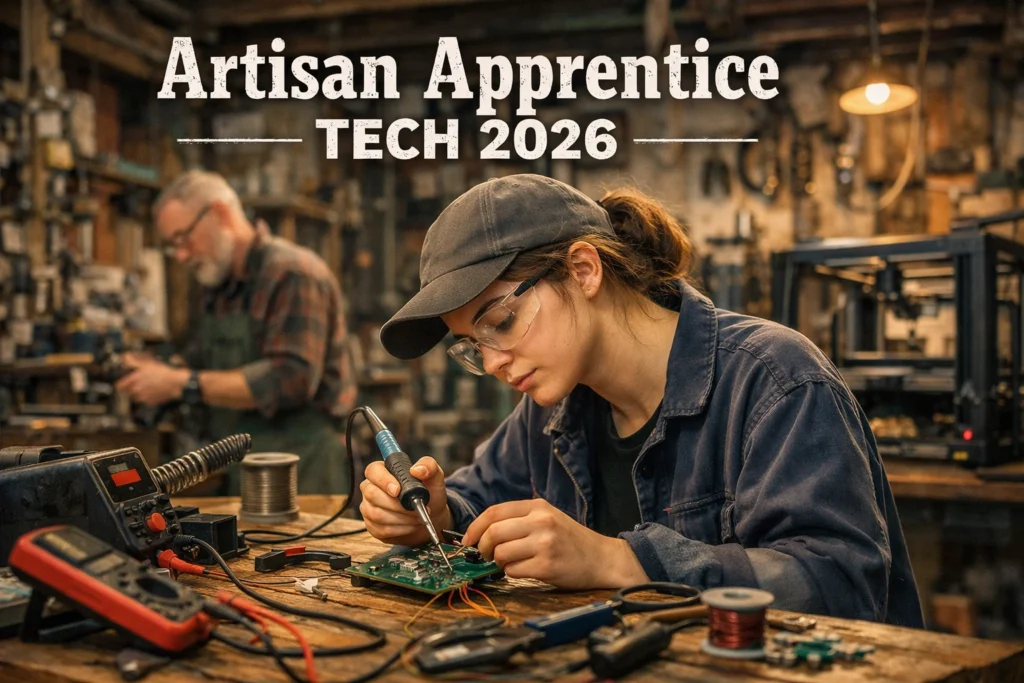
APPLY HERE: Artisan Apprentice Tech 2026
Challenges and Risks for Entry-Level Technicians
While the opportunity is promising, it is not without challenges.
High Performance Expectations
Even as an apprentice, there is pressure to deliver results quickly.
Physical and Mental Demands
Technical roles often involve long hours, manual work, and problem-solving under pressure.
Limited Margin for Error
Mistakes in equipment handling can be costly, increasing stress levels for newcomers.
Competitive Landscape
With many candidates holding similar qualifications, standing out requires more than just certificates.
These realities highlight the importance of resilience, adaptability, and continuous learning.
What This Means Going Forward
The emergence and evolution of roles like the ARTISAN APPRENTICE TECH point to a broader transformation in South Africa’s labour market.
Firstly, technical careers are becoming more structured and accessible, but also more demanding. The expectation is no longer passive learning—it is active contribution from the outset.
Secondly, the boundary between education and employment is blurring. Employers are effectively becoming training providers, integrating learning into daily operations.
Thirdly, the demand for artisans is unlikely to decline. As infrastructure projects expand and industries modernise, the need for skilled technicians will continue to grow.
However, this also places pressure on:
- TVET colleges to produce work-ready graduates
- Training institutions to align curricula with industry needs
- Candidates to proactively seek practical exposure
For young South Africans, the message is clear: theoretical knowledge alone is no longer enough. The future belongs to those who can translate knowledge into action.
Conclusion: A Small Job Listing with Big Implications
At face value, the ARTISAN APPRENTICE TECH opportunity in Cape Town is a single job listing among many. But beneath the surface, it reflects critical shifts in how skills are developed, valued, and deployed in the modern economy.
It highlights a growing recognition that artisans are not just support workers—they are essential to economic functionality. It also underscores the need for a more integrated approach to training, where learning and working happen simultaneously.
For candidates willing to embrace the demands of the role, this is more than an entry-level position. It is a gateway into a career that is both resilient and increasingly indispensable.
APPLY HERE: Artisan Apprentice Tech 2026
ALSO APPLY FOR: KAL Group Diesel Mechanic Apprenticeship 2026