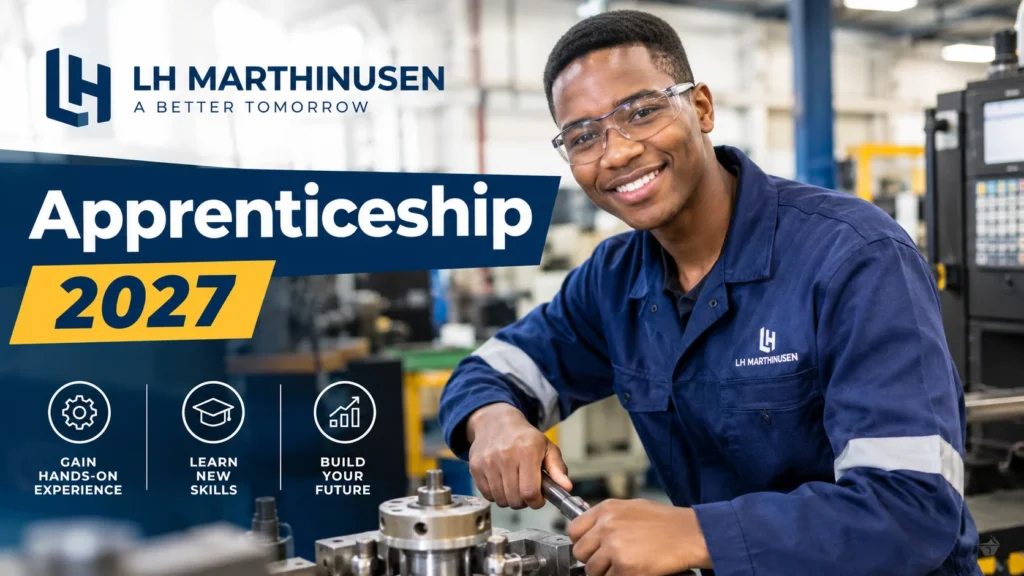

LH Marthinusen Apprenticeship 2027: LH Marthinusen, a division of ACTOM (Pty) Ltd, is inviting applications for its artisan apprenticeship programme. The company is a long-established electro-mechanical repair and manufacturing business, and its apprenticeship route is designed to build practical, trade-tested skills rather than offer short-term work experience. The opportunity is aimed at candidates who have completed matric and hold a relevant N2 or NCV Level 4 qualification, and who want to qualify as artisans in trades such as armature winding, electrical work, fitting and turning, or welding.
Opportunity Summary
- Apprenticeship: LH Marthinusen Apprenticeship Programme – 2027 Intake
- Company: LH Marthinusen, a division of ACTOM (Pty) Ltd
- Trade: Armature Winder, Electrician, Welder, Fitter and Turner
- Location: LH Marthinusen training facilities, including the company’s Technical Training Centre in Denver, Johannesburg
- Duration: 4 years
- Qualification: N2 / NCV Level 4 with four complete subjects in the relevant trade
- Stipend: Not confirmed in the official advertisement. No amount is stated on the verified LH Marthinusen pages
- Closing date: 15 November 2026 for the 2027 intake
- Status: Applications open 1 October 2026 and close 15 November 2026
About the Apprenticeship
The LH Marthinusen apprenticeship is a structured, workplace-based learning programme. It is not a general internship or a short learnership. It is an artisan apprenticeship designed to take candidates through the practical and theoretical requirements needed to qualify for a trade test. Training is aligned with the requirements of MerSETA, the manufacturing, engineering and related services sector education and training authority, and successful apprentices work towards a trade test.
Apprentices are appointed on a limited duration contract for the duration of the programme, with the possibility of permanent employment after qualifying. The programme is therefore best understood as a multi-year investment in a trade qualification, not a temporary job.
What Trade or Skill Will You Learn?
The official application form lists four trades: Armature Winder, Electrician, Welder, and Fitter and Turner. The company’s training centre also confirms training in armature winding, electrical work, fitting and turning, and welding. These are practical engineering trades that support the maintenance, repair and manufacture of electric motors, transformers, industrial fans and related electro-mechanical equipment.
Armature winding, for example, involves winding coils for electric motors and transformers, and it is a specialised skill in the electro-mechanical repair sector. Electricians work on electrical installations, maintenance and fault-finding. Fitters and turners manufacture and maintain mechanical components, often using lathes and other machine tools. Welders join metal components used in engineering fabrication and repair. The apprenticeship is therefore a good fit for candidates who want a hands-on artisan apprenticeship rather than a purely office-based career.
Who Can Apply?
The programme is aimed at candidates who meet the minimum academic requirement and who are interested in building a trade career. The official page states the minimum requirement as N2 / NCV Level 4, with four complete subjects in the relevant trade. That means applicants should have a matric-level qualification plus the relevant technical subjects, or an N2 certificate with the appropriate trade subjects.
The apprenticeship is open to South African candidates who are eligible to work and train in the country. Because the programme is an apprenticeship in South Africa leading to a trade test, applicants should be committed to completing the full four-year programme. The official application page also warns applicants not to submit multiple applications for different branches or trades, because doing so will not improve the selection process.
Qualifications Required
The core academic requirement is N2 / NCV Level 4 with four complete subjects in the relevant trade. In practice, this means candidates should have passed the trade-related subjects that underpin the trade they are applying for. For example, an applicant interested in the electrical trade would need relevant electrical subjects, while a candidate interested in fitting and turning would need mechanical-related subjects.
The apprenticeship is therefore one of the apprenticeships after matric that requires more than a general matric pass. It requires a technical foundation. Candidates who have completed N2 at a TVET college, or an NCV Level 4 programme in a relevant trade, are the primary target group. The company’s training centre also offers basic theoretical training from N1 to N3 in conjunction with TVET colleges, which means apprentices may continue with theory while completing practical training.
Practical Training and Workplace Experience
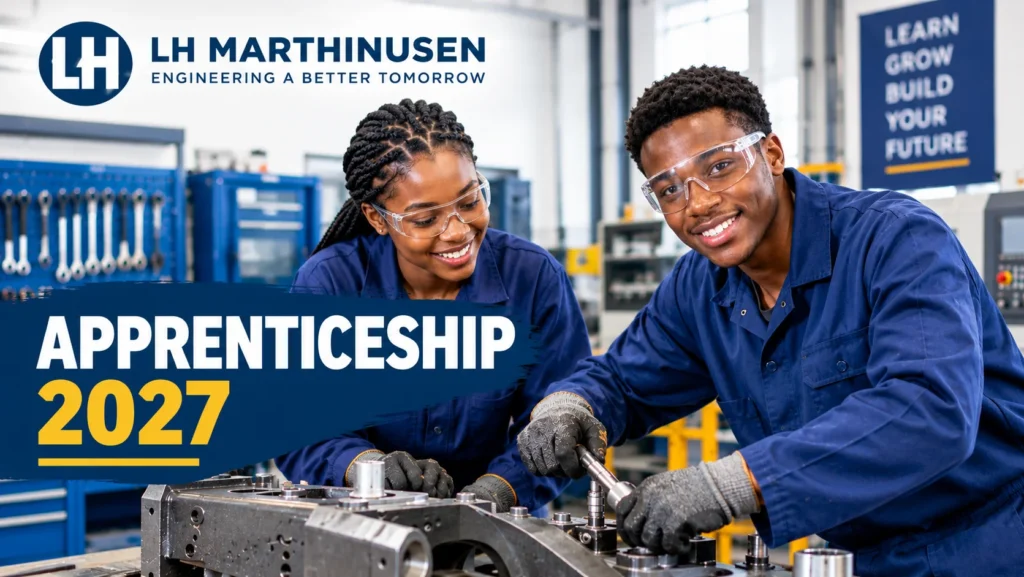
Practical training takes place in a workshop and workplace environment. The company’s Technical Training Centre is accredited by the Department of Higher Education and Training and the National Artisan Moderating Body, and it is approved as a trade test centre for armature winders. The facility includes a training workshop and a trade test area, and it can accommodate up to 20 learners or apprentices at a time.
Apprentices can expect to learn basic hand-tool use, practical trade skills, and on-the-job exposure to electro-mechanical repair, manufacturing and maintenance. The programme is structured so that apprentices build competence progressively and are prepared for the trade test. The exact rotation between workshop training, theoretical study and workplace experience may depend on the trade and branch placement, but the overall purpose is clear: to produce trade-tested artisans who can work safely and competently in an engineering environment.
Apprenticeship Duration
The programme runs for four years. That is a standard duration for an artisan apprenticeship in South Africa, because it allows enough time for theoretical training, practical workplace experience and trade test preparation. Applicants should plan for a multi-year commitment. The four-year period is not a short-term contract that can be completed in a few months.
Documents Required
The official online application form requires a CV in Word or PDF format. The form also states that only applications submitted through the online application form will be accepted, and that late applications will not be considered. Applicants should complete all required fields marked with an asterisk or in red.
In addition to the CV, applicants should be ready to provide certified copies of their N2 or NCV Level 4 results and any other relevant qualifications if requested during the selection process. It is sensible to prepare these documents in advance, but the confirmed upload requirement on the application page is the CV.
How to Apply
- Go to the official LH Marthinusen apprenticeship application page:
- Read the instructions on the page carefully. Do not submit multiple applications for different branches or trades.
- Complete all required fields on the online form. Fields marked with an asterisk or highlighted in red must be filled in.
- Upload your CV in Word or PDF format.
- Submit the form before the closing date. Late applications will not be considered.
- Keep a record of your submission. If you do not receive feedback within the period stated by the employer, follow up through the official contact channels rather than through unofficial agents
OFFICIAL APPLICATION LINK: LH Marthinusen Apprenticeship 2027
ALSO APPLY FOR: Motus Hyundai Apprentice ( Level 1 )
Closing Date
The closing date for the 2027 intake is 15 November 2026. Applications open on 1 October 2026. Applicants should not wait until the final day, because online forms can experience high traffic near the deadline.
Career Opportunities After an Apprenticeship
After completing the apprenticeship and passing the trade test, candidates can work as qualified artisans in engineering maintenance, manufacturing, electro-mechanical repair or related industries. The company states that successful apprentices may be considered for permanent employment, but this is a possibility rather than a guarantee. A trade qualification is portable, and qualified artisans can also apply for roles at other employers in the manufacturing, mining, energy and industrial maintenance sectors.
The apprenticeship does not automatically guarantee a job, but it does provide a recognised trade qualification and practical experience. That combination is valuable in the labour market and can support further study or specialisation later.
Avoid Apprenticeship Scams
Apply only through the official LH Marthinusen application page. Be cautious of anyone who asks for a fee to submit an application, promises a guaranteed placement, or requests payment for “registration” or “training materials.” Legitimate employers do not charge applicants to apply for an apprenticeship. Verify the opportunity by checking the official company website and the official application URL. If a message or social media post asks you to pay, treat it as a red flag.
Frequently Asked Questions
1. What is the LH Marthinusen apprenticeship?
It is a four-year artisan apprenticeship at LH Marthinusen, a division of ACTOM, aligned with MerSETA requirements and leading to a trade test.
2. Which trades are available?
The application form lists Armature Winder, Electrician, Welder, and Fitter and Turner.
3. What are the LH Marthinusen requirements?
The minimum requirement is N2 or NCV Level 4 with four complete subjects in the relevant trade.
4. What is the LH Marthinusen closing date for 2027?
The 2027 intake closes on 15 November 2026.
Official Source
The official application page is: https://www.lhm.co.za/vacancies/Apprenticeship-Applications-DB.html. Programme information is also available on LH Marthinusen’s Technical Training and Skills Development page.
Conclusion
The LH Marthinusen apprenticeship is a practical route into an artisan trade for candidates who have the required N2 or NCV Level 4 technical foundation. It offers four years of structured training, trade test preparation and workplace experience in armature winding, electrical work, fitting and turning, or welding. The stipend is not published, so applicants should confirm the contract terms directly with the employer. Apply through the official online form before 15 November 2026, upload a CV in Word or PDF format, and avoid anyone who asks for payment to secure a place.