
For many unemployed South Africans, getting started in the technology industry can feel difficult for one simple reason: employers often want experience, while entry-level candidates need an opportunity to gain that experience in the first place. This creates a frustrating cycle for young people who have completed school but have not yet had the chance to build workplace skills.
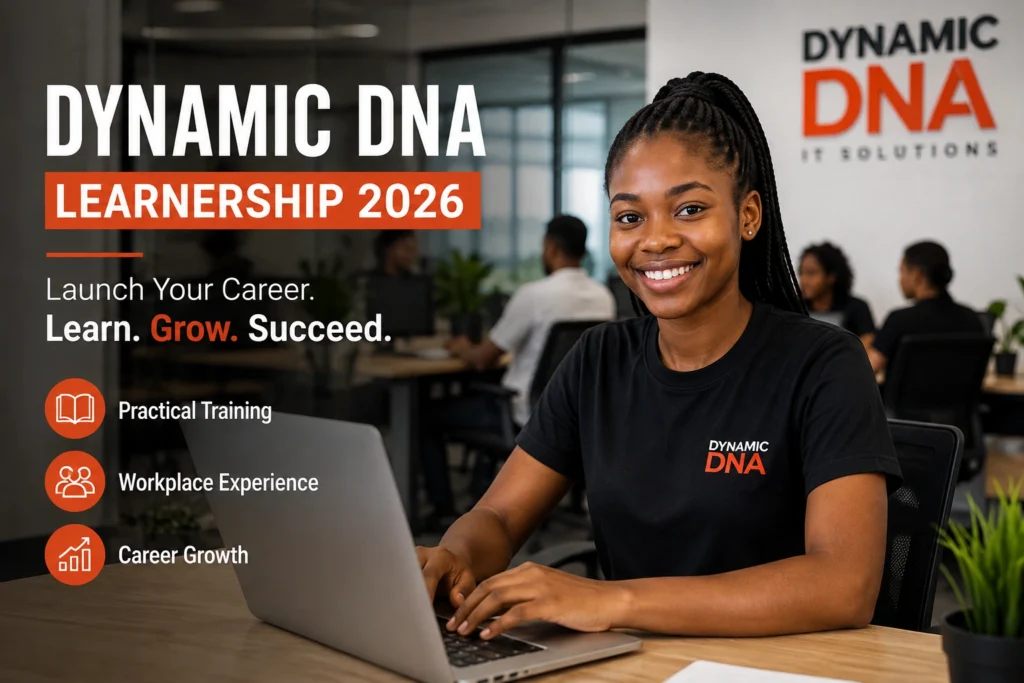
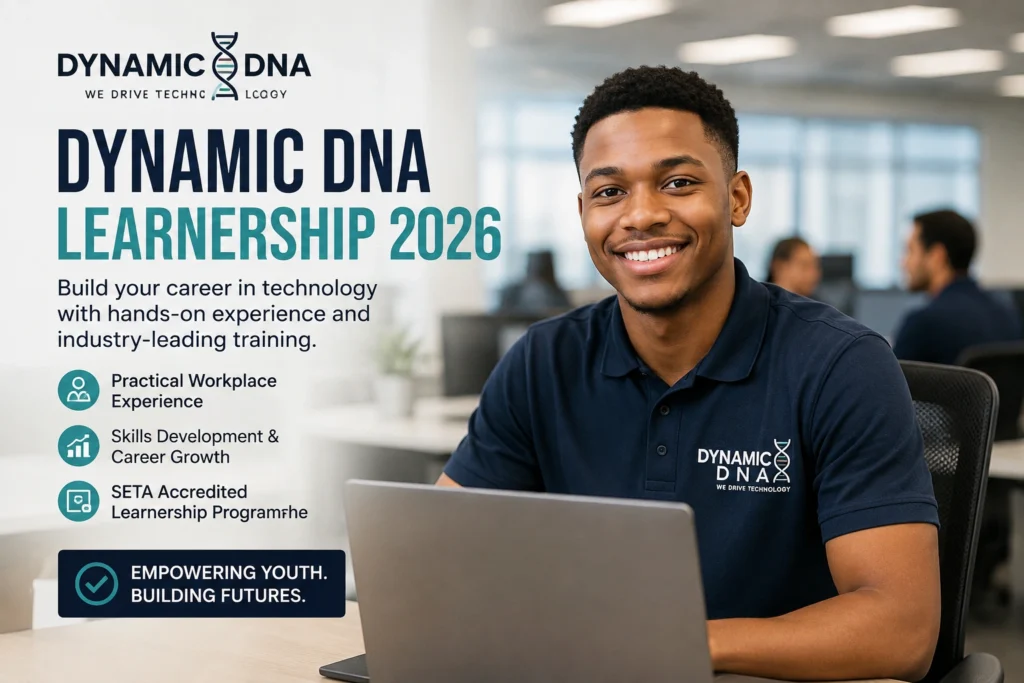
The Dynamic DNA Learnership 2026 offers a possible route into the ICT sector by combining structured training with practical workplace exposure. The Systems Development programme is aimed at unemployed South Africans interested in technology, coding, software development and related digital careers.
The programme leads towards a National Certificate in Systems Development at NQF Level 4, giving successful learners an opportunity to develop both theoretical knowledge and practical skills.
For applicants considering this opportunity, however, it is important to understand more than simply the entry requirements. You should know what the qualification involves, what you could learn, what careers it may support, how to prepare your application and which mistakes could reduce your chances of being selected.
What Is the Dynamic DNA Learnership 2026?
The Dynamic DNA Learnership 2026 is a Systems Development learnership designed to help unemployed youth develop foundational ICT skills.
Dynamic DNA delivers technology and skills-development programmes, while MICT SETA supports skills development within South Africa’s media, information and communication technologies sector.
The Systems Development programme combines theoretical education with workplace-based learning. Instead of spending the entire programme in a classroom, learners can gain exposure to practical working environments while developing their technical knowledge.
The qualification associated with the programme is a National Certificate in Systems Development, NQF Level 4.
For someone with limited or no professional ICT experience, this type of programme can provide a structured starting point for developing skills that may later be used in software development, technical support, systems administration and other technology-related roles.
What does Systems Development actually involve?
Systems development is broader than simply learning how to write code.
A learner may encounter concepts involving:
- Programming fundamentals
- Software development
- Systems analysis
- Databases
- Software testing
- Logical problem-solving
- Technical documentation
- Computer systems
- Workplace communication
- Teamwork
- Technical support
The precise training content and workplace activities can depend on the programme structure and placement.
The important point is that applicants should not view the opportunity simply as a way to obtain a certificate. The real value comes from developing practical skills that can eventually be demonstrated to employers.
Who Can Apply?
Based on the programme information provided, applicants should generally meet the following requirements:
- Be a South African citizen.
- Be unemployed.
- Have completed at least Grade 10, Grade 11 or Matric.
- Have an interest in Information Technology.
- Have an interest in coding and software development.
- Be available and willing to complete the programme.
- Not already be participating in another SETA-funded programme.
Applicants should remember that minimum requirements are only the starting point.
A person who meets every listed requirement may still not be selected if the programme has more eligible applicants than available places. Recruitment may also involve screening, assessments or interviews.
Does Grade 10 or Grade 11 mean you have no chance?
Not necessarily.
One of the notable features of the stated requirements is that the opportunity is not restricted only to people who have completed Matric. Candidates with Grade 10, Grade 11 or Matric may potentially qualify.
However, applicants should check the latest official advertisement before applying because eligibility conditions can change between programme intakes.
Why This Issue Matters
South Africa’s employment challenge is particularly difficult for young people who leave school without substantial work experience. Technology can provide career opportunities, but entering ICT is not always straightforward.
A learner may know that software development, IT support or systems administration is a potential career path but have no idea where to start.
That is where structured workplace learning can make a difference.
A learnership can help bridge the gap between education and employment by allowing participants to develop knowledge while gaining exposure to professional expectations.
For technology careers, this practical component is particularly valuable. Employers do not only want candidates who can say they are interested in computers. They want people who can solve problems, communicate effectively, learn new technologies and apply technical knowledge.
The Dynamic DNA programme therefore has potential value beyond the qualification itself. It can help learners begin building evidence of their skills and workplace readiness.
What Skills Could You Develop?
The Systems Development qualification provides a foundation rather than making someone an experienced software engineer overnight.
Learners may develop knowledge in areas such as programming logic, systems development, databases and software testing.
Programming fundamentals
Beginners can learn the basic principles behind programming, including logical thinking, instructions, variables, conditions and problem-solving.
These concepts provide a foundation for learning programming languages later.
Systems analysis
Systems development involves understanding problems and determining how technology can help solve them.
Learners can develop an understanding of how requirements are identified and how systems are planned.
Database concepts
Modern applications rely heavily on data. Understanding how information is organised, stored and accessed is therefore an important foundation for technology careers.
Software testing
Developing software is not simply about creating something that works once. Applications need to be tested to identify errors and improve reliability.
Workplace skills
Technical knowledge alone is not enough.
Learners may also develop communication, teamwork, documentation and professional workplace skills.
These abilities can become particularly important when applying for future internships and entry-level positions.
Potential Career Paths After the Learnership
Completing a Systems Development qualification does not guarantee employment, but it can provide a foundation for applying for entry-level ICT positions.
Potential career directions include:
- Junior Software Developer
- Junior Programmer
- IT Support Technician
- Technical Support Assistant
- Helpdesk Support Consultant
- Application Support Technician
- Software Tester
- Systems Support Administrator
- Systems Administrator Assistant
Your first job may not have the exact title you expected. Some graduates may start in technical support before moving into development, testing or systems administration.
The qualification can also be used as a foundation for further studies and additional technology certifications.
How to Apply for the Dynamic DNA Learnership 2026
Applicants should follow the official application instructions for the current intake rather than relying on information from social media posts or old advertisements.
A practical application process looks like this:
Step 1: Confirm that you qualify
Before preparing an application, check the latest requirements carefully.
Pay particular attention to:
- Citizenship requirements
- Employment status
- Education requirements
- Age requirements, if specified
- Previous SETA participation
- Availability requirements
- Location or workplace requirements
APPLY HERE: Dynamic DNA Learnership 2026
Do not assume that meeting one requirement means you automatically qualify for the programme.
Step 2: Prepare your CV
Your CV does not need to be filled with years of work experience.
For an entry-level learnership, focus on information that demonstrates your potential.
Include:
- Full name
- Contact details
- Education
- Subjects or relevant coursework
- Computer skills
- Short courses
- Projects
- Volunteer experience
- Leadership activities
- Relevant interests
If you have experimented with coding, built a basic website, completed an online technology course or worked on a school computer project, consider including it where appropriate.
Step 3: Gather supporting documents
Applicants should prepare commonly requested documents such as:
- South African ID copy
- Copies of qualifications
- Updated CV
- Other documents specifically requested in the advertisement
If certified copies are required, ensure they meet the stated certification requirements.
Do not submit unclear photographs of documents when the application specifically requires readable copies.
Step 4: Check your contact details
This is a small step that applicants often overlook.
Make sure your:
- Mobile number works.
- Email address is correct.
- Email inbox is regularly checked.
- Voicemail is functional if possible.
A recruitment team cannot easily contact you if your number is incorrect or your inbox is full.
Step 5: Submit through the official channel
Use the application method specified by the programme.
If an official online application form, careers portal or designated email address is provided, use that route.
Avoid sending sensitive documents to random individuals who claim to represent the programme.
Step 6: Keep evidence of your application
After applying, save:
- Confirmation emails
- Application reference numbers
- Screenshots of successful submissions
- Copies of documents submitted
This information can be useful if you need to follow up later.
ALSO APPLY FOR: LearnEx Learnership 2026
Best Practices Experts Recommend
Build basic digital skills before starting
You do not necessarily need to be an experienced programmer before applying. However, learning basic computer and programming concepts can make the training easier to understand.
Free introductory lessons in programming logic, HTML, databases or computer fundamentals can be useful preparation.
Demonstrate genuine interest in technology
If an application or interview asks why you want to join the programme, avoid giving a generic answer such as “I need a job.”
Explain what interests you about technology and what career direction you want to explore.
For example, you could discuss your interest in building software, solving technical problems or understanding how applications work.
Keep learning outside the programme
A learnership should be viewed as a starting point.
Technology changes quickly. Learners who continue developing their skills after completing the programme may be better positioned for further opportunities.
Create small projects
If you are interested in software development, practical projects can help demonstrate your initiative.
A simple website, basic application or small programming exercise can become evidence that you are actively developing your skills.
Treat workplace exposure seriously
The workplace component should not be regarded as an interruption to training.
Arriving on time, communicating professionally, asking sensible questions and completing assigned tasks can help you build a positive reputation.
Mistakes People Often Make
One of the biggest mistakes is applying without reading the requirements.
Applicants sometimes see “ICT learnership” and immediately submit an application without checking whether they meet the education, employment or programme-participation requirements.
Another common mistake is submitting an incomplete CV.
Even if you have no formal employment history, your education, skills, projects and relevant activities can provide useful information.
Applicants should also avoid exaggerating their technical abilities. Claiming to be an advanced programmer when you have only completed a beginner course can create problems during assessments or interviews.
Finally, beware of scams. Legitimate learnership opportunities should not require applicants to pay someone simply to secure a placement.
Frequently Asked Questions
1. Is the Dynamic DNA Learnership 2026 suitable for beginners?
Yes, the programme is intended to provide foundational Systems Development skills. Applicants do not necessarily need professional ICT experience, although a genuine interest in technology and willingness to learn are important.
2. What qualification does the programme offer?
The programme is associated with a National Certificate in Systems Development at NQF Level 4.
3. Can someone with Grade 10 or Grade 11 apply?
According to the provided programme information, applicants who have completed Grade 10, Grade 11 or Matric may qualify. Always confirm the requirements in the latest official advertisement before submitting an application.
4. Does completing the learnership guarantee a job?
No. A learnership can improve skills, qualifications and workplace readiness, but employment after completion is not guaranteed. Graduates still need to compete for available positions and should continue building their technical skills.
Final Summary: Is This Opportunity Worth Considering?
The Dynamic DNA Learnership 2026 could be a useful starting point for unemployed South Africans who want to enter the ICT industry but lack professional experience.
Its biggest advantage is the combination of accredited learning and workplace exposure. Instead of relying only on classroom knowledge, participants can work towards a recognised qualification while developing practical skills relevant to technology careers.
However, applicants should approach the opportunity realistically. Completing a learnership does not automatically lead to a permanent job, and a certificate alone will not replace continued learning. The strongest candidates are likely to be those who use the opportunity to build practical skills, develop professional habits and prepare for their next career step.
If you are considering applying, start by confirming the latest eligibility requirements and official application instructions. Then prepare a clear CV, gather your supporting documents, check every detail before submitting and keep proof of your application.
Most importantly, treat the learnership as the beginning of an ICT career rather than the final destination. Learning programming fundamentals, building small projects, improving communication skills and continuing your studies can help turn an entry-level opportunity into a longer-term technology career.