
South Africa’s youth unemployment challenge continues to affect thousands of school leavers and technical college graduates every year. Many young people have the required qualifications in Mathematics, Science, or engineering-related subjects but struggle to find opportunities that provide practical workplace training. Without hands-on experience, it can be difficult to qualify as a skilled artisan and build a long-term career.
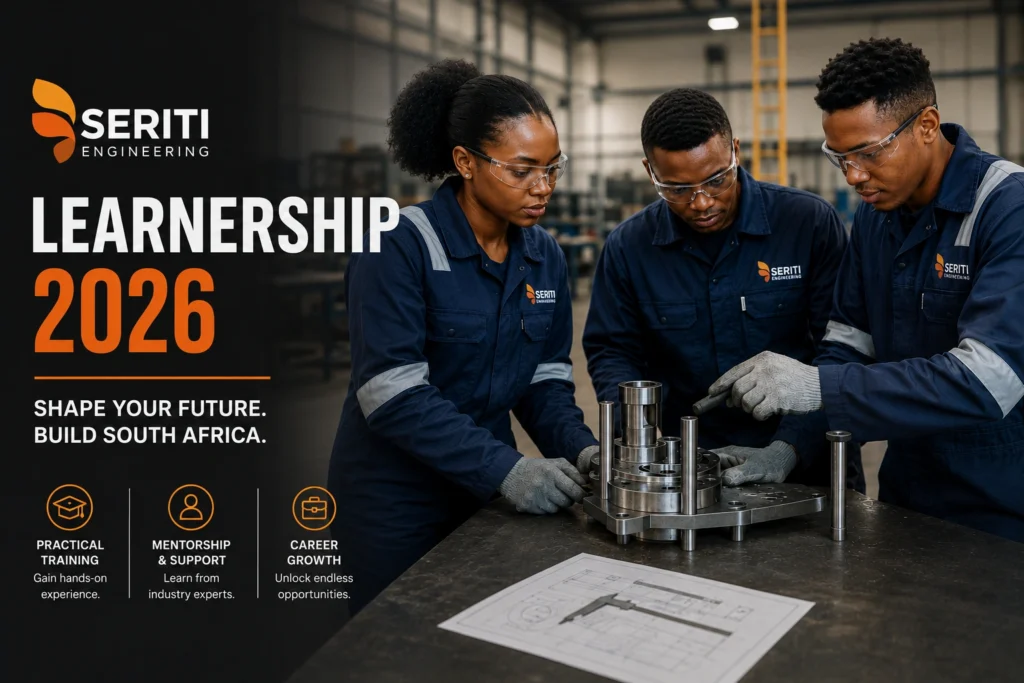
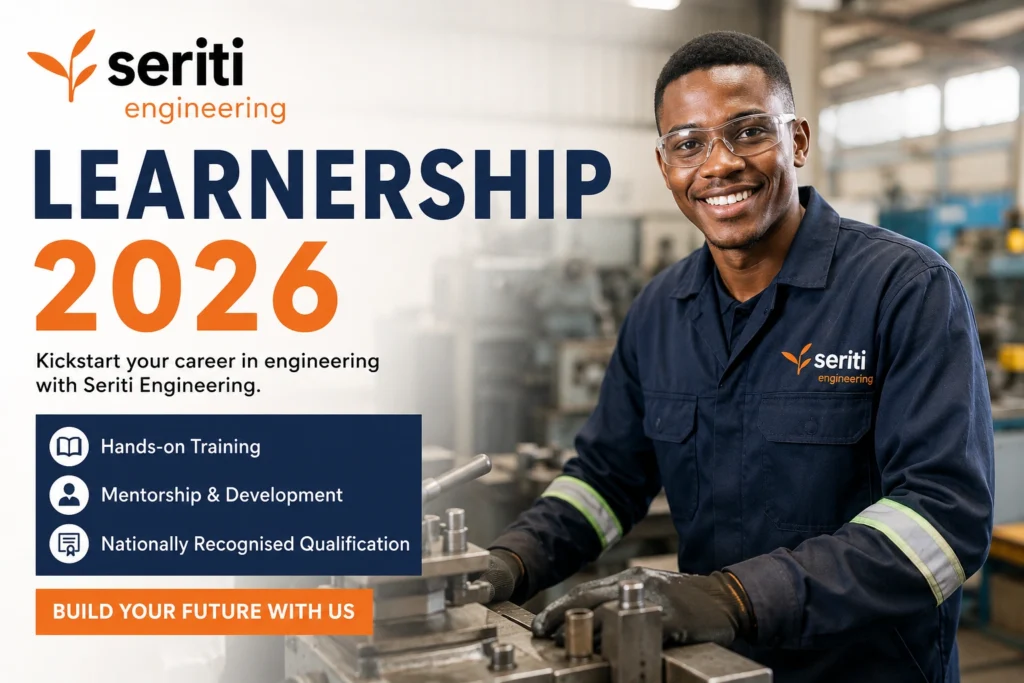
This is where the Seriti engineering learnership 2026 presents an important opportunity. The programme is designed to help aspiring artisans gain structured training, workplace exposure, and technical development within the mining industry. For candidates who meet the requirements, this learnership can serve as a pathway toward becoming a qualified tradesperson in one of South Africa’s most important economic sectors.
This guide explains everything applicants need to know about the programme, including eligibility requirements, available trades, application strategies, common mistakes to avoid, and practical steps to improve your chances of success.
Understanding the Seriti Engineering Learnership 2026
The Seriti engineering learnership 2026 is an artisan development programme offered by Seriti at New Vaal Colliery. The learnership falls under Section 18.2 and is aimed at external candidates from host communities who want to develop technical skills in mining-related engineering trades.
The primary goal of the programme is to develop learners into qualified artisans through a combination of theoretical training and practical workplace experience.
Successful candidates will receive training in one of several specialized trades that are essential for mining operations and industrial maintenance.
Available Trades
Applicants can choose from the following disciplines:
- Auto Electrician
- Fitter
- Boilermaker
- Instrument Mechanician
- Rigger
Each trade plays a critical role in maintaining mining equipment, ensuring operational efficiency, and supporting workplace safety.
Why This Issue Matters
South Africa faces a shortage of qualified artisans across many industries, including mining, manufacturing, construction, and energy. Employers consistently report difficulties finding skilled workers with both technical knowledge and practical experience.
Learnerships help bridge this gap by allowing learners to:
- Gain workplace experience
- Develop specialized technical skills
- Improve employability
- Build professional networks
- Earn industry-recognized qualifications
- Create pathways toward permanent employment
For many young South Africans, an engineering learnership represents more than just temporary training. It can become the foundation of a lifelong career with opportunities for growth, specialization, and higher earnings.
The mining sector remains one of the country’s largest employers of artisans, making programmes such as the Seriti engineering learnership 2026 particularly valuable.
Who Can Apply?
Before applying, candidates should carefully review the eligibility requirements.
Academic Requirements
Applicants must have:
- Grade 12 with Mathematics (not Mathematical Literacy)
- Physical Science
- Minimum E symbol (40%) in required subjects
In addition, applicants must have either:
- Two N2 trade-related subjects together with Grade 12 qualifications, or
- Minimum N2 qualification with four relevant trade-related subjects
Trade-Specific Subjects
Different trades require specific N2 subjects.
Electrician
Applicants should have:
- Mathematics
- Engineering Science
- Industrial Electronics
- Electrical Trade Theory
Fitter
Applicants should have:
- Mathematics
- Engineering Science
- Engineering Drawing
- Fitting and Machining Theory
Instrument Mechanician
Applicants should have:
- Mathematics
- Engineering Science
- Industrial Electronics
- Instrument Trade Theory
Rigger
Applicants should have:
- Mathematics
- Engineering Science
- Engineering Drawing
- Mechanotechnology
An important requirement is that subjects with F symbols will not be accepted.
What Makes This Learnership Attractive?
Many engineering learnerships focus solely on classroom learning. The Seriti engineering learnership 2026 combines technical theory with workplace exposure in a real mining environment.
Benefits include:
Practical Industry Experience
Learners gain experience working with industrial equipment, maintenance systems, and operational processes used in mining.
Professional Development
Participants develop skills such as:
- Problem-solving
- Fault identification
- Teamwork
- Communication
- Technical reporting
- Workplace safety awareness
Career Path Opportunities
Qualified artisans are often in demand across sectors including:
- Mining
- Manufacturing
- Energy
- Petrochemicals
- Construction
- Transportation
The skills gained are transferable and can create future employment opportunities beyond mining.
Step-by-Step Guide to Applying Successfully
Applying for a learnership requires more than simply submitting documents. Following a structured approach can significantly improve your chances.
Step 1: Choose the Correct Trade
Review each trade carefully.
Ask yourself:
- Which subjects did I complete?
- Which field interests me most?
- What type of work environment do I prefer?
For example:
- Electricians work extensively with electrical systems.
- Fitters focus on machinery maintenance.
- Instrument Mechanicians work with measuring and control systems.
- Riggers specialize in lifting equipment and heavy loads.
APPLY HERE: Seriti Engineering Learnership 2026
Selecting a trade aligned with your interests can improve long-term career satisfaction.
Step 2: Prepare Your Documentation
Seriti requires applicants to submit:
- Updated CV in PDF format
- Certified copy of ID
- Certified copies of qualifications
- Certified copy of driver’s license (if applicable)
- Proof of residence
All certifications must be within three months of application.
Ensure documents are clear, complete, and legible.
Step 3: Update Your CV
Your CV should highlight:
- Educational qualifications
- Technical subjects completed
- Practical projects
- Work experience (if any)
- Computer skills
- Driver’s license
- Contact details
Keep the document professional and easy to read.
Step 4: Verify Your Proof of Residence
Preference is given to the New Vaal Colliery host community.
Because of this, proof of residence is extremely important.
Ensure your proof of residence clearly matches your personal details and current address.
Step 5: Prepare for Assessments
Candidates must be willing to undergo psychometric assessments.
These assessments may evaluate:
- Mechanical reasoning
- Problem-solving ability
- Numerical reasoning
- Technical aptitude
- Attention to detail
Preparation can improve confidence and performance.
Step 6: Submit Before the Deadline
The closing date is 12 June 2026.
Avoid waiting until the final day.
ALSO APPLY FOR: Capricorn Learnership 2026
Late applications are typically not considered.
Skills That Can Improve Your Chances
While meeting minimum requirements is essential, certain additional skills can strengthen your application.
Technical Curiosity
Employers value candidates who enjoy learning how machines, systems, and equipment work.
Safety Awareness
Mining environments place strong emphasis on safety.
Demonstrating awareness of safety procedures can make a positive impression.
Communication Skills
Artisans regularly communicate with supervisors, technicians, and team members.
Strong communication skills are increasingly important.
Problem-Solving Ability
The ability to diagnose faults and identify solutions is a valuable skill in every engineering trade.
Adaptability
Mining operations often involve changing conditions, shift work, and operational challenges.
Flexible learners tend to perform well.
Best Practices Experts Recommend
Industry professionals often suggest several strategies for learnership applicants.
Research the Trade Thoroughly
Understand the daily responsibilities of your chosen trade before applying.
Many candidates apply without knowing what the job involves.
Build Basic Technical Knowledge
Read about:
- Mining operations
- Industrial maintenance
- Engineering safety practices
- Artisan career paths
This preparation can help during interviews and assessments.
Practice Aptitude Tests
Psychometric assessments are common in technical recruitment.
Regular practice can improve performance and confidence.
Maintain Professional Documents
Keep digital copies of:
- CV
- ID
- Qualifications
- Certificates
- Driver’s license
Being organized prevents last-minute problems.
Demonstrate a Positive Attitude
Employers often look beyond academic results.
Reliability, willingness to learn, and a strong work ethic can make a significant difference.
Mistakes People Often Make
Many applicants miss opportunities because of avoidable errors.
Submitting Incomplete Applications
Missing documents are one of the most common reasons applications are rejected.
Double-check every requirement.
Applying for the Wrong Trade
Some candidates choose trades without understanding subject requirements.
Always verify eligibility before applying.
Ignoring Certification Rules
Documents must be certified within three months.
Older certifications may not be accepted.
Poor CV Presentation
A CV with spelling errors, outdated information, or poor formatting can create a negative impression.
Waiting Until the Last Minute
Last-minute submissions increase the risk of technical issues or missing documentation.
Failing to Prepare for Assessments
Psychometric tests can influence shortlisting decisions.
Preparation matters.
What Happens After Selection?
Candidates who are shortlisted typically proceed through additional recruitment stages.
These may include:
- Psychometric assessments
- Interviews
- Medical evaluations
- Fitness assessments
- Verification checks
Applicants must also be able to obtain a valid Certificate of Fitness.
Successful learners then enter structured training programmes that combine workplace experience and formal learning.
Career Opportunities After Qualification
Completing an artisan learnership can open several career pathways.
Potential opportunities include:
Qualified Artisan Roles
Many learners eventually become:
- Qualified Electricians
- Fitters
- Boilermakers
- Instrument Technicians
- Riggers
Specialist Technical Positions
With experience, artisans may move into specialist maintenance or reliability roles.
Supervisory Positions
Experienced artisans often progress into leadership and supervisory positions.
Further Studies
Many artisans continue their education through:
- Trade Tests
- Technical diplomas
- Engineering qualifications
- Management programmes
The long-term earning potential for qualified artisans can be significantly higher than entry-level positions.
Frequently Asked Questions
1. Does the Seriti engineering learnership 2026 require previous work experience?
No. The programme is aimed at entry-level candidates. However, any technical or mining-related experience may be advantageous.
2. Can I apply if I only have Mathematical Literacy?
No. Applicants must have Mathematics, not Mathematical Literacy.
3. Is a driver’s license mandatory?
A valid K53 driver’s license is listed as advantageous rather than mandatory. However, having one may strengthen your application.
4. Who receives preference during selection?
Preference is given to members of the New Vaal Colliery host communities. Proof of residence must be submitted with the application.
Final Thoughts
The Seriti engineering learnership 2026 represents a valuable opportunity for young South Africans who want to build careers as skilled artisans. With training available in fields such as electrical work, fitting, instrumentation, rigging, and boilermaking, the programme provides a practical route into the engineering and mining industries.
Competition is likely to be strong, so applicants should focus on submitting complete documentation, ensuring qualifications meet the requirements, preparing thoroughly for assessments, and researching their chosen trade before applying. Small details such as properly certified documents, a professional CV, and early submission can make a significant difference.
For aspiring artisans, this learnership is more than a training programme—it is a potential stepping stone toward long-term career growth, technical expertise, and greater employment opportunities within South Africa’s industrial economy.