

South Africa’s youth unemployment crisis continues to push many matriculants and graduates into a difficult position. Thousands complete school or technical studies every year, yet struggle to gain the workplace experience employers demand. In technical industries like telecommunications and ICT, this challenge becomes even bigger because companies often want candidates who already understand field operations, network systems, fibre infrastructure, and equipment maintenance.
That is why the Ericsson Learnership 2026 stands out as more than just another training programme. It offers practical, structured exposure to real telecommunications work environments where learners can build technical skills while gaining industry experience.
For young people interested in fibre networks, tower operations, communication systems, and technical field support, the Ericsson Telecommunication Network Operations Learnership Programme 2026 could become an important first step toward a long-term ICT career.
Unlike many classroom-based programmes, this learnership combines workplace training, technical exposure, and practical operations experience over 12 months. Learners are expected to work in real environments where telecommunications infrastructure is installed, repaired, maintained, and upgraded.
What Is the Ericsson Learnership 2026?
The Ericsson Learnership 2026 is a 12-month telecommunications training programme designed to prepare learners for technical network operations roles.
The programme focuses on practical telecommunications infrastructure work and introduces learners to areas such as:
- Network operations
- Fibre installations
- Tower support
- Telecommunications maintenance
- Communication hardware
- Safety procedures
- Technical field operations
The learnership is linked to SAQA ID 59057 and is structured at NQF Level 4.
The programme begins on 1 June 2026 and runs until 31 May 2027.
Its primary training location is East London, Eastern Cape, although learners may travel across the province after the first few months of training.
This opportunity is especially valuable for candidates who prefer hands-on technical work rather than purely office-based ICT jobs.
APPLY HERE: Ericsson Learnership 2026
Key Programme Details
| Programme Information | Details |
|---|---|
| Programme Name | Ericsson Telecommunication Network Operations Learnership Programme 2026 |
| Company | Ericsson |
| Duration | 12 Months |
| SAQA ID | 59057 |
| NQF Level | 4 |
| Start Date | 1 June 2026 |
| End Date | 31 May 2027 |
| Main Location | East London |
| Head Office | Woodmead |
| Monthly Stipend | Yes |
| Travel Requirement | Yes |
| Reference Number | Req ID: 784797 |
| Minimum Qualification | Matric or ICT-related qualification |
Candidates should apply as early as possible because no official closing date has been listed.
Why This Issue Matters
South Africa’s economy depends heavily on digital connectivity. Mobile networks, internet infrastructure, fibre systems, and communication towers all require trained technicians to keep them functioning.
Every dropped call, slow internet connection, damaged fibre cable, or tower fault usually requires technical teams to investigate and repair the issue.
At the same time, many young people remain unemployed because they lack workplace exposure.
The Ericsson Learnership 2026 helps address both problems:
- It creates technical training opportunities for youth.
- It helps build telecommunications infrastructure skills.
- It gives learners real workplace exposure.
- It supports the growing ICT and digital economy.
- It helps develop future field technicians.
As South Africa continues expanding fibre connectivity and digital communication systems, skilled telecommunications workers are becoming increasingly important.
This makes technical learnerships more valuable than ever.
Who Should Apply for the Ericsson Learnership 2026?
This programme is ideal for candidates who enjoy practical technical work and want to build careers in telecommunications or ICT infrastructure.
Suitable applicants may include:
- Matriculants with technical subjects
- TVET college graduates
- ICT students
- Networking students
- Telecommunications learners
- Young people interested in fibre technology
- Candidates interested in field operations
The programme may particularly suit people who enjoy:
- Solving technical problems
- Working with equipment
- Learning through practical tasks
- Outdoor technical work
- Team-based environments
- Technology and communication systems
Applicants should also understand that this is not only desk-based work. Some tasks involve physical activity, climbing structures, travelling to sites, and working outdoors.
What Learners Will Be Trained to Do
One reason the Ericsson Learnership 2026 is attractive is because of its practical training structure.
Learners may assist with several operational tasks under supervision.
Telecommunications Infrastructure Support
Learners may help install and maintain telecommunications equipment used in communication networks.
This can include:
- Antennas
- Microwave dishes
- Fibre infrastructure
- Communication hardware
- Tower components
Network Maintenance
The programme also introduces learners to network troubleshooting and maintenance activities.
This may involve:
- Technical testing
- Equipment inspections
- Fault reporting
- Repair support
- Network upgrades
Fibre and Cable Installations
As fibre infrastructure continues expanding across South Africa, learners may gain exposure to cable installation and fibre support work.
This experience can become valuable in future ICT and telecommunications roles.
Safety Procedures
Telecommunications work involves strict safety standards.
Learners are expected to understand:
- Working-at-heights safety
- Protective equipment use
- Site safety procedures
- Emergency protocols
- Operational compliance
Safety awareness is critical in field-based technical environments.
Step-by-Step Guide to Improve Your Application
Many candidates apply for technical learnerships without properly preparing their applications. A strong application can significantly improve your chances.
1. Prepare a Professional CV
Your CV should clearly show your technical interest and learning potential.
Include:
- Educational qualifications
- Technical subjects
- Computer skills
- Networking knowledge
- ICT projects
- Volunteer work
- Team activities
- Practical experience
Even small technical projects can strengthen your application.
2. Highlight Technical Skills
The Ericsson Learnership 2026 values candidates with practical interest in telecommunications and networking.
Mention any exposure to:
- Ethernet systems
- Networking basics
- Fibre technology
- Electrical systems
- Technical troubleshooting
- ICT hardware
This helps recruiters see your technical potential.
3. Organise Your Documents Properly
Applicants usually need:
- Updated CV
- Certified South African ID copy
- Certified qualification certificates
Ensure documents are:
- Clear
- Recently certified
- Properly scanned
- Correctly uploaded
Poor document quality can weaken your application immediately.
4. Show Willingness to Learn
Technical industries value attitude just as much as qualifications.
Employers often look for candidates who demonstrate:
- Reliability
- Discipline
- Teamwork
- Adaptability
- Safety awareness
- Commitment
Your CV and application responses should reflect these qualities.
5. Apply Early
Since no official closing date has been provided, waiting too long can become risky.
APPLY HERE: Ericsson Learnership 2026
Early applications may receive attention before application volumes become too high.
ALSO APPLY FOR: OUTsurance OSS Hastings Learnerships 2026
What Makes This Learnership Different?
Many training programmes focus heavily on theory and classroom learning.
The Ericsson Learnership 2026 is different because it introduces learners to real telecommunications environments.
Learners should expect exposure to:
- Outdoor network sites
- Physical technical tasks
- Field operations
- Emergency maintenance work
- Infrastructure support
- Team-based technical operations
This practical exposure helps learners understand how telecommunications systems operate in real-world conditions.
It also improves employability because workplace experience matters strongly in technical industries.
Challenges Candidates Should Expect
Although the programme offers valuable opportunities, candidates should understand that telecommunications field work can be demanding.
Physical Demands
Some duties may involve:
- Carrying equipment
- Climbing ladders
- Working outdoors
- Long site visits
Candidates should be physically prepared for field environments.
Travel Requirements
Learners may travel across the Eastern Cape after the initial training period.
This requires flexibility and adaptability.
Emergency Work Situations
Telecommunications faults do not always happen during office hours.
Learners may experience:
- Shift work
- Weekend duties
- Emergency callouts
- Fast-response situations
Candidates should be mentally prepared for this type of environment.
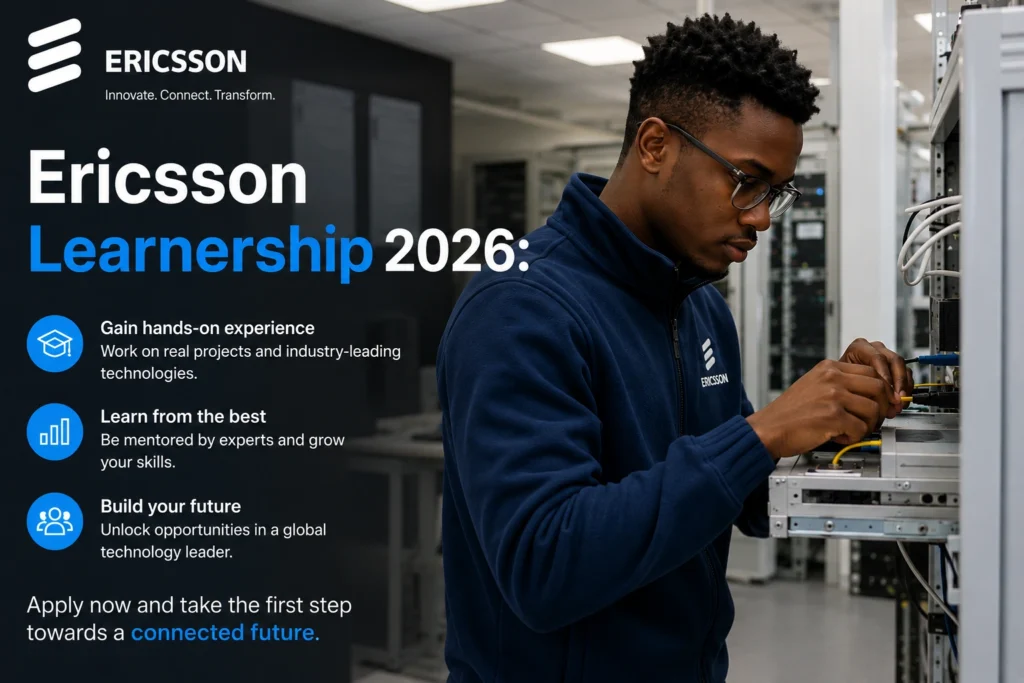
APPLY HERE: Ericsson Learnership 2026
Best Practices Experts Recommend
Candidates entering telecommunications and ICT learnerships often succeed faster when they develop good habits early.
Focus on Safety First
Telecommunications infrastructure work can become dangerous without proper safety awareness.
Always:
- Follow instructions carefully
- Use protective equipment correctly
- Respect safety procedures
- Ask questions when unsure
Safety discipline is highly respected in technical industries.
Build Technical Curiosity
Successful learners often continue learning outside formal training.
You can strengthen your knowledge by learning about:
- Fibre optics
- Networking systems
- Mobile communication technology
- Tower operations
- ICT infrastructure
Self-learning shows initiative and commitment.
Improve Communication Skills
Field technicians work in teams and communicate with supervisors, engineers, and clients.
Good communication can improve workplace performance significantly.
Stay Reliable and Punctual
Technical operations depend heavily on teamwork and timing.
Employers notice learners who:
- Arrive on time
- Follow schedules
- Complete tasks responsibly
- Remain dependable under pressure
Reliability often influences future employment opportunities.
Mistakes People Often Make
Many candidates unintentionally weaken their applications or struggle during learnerships because of avoidable mistakes.
Submitting Generic CVs
A generic CV that does not mention technical interests may appear weak.
Tailor your CV toward telecommunications and ICT operations.
Ignoring Safety Awareness
Some candidates underestimate the importance of safety in technical industries.
Telecommunications companies prioritise safety compliance strongly.
Applying Without Understanding the Job
This programme includes practical field work.
Candidates who expect only office-based tasks may become frustrated later.
Waiting Until the Last Minute
Delaying applications can reduce opportunities if positions fill quickly.
Early preparation is always better.
Overlooking Soft Skills
Technical ability matters, but employers also value:
- Teamwork
- Discipline
- Adaptability
- Communication
- Professionalism
These qualities can influence long-term career growth.
Frequently Asked Questions
1. Does the Ericsson Learnership 2026 pay a stipend?
Yes. Learners will receive monthly stipend support during the programme
2. Do applicants need previous work experience?
No formal work experience is mentioned as a requirement. However, technical exposure, ICT knowledge, or practical projects may strengthen an application
3. Is the programme only for people in East London?
The programme is based in East London, but applicants willing to relocate or travel within the Eastern Cape may also apply.
Final Thoughts
The Ericsson Learnership 2026 offers more than a training certificate. It provides practical exposure to one of South Africa’s fastest-growing technical sectors.
For young people interested in telecommunications infrastructure, fibre systems, network operations, and field-based ICT work, this programme can become an important starting point.
The telecommunications industry increasingly needs workers who understand both technical systems and practical operations. Candidates who are willing to learn, follow safety procedures, work in teams, and adapt to field environments may benefit significantly from this opportunity.
Applicants should prepare strong CVs, organise their documents carefully, apply early, and demonstrate genuine interest in telecommunications technology.
For motivated learners, this 12-month programme could become the foundation for long-term technical career growth in South Africa’s expanding digital economy.