
The job market in 2026 looks very different from what it did only a few years ago. Employers are receiving hundreds, sometimes thousands, of applications for a single role. Many companies now use automated hiring systems to filter candidates before a human recruiter even sees a CV. At the same time, remote work, freelance contracts, hybrid jobs, and AI-assisted recruitment have completely changed how people search for employment.
For many job seekers, the biggest challenge is no longer finding vacancies. The real challenge is standing out.
A well-qualified candidate can still get ignored because their CV is poorly optimized, their LinkedIn profile is incomplete, or they are applying too slowly. Meanwhile, other applicants are using advanced digital tools to tailor applications, prepare for interviews, and network more effectively.
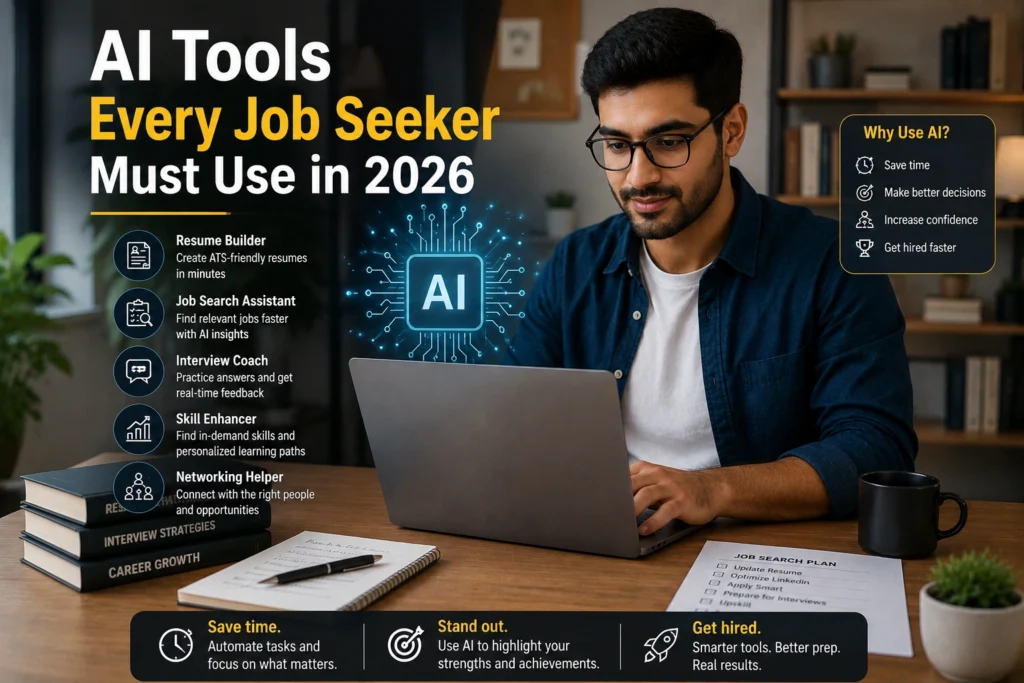
This is exactly why understanding the AI Tools Every Job Seeker Must Use in 2026 has become essential rather than optional.
Artificial intelligence is now helping candidates write better resumes, discover hidden job opportunities, practice interviews, improve communication skills, automate repetitive tasks, and even identify which careers best match their strengths. Used correctly, these tools can save time, reduce stress, and dramatically improve the chances of landing interviews.
But there is also confusion. Some people overuse AI and submit generic applications that recruiters instantly recognize. Others avoid AI completely and fall behind more prepared candidates.
This guide explains the most useful AI tools job seekers should use in 2026, how they work, and how to use them strategically without damaging authenticity.
Understanding the Role of AI in Job Hunting
Before looking at specific tools, it is important to understand why AI has become such a major part of recruitment.
Most medium and large employers now use Applicant Tracking Systems (ATS). These systems scan resumes for keywords, skills, qualifications, and formatting before ranking candidates. Recruiters increasingly depend on automation because manually reviewing every application is impossible.
At the same time, candidates are using AI to:
- Improve CVs and cover letters
- Tailor applications to job descriptions
- Practice interviews
- Build personal brands online
- Find hidden opportunities
- Learn in-demand skills faster
- Automate repetitive job search tasks
The key difference between successful and unsuccessful candidates is not simply using AI. It is using AI intelligently.
The best applicants combine human judgment, genuine experience, and AI-powered efficiency.
ALSO APPLY FOR: Lancet Laboratories Intern 2026
ALSO APPLY FOR: BCE FoodService Graduate Intern 2026
Why This Issue Matters
The rise of AI in recruitment has real-world consequences for millions of workers.
A candidate who submits a generic resume may never pass ATS screening, even if they are qualified. Someone without interview preparation may lose opportunities to candidates who practiced with AI interview simulators. Professionals who fail to optimize their LinkedIn profiles may become invisible to recruiters searching for talent online.
This issue matters because job competition has intensified globally. Economic uncertainty, remote hiring, and digital recruitment systems mean employers can recruit from larger talent pools than ever before.
AI tools are also changing expectations. Recruiters increasingly expect polished applications, tailored resumes, and professional online profiles. Candidates who do not adapt may struggle despite having strong skills or experience.
For graduates and unemployed youth, AI tools can level the playing field by providing affordable career support that previously required expensive career coaches or resume writers.
For experienced professionals, AI tools can speed up career transitions and help identify emerging industries with growing demand.
Understanding the AI Tools Every Job Seeker Must Use in 2026 is now part of modern career survival.
AI Tools Every Job Seeker Must Use in 2026
1. AI Resume Builders and ATS Optimizers
One of the most important AI tools for modern job seekers is the AI-powered resume optimizer.
These platforms analyze job descriptions and compare them against your resume to identify missing keywords, formatting problems, and skill gaps.
Popular tools include:
- Resume Worded
- Teal
- Kickresume
- Enhancv
- Rezi
These tools help candidates:
- Match ATS requirements
- Improve readability
- Highlight measurable achievements
- Remove weak phrases
- Optimize formatting for recruiters
Step-by-Step Strategy
- Copy the job description.
- Upload your current CV.
- Run an ATS analysis.
- Add missing keywords naturally.
- Rewrite weak bullet points using measurable outcomes.
- Save tailored versions for different industries.
Instead of saying:
“Responsible for customer service.”
AI-assisted improvement could become:
“Resolved 40+ customer queries daily while maintaining a 95% satisfaction rating.”
That difference matters.
2. AI Cover Letter Generators
Writing a fresh cover letter for every application is exhausting. Many candidates either skip cover letters completely or send generic versions that recruiters ignore.
AI writing assistants can help generate personalized drafts quickly.
Useful platforms include:
- Grammarly
- ChatGPT
- Jasper
- Copy.ai
The goal is not copying AI output word-for-word. The goal is creating a strong first draft you can personalize.
Best Approach
Use AI to:
- Structure the letter
- Improve grammar
- Highlight matching skills
- Adjust tone professionally
Then manually add:
- Personal motivation
- Specific company knowledge
- Real examples from your experience
Recruiters can usually detect purely AI-generated applications because they sound vague and repetitive.
Human editing remains essential.
3. AI Interview Preparation Platforms
Interview anxiety remains one of the biggest obstacles for job seekers.
AI interview tools now simulate realistic interviews using voice analysis, body language feedback, and industry-specific questions.
Leading platforms include:
- Interview Warmup
- Yoodli
- Final Round AI
- Huru
These tools can evaluate:
- Speaking pace
- Confidence
- Filler words
- Clarity
- Eye contact
- Answer structure
Step-by-Step Interview Practice Method
- Choose your target industry.
- Run a mock interview session.
- Record your responses.
- Review AI-generated feedback.
- Improve weak answers.
- Repeat until answers feel natural.
This is especially useful for graduates, first-time job seekers, and professionals changing careers.
4. AI Job Matching Platforms
Searching through thousands of listings manually wastes enormous time.
Modern AI-powered job platforms analyze your skills, experience, preferences, and behavior to recommend better-fitting roles.
Examples include:
- LinkedIn AI recommendations
- Indeed Smart Matching
- ZipRecruiter
- Jobscan
These systems can identify jobs candidates might otherwise overlook.
Some even predict:
- Salary compatibility
- Skill gaps
- Career progression opportunities
- Remote work suitability
Practical Tip
Do not rely on one platform alone.
Create profiles across multiple job platforms and keep them updated weekly. AI systems prioritize active users more often than inactive profiles.
5. LinkedIn AI Optimization Tools
LinkedIn has become one of the most important career platforms globally.
Recruiters increasingly search LinkedIn before contacting candidates. An incomplete profile can damage credibility instantly.
AI tools can help optimize:
- Headlines
- About sections
- Skill lists
- Keyword placement
- Post ideas
- Networking messages
Helpful tools include:
- Taplio
- Resume Worded LinkedIn Review
- Canva AI for profile banners
Strong LinkedIn Practices
Your profile should include:
- Professional headline
- Skills relevant to target roles
- Quantifiable achievements
- Professional photo
- Consistent activity
Candidates who regularly post industry insights often receive more recruiter attention than inactive users.
6. AI Career Coaching Platforms
Many people apply for jobs without clear direction. AI career coaching tools help users identify strengths, suitable industries, and learning paths.
Useful platforms include:
- Careerflow
- Coursera Career Academy
- FutureFit AI
- Skillsoft Percipio
These tools analyze:
- Existing skills
- Industry trends
- Salary forecasts
- Learning opportunities
- Career transition options
This is especially valuable in 2026 because many traditional roles are evolving rapidly due to automation.
7. AI Skill Learning Platforms
Employers increasingly prioritize adaptable candidates who continue learning.
AI-powered learning platforms personalize courses based on goals and weaknesses.
Popular options include:
- Coursera
- Udemy AI recommendations
- Khan Academy AI tools
- LinkedIn Learning
In-demand skills in 2026 include:
- Data analysis
- AI literacy
- Digital marketing
- Cybersecurity
- Project management
- Communication skills
- Prompt engineering
Continuous learning strengthens both resumes and confidence.
8. AI Networking Assistants
Networking remains one of the fastest ways to find opportunities.
AI tools now help users draft networking messages, organize contacts, and identify valuable professional connections.
Tools include:
- Clay
- LinkedIn AI assistant
- Notion AI
Effective Networking Strategy
- Identify professionals in your target industry.
- Personalize connection requests.
- Engage with their content consistently.
- Ask thoughtful questions.
- Avoid immediately requesting jobs.
Strong professional relationships often create opportunities before jobs are publicly advertised.
ALSO READ ABOUT: Get Paid While Studying: Opportunities Most Students Ignore
Best Practices Experts Recommend
Use AI as an Assistant, Not a Replacement
The strongest applications combine AI efficiency with authentic human experience.
Recruiters still value originality, personality, and real achievements.
Tailor Every Application
Mass applications rarely work well anymore.
Use AI tools to customize:
- Skills
- Keywords
- Cover letters
- Resume summaries
Small adjustments significantly improve ATS performance.
Keep Learning New Skills
AI is transforming industries quickly.
Candidates who continuously improve their digital skills remain more employable long term.
Build an Online Presence
Recruiters increasingly evaluate online visibility.
Maintain:
- Active LinkedIn profiles
- Professional portfolios
- Industry engagement
- Thoughtful online communication
Practice Interviews Repeatedly
Interview confidence improves through repetition.
AI interview simulators can help identify weaknesses before real interviews happen.
Mistakes People Often Make
Submitting Fully AI-Generated Applications
Many candidates copy AI-generated text directly without editing.
This creates:
- Generic applications
- Repetitive language
- False claims
- Weak personalization
Recruiters notice this quickly.
Ignoring ATS Formatting Rules
Fancy graphics, tables, and unusual layouts can confuse ATS systems.
Simple, clean formatting usually performs better.
Applying Without Research
AI tools save time, but candidates still need company knowledge.
Research:
- Company culture
- Industry trends
- Recent news
- Role expectations
Preparation matters.
Overloading Resumes With Keywords
Some job seekers stuff resumes with keywords unnaturally.
ATS systems are becoming smarter and recruiters still review final applications manually.
Use keywords naturally within meaningful achievements.
Neglecting Human Networking
AI cannot replace genuine relationships.
Personal referrals remain one of the strongest hiring advantages.
FAQ
1. Are AI-generated resumes accepted by employers?
Yes, but only when used responsibly. Employers generally accept AI-assisted resumes if the information is truthful, personalized, and professionally written.
2. Can recruiters detect AI-written applications?
Often, yes. Generic wording, repetitive phrases, and vague statements can signal AI-generated content. Human editing is essential.
3. Which AI tool is best for interview preparation?
Platforms like Interview Warmup and Yoodli are popular because they provide realistic practice sessions and detailed speaking feedback.
4. Do AI tools guarantee a job offer?
No. AI tools improve efficiency and preparation, but success still depends on qualifications, communication skills, experience, and interview performance.
Final Thoughts on AI Tools Every Job Seeker Must Use in 2026
The modern job market rewards candidates who adapt quickly, communicate clearly, and use technology strategically. AI has become deeply integrated into recruitment, career development, and professional networking.
Ignoring these tools can place candidates at a disadvantage. But blindly depending on them can also hurt authenticity.
The smartest approach is balance.
Use AI to:
- Save time
- Improve applications
- Prepare interviews
- Learn new skills
- Discover better opportunities
At the same time, maintain genuine communication, honest experience, and strong human relationships.
Job seekers who combine technology with authenticity will likely have the strongest advantage in 2026 and beyond.
If you are currently searching for work, start small. Choose one AI resume tool, one interview practice platform, and one learning platform. Build consistency rather than trying every tool at once.
Small improvements applied consistently often produce the biggest career results.
ALSO APPLY FOR: Lancet Laboratories Intern 2026
ALSO APPLY FOR: BCE FoodService Graduate Intern 2026
ALSO READ ABOUT: Get Paid While Studying: Opportunities Most Students Ignore