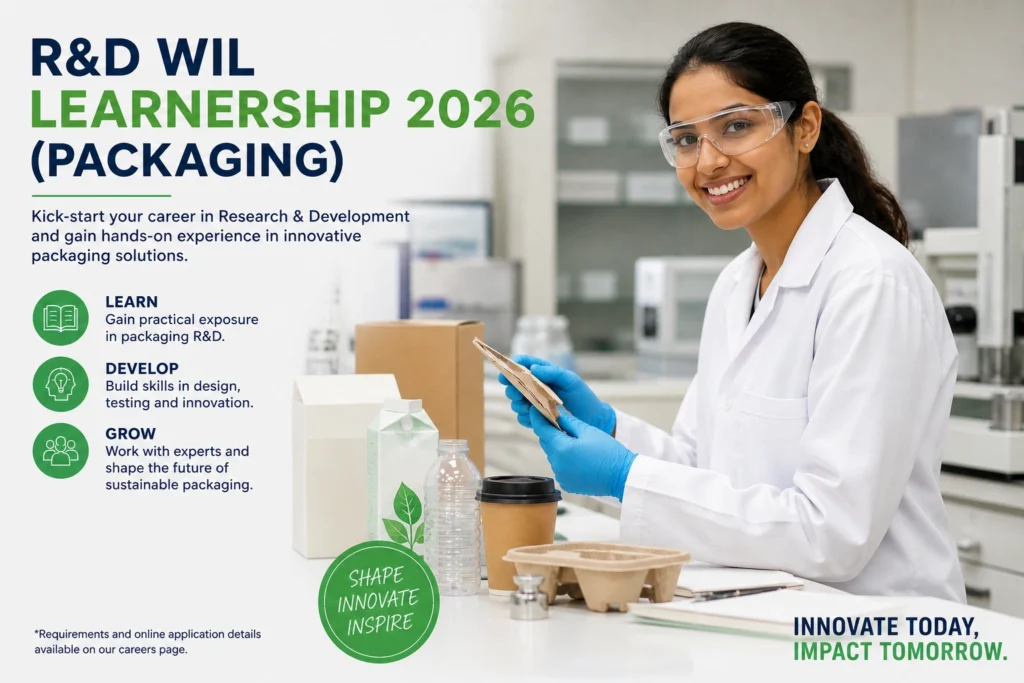

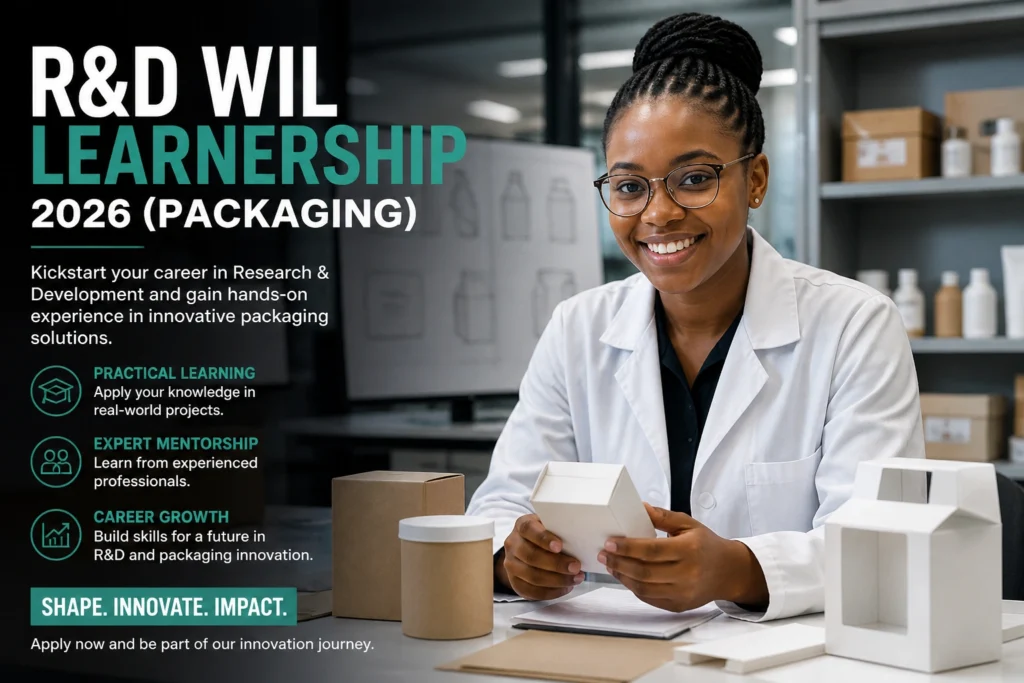
The R&D WIL Learnership 2026 is a structured workplace learning opportunity designed for science and engineering students who need practical exposure before graduating. Hosted by PepsiCo in Cape Town, this programme focuses on packaging research and development—an essential but often overlooked part of the food industry.
If you’re studying Food Technology, Biochemistry, or Engineering, this learnership could be your bridge from classroom theory to real-world innovation. It’s not just about “getting experience”—it’s about learning how products are developed, tested, packaged, and scaled for mass production.
This guide breaks down everything you need to understand: what the programme involves, how it works, what skills you’ll gain, and whether it’s the right move for your career.
What You Should Know First
Here’s the short version of the R&D WIL Learnership 2026:
- It’s a Work Integrated Learning (WIL) programme—meaning it combines academic theory with real workplace practice
- Based in Cape Town, it’s full-time and on-site
- Focuses on packaging R&D within the food manufacturing sector
- Ideal for final-year students who’ve completed theoretical coursework
- You’ll support real product trials, lab testing, and pilot plant operations
- It’s hands-on, not just observational
In simple terms: you won’t just watch—you’ll actively contribute to product development.
APPLY HERE: R&D WIL Learnership 2026
Understanding the Role: What Does an R&D WIL Learnership Involve?
At its core, this programme places you inside a functioning R&D team. You’ll work alongside technologists, engineers, and quality specialists to help develop and refine food products.
1. Supporting Research & Development Projects
You’ll assist with planning and executing projects, including:
- Preparing trial protocols
- Helping organize project timelines
- Supporting prototype development
For example, if a new snack product is being tested, you might help define how it will be evaluated—what measurements to take, what success looks like, and how results are recorded.
2. Working in Pilot Plants and Production Environments
One of the most valuable parts of the programme is exposure to pilot plant trials.
A pilot plant is a small-scale version of a factory used to test products before mass production.
Your role may include:
- Collecting base products from production lines
- Assisting with trial setup
- Observing how packaging performs under real conditions
This is where theory meets reality. You’ll see how small formulation changes affect large-scale production.
3. Conducting Laboratory Tests
You’ll perform essential quality and analytical tests such as:
- Salt analysis – ensuring flavour consistency
- Oil analysis – checking product stability
- Moisture analysis – critical for shelf life
- Particle size and bulk density testing – affecting texture and packaging
These tests help determine whether a product meets internal standards before it reaches consumers.
4. Data Analysis and Reporting
You won’t just collect data—you’ll learn to interpret it.
You’ll:
- Compile results into reports
- Identify patterns or inconsistencies
- Make basic recommendations
For example, if moisture levels are too high, you may suggest adjustments in processing conditions.
5. Supporting Scale-Up Activities
Scaling up means moving from small test batches to full production.
You’ll assist in:
- Coordinating with manufacturing teams
- Ensuring equipment readiness
- Monitoring consistency during production trials
This step is crucial because many products fail during scale-up—not in the lab.
6. Packaging Development and Compliance
Packaging is more complex than it looks. You’ll help:
- Draft packaging specifications
- Ensure compliance with regulations
- Support artwork and labeling standards
You’ll also work with regulatory teams to make sure everything meets legal requirements.
Skills You’ll Develop (Step-by-Step)
The R&D WIL Learnership 2026 is designed to build both technical and soft skills.
Step 1: Technical Foundation
You’ll strengthen your understanding of:
- Food chemistry
- Packaging materials
- Manufacturing processes
Step 2: Analytical Thinking
Through lab work and data interpretation, you’ll learn:
- How to evaluate product performance
- How to use basic statistics
- How to make data-driven decisions
Step 3: Workplace Collaboration
You’ll interact with multiple teams:
- R&D
- Operations
- Quality assurance
- External partners
This builds communication and teamwork skills.
Step 4: Problem-Solving in Real Time
Unlike academic settings, problems here are time-sensitive.
Example:
If a product fails a moisture test during a trial, you may need to help identify the issue immediately before production continues.
Step 5: Professional Discipline
You’ll learn:
- Good Manufacturing Practices (GMP)
- Hygiene standards
- Environmental, Health & Safety (EHS) protocols
These are non-negotiable in the food industry.
Who Should Apply?
This learnership is best suited for:
- Final-year students in:
- Food Technology
- Biochemistry
- Engineering
- Candidates with 60%+ academic average
- South African citizens
- Individuals who are:
- Detail-oriented
- Self-motivated
- Comfortable working in lab and factory environments
A driver’s license is helpful but not mandatory.
APPLY HERE: R&D WIL Learnership 2026
ALSO APPLY FOR: Nexio Digital Skills Learnership 2026
Why Packaging R&D Matters More Than You Think
Many students overlook packaging, focusing instead on product formulation. But packaging plays a critical role in:
- Shelf life – preventing spoilage
- Food safety – protecting against contamination
- Brand identity – influencing consumer decisions
- Sustainability – reducing environmental impact
For example, changing packaging material can extend a product’s shelf life by weeks—or reduce plastic usage significantly.
Common Misunderstandings About R&D WIL Learnership 2026
“It’s just an internship with basic tasks”
Not true. You’ll be involved in real projects that impact production decisions.
“You need advanced experience to apply”
The programme is designed for students. You only need a strong academic foundation and willingness to learn.
“It’s only lab work”
While lab testing is important, you’ll also work in pilot plants and production environments.
“Packaging is less important than product development”
Packaging is essential. A great product can fail if packaging is poor.
What Makes This Opportunity Valuable?
Working with a global company like PepsiCo gives you:
- Exposure to international standards
- Experience with advanced equipment and processes
- A strong addition to your CV
- Potential career pathways in:
- R&D
- Quality assurance
- Manufacturing
- Product development
APPLY HERE: R&D WIL Learnership 2026
Challenges You Should Be Ready For
This isn’t an easy programme. Expect:
- Fast-paced environments
- Tight deadlines during trials
- High attention to detail
- Balancing multiple tasks
But these challenges are exactly what prepare you for industry.
How to Stand Out as an Applicant
If you want to increase your chances:
Highlight Practical Knowledge
Mention lab work, projects, or experiments from university.
Show Curiosity
Employers value candidates who ask questions and seek understanding.
Demonstrate Reliability
This role requires accuracy and consistency.
Emphasize Teamwork
You’ll be working across departments.
Key Takeaways
- The R&D WIL Learnership 2026 is a hands-on workplace training programme in packaging R&D
- It’s designed for final-year science and engineering students
- You’ll gain experience in lab testing, pilot plant trials, and production processes
- Packaging plays a critical role in product success and safety
- The programme builds both technical expertise and professional skills
- It can open doors to long-term careers in the food and manufacturing industries
Frequently Asked Questions (FAQs)
1. Is the R&D WIL Learnership 2026 paid?
Details about stipends are not always publicly listed. Many WIL programmes offer stipends, but you should confirm during the application process.
2. Do I need prior work experience?
No. This programme is specifically designed for students who have completed their theoretical studies.
3. What is the difference between a WIL learnership and an internship?
A WIL learnership is usually part of academic requirements and focuses on structured learning outcomes, while internships may be less structured.
4. Can this lead to a permanent job?
While not guaranteed, strong performance can improve your chances of future employment within the company or industry.
Final Thoughts
The R&D WIL Learnership 2026 is more than just a requirement to complete your studies—it’s a real opportunity to step into the world of food innovation and manufacturing.
You’ll move beyond textbooks and into environments where decisions affect real products, real consumers, and real business outcomes. From lab testing to production trials, every task contributes to a bigger picture.
If you’re serious about building a career in science, engineering, or food technology, this kind of experience isn’t optional—it’s essential.