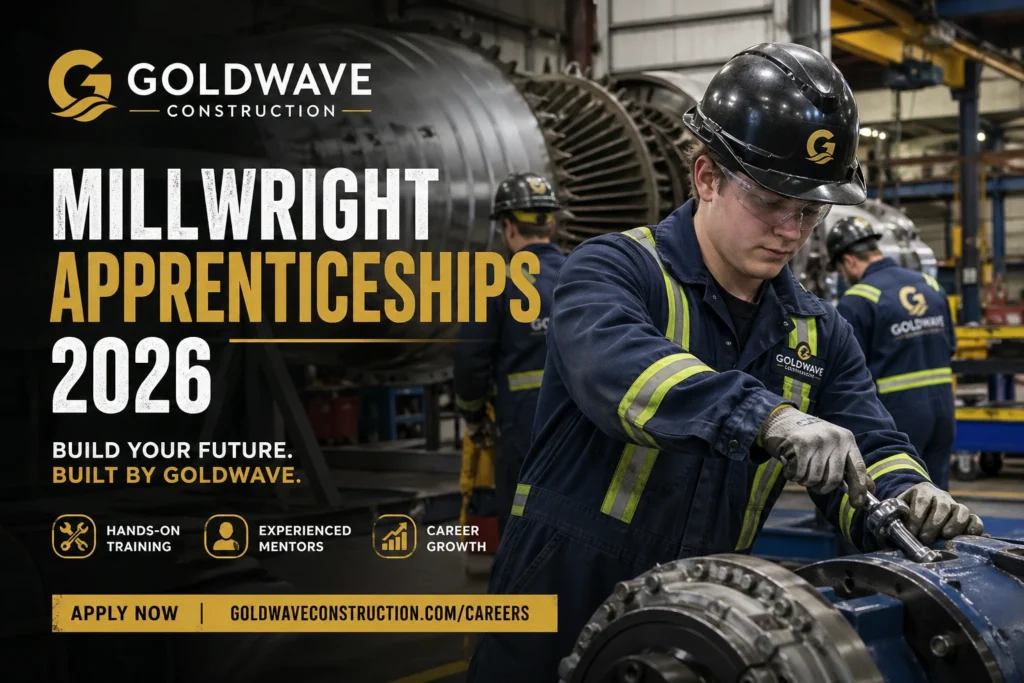

For many young South Africans, especially those with technical qualifications, the biggest hurdle isn’t education—it’s access to real work experience. You may have an N2–N6 certificate or a Technical Matric, but without hands-on exposure, breaking into engineering roles can feel nearly impossible.
This is where structured apprenticeship programmes become critical. Opportunities like the Goldwave Construction Millwright Apprenticeships 2026 offer a bridge between theory and practical skills—but competition is tight, deadlines are strict, and many applicants miss out simply because they don’t prepare effectively.
This guide breaks down everything you need to know—not just about the programme itself, but how to position yourself for success.
Understanding the Goldwave Construction Millwright Apprenticeships 2026
Before diving into application strategies, it’s important to clearly understand what this opportunity involves.
The Goldwave Construction Millwright Apprenticeships 2026 is a structured training programme based in Gauteng, aimed at unemployed youth who want to build careers in mechanical and electrical engineering.
What Does a Millwright Do?
A millwright is a highly skilled artisan responsible for:
- Installing industrial machinery
- Maintaining mechanical and electrical systems
- Diagnosing faults and repairing equipment
- Ensuring machines operate safely and efficiently
This role combines both mechanical engineering and electrical troubleshooting, making it one of the most versatile technical careers.
What the Programme Offers
Participants in the programme will:
- Gain hands-on experience with machinery installation and maintenance
- Work alongside experienced technicians
- Learn industry-standard safety practices
- Build practical skills that lead toward artisan qualification
Why This Issue Matters
South Africa faces a critical shortage of skilled artisans, particularly in sectors like construction, energy, and manufacturing. At the same time, youth unemployment remains high.
Programmes like the Goldwave Construction Millwright Apprenticeships 2026 matter because they:
- Close the gap between education and employment
- Equip young people with in-demand technical skills
- Improve long-term earning potential
- Support infrastructure and economic development
Without access to apprenticeships, many technically qualified individuals remain unemployed or underemployed—despite having valuable skills.
Minimum Requirements: Are You Eligible?
To apply successfully, you must meet the following criteria:
Required Qualifications
- Technical Matric or N2–N6 in Mechanical/Electrical Engineering
- Fluency in English
Key Competencies
- Strong mechanical and electrical aptitude
- Willingness to learn and undergo training
- Ability to work in a team
Added Advantages
- Basic welding knowledge
- Valid driver’s licence (or working towards one)
Tip: Even if some requirements are listed as “advantageous,” they can significantly boost your chances.
Step-by-Step Guide to Applying Successfully
Step 1: Prepare a Strong Technical CV
Your CV is your first impression. Make it count.
Include:
- Your technical qualifications (N2–N6 or Technical Matric)
- Practical training or workshop experience
- Any exposure to machinery, tools, or electrical systems
- Welding or fabrication skills (if applicable)
Pro tip: Use clear headings like “Technical Skills” and “Practical Experience.”
Step 2: Highlight Relevant Skills
Employers are not just looking for qualifications—they want capability.
Focus on:
- Problem-solving ability
- Mechanical reasoning
- Attention to detail
- Safety awareness
Use examples where possible (e.g., school projects, practical modules).
Step 3: Write a Focused Application Email
Send your CV to:
Keep your email:
- Professional
- Brief
- Relevant
Include:
- A short introduction
- Why you’re interested in the apprenticeship
- Your key qualifications
Step 4: Apply Before the Deadline
Closing date: 27 April 2026
Late applications are typically not considered. Submit early to avoid missing out.
Step 5: Prepare for Possible Screening
If shortlisted, you may be assessed on:
- Technical knowledge
- Problem-solving ability
- Communication skills
Prepare by reviewing:
- Basic electrical concepts
- Mechanical systems
- Safety procedures
ALSO VISIT:https://www.goldwavegroup.co.za
Key Responsibilities During the Apprenticeship
If accepted into the Goldwave Construction Millwright Apprenticeships 2026, you will:
- Assist with machinery installation
- Support maintenance and repairs
- Work under experienced technicians
- Follow strict safety protocols
- Participate in structured on-the-job training
This is not a passive learning programme—you’ll be actively involved in real engineering work.
ALSO APPLY FOR: Gibela Engineering Apprenticeships 2026
Best Practices Experts Recommend
1. Treat the Apprenticeship Like a Career Launch
This is not just training—it’s your entry into the workforce. Show commitment from day one.
2. Focus on Learning, Not Just Completing Tasks
Ask questions. Understand why things are done—not just how.
3. Build Relationships with Mentors
Experienced technicians can become valuable career guides.
4. Prioritise Safety at All Times
Safety awareness is a key trait employers look for in technical professionals.
Mistakes People Often Make
1. Submitting Generic CVs
A CV that doesn’t highlight technical skills often gets ignored.
2. Missing the Deadline
Many applicants wait until the last minute and miss submission entirely.
3. Ignoring “Advantageous” Skills
Things like welding or a driver’s licence can make a big difference.
4. Underestimating Soft Skills
Communication and teamwork are just as important as technical ability.
5. Not Preparing for Assessments
Even strong candidates can fail if they don’t prepare.
Why Choose a Millwright Career?
The Goldwave Construction Millwright Apprenticeships 2026 opens the door to a highly valuable trade.
Benefits of Becoming a Millwright
- High demand across industries
- Opportunities in construction, mining, and manufacturing
- Strong earning potential
- Ability to work locally or internationally
- Career progression into supervisory or specialist roles
This is a long-term career—not just a job.
FAQ:
1. Do I need work experience to apply?
No. The programme is designed for individuals who have technical qualifications but need practical experience.
2. Can I apply without a driver’s licence?
Yes, but having one (or working toward it) improves your chances.
3. What happens after the apprenticeship?
Successful apprentices may pursue artisan qualification and find employment in engineering-related industries
4. Will all applicants be contacted?
No. Only shortlisted candidates will be contacted, so ensure your application stands out.
Final Thoughts: How to Maximise This Opportunity
The Goldwave Construction Millwright Apprenticeships 2026 is more than just a training programme—it’s a stepping stone into a skilled, stable, and rewarding career.
To improve your chances:
- Apply early and professionally
- Tailor your CV to highlight technical strengths
- Demonstrate a willingness to learn
- Prepare for assessments
- Take the process seriously
Opportunities like this don’t come often—and small details can make a big difference.
If you’re serious about building a future in engineering, this could be the opportunity that changes everything.