
Searching for a job can feel like juggling too many moving parts at once. You apply to dozens of roles, tweak your CV constantly, write tailored cover letters—and then suddenly, you can’t remember which company you applied to last week, who responded, or whether you already followed up. That confusion doesn’t just feel stressful; it can cost you real opportunities.
If you’ve ever missed an interview email, duplicated an application, or forgotten to follow up at the right time, you already know the problem. The good news? Learning how to track all your job applications easily is not complicated—but it does require a system.
This guide breaks down exactly how to stay organized, reduce stress, and improve your chances of landing the job you want.
Understanding the Challenge Before Solving It
Before jumping into tools and strategies, it’s worth understanding why job tracking becomes overwhelming in the first place.
Modern job searching isn’t linear. You might:
- Apply on multiple job boards
- Reach out via LinkedIn
- Email recruiters directly
- Get referrals through contacts
- Apply again to the same company for different roles
Each of these channels creates scattered information. Without a central place to track everything, your brain becomes the system—and that system fails quickly under pressure.
That’s why the key to how to track all your job applications easily is not just “writing things down,” but creating a consistent, repeatable workflow.
ALSO APPLY FOR: O.R. Tambo’s 2026 Internship
ALSO APPLY FOR: Glencore Human Resources Internship 2026
Why This Issue Matters
Not tracking your job applications properly has real consequences beyond mild frustration.
First, it affects your professionalism. If a recruiter calls and you can’t remember the role, it signals disorganization. Second, it reduces your success rate. Following up at the right time can significantly improve your chances—but only if you know when to do it.
There’s also a psychological cost. Job searching is already emotionally draining. Disorganization adds unnecessary anxiety and makes rejection feel worse because you lack clarity on your progress.
Most importantly, tracking helps you learn. You can identify patterns:
- Which types of roles get responses
- Which companies respond fastest
- Which CV versions perform better
Without tracking, you’re guessing. With tracking, you’re improving.
Step-by-Step: How to Track All Your Job Applications Easily
1. Create a Central Tracking System
The first rule is simple: everything goes in one place.
You have a few solid options:
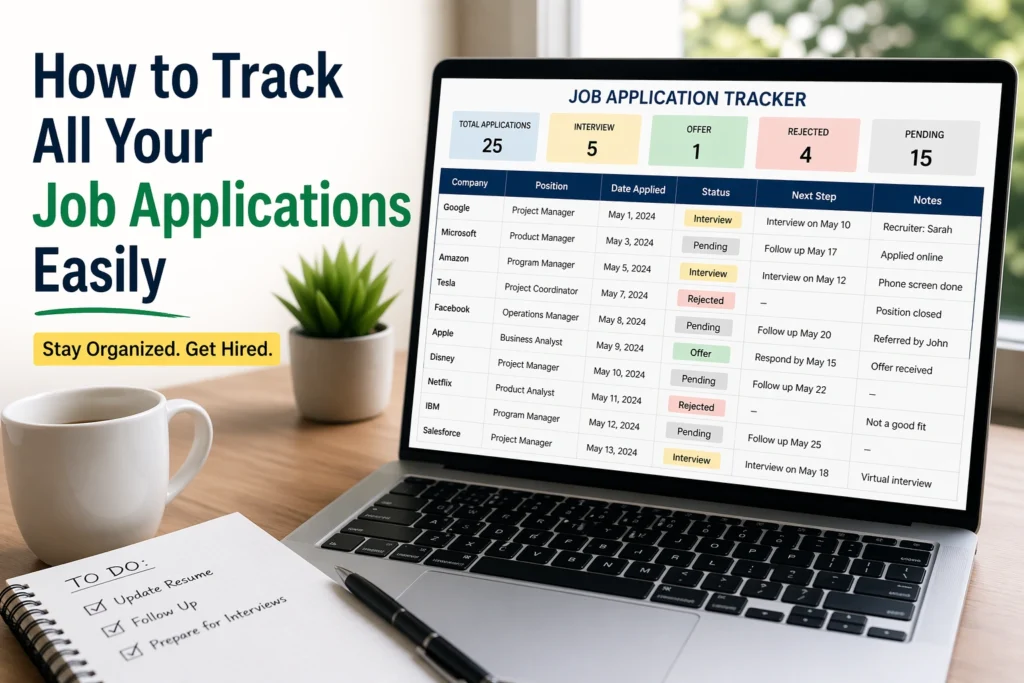
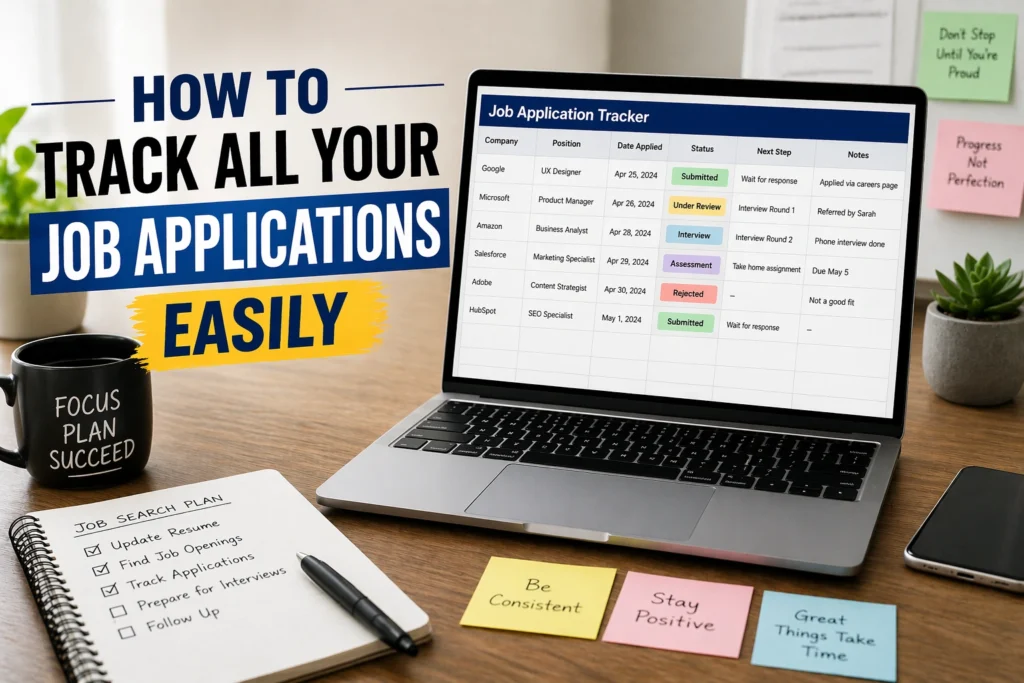
- A spreadsheet (Google Sheets or Excel)
- A note-taking app
- A dedicated job tracking tool
For most people, a spreadsheet is the best starting point because it’s flexible and simple.
Include these columns:
- Company name
- Job title
- Date applied
- Application method (job board, referral, etc.)
- Contact person
- Status (applied, interview, rejected, offer)
- Follow-up date
- Notes
This becomes your “control center.”
2. Track Immediately After Applying
The biggest mistake people make is thinking they’ll “add it later.”
They won’t.
Make it a rule:
Every application gets logged immediately.
It takes less than 60 seconds and prevents hours of confusion later. If you build this habit early, tracking becomes effortless.
3. Use Status Labels That Make Sense
Avoid vague statuses like “in progress.” Instead, use clear stages:
- Applied
- Application viewed
- Interview scheduled
- Interview completed
- Waiting for response
- Offer received
- Rejected
This clarity helps you quickly scan your pipeline and know exactly where you stand.
4. Schedule Follow-Ups in Advance
Following up is one of the most powerful—but underused—job search strategies.
When you apply, immediately set a follow-up date:
- 5–7 days after applying
- 2–3 days after an interview
Add this to your tracker and, ideally, your calendar. That way, you never rely on memory.
5. Store Supporting Documents in One Place
Your tracker should link to:
- The job description
- The CV version you used
- Your cover letter
This is incredibly useful when preparing for interviews. Instead of scrambling, everything is already organized.
6. Review Your Tracker Weekly
Tracking isn’t just about recording—it’s about using the data.
Once a week, review:
- Applications with no response
- Roles you should follow up on
- Patterns in responses
This transforms your tracker from a passive list into an active decision-making tool.
7. Use Automation Where Possible
If you want to make things even easier:
- Use email filters to label job-related emails
- Set reminders automatically for follow-ups
- Use templates for common updates
Automation reduces effort and keeps your system consistent.
ALSO READ ABOUT: How to Check If a Job Offer Is Legit (Avoid Scams)
Best Practices Experts Recommend
Experienced recruiters and career coaches consistently emphasize a few key habits when it comes to how to track all your job applications easily.
Keep It Simple
A complex system is a system you won’t use. Start basic. You can always add more detail later.
Be Consistent, Not Perfect
Missing a few entries isn’t the problem—abandoning the system is. Focus on consistency over perfection.
Track Quality, Not Just Quantity
Instead of only counting applications, track:
- Time spent customizing applications
- Whether you had a referral
- How closely you matched the job
This gives better insight into what actually works.
Use Color Coding
Simple visual cues can save time:
- Green = interviews
- Yellow = waiting
- Red = rejected
This makes your tracker easier to scan quickly.
Separate Active vs Closed Applications
Keep your list clean by moving rejected or completed applications to a separate section. This helps you focus only on active opportunities.
Mistakes People Often Make
Even with good intentions, many job seekers fall into common traps.
Relying on Memory
“I’ll remember where I applied” is the fastest way to lose track. Memory is unreliable under stress.
Using Too Many Tools
Switching between apps creates confusion. Pick one primary system and stick with it.
Not Updating Status
An outdated tracker is almost worse than no tracker. Make sure statuses reflect reality.
Ignoring Follow-Ups
Many candidates stop after applying. A simple follow-up can set you apart—but only if you track when to send it.
Tracking Without Reviewing
If you never look at your tracker, it becomes useless. The value comes from using the data to improve your strategy.
Frequently Asked Questions
1. What is the easiest way to track job applications?
The easiest way is using a simple spreadsheet. It’s flexible, free, and requires minimal setup. The key is consistency, not complexity.
2. How often should I update my job application tracker?
Ideally, immediately after each application or update. At minimum, review and update it once a week.
3. Should I track rejected applications?
Yes. Tracking rejections helps you identify patterns and avoid applying repeatedly to the same role without improvement.
4. Can job tracking really improve my chances?
Absolutely. It ensures timely follow-ups, better preparation for interviews, and smarter application strategies—all of which increase your success rate.
Turn Chaos Into Control
Job searching doesn’t have to feel chaotic. Once you understand how to track all your job applications easily, everything becomes clearer: where you stand, what’s working, and what to do next.
Start simple. Create one central tracker. Update it immediately. Review it weekly.
Those small actions create a powerful system—one that reduces stress, improves your follow-ups, and ultimately increases your chances of getting hired.
The difference between a scattered job search and a strategic one isn’t luck. It’s organization.
ALSO APPLY FOR: O.R. Tambo’s 2026 Internship
ALSO APPLY FOR: Glencore Human Resources Internship 2026
ALSO READ ABOUT: How to Check If a Job Offer Is Legit (Avoid Scams)