
The Diagnostic Technician Apprenticeship 2026 arrives at a pivotal moment for South Africa’s automotive industry. As vehicles become increasingly software-driven, the demand for technicians who can interpret complex electronic systems—not just perform mechanical repairs—has surged. This shift is reshaping what it means to be “qualified” in the motor trade.
The vacancy based in Margate, KwaZulu-Natal, reflects more than a routine hiring cycle. It signals a broader transformation: dealerships are prioritizing diagnostic intelligence, digital fluency, and standardized processes aligned with global automotive brands. For aspiring technicians and industry observers alike, this role offers insight into how skills requirements, training pathways, and dealership operations are evolving in 2026.
Understanding this opportunity requires looking beyond the job listing itself. It sits at the intersection of education reform, technological advancement, and shifting employer expectations—making it a useful case study for the future of technical apprenticeships in South Africa.
The Changing Nature of Automotive Technical Work
Historically, automotive technicians were defined by mechanical expertise—engine rebuilding, gearbox repairs, and general servicing. While these skills remain relevant, the modern vehicle has transformed into a network of interconnected electronic systems.
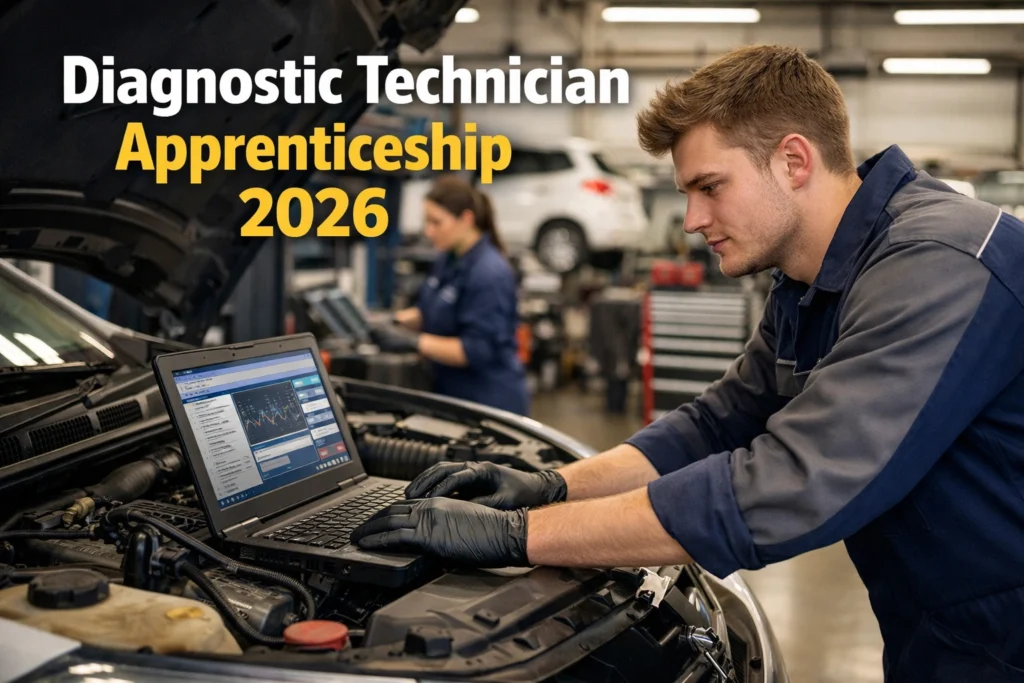
Today’s diagnostic technician must interpret fault codes, analyze sensor data, and work with proprietary dealership software. Vehicles from brands like Volkswagen, Audi, Suzuki, and Foton—explicitly referenced in the role—require brand-specific diagnostic protocols and tools. This introduces a layer of complexity that traditional training alone cannot address.
The Diagnostic Technician Apprenticeship 2026 highlights this shift by emphasizing:
- Diagnostic experience as a competitive advantage
- Proficiency in computerized systems
- Understanding dealership-specific processes and standards
This evolution reflects a global trend. Vehicles increasingly rely on electronic control units (ECUs), advanced driver-assistance systems (ADAS), and hybrid or electric powertrains. As a result, the technician’s role is becoming more analytical than manual.
In practical terms, this means that apprentices entering the field today are not just learning how to fix cars—they are learning how to interpret data and troubleshoot systems in a digital environment.
APPLY HERE: Diagnostic Technician Apprenticeship 2026
Apprenticeship as a Structured Pathway to Expertise
One of the defining aspects of this opportunity is its emphasis on a completed four-year apprenticeship and trade test. This requirement underscores the continued importance of structured, formal training in producing competent technicians.
In South Africa, apprenticeships serve as a bridge between theoretical education (such as N2 certification) and real-world application. The Diagnostic Technician Apprenticeship 2026 reflects a model where:
- Foundational knowledge is built through formal education
- Practical skills are developed through hands-on dealership experience
- Competency is validated through standardized trade testing
What makes this pathway particularly valuable in 2026 is its alignment with employer expectations. Dealerships are no longer willing to invest heavily in basic training; they expect candidates to arrive with a strong baseline of skills and an ability to adapt quickly.
This raises an important point: apprenticeships are becoming more selective and outcome-driven. Completing one is no longer just about time served—it is about demonstrating measurable competence in both mechanical and electronic systems.
For aspiring technicians, this means the apprenticeship phase must be approached strategically. Exposure to diagnostic tools, dealership workflows, and brand-specific training can significantly enhance employability.
Dealership-Centric Skill Requirements: A Closer Look
The job description places strong emphasis on dealership experience, which is not incidental. Modern automotive service environments are highly structured ecosystems governed by strict processes, performance metrics, and customer service standards.
Key expectations in the Diagnostic Technician Apprenticeship 2026 include:
- Accurate job card documentation and time tracking
- Adherence to “first-time right” quality standards
- Compliance with operational manuals and manufacturer guidelines
- Coordination with service advisors and workshop foremen
These requirements point to a broader trend: technical skill alone is insufficient. Technicians must operate effectively within a system that prioritizes efficiency, accountability, and customer satisfaction.
For example, the insistence on correctly recording all operations—even those performed free of charge—reflects the importance of data integrity in dealership operations. This data feeds into performance analytics, warranty claims, and inventory management.
Similarly, the requirement to obtain authorization before commencing work highlights the financial and operational controls inherent in dealership environments. Every action must be traceable and justified.
This structured approach contrasts with independent workshops, where processes may be more flexible but less standardized. For technicians, dealership experience therefore offers exposure to global best practices—an advantage that can enhance long-term career mobility.
ALSO APPLY FOR: Motus Apprentice 2026 (Petrol/Diesel)
The Role of Continuous Training and Skill Upgrading
Another notable aspect of the Diagnostic Technician Apprenticeship 2026 is the emphasis on ongoing training. This is not merely a formality; it is a necessity in an industry characterized by rapid technological change.
Manufacturers regularly update vehicle systems, introduce new models, and refine diagnostic procedures. As a result, technicians must engage in continuous learning to remain effective.
The role explicitly requires participation in training sessions designed to “teach or upgrade technical skills.” This reflects a shift toward lifelong learning within the automotive sector.
Senior technicians are also expected to mentor apprentices and RSA (Repair Shop Assistant) personnel, creating a knowledge transfer loop within the workshop. This internal training dynamic is critical for maintaining service quality and ensuring consistency across teams.
From an industry perspective, this emphasis on training highlights a key challenge: the skills gap. As technology advances, the pace of change can outstrip the capacity of traditional training systems. Dealerships are therefore taking a more active role in developing their workforce.
For technicians, this means adaptability is as important as expertise. Those who embrace continuous learning are more likely to progress into senior or specialized roles.
Regional Dynamics: Opportunities Beyond Major Urban Centers
The Margate-based opportunity also sheds light on regional employment dynamics. While major cities like Johannesburg and Durban dominate automotive activity, smaller regions are increasingly becoming important service hubs.
The requirement to travel between branches in Margate, Port Shepstone, and Kokstad suggests a networked dealership model serving a broader geographic area. This has several implications:
- Technicians must be flexible and willing to work across multiple locations
- Regional dealerships may offer diverse exposure due to varied customer needs
- There is growing demand for skilled technicians outside traditional urban centers
For job seekers, this presents both opportunities and challenges. While regional roles may offer less competition and broader hands-on experience, they may also require greater mobility and adaptability.
From an industry standpoint, this trend reflects the decentralization of automotive services. As vehicle ownership expands in non-urban areas, dealerships are extending their reach to meet demand.
APPLY HERE: Diagnostic Technician Apprenticeship 2026
Accountability, Safety, and Professional Standards
The detailed list of responsibilities in the Diagnostic Technician Apprenticeship 2026 underscores the importance of accountability and safety in modern workshops.
Technicians are expected to:
- Maintain their own tools in good working order
- Adhere to strict health and safety regulations
- Report faulty equipment and expired parts immediately
- Ensure proper housekeeping within the workshop
These requirements are not merely procedural—they are integral to maintaining operational efficiency and minimizing risk.
The emphasis on returning used parts to customers or the factory, for instance, reflects transparency and compliance with warranty processes. Similarly, the requirement to obtain a foreman’s signature upon job completion ensures quality control and accountability.
In a broader sense, these standards contribute to the professionalization of the automotive trade. Technicians are no longer viewed as informal laborers but as skilled professionals operating within a regulated environment.
What This Means Going Forward
The Diagnostic Technician Apprenticeship 2026 provides a clear snapshot of where the automotive industry is heading—and the implications are significant.
First, the role of the technician will continue to evolve toward diagnostics and systems analysis. Mechanical skills will remain foundational, but digital literacy will become the defining competency.
Second, apprenticeships will become more rigorous and outcome-focused. Employers will prioritize candidates who can demonstrate both technical proficiency and the ability to operate within structured dealership environments.
Third, continuous training will be non-negotiable. As vehicles become more complex, the gap between current knowledge and required expertise will widen, making lifelong learning essential.
Finally, regional opportunities will grow in importance. Technicians willing to work across multiple locations or outside major cities may find themselves with a competitive advantage.
For aspiring professionals, the message is clear: success in this field will depend on adaptability, technical curiosity, and a willingness to engage with evolving technologies.
Conclusion
The Diagnostic Technician Apprenticeship 2026 is more than a job opportunity—it is a reflection of an industry in transition. As automotive technology advances, the skills required to service and repair vehicles are becoming increasingly sophisticated.
This role highlights the importance of structured training, dealership experience, and continuous learning in building a sustainable career in the automotive sector. It also underscores the growing demand for technicians who can navigate both mechanical and digital systems with confidence.
For those entering the field, the path forward is challenging but promising. By aligning with the expectations outlined in opportunities like this, aspiring technicians can position themselves at the forefront of a rapidly evolving industry.
APPLY HERE: Diagnostic Technician Apprenticeship 2026
ALSO APPLY FOR: Motus Apprentice 2026 (Petrol/Diesel)