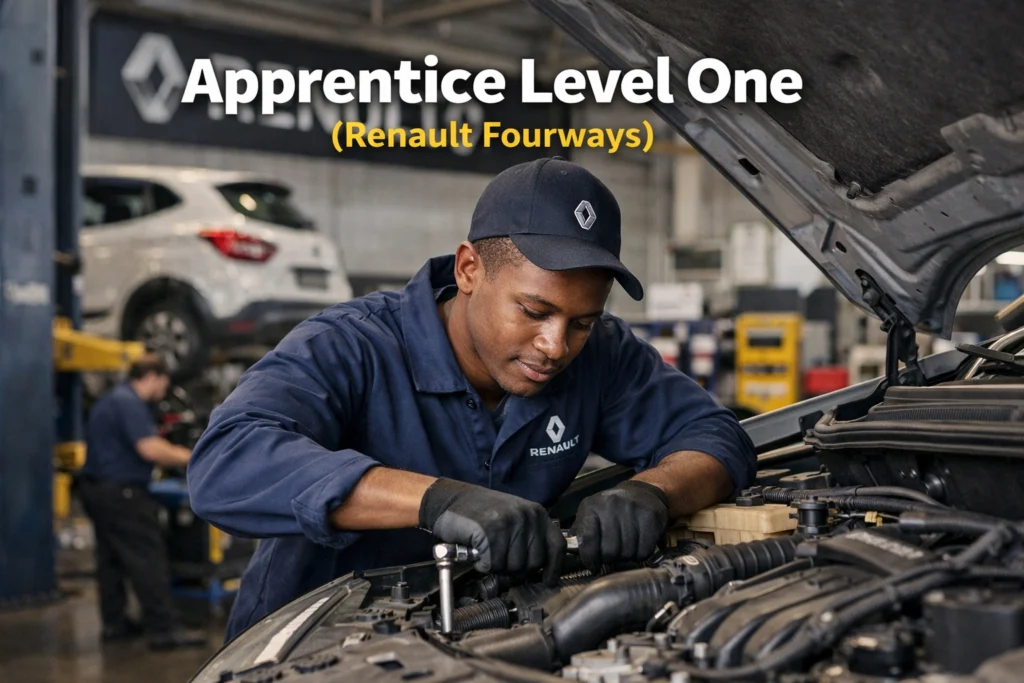

If you’ve ever been curious about how cars work—or dreamed of turning that curiosity into a career—then the Apprentice Level One (Renault Fourways) opportunity could be exactly what you need. This learnership, offered through Motus Corporation in Johannesburg, is designed to help young South Africans step into the automotive industry with real, hands-on experience.
In a country where youth unemployment remains a serious challenge, opportunities like this are more than just jobs—they’re pathways into skilled careers. Whether you’ve just finished matric or are looking for a practical alternative to university, this guide will help you understand what the role involves, what you need to qualify, and how to make the most of it.
What You Should Know First
The Apprentice Level One (Renault Fourways) programme is an entry-level learnership aimed at individuals who want to become qualified motor mechanic technicians.
Here’s the core idea:
- You learn while working
- You gain practical, real-world experience
- You follow a structured training path (up to 3 years)
- You build skills that can lead to a long-term career in the automotive industry
This is not just a job—it’s a foundation for a trade profession.
APPLY HERE: Apprentice Level One (Renault Fourways)
Understanding the Apprentice Level One (Renault Fourways) Role
At its heart, this programme is about learning by doing. As an apprentice, you won’t be expected to know everything from day one. Instead, you’ll work under experienced technicians who guide you step by step.
What You’ll Actually Do Daily
Your responsibilities will include:
- Assisting technicians with vehicle repairs
- Removing and replacing car parts
- Performing basic maintenance like oil changes
- Handling tools and equipment
- Keeping the workshop clean and organised
- Following safety procedures
Example: A Typical Task
Let’s say a vehicle comes in for a service:
- A senior technician diagnoses the issue
- You help lift the vehicle using a jack
- You remove the wheels or filters
- You replace parts under supervision
- You clean up and prepare for the next job
Over time, these small tasks build into full mechanical knowledge.
Why This Learnership Matters in South Africa
South Africa has a strong demand for skilled artisans, especially in technical fields like automotive repair.
Here’s why this opportunity stands out:
- High demand for mechanics: Cars need constant maintenance
- Portable skill: You can work anywhere in the country
- Career growth: From apprentice → qualified technician → workshop manager
- Hands-on learning: Ideal for those who prefer practical work over theory
Unlike many entry-level jobs, this learnership gives you a clear career path.
Requirements: Can You Apply?
Before applying, it’s important to check if you meet the minimum requirements.
Essential Qualifications
You must have:
- Grade 12 (Matric)
- Pure Mathematics
- Physical Science
These subjects are important because they help you understand:
- Engine systems
- Electrical components
- Measurements and calculations
Added Advantages
You’ll stand out if you have:
- A Technical Matric
- A driver’s license
- Basic technical or mechanical knowledge
Personal Qualities That Matter
Employers are also looking for:
- A strong interest in vehicles
- Willingness to learn
- Teamwork skills
- Attention to detail
- Good attitude toward customers
APPLY HERE: Apprentice Level One (Renault Fourways)
ALSO APPLY FOR:(SAB) Electrical Apprenticeships 2026
Step-by-Step: How the Training Programme Works
The apprenticeship typically runs for up to three years, and each phase builds on the previous one.
Year 1: Foundations
- Learn basic workshop safety
- Understand tools and equipment
- Assist with simple repairs
- Perform cleaning and maintenance tasks
Year 2: Skill Development
- Start handling more complex tasks
- Work more independently (still supervised)
- Learn diagnostics basics
- Attend technical training courses
Year 3: Advanced Learning
- Take on major repair tasks
- Build confidence in troubleshooting
- Prepare for trade testing
- Transition into a qualified technician role
Skills You Will Gain
By the end of the programme, you’ll have developed a wide range of skills:
Technical Skills
- Engine repair basics
- Brake and suspension systems
- Oil and filter servicing
- Tool handling
Workplace Skills
- Time management
- Communication
- Problem-solving
- Customer service
Safety Awareness
- Workshop safety rules
- Equipment handling
- Risk prevention
These skills are valuable not just in one job—but across the entire automotive industry.
A Day in the Life of an Apprentice
To make this more real, imagine your typical workday:
- Morning: Check tools, clean workspace, prepare vehicles
- Midday: Assist with repairs, change parts, learn new techniques
- Afternoon: Attend training sessions or complete tasks
- End of day: Clean tools, update progress, review learning
It’s active, practical, and never boring.
Challenges You Should Be Ready For
While this opportunity is rewarding, it’s not always easy.
Physical Work
- You’ll be standing for long hours
- Lifting parts and tools
- Working in different conditions
Learning Curve
- Mechanical systems can be complex
- You’ll need patience and persistence
Discipline Required
- Punctuality matters
- Cleanliness and organisation are essential
- Safety rules must always be followed
If you’re committed, these challenges become stepping stones.
Common Misunderstandings About Apprentice Level One (Renault Fourways)
Many people misunderstand what an apprenticeship really involves. Let’s clear that up.
1. “It’s just a basic job”
Not true.
This is a structured training programme leading to a professional qualification.
2. “You don’t need academic subjects”
Incorrect.
Maths and Science are important because modern vehicles are highly technical.
3. “You’ll only do cleaning work”
While cleaning is part of the job, it’s only a small portion.
Most of your time is spent learning real mechanical skills.
4. “There’s no career growth”
This is one of the biggest myths.
Many qualified technicians go on to:
- Open their own workshops
- Become specialists
- Move into management roles
Career Opportunities After Completion
Once you complete the apprenticeship, several doors open.
Possible Career Paths
- Qualified Motor Mechanic
- Diagnostic Technician
- Workshop Supervisor
- Service Advisor
- Automotive Specialist
Long-Term Growth
With experience, you can:
- Earn higher salaries
- Specialise in certain vehicle brands
- Start your own business
The automotive field offers stability and growth.
Tips to Succeed in This Learnership
If you’re serious about making the most of this opportunity, here’s what you should focus on:
1. Be Curious
Ask questions.
Understand why things work—not just how.
2. Take Initiative
Don’t wait to be told everything.
Show eagerness to learn.
3. Respect the Process
Even small tasks matter.
They build discipline and attention to detail.
4. Learn from Mistakes
You will make errors—it’s part of learning.
What matters is improving.
How to Apply Successfully
Although the job listing doesn’t always specify full application steps, here’s a general guide:
Prepare Your Documents
- Updated CV
- Certified copy of Matric certificate
- ID document
- Driver’s license (if available)
Tailor Your CV
Highlight:
- Technical subjects
- Any hands-on experience
- Interest in mechanics
Write a Strong Motivation
Explain:
- Why you want to become a mechanic
- What makes you a good fit
- Your willingness to learn
APPLY HERE: Apprentice Level One (Renault Fourways)
Key Takeaways
- The Apprentice Level One (Renault Fourways) programme is a structured learnership in the automotive industry
- It combines practical work and training over up to three years
- You need Matric with Maths and Science to qualify
- The role involves assisting technicians, learning repairs, and maintaining the workshop
- It offers a clear path to becoming a qualified motor mechanic
- With dedication, it can lead to long-term career growth and financial stability
Frequently Asked Questions (FAQs)
1. Do I get paid during the learnership?
Most learnerships offer a stipend, but it may not be a full salary. The main benefit is the training and experience.
2. Can I apply without a driver’s license?
Yes, but having a license is an advantage and may improve your chances.
3. Is this better than going to university?
It depends on your goals.
If you prefer practical, hands-on work, this is a strong alternative to academic study.
4. What happens after the 3-year programme?
If you perform well, you may: Be offered permanent employment and Qualify as a technician
Final Thoughts
The Apprentice Level One (Renault Fourways) opportunity is more than just a starting point—it’s a gateway into a skilled profession. In a world where practical skills are increasingly valuable, becoming a trained motor mechanic can offer both stability and independence.
If you enjoy working with your hands, solving problems, and understanding how things work, this path could be the right fit. The journey may be challenging, but the reward—a recognised trade and a sustainable career—is worth it.
APPLY HERE: Apprentice Level One (Renault Fourways)
ALSO APPLY FOR:(SAB) Electrical Apprenticeships 2026